Quick Overview
A swift recovery after a dental crown is important because it reduces patient discomfort, prevents complications such as infection or crown loosening, and allows a return to normal eating and speaking habits. Key post‑crown care principles include: (1) wait for local anesthesia to wear off before eating; keep the first 24‑48 hours soft‑food only and avoid hot, cold, sticky, or hard items while the cement sets; (2) maintain gentle oral hygiene with a soft‑bristled brush and floss carefully around the crown, using a salt‑water rinse to soothe gums; (3) manage mild pain or inflammation with over‑the‑counter ibuprofen or acetaminophen as directed; (4) apply cold compresses for swelling and keep the head elevated; (5) schedule a follow‑up within 7‑10 days to confirm bite alignment and address any adjustment needs. Following these steps promotes comfort, protects the restoration, and supports long‑term crown durability.
Immediate Post‑Procedure Care
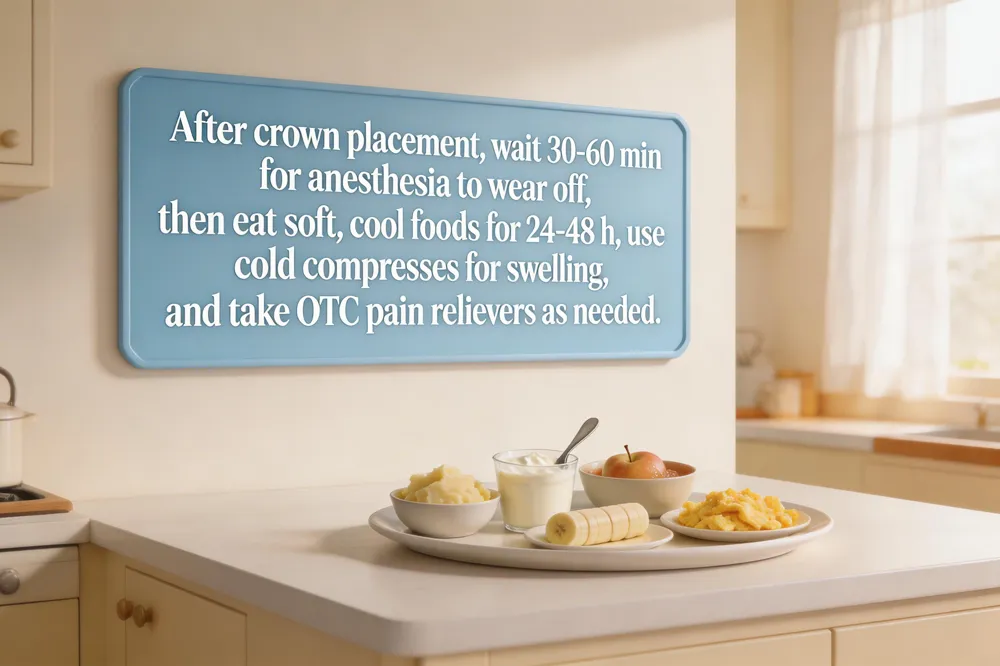 After a crown is placed, local anesthetic typically wears off within 30 – 60 minutes. Until numbness clears, avoid chewing, hot drinks and hard foods to prevent accidental bites. Once sensation returns, wait at least 30 minutes–1 hour before eating; stick to soft, cool foods (yogurt, mashed potatoes, smoothies) and chew on the opposite side for the first 24 hours. Apply a cold compress to the cheek for 10‑15 minutes on and off during the first 24‑48 hours to control swelling and facial bruising, keeping your head elevated while resting.
Permanent crown post‑operative instructions – Avoid eating or drinking for the first 1–2 hours, then follow a soft‑food diet, brush gently with a soft‑bristled brush, resume flossing after 24‑48 hours, and take ibuprofen or acetaminophen as needed. Contact us if pain, swelling, or looseness persists.
How long after a crown is cemented can I eat normally? – Wait 30 minutes–1 hour post‑cementation, then soft‑food diet for 24 hours, gradually re‑introducing normal foods after 24‑48 hours if no discomfort.
Facial bruising after dental crown – Rare but possible; use a cold compress for 15 minutes intermittently, keep head elevated, and monitor. Seek care if bruising worsens or is painful after a week.
Does getting a same‑day crown hurt? – The procedure itself is painless under anesthesia; mild soreness and temperature sensitivity may occur as numbness fades, usually resolving with soft‑food diet and OTC analgesics.
Diet & Nutrition for Healing
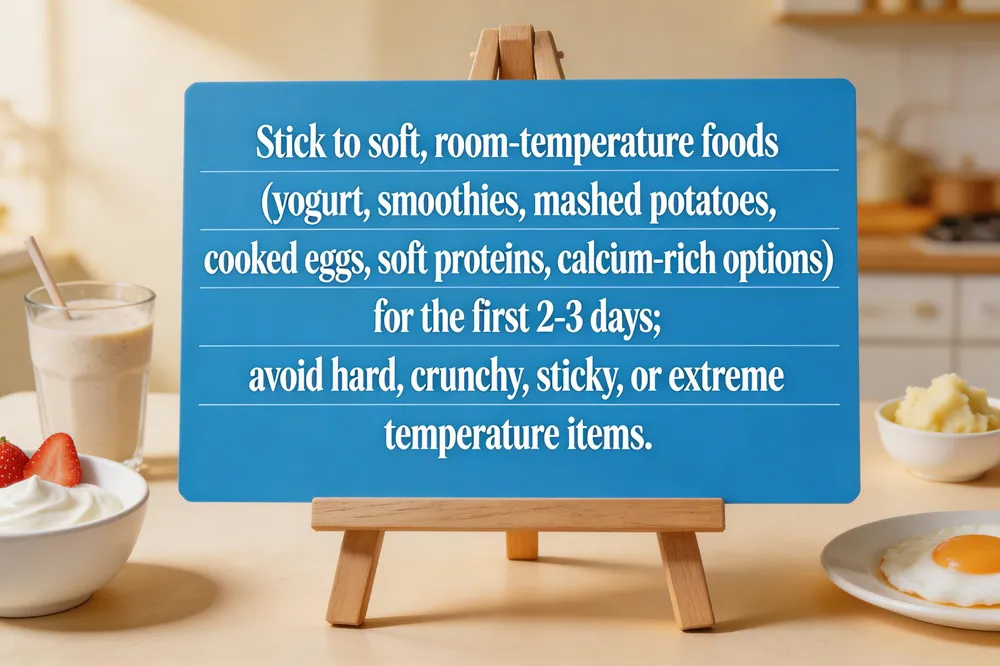 After crown placement, stick to a soft‑food diet for the first 24‑48 hours. Warm, room‑temperature options such as yogurt, smoothies, oatmeal, scrambled eggs, mashed potatoes, sweet potatoes, applesauce, and well‑cooked vegetables are easy to chew and reduce pressure on the new restoration. Include nutrient‑dense proteins (soft‑cooked fish, chicken, lentils) and calcium‑rich foods (Greek yogurt, cheese) to support gum healing. Avoid hard, crunchy items (nuts, chips, ice), sticky or gummy foods (caramel, gummies), and extreme hot or cold beverages as temperature changes can trigger sensitivity in the first few days. Gradually re‑introduce regular foods after 2‑3 days, chewing on the opposite side until the cement fully sets and the bite feels stable. Over‑the‑counter ibuprofen or acetaminophen can manage mild discomfort, while a salt‑water rinse after meals helps reduce inflammation. Most patients feel back to normal within 24‑48 hours; mild soreness and temperature sensitivity usually resolve within a week, and full adaptation of the bite may take up to four weeks. If pain, swelling, or a loose crown persists beyond a few days, contact your dentist promptly.
Oral Hygiene & Maintenance
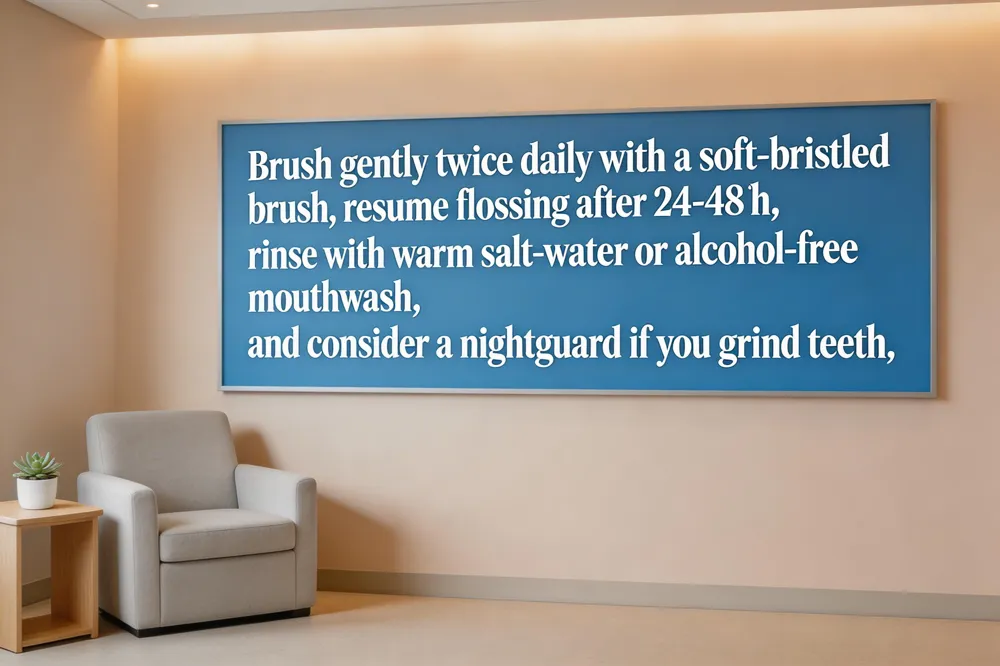 Gentle brushing technique
Use a soft‑bristled toothbrush and circular motions, keeping the bristles at a 45‑degree angle to the gum line. Brush twice daily for two minutes, avoiding aggressive scrubbing that could irritate the cement margin or gum tissue.
Flossing around crowns
Slide floss gently under the crown edge rather than pulling upward. For tight spaces, a floss threader or interdental brush works well. Resume normal flossing after 24‑48 hours post‑crown placement to keep plaque away from the restoration.
Mouthwash recommendations
Rinse with a warm salt‑water solution (½ tsp salt per 8 oz water) after meals for the first week to reduce inflammation. An alcohol‑free antimicrobial mouthwash (e.g., chlorhexidine) can be used twice daily for enhanced bacterial control, but avoid alcohol‑based rinses until the cement has fully set.
Nightguard for bruxism
If you grind or clench, ask your dentist for a custom nightguard. A nightguard protects the crown from excessive forces that can cause chipping or loosening, extending the restoration’s lifespan.
Temporary crown post‑operative instructions
Do not bite directly on the temporary crown for the first 24 hours and avoid hard, sticky, or crunchy foods while it remains in place. Brush gently with a soft‑bristled brush and use salt‑water rinses; floss carefully by sliding the floss down rather than pulling upward. Stay away from very hot or cold beverages and alcohol‑based mouthwashes that could weaken the temporary cement. Take OTC ibuprofen or acetaminophen as needed; mild sensitivity should subside within a couple of days. Contact the office promptly if the crown becomes loose, breaks, or pain persists.
Permanent crown post‑operative instructions
After placement, avoid chewing on that tooth for the first 2–4 hours (or up to 24 hours if cement is setting) and stick to soft, cool foods. Brush gently with a soft‑bristled brush; resume normal flossing after 24‑48 hours. Rinse with warm salt water or a prescribed mouthwash after meals. Take recommended OTC pain relievers; expect mild temperature sensitivity that fades within a few days. If pain, loosening, or an odd bite occurs, contact the dentist promptly.
Pain after dental crown procedure
Mild to moderate soreness, pressure, or temperature sensitivity is common for the first 24‑48 hours. Ibuprofen (200‑400 mg every 6‑8 hours) or acetaminophen can control discomfort. Sharp, persistent pain, swelling, pus, or a loose crown signals a possible high bite, nerve irritation, or infection and requires immediate dental evaluation. Adjustments or further treatment may be necessary.
Managing Discomfort & Complications
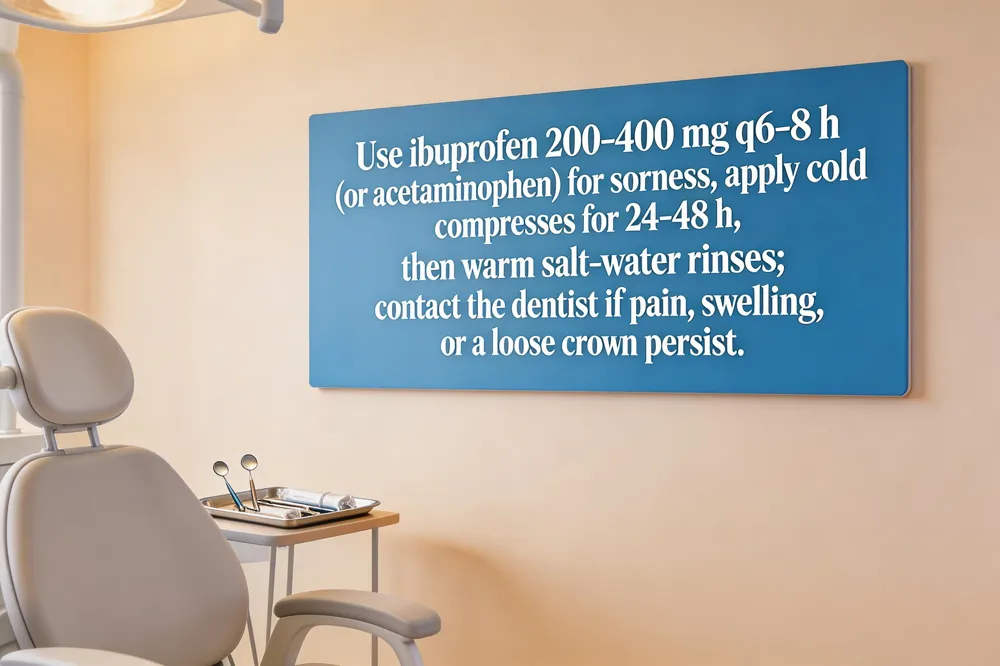 After a crown placement, mild soreness, pressure and temperature sensitivity are normal for the first 24‑48 hours. Use over‑the‑counter ibuprofen 200‑400 mg every 6‑8 hours (or acetaminophen) as needed, but do not exceed the label‑ recommended daily limit. The “3‑3‑3 rule” for infection advises three 200 mg ibuprofen tablets every three hours for up to three days, changing inflammation and pain, provided you have no contraindications. Apply a cold compress to the cheek for 10‑15 minutes on and off during the first 24‑48 hours to control swelling; switch to a warm salt‑water rinse after 24 hours to promote healing. Contact your dentist promptly if pain is sharp, persists beyond a few days, worsens with chewing, or is accompanied by swelling, bruising, a loose crown, foul taste, pus, or fever. Also call if you notice a high bite or uneven occlusion. Early intervention prevents complications such as infection, nerve irritation, or crown adjustment needs.
Long‑Term Success & Return to Daily Life
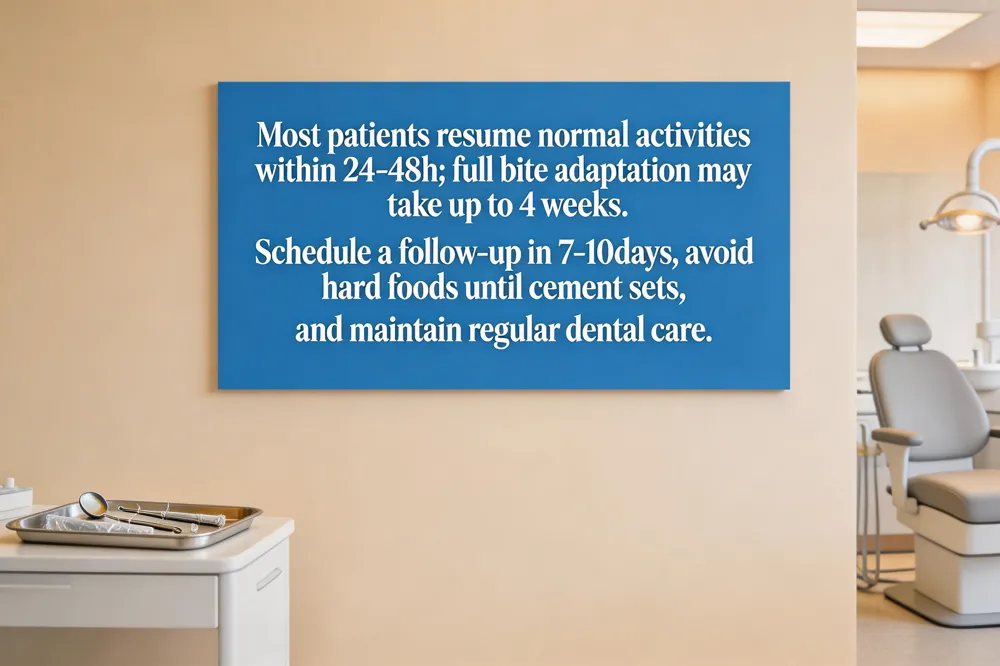 Returning to work after a crown is usually straightforward once the local anesthetic subsides (2‑3 hours). Most patients can resume light duties the same day, but if your job is physically demanding or you notice lingering soreness, taking the remainder of the day off is wise. While at work, avoid hard, sticky or very hot foods until the cement fully sets and any temperature sensitivity eases.
Recovery time after a permanent crown – Most people feel back to normal within 24‑48 hours. Mild swelling, gum tenderness, and cold‑/hot‑sensitivity are common for the first few days and typically resolve by day 5. Over‑the‑counter ibuprofen or acetaminophen, along with soft foods, manage discomfort. Full bite adaptation and gum healing may take up to four weeks, after which the crown behaves like a natural tooth.
Does getting a same‑day crown hurt? – The procedure is pain‑free thanks to local anesthesia. After the numbing wears off, patients may experience brief soreness, pressure, or temperature sensitivity for a few days. This is normal and controlled with soft foods, OTC analgesics, and a bite adjustment if the crown feels high. Persistent sharp pain warrants a prompt dental visit.
Follow‑up and lifestyle habits – Schedule a check‑up within 7‑10 days to verify fit and make bite adjustments. Avoid smoking, alcohol, and use a nightguard if you grind teeth. Maintain regular dental visits every six months, practice gentle brushing with a soft‑bristled brush, and floss carefully to ensure the crown’s long‑term durability.
Putting It All Together
Recovering from a dental crown is quicker when you follow a few key habits. First, keep the local anesthetic’s numbing effect in mind—avoid hot foods and chewing on the treated side until sensation returns. Stick to a soft‑food diet for the first 24‑48 hours, steering clear of sticky, hard or crunchy items. Use a soft‑bristled brush and circular motions, and floss carefully with a threader or slide the floss out from the side. Rinse with warm salt water times daily and apply a cold compress to reduce swelling. Take ibuprofen or acetaminophen as needed, and refrain from smoking, alcohol and strenuous exercise for the first two days. Finally, schedule your follow‑up appointment at our Paterson office within 7‑10 days to confirm fit.