Why Modern Denture Materials Matter
Patients today expect dentures that feel as natural as their own teeth, look lifelike, and last for years without constant repairs. Recent advances in material science—high‑impact PMMA reinforced with nanofillers, flexible nylon thermoplastics, and hybrid titanium‑acrylic frameworks—deliver precisely, reduced fragile, and hypo‑allergenic options. Digital workflows amplify these benefits: intra‑oral scanners capture exact gum contours, CAD/CAM milling or 3‑D printing produces bases that fit on the first try, and computer‑aided shade‑matching creates multi‑layered teeth with natural translucency. In Paterson, NJ, a full‑service practice integrates these technologies by offering on‑site digital impressions, same‑day milled or printed dentures, and personalized material selection based on bone support, lifestyle, and budget. Regular follow‑up appointments ensure relining or adjustments keep the prosthesis comfortable, hygienic, and functional, turning modern materials into lasting confidence for every patient.
Understanding Denture Base Materials
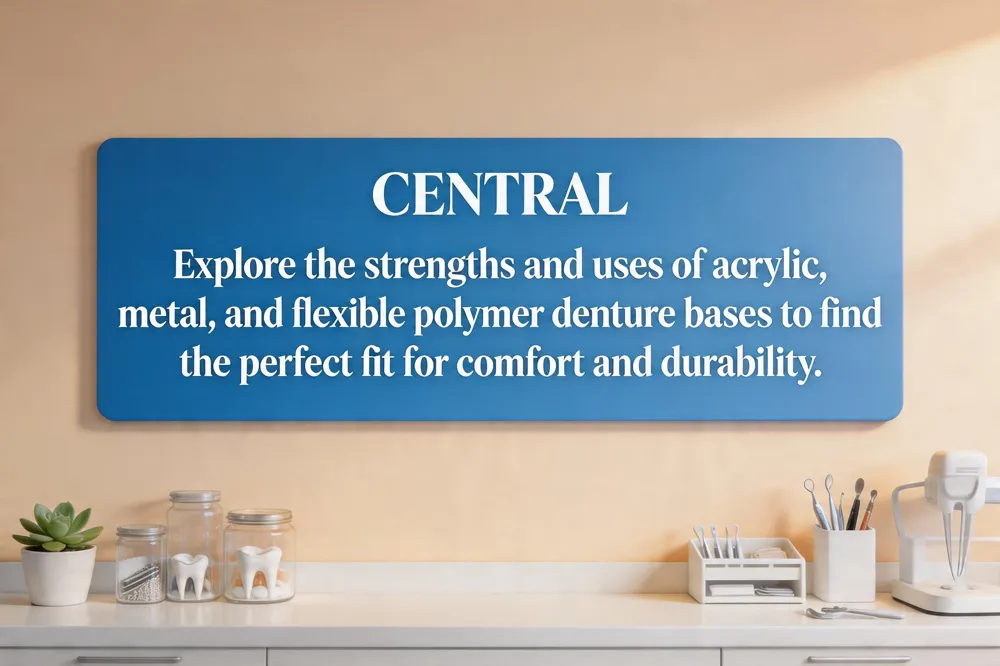 Modern dentures rely on a variety of base materials, each chosen to balance strength, comfort, and aesthetics.
Heat‑cured acrylic resin as the classic base – This polymethyl methacrylate (PMMA) formulation remains the most common denture base. It is lightweight, inexpensive, easy to adjust, and can be tinted pink to mimic natural gum tissue. High‑impact acrylic and injection‑molded acrylics improve fracture resistance and reduce warping while retaining the simplicity of traditional acrylic.
Metal frameworks for strength and thinness – Cobalt‑chromium or chrome‑cobalt alloys provide a thin, durable skeleton that can be combined with an acrylic or porcelain overlay. Metal frameworks are especially useful for partial dentures or cases requiring extensive support, offering superior rigidity and a long service life (10‑20 years).
Flexible thermoplastic polymers (nylon, Valplast, Flexite) – These nylon‑based materials adapt to oral undercuts, eliminate metal clasps, and provide a soft, comfortable fit. They are hypoallergenic and ideal for patients with sensitive gums, though they may wear faster than rigid bases.
What is the pink part of dentures made of? – The pink gum‑shading portion is typically acrylic resin tinted to match the patient’s gums. Some soft‑line or flexible dentures use a silicone‑based material dyed similarly. Both are biocompatible and designed for comfort.
Denture materials list – Heat‑cured acrylic, high‑impact acrylic, injection‑molded acrylic, metal alloys (cobalt‑chromium, titanium), flexible thermoplastics (Valplast, Flexite), hybrid acrylic‑metal designs, and 3‑D‑printed photopolymer resins. The optimal choice depends on functional needs, budget, aesthetic goals, and any material sensitivities.
Pain Management for Full‑Mouth Extractions
 Full‑mouth extractions are typically performed under local anesthesia, and many clinicians supplement this with oral or IV sedation to keep the patient comfortable. While the teeth are being removed, the patient feels little to no pain; the discomfort begins after the anesthetic wears off. Most patients report sore, tender gums and a feeling of pressure from the new dentures during the first 24‑72 hours, with pain peaking around day two. By the end of the first week the intensity usually declines, and after two to four weeks the gums have largely healed and the dentures can be adjusted for a better fit.
To control pain, over‑the‑counter ibuprofen or acetaminophen are effective for mild to moderate discomfort, and dentists may prescribe stronger analgesics if needed. Salt‑water rinses, cold compresses, and a soft‑food diet help reduce swelling and irritation. If sore spots persist after the initial healing period, a quick denture adjustment can relieve pressure and restore comfort. Regular follow‑up appointments ensure the prosthesis adapts properly as the oral tissues remodel, keeping pain to a minimum.
Flexible Denture Options and Their Benefits
 Thermoplastic nylon and other flexible polymers have become popular alternatives to traditional rigid acrylic dentures. Materials such as nylon‑based resins (Valplast, Flexite, Duraflex) and other flexible polymers like ethylene‑propylene (TCS) are lightweight, semi‑translucent, and soft, allowing the denture to gently conform to gum tissue for a comfortable, secure fit. Because they are metal‑free, they eliminate the risk of metal allergies and remove the need for visible clasps, giving a more natural appearance.
Biocompatibility and hypoallergenic properties are key advantages. Flexible polymers are generally well tolerated, and many patients with sensitivities to nickel or acrylic monomers find these materials safe. The elasticity of the polymer reduces pressure points, which can minimize irritation and inflammation of the oral mucosa.
Adjustment, relining, and repair are also easier with flexible dentures. The inherent flexibility makes the base more resistant to fracture, and minor adjustments can often be performed chair‑side without extensive laboratory work. Relining with soft‑liner materials or replacing the base is straightforward, extending the functional lifespan of the prosthesis.
When to choose flexible over rigid acrylic? Patients with delicate ridges, a history of metal allergies, or a desire for a clasp‑free aesthetic are ideal candidates. Flexible dentures are particularly useful for partial dentures where a gentle, adaptive fit is needed, and for patients who have experienced frequent breakage of acrylic bases. In cases where maximum strength, thinness, or extensive bone loss is a concern, a metal‑reinforced acrylic or hybrid design may still be preferred.
Flexible denture material – Flexible dentures are fabricated from thermoplastic polymers—primarily nylon‑based resins such as Valplast, Flexite, and Duraflex—and other flexible materials like ethylene‑propylene (TCS). These polymers are lightweight, semi‑translucent, and soft, allowing the denture to conform gently to the gum tissue for a comfortable, secure fit. Because they are metal‑free, they eliminate the risk of metal allergies and eliminate visible clasps, giving a more natural appearance. The material’s inherent flexibility also makes it more resistant to fracture and easier to adjust during relines or repairs. Overall, flexible denture polymers combine biocompatibility, durability, and aesthetic benefits, making them an attractive option for many adult and family dental patients.
Best material for full dentures – High‑impact, heat‑cured acrylic resin is the most widely recommended material for full dentures because it provides a natural tooth appearance, is lightweight, easy to adjust, and is cost‑effective. For patients who need extra strength, a thinner base, or have significant bone loss, a metal‑reinforced acrylic or an acrylic‑over‑metal (hybrid) design offers added durability while still bonding securely to the denture base. Porcelain teeth give the most lifelike translucency and superior stain resistance, but they are heavier, can transmit more pressure to the gums, and are more prone to chipping if dropped. If a patient has metal sensitivities, a high‑quality acrylic denture remains the safest and most comfortable option. Ultimately, the best material is chosen based on individual oral‑health conditions, aesthetic goals, and budget, with acrylic‑based dentures serving as the reliable default for most full‑denture cases.
Choosing Teeth Materials and Cutting‑Edge Options
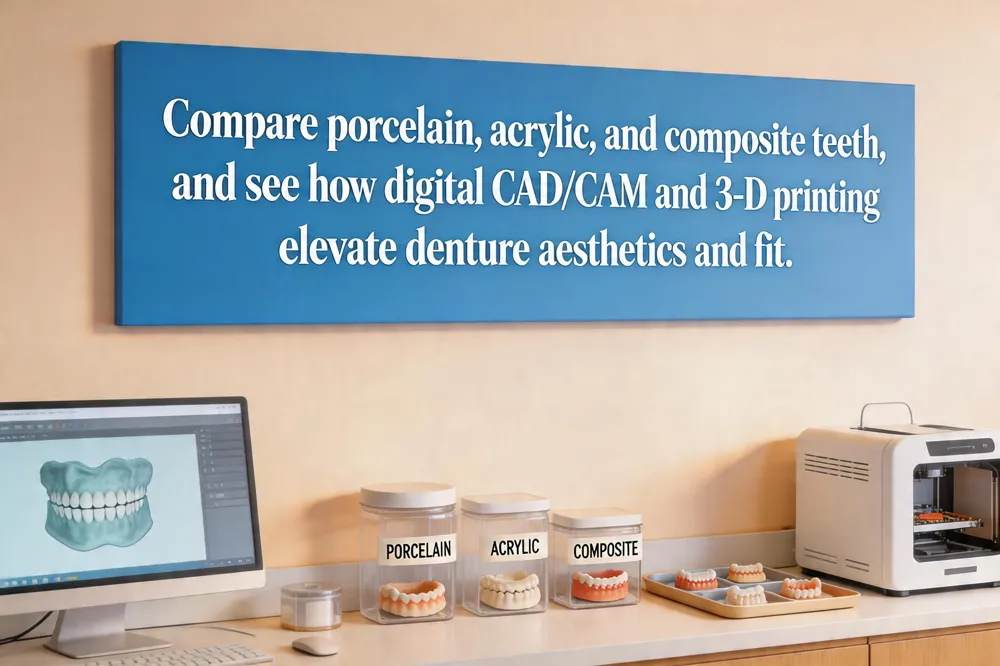 When selecting artificial denture teeth, three material families dominate the market. Porcelain remains the gold standard for aesthetics and longevity; its enamel‑like translucency, high stain resistance, and 10‑15‑year durability make it the best choice for patients who prioritize a natural look, though it is heavier and can chip if dropped. Acrylic resin teeth are the most common, low‑cost option; they bond securely to the denture base, are lightweight, and can be quickly adjusted, but they wear faster and may discolor over time. Composite resin offers a middle ground with improved translucency and moderate strength, yet it is less prevalent in full dentures. Modern dentures often employ hybrid or multilayered acrylic teeth, which combine layers of varying density to mimic the optical properties of natural enamel and dentin, delivering lifelike translucency while retaining the ease of adjustment of acrylic.
Newest digital and 3‑D‑printed denture technologies have transformed fabrication. CAD/CAM‑milled high‑impact acrylic or zirconia bases achieve sub‑0.15 mm fit accuracy, while 3‑D‑printed photopolymer resins enable same‑day delivery and personalized tissue‑contact porosity. These workflows reduce adjustment visits and allow precise shade‑matching of teeth and gums.
Comfort‑focused designs include implant‑supported overdentures anchored to 2‑6 titanium implants, which eliminate movement, preserve alveolar bone, and remove the need for adhesives. Zirconia and PEEK (polyetheretherketone) frameworks provide ultra‑lightweight, metal‑free strength with a natural translucency, offering patients a durable, hypoallergenic alternative to traditional acrylic or metal bases.
Best artificial teeth material: Porcelain for superior aesthetics and durability; acrylic for cost‑effective, easily adjustable solutions; composite for a balanced option.
Newest dentures available: Digitally designed, CAD/CAM‑milled or 3‑D‑printed acrylic/zirconia bases; implant‑supported overdentures; flexible nylon thermoplastics; ultra‑light zirconia prostheses.
Most comfortable full dentures: Those that combine a custom‑fit digital workflow with lightweight, flexible materials—such as implant‑supported overdentures or high‑quality flexible thermoplastic bases—provide the highest comfort and stability.
Practical Considerations: Cost, Emergency Care, and Access in Paterson
Typical price ranges for different denture types
Full removable acrylic dentures run about $1,200‑$2,500 per arch, while flexible (Valplast) full dentures cost $1,500‑$3,000. Metal‑reinforced acrylic options are priced around $2,000‑$3,500, and implant‑supported overdentures (two‑to‑four implants) range from $3,500‑$6,000. Partial dentures are more affordable, with resin‑based partials at $1,300‑$3,300 and metal‑based partials at $1,700‑$4,200. Prices vary with material, lab fees, case complexity, and any preparatory work such as extractions or relining.
Options for patients with limited budgets
If cost is a barrier, explore Medicaid or state dental programs that cover dentures for low‑income adults. Community clinics, dental‑school treatment centers, and nonprofits (e.g., Dental Lifeline Network) often provide reduced‑price or free dentures. Many offices offer flexible financing, third‑party plans, or discount memberships. Request material lower‑cost material quotes and negotiate with the laboratory to keep expenses down.
Emergency denture repair and same‑day service
For urgent denture issues, call Emergency denture repair available same‑day at Dr. David Mayer’s Paterson office. Their 24‑hour answering service and online scheduling secure same‑day appointments for broken dentures, severe pain, or infections. The multilingual staff (English, Spanish, Arabic) guides patients in their preferred language, aiming to control pain, prevent infection, and restore function in a single visit.
Location, parking, and multilingual support at 2 West Broadway
The practice sits at 2 West Broadway, Paterson, NJ 07501, steps from the Paterson NJ Transportation Center with ample on‑site and street parking. Surrounded by local businesses and residential areas, the office offers a welcoming atmosphere. The team’s fluency in English, Spanish, and Arabic ensures clear communication for Pat’s diverse community.
Stay Informed and Choose the Right Material for Your Smile
A wide range of denture materials is available today, each with specific strengths. High‑impact acrylic (PMMA) resin remains the most common base for full dentures because it is lightweight, affordable, and easy to adjust; it works well for patients with moderate bone support and budget considerations. Flexible nylon‑based thermoplastics are ideal for partials or patients with sensitive gums, offering a metal‑free, elastic fit that adapts to tissue changes. Porcelain teeth provide superior translucency and stain resistance for patients seeking a highly aesthetic result, though they are heavier and can be brittle. Metal frameworks of cobalt‑chrome or titanium add strength and thinness to partial dentures and are preferred when long‑term durability is essential. Hybrid designs—such as a thin titanium or cobalt‑chromium framework combined with an acrylic or composite overlay—merge strength with natural aesthetics.
Even the best material will perform poorly without regular professional care. Routine check‑ups every six to twelve months allow the dentist to detect tissue changes, adjust fit, and perform relining or rebasing before discomfort or bacterial buildup occurs. Relining extends the functional life of a denture, especially acrylic acrylic bases that compress as the underlying bone remodels.
Take the next step toward a comfortable, confident smile. Schedule a personalized consultation at 2 West Broadway in Paterson, NJ, where our multilingual team will assess your oral anatomy, discuss material options, and craft a denture solution tailored to your lifestyle, health history, and aesthetic goals.