Understanding Same‑Day Crowns
A CEREC or CAD‑CAM crown is a ceramic restoration that is designed, milled, and placed in the dental chair during one visit. Using a digital intra‑oral scanner, the dentist captures a 3‑D image of the prepared tooth, designs the crown on a computer, and mills it from a solid ceramic block—all while the patient waits. The single‑visit approach eliminates a temporary crown, reduces the number of appointments, and provides immediate function and aesthetics. For cracked teeth, rapid restoration is critical: it seals the fracture, prevents bacterial infiltration, and stops the crack from spreading, preserving the natural tooth and avoiding more invasive procedures.
Speed and Process of Same‑Day Crowns
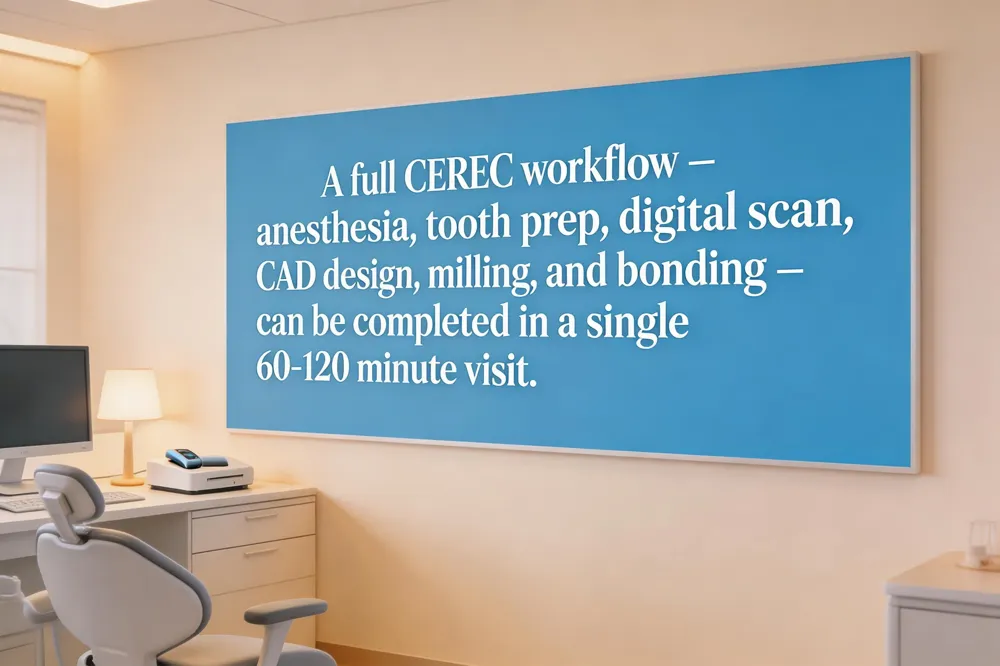 CEREC (Chairside Economical Restoration of Esthetic Ceramics) and a seamless chair‑side workflow that takes a patient from tooth preparation to permanent cementation in a single visit. First, the dentist numbs and shapes the tooth (about 30‑45 minutes). A handheld intra‑oral scanner then captures a 3‑D digital impression in seconds, and the CAD software designs the crown in roughly 15‑30 minutes. The design is sent to an on‑site milling unit, which carves the custom ceramic crown from a solid block in 15‑30 minutes. Finally, the dentist checks the fit, makes any minor adjustments, and bonds the crown permanently (10‑15 minutes).
Typical chair‑time ranges from 90 minutes to 2 hours, with simple cases finishing in under an hour. The milling step alone usually takes 15‑30 minutes, while the entire process—from anesthesia and preparation to final placement—can be completed in about 1–2 hours.
In practice, most patients leave the office with a finished, permanent crown after a 60‑120 minute appointment, enjoying immediate restoration of function and aesthetics without a temporary crown.
When a Cracked Tooth Can Be Treated with a Same‑Day Crown
 Is it possible to get a crown in one day?
Yes. Modern CEREC or E4D systems let the dentist scan, design, mill, and place a permanent ceramic or zirconia crown in a single visit. The patient leaves with a fully functional restoration without a temporary crown.
Can a cracked tooth under a crown be saved?
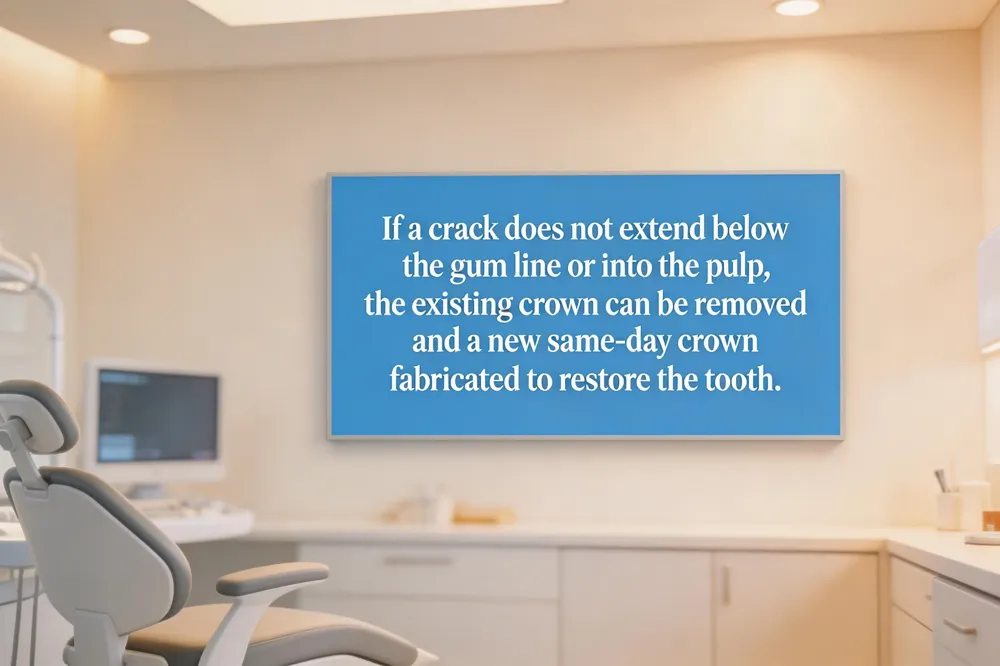
Most cracked tooth beneath a crown can be saved if the fracture does not extend below the gum line or into the pulp. The dentist first removes the existing crown, evaluates the fracture with digital X‑rays or intra‑oral scans, and may perform a root‑canal if the pulp is involved. Once the tooth is stable, a new same‑day crown is fabricated and cemented.
Can a cracked tooth under a crown be repaired?
Repair depends on severity. Minor enamel or dentin cracks can be sealed by preparing the tooth and placing a new same‑day crown after the old one is removed. If the crack reaches the pulp, root‑canal therapy is required before the crown can be placed. Severe or sub‑gingival cracks often necessitate extraction rather than a crown.
Alternative to crown for cracked tooth
When a full‑coverage crown isn’t necessary, onlays or inlays, composite bonding, veneers, or indirect resin crowns can reinforce the tooth while preserving more natural structure. For deeper cracks, root‑canal therapy followed by a conservative restoration (e.g., an onlay) may be the preferred option.
Managing Cracked Teeth Before Professional Care
 A cracked tooth can be painful and worrisome, but a few simple steps can keep the situation from getting worse while you arrange professional treatment.
Immediate home‑care steps
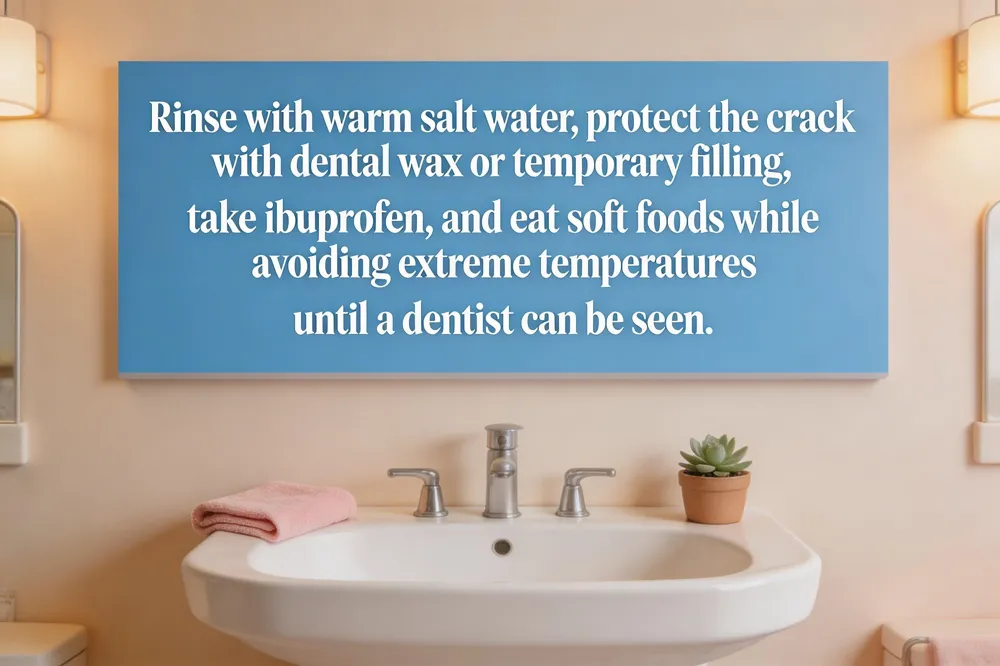
- Rinse the mouth gently with warm salt water (½ tsp salt per 8 oz of water) to cleanse the area and reduce inflammation.
- Apply a small amount of dental wax, over‑the‑counter temporary filling material, or a soft dental cement over the exposed crack to protect the tooth from food particles.
- Take ibuprofen or acetaminophen as directed for pain relief and a a cold compress on the cheek for 10‑minute intervals.
- Eat only soft foods on the opposite side and avoid chewing on the affected tooth.
What not to do
- Do not use super‑glue, household adhesives, or home‑made pastes that can damage the tooth structure.
- Avoid extreme hot or cold foods and beverages, which can trigger sensitivity.
- Do not ignore persistent pain or swelling; these are signs that professional care is needed promptly.
Emergency resources
- UCare members can call the UCare Dental Connection (1‑800‑685‑1548 for Individual/Family, 1‑888‑227‑3310 for Medicaid) for after‑hours assistance, locate a nearby dentist, arrange transportation, and request interpreter support in English, Spanish, or Arabic.
- Same‑day emergency dental near Paterson, NJ – Our office offers immediate appointments for severe pain, cracked teeth, or lost crowns. Call (973) 555‑1234; walk‑ins are welcome, but calling ahead speeds service.
These steps help control discomfort and protect the tooth until a same‑day crown or other definitive treatment can be placed by a qualified dentist.
Post‑Crown Healing and Longevity
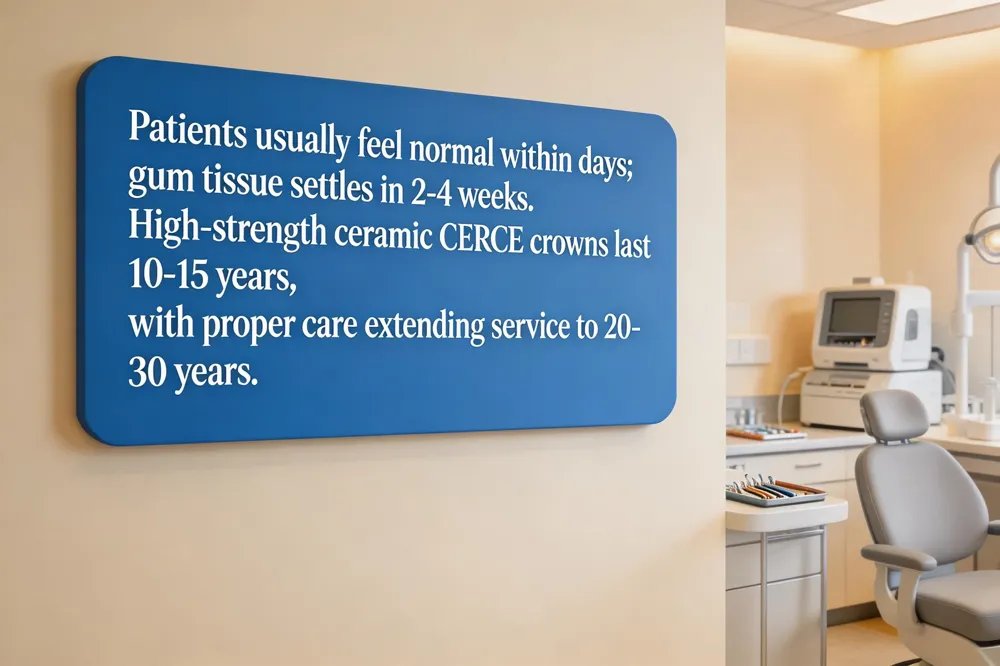 After a same‑day CEREC crown is placed, most patients feel normal within a few days, but the gum tissue usually needs 2‑4 weeks to settle completely.
Sensitivity to hot, cold, or pressure often fades by the end of the first week; full adaptation may take up to a month, especially after extensive preparation.
CEREC crowns are fabricated from high‑strength ceramic and have a documented lifespan of 10‑15 years, comparable to laboratory‑made crowns.
With diligent oral hygiene, regular check‑ups, and a nightguard for bruxismo, many patients enjoy 20‑30 years of service.
Improper crown height, uneven occlusion, or mis‑alignment can provoke TMJ symptoms such as jaw pain, headaches, or clicking.
If discomfort arises after placement, the dentist can quickly adjust the crown’s contact points or bite to relieve pressure.
A cracked tooth beneath a crown typically presents as a sharp, sudden pain when biting, lingering temperature sensitivity, a catching sensation, or a loose feeling of the crown.
Swelling may accompany the pain.
Prompt evaluation and, when appropriate, a same‑day crown can seal the crack and restore function.
Practical Considerations: Cost, Insurance, and Scheduling
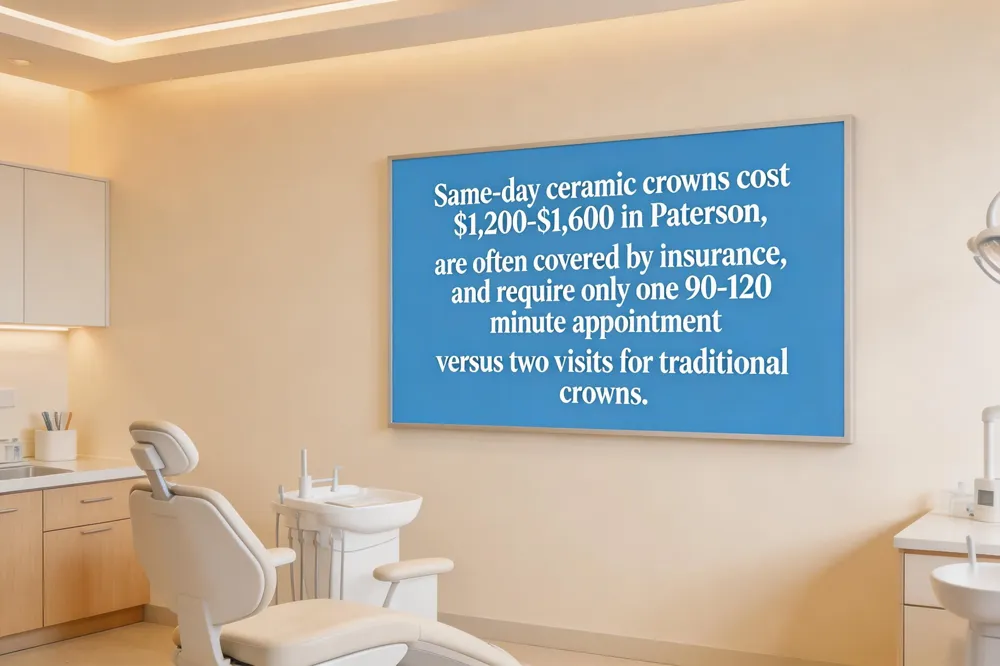 Crown costs depend on material and technology. In Paterson, a basic resin crown starts around $700, ceramic (porcelain) crowns range $1,200‑$1,600, and metal‑ceramic crowns fall between $770‑$2,450. Same‑day CEREC® crowns , which are all‑ceramic, typically sit at the higher end of the porcelain range because they include digital scanning, CAD design, and in‑office milling. Most dental insurance plans cover crowns under the same benefit codes as traditional restorations; however, some insurers may label same‑day crowns as cosmetic, so verification before treatment is essential. Financing options such as CareCredit are often available.
A traditional crown requires two visits: the first (60‑90 minutes) for examination, X‑rays, tooth preparation, and placement of a temporary crown; the second (30‑45 minutes) for removal of the temporary, fit checks, adjustments, and permanent cementation. In contrast, a same‑day crown consolidates all steps into a single appointment lasting 90‑120 minutes. The workflow includes anesthesia, tooth reshaping, a 10‑15‑minute digital scan, 15‑30 minutes of CAD design, 15‑30 minutes of milling, and final bonding.
If a tooth cracks beneath an existing crown, the dentist removes the crown, evaluates the fracture with radiographs or scans, and decides whether a root‑canal, a new crown, or extraction is needed. Prompt professional assessment prevents infection and preserves the tooth whenever possible.
Your Path to a Quick, Durable Fix
If you suspect a cracked or weakened tooth, call our office today to schedule a same‑day crown evaluation. Our experienced clinicians, with over 40 years of service, use state‑of‑the‑art CEREC CAD/CAM technology to design, mill, and place a permanent ceramic crown in one visit—often within an hour. Our multilingual team (English, Spanish, Arabic) ensures clear communication and culturally‑sensitive care for every patient. After placement, maintain your crown’s longevity by brushing twice daily, flossing, avoiding hard foods for 24‑48 hours, and visiting us for regular cleanings and check‑ups. Proper oral hygiene can help your crown last 10‑15 years or more.