Introduction to Same-Day Dental Crowns and Technological Advances
Overview of Same-Day Crowns
Same-day dental crowns represent a significant advancement in restorative dentistry, allowing patients to receive durable, custom-made crowns during a single visit. Unlike traditional crowns that require multiple appointments and temporary crowns, same-day crowns utilize digital imaging and in-office milling technology to streamline the entire process.
Role of Technology in Modern Dental Care
Modern dental practices employ advanced Computer-Aided Design and Computer-Aided Manufacturing (CAD/CAM) systems, notably the widely used CEREC technology. These systems create highly accurate 3D digital impressions through handheld scanners, replacing the discomfort associated with traditional molds. Crowns are then precisely milled onsite from high-quality ceramic or zirconia within 15 to 30 minutes, ensuring an excellent fit and natural appearance.
Benefits to Patients Including Comfort and Time Savings
Patients benefit from enhanced comfort due to non-invasive digital scanning and the elimination of temporary crowns. The entire procedure can be completed within a couple of hours, significantly reducing the number of dental visits. This efficiency minimizes disruptions for busy individuals while providing durable, stain-resistant crowns that blend seamlessly with natural teeth, supporting better long-term oral health and aesthetics.
How Same-Day Crowns are Created: Embracing Digital Dentistry
Can a dental crown be completed on the same day?
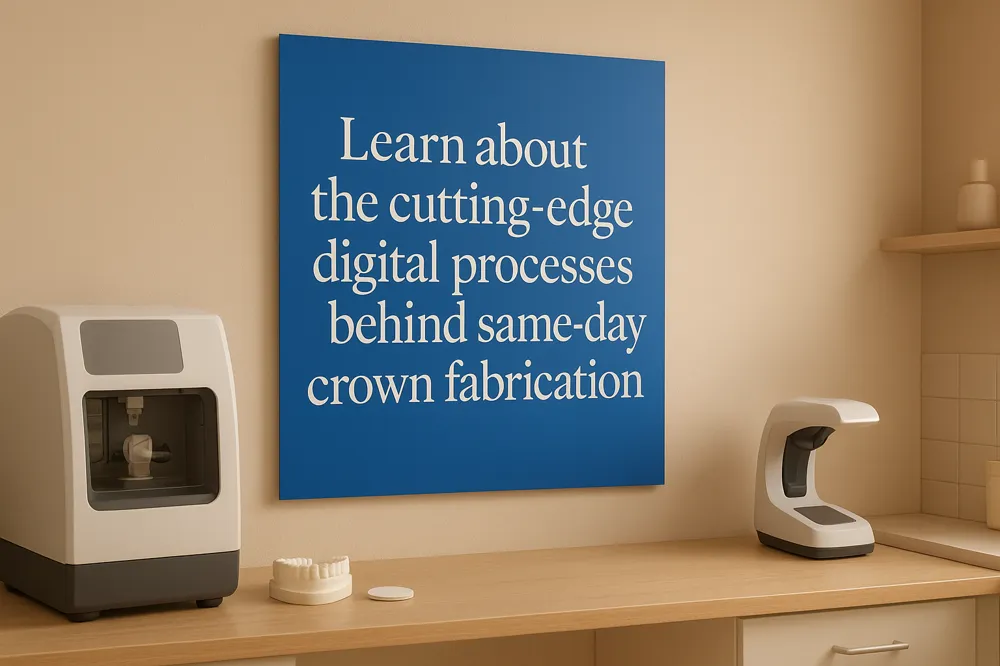
Yes, dental crowns can often be completed in a single appointment thanks to Digital dental technology. Using CEREC CAD/CAM technology, dentists employ Digital impressions for crowns of the affected tooth. This process replaces Traditional impression trays, enhancing patient comfort and accuracy.
Once the digital scan is complete, specialized software designs the crown precisely to fit the patient's tooth structure, color, and bite. The design is then sent directly to an In-office crown milling machine that carves the crown from a solid block of Porcelain dental crowns in approximately 15 to 30 minutes.
This streamlined workflow allows the dentist to place and cement the crown on the same day, avoiding the need for temporary crowns and multiple visits. Patients benefit from immediate restoration, improved aesthetics, enhanced durability, and overall time and cost savings. See more about the Benefits of same-day crowns.
How are dental crowns made, and what is the latest technology involved?
Modern dental crowns are created using CAD/CAM technology for crowns which combines Digital intraoral impressions, 3D imaging, and Chairside milling technology.
-
Digital Intraoral Scanning and 3D Imaging: A handheld scanner captures an accurate 3D model of the prepared tooth and surrounding areas. This removes the discomfort and errors associated with Traditional impression trays.
-
Digital Crown Design: Using advanced software, dentists design a custom crown that matches the natural shape and shade of the patient’s teeth. Learn about Digital crown fabrication.
-
In-Office Milling: The crown is milled onsite from durable, aesthetic ceramic materials such as lithium disilicate, zirconia, or feldspathic porcelain. In-office crown milling machines can produce the crown in as little as 15–30 minutes.
Compared to Conventional dental crowns, which require multiple appointments, temporary restorations, and off-site laboratory fabrication over several weeks, Same-day dental crowns provide efficiency without compromising quality. They offer a precise fit, superb aesthetics, and durability expected from crowns fabricated with craftsman-level attention.
These advances in Same-day crowns have transformed dental care by providing patients with faster, more comfortable treatment and long-lasting results, all within a single dental visit.
Advantages and Limitations of Same-Day Crowns
What are the pros and cons of same-day crowns?
Same-day crowns offer the convenience of restoring damaged or decayed teeth in a single visit thanks to CAD/CAM technology. These crowns are made from durable, high-quality ceramic materials that provide a natural appearance and can last over a decade with proper oral care. Patients benefit from fewer appointments, no need for temporary crowns, and improved comfort compared to traditional impression methods.
However, same-day crowns may have limitations in strength, especially for back teeth that endure heavy chewing forces. They might also have less precise color matching and customization than traditional lab crowns. The cost typically ranges between $800 and $2,500 depending on the materials and case complexity. Therefore, patients should consult their dentist to assess if same-day crowns fit their specific dental needs and lifestyle.
Are same-day crowns as durable and effective as traditional crowns?
Ceramic same-day crowns are durable and can last up to 15 years when properly maintained. Yet, traditional crowns—often made from metal or porcelain-fused-to-metal crowns and fabricated in specialized labs—tend to be stronger and better suited for teeth with high biting pressure. Traditional crowns also provide greater options for color and fit customization, which can lead to enhanced longevity and aesthetics in certain situations.
What are the disadvantages of CEREC crowns?
CEREC crowns, while offering immediate restoration and a tooth-colored appearance, are often less durable than metal or porcelain-fused-to-metal crowns. They may be less ideal for complex bite issues or large restorations, where lab-made crowns offer superior strength and fit. The advanced technology involved also means CEREC crowns can be more costly. Additionally, the technology is limited to ceramic-based materials and requires dentists trained specifically in its use, which may not accommodate all cases or patient needs.
| Aspect | Same-Day Crowns (CEREC) | Traditional Lab Crowns | Notes |
|---|---|---|---|
| Number of Visits | Single appointment | Multiple appointments | Saves time and reduces inconvenience |
| Material Options | Mainly ceramics (porcelain, zirconia) | Variety (metal, porcelain-fused-to-metal, ceramic) | Traditional crowns offer more material choice |
| Durability | Up to 15 years | Typically longer-lasting for heavy loads | Depends on material and tooth location |
| Fit and Customization | Good digital fit but less customizable | Highly precise with greater customization | Lab work may provide better aesthetic results |
| Cost | $800-$2,500 | Similar range but varies by material | Insurance coverage may be similar |
| Aesthetic Outcome | Natural-looking, matches nearby teeth | Often more precisely matched and crafted | Varies by dentist skill and lab capabilities |
Ultimately, same-day crowns provide an efficient, comfortable, and aesthetically pleasing dental restoration option suitable for many patients but should be chosen after professional evaluation of individual dental conditions and preferences.
Clinical Applications and Patient Benefits of Same-Day Crowns
Why do dentists often recommend crowns for certain dental problems?
Dentists recommend crowns to provide a durable, protective covering that restores both function and appearance of weakened or damaged teeth. Crowns are essential when fillings are insufficient, such as for large cavities, cracked, or fractured teeth. They also reinforce teeth following root canal therapy, preventing future fractures and decay. Crowns help improve chewing ability and enhance the natural smile, with materials like porcelain, ceramic, and metal offering customized durability and aesthetics. Properly cared for, crowns can last 15 years or more (Conventional dental crowns, Dental crown longevity).
Why is there usually a waiting period before placing crowns after procedures like root canals?
Typically, a 1-2 week waiting period allows the tooth to heal and stabilize after root canal treatment before placing a permanent crown. This helps avoid complications such as reinfection or fractures. During this time, temporary crowns protect the tooth, maintaining function and appearance. However, with modern Same-day dental crowns, permanent crowns can sometimes be placed immediately after root canal therapy if the tooth is stable and infection-free, reducing treatment time and visits (Same-day crowns turnaround time, Combining root canal and crown in one visit).
How do same-day crowns improve patient experience and comfort?
Same-day crowns use advanced digital scanning and CAD/CAM milling technology, allowing the entire restoration in one visit. Digital impressions replace traditional messy molds, increasing patient comfort and accuracy. The speedy process reduces anxiety, appointments, and overall treatment time, which benefits busy patients (Benefits for Busy Patients). The crowns are designed to precisely match the patient's natural teeth, improving the aesthetic outcome (Better aesthetic outcomes).
How does same-day crown technology reduce temporary crown usage and related issues?
Same-day crowns eliminate the need for temporary crowns, which can be uncomfortable, fragile, and prone to falling off. Because crowns are milled and placed during a single appointment, patients avoid the inconvenience and risks associated with temporary restorations. This leads to better protection for the tooth, less sensitivity, and fewer follow-up visits for adjustments or replacements (No temporary crowns needed, avoiding temporary crown discomfort).
Understanding Dental Crowns Terminology and Care for Temporaries
What is the difference between a dental cap and a dental crown?
The terms "dental cap" and "dental crown" are often used interchangeably, but there are important distinctions. A dental crown is a full-coverage restoration that encases the entire visible part of a tooth, offering strength, protection, and enhanced appearance. Crowns are typically made from porcelain, ceramic, metal, or a combination of materials. They restore heavily damaged or decayed teeth, support dental implants, and improve aesthetics.
In contrast, the term "cap" is an older, more colloquial term and can sometimes refer to smaller restorations like inlays or onlays that cover only part of a tooth. Caps usually imply less extensive coverage and preparation than crowns. In modern dentistry, "crown" is the preferred and more accurate term, while "cap" may be used informally or for partial restorations.
What care is needed for temporary crowns while waiting for a permanent crown?
Temporary crowns serve as a short-term protection for your tooth while the permanent crown is being made. To keep your temporary crown secure and avoid discomfort, follow these care tips:
- Avoid sticky, hard, or chewy foods such as caramel, nuts, or gum that can loosen or damage the temporary crown.
- Brush gently with a soft-bristle toothbrush, focusing carefully around the crown area.
- Floss by sliding the floss out sideways rather than pulling up, to prevent dislodging the crown.
- Eat soft foods like yogurt, mashed potatoes, and scrambled eggs to reduce pressure on the temporary crown.
- Apply cold compresses if you experience sensitivity or swelling.
If your temporary crown feels loose, damaged, or causes discomfort, contact your dentist promptly to prevent complications. Proper care helps ensure a smooth transition to your permanent crown and maintains oral health.
The Impact of Digital Technology on Dental Crown Care and Patient Experience
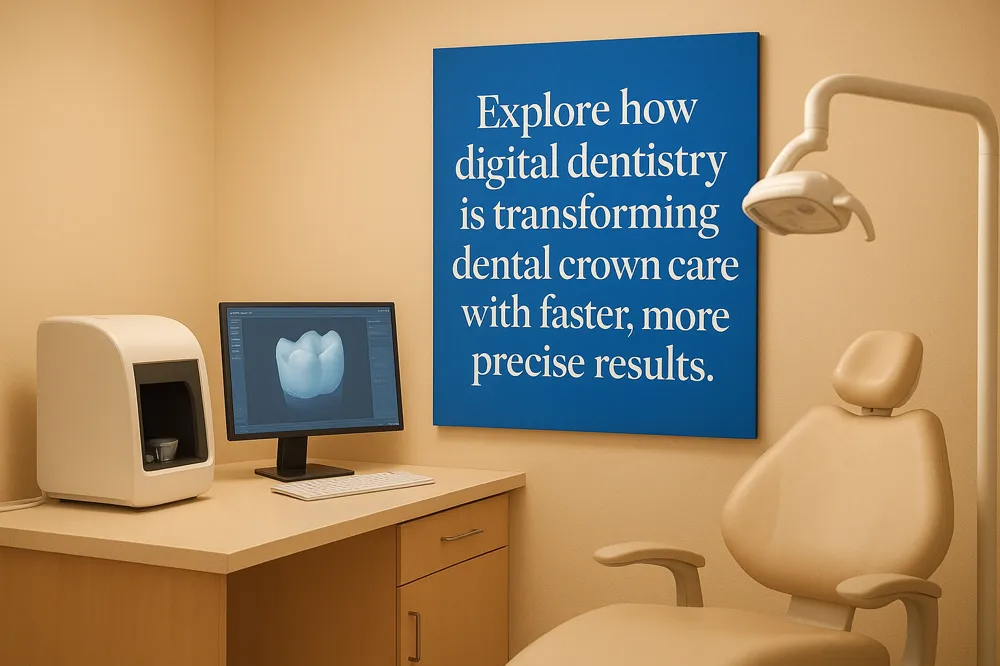
How digital impressions enhance precision and comfort
Digital impressions use advanced intraoral scanners to create precise 3D models of patients' teeth. This technology replaces traditional impression trays, which often cause discomfort and gag reflex issues. The accurate crown fit with digital scans ensures a highly detailed and better aesthetic outcomes, minimizing bite misalignments and supporting long-term oral health.
Reduced human error compared to traditional methods
The digital process reduces human error inherent in conventional dental crowns. By eliminating physical mold-making, digital dental technology limits misfits and inaccuracies. This leads to fewer adjustments and remakes, enhancing the reliability of the dental crown fitting.
Efficiency gains with in-office milling
CAD/CAM systems enable in-office milling, fabricating crowns from ceramic dental crowns within 15 to 30 minutes. This efficiency allows dentists to complete the entire single-visit dental crown procedure, avoiding temporary crown alternatives and multiple appointments.
Patient satisfaction and insurance implications
Patients appreciate the convenience of same-day dental crowns due to reduced treatment time and fewer dental visits. Immediate crown placement improves comfort and cosmetic outcomes. Most dental insurance plans cover same-day crowns similarly to traditional crowns, making advanced digital care accessible without additional financial burden.
This combination of precision, speed, and comfort has revolutionized modern dental crowns, improving patient trust and treatment success.
The Future of Convenient and High-Quality Smile Restoration
Embracing Same-Day Crowns: The Benefits
Same-day dental crowns are revolutionizing dental care by allowing patients to receive durable, natural-looking restorations in just one visit. Using advanced digital scanning and in-office milling technologies like CEREC, crowns are custom-designed to perfectly fit and match the patient’s smile. This eliminates the need for multiple appointments, temporary crowns, and uncomfortable traditional impressions. High-quality ceramic materials ensure long-lasting strength and aesthetic appeal.
Ongoing Technology Advancements
Continued improvements in CAD/CAM systems and materials such as zirconia and lithium disilicate enhance crown precision, durability, and appearance. Faster milling times and more accurate digital impressions reduce human error, discomfort, and treatment duration, benefiting both patients and dentists alike.
Patient Guidance
It is important for patients to consult with their dental professionals to understand the latest crown technologies and determine the best option tailored to their oral health needs. Staying informed equips patients to enjoy the convenience and quality of modern restorative dentistry.