Understanding After‑Hours Dental Emergencies
Dental problems often flare up at night because lying down increases blood flow to the head, amplifying inflammation and pain, and because daily oral‑care habits may have been missed. Delaying treatment can allow an infection to spread, lead to swelling, fever, or even loss of the tooth, and may require more invasive procedures later. After regular office hours, patients can call their dentist’s emergency line, visit a 24‑hour urgent‑care clinic, or go to an emergency department for severe bleeding or facial swelling. Many practices—such as Arch Dental Care in Northampton, MA, and Birmingham Emergency Dental—offer same‑day appointments, walk‑ins, and after‑hours hotlines, providing pain relief, temporary restorations, root‑canal therapy, extractions and and trauma care to stabilize the condition until definitive treatment can be completed.
Immediate Steps for Nighttime Tooth Pain
 First‑aid rinse and cold compress
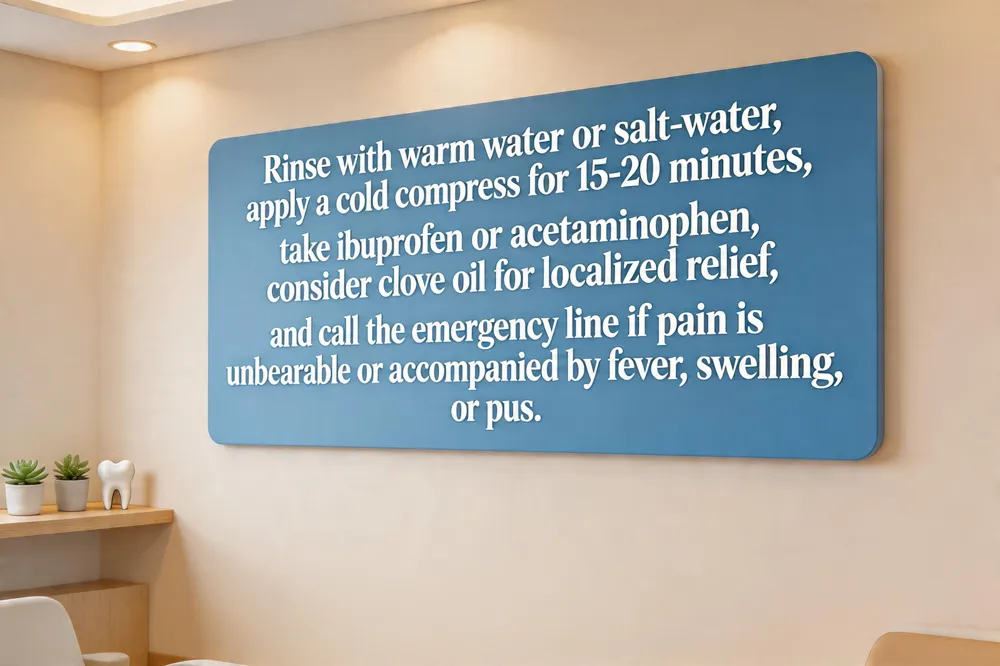
a the pain hits, rinse your mouth with warm water (or a warm salt‑water solution ½ tsp salt per 8 oz) to clear debris and reduce inflammation. Apply a cold compress—ice wrapped in a towel or frozen peas—to the cheek over the painful tooth for 15‑20 minutes, then pause for a few minutes before repeating. This helps numb the area and limit swelling.
Over‑the‑counter pain relief
Take an OTC analgesic such as ibuprofen (200‑400 mg every 6‑8 hours) or acetaminophen according to the label directions. Ibuprofen also reduces inflammation, while acetaminophen eases pain. For short‑term numbness, a few drops of clove oil on a cotton swab can be dabbed onto the sore tooth, but avoid swallowing. Do not place aspirin or benzocaine directly on the gums unless a dentist advises it.
When to seek professional help
If the pain is unbearable, persists despite the measures above, or is accompanied by fever, facial swelling, pus, difficulty swallowing, or breathing problems, call our emergency line immediately for a same‑day appointment. Severe pain after hours warrants a prompt visit; early treatment can prevent infection spread, preserve the tooth, and avoid more extensive procedures later.
What can I do if tooth pain is unbearable?
Rinse with warm water, gently floss, take ibuprofen or acetaminophen, and apply a cold compress for 15‑20 minutes. Avoid placing benzocaine products on gums without guidance. Call our emergency line right away; if you develop fever, swelling, pus, or breathing difficulty, seek emergency medical care immediately.
What to do for severe tooth pain after hours?
Rinse with warm salt‑water, use a cold compress, take an OTC pain reliever (ibuprofen, acetaminophen, or naproxen), keep your head elevated with an extra pillow, and consider a dab of clove oil on a cotton swab for targeted relief. Then contact our emergency line to arrange same‑day or next‑morning treatment.
Nighttime Trauma: Knocked‑Out or Cracked Teeth
 Dental emergencies can happen after the lights go out, and quick action saves teeth and eases pain.
Handling avulsed (knocked‑out) teeth – If the tooth is completely out, pick it up by the crown only, rinse gently with water, and try to place it back into its socket. If reinsertion isn’t possible, store the tooth in milk, saliva, or a commercial preservation solution and keep it moist.
Storing tooth fragments safely – Any broken piece should be saved in milk or a sealed container with saline solution. Bring the fragment to the dentist for accurate reconstruction.
Temporary protection for cracked or broken teeth – Rinse with warm salt water, apply a cold compress to the cheek for 15‑minute intervals, and avoid chewing on the affected side. Over‑the‑counter ibuprofen or acetaminophen can control pain. Use sugar‑less gum, dental wax, or OTC dental cement to cover a lost filling or crown until you are seen.
What to do if you have a dental emergency at night? Call our 24‑hour emergency line; if unanswered, go to the nearest emergency department for pain control and antibiotics. Rinse with warm water or a salt‑water solution, apply a cold compress to the cheek and keep a knocked‑out tooth moist in milk or saliva. Take ibuprofen or acetaminophen and contact our Paterson office for a same‑day appointment.
What to do if you have a dental emergency on the weekend? Call our after‑hours line for on‑call assessment. While waiting, rinse, apply a cold compress to the cheek, and take OTC pain relievers. Preserve a knocked‑out tooth in milk or a preservation kit and avoid touching the root. We will arrange a same‑day emergency visit within a few hours. If you experience uncontrolled bleeding, severe facial trauma, or fever, seek immediate care at the nearest hospital or urgent‑care center.
Choosing Between ER, Urgent Care, and the Dentist
 When a dental crisis strikes after office hours, many wonder where to turn.
What the emergency department can realistically provide Hospital ERs are equipped to manage life‑threatening conditions but lack dental specialists. They can control severe pain with stronger analgesics, start antibiotics for infection, and address airway‑compromising swelling. However, they cannot perform extractions, root canals, crown repairs, or tooth re‑implantation. After initial stabilization, a follow‑up dental appointment is essential to resolve the underlying problem.
Limitations of urgent‑care clinics for dental work Urgent‑care centers can prescribe medication and manage minor swelling, yet they do not have the dental tools or expertise for definitive procedures such as fillings, crowns, or extractions. For a knocked‑out tooth, a cracked tooth, or a deep abscess, an emergency dentist is needed to take diagnostic X‑rays and provide proper treatment.
Why a dental professional remains the definitive solution A dentist can diagnose the issue with dental imaging, apply temporary restorations, perform root canal therapy, extract or re‑implant teeth, and prevent infection spread. Our Paterson office offers same‑day emergency appointments, on‑call numbers, and flexible payment options, ensuring you receive the right care promptly.
FAQs
- Does the ER do emergency dental work? No. ERs provide symptom relief and medical stabilization but cannot perform dental procedures.
- Can I go to urgent care for a dental issue? Only for pain control and antibiotics; definitive dental work requires a dentist.
- What can the ER do for a tooth? It can give pain meds, start antibiotics, and assess serious swelling, but definitive treatment must come from a dentist.
Accessing Same‑Day Emergency Dental Care in Paterson, NJ
 Paterson’s dental offices understand that a severe toothache a knocked‑out tooth or an abscess can strike at any hour. To meet this need, most practices operate a dedicated after‑hours emergency line that is staffed 24 hours a day. When you call, a triage nurse assesses the urgency and, for true emergencies, schedules a same‑day appointment—often within a few hours—so you won’t have to endure pain until morning.
Can I see a dentist in the middle of the night? Yes. By dialing the emergency number you can be placed on the on‑call roster and, if the situation warrants, seen that same day or even that night, depending on clinic availability. Routine cleanings still require a scheduled visit, but urgent care is available around the clock.
What to do if you have a dental emergency and no insurance? Call the office right away and disclose your uninsured status. The team will arrange an urgent slot and discuss flexible payment options such as CareCredit, sliding‑scale fees, or short‑term financing. Many Paterson practices also accept most major PPO plans and offer in‑house membership plans for self‑pay patients, ensuring that cost does not delay essential treatment. While waiting for your appointment, rinse with warm salt water, apply a cold compress, and take an over‑the‑counter NSAID for temporary relief.
The combination of a 24‑hour emergency line , same‑day scheduling, and affordable payment pathways makes emergency dental care in Paterson both accessible and patient‑focused.
Preventive Tips to Reduce Nighttime Dental Crises
 Consistent daily oral‑hygiene habits form the foundation of nighttime dental health. Brush twice a day with fluoride toothpaste, floss daily, and finish with an antimicrobial mouthwash to remove plaque and reduce bacterial load that can lead to cavities and gum disease. For patients who grind or clench their teeth, a custom‑fitted night guard protects the enamel and prevents micro‑fractures that often trigger painful throbbing after dark. Scheduling regular dental check‑ups—typically every six months—allows the dentist to detect early decay, incipient cracks, or emerging infections before they become emergencies. During these visits, X‑ray imaging and visual examinations identify problems that may not yet cause symptoms, enabling timely restorative treatment. Finally, know when to call an emergency line: severe tooth pain, swelling, fever, a knocked‑out tooth, or a lost crown that cannot be temporarily secured all merit immediate professional attention. Prompt communication with your dentist after hours can secure same‑day or next‑day care, preventing a minor issue from escalating into a night‑time crisis.
Your Night‑Time Dental Safety Net
When a dental emergency strikes after dark, act fast: rinse the area with warm salt water, apply a cold compress to the cheek for 10‑20 minutes, and take an over‑the‑counter NSAID like ibuprofen for pain and inflammation. If a tooth is knocked out, handle it by the crown, rinse gently, and store it in milk or saliva until you can be seen. Call our 24‑hour emergency line at (555) 123‑4567 anyone any of these symptoms occur. Keep a small emergency kit at home – a container of milk, a small tube of clove oil, a reusable cold pack, a bottle of saline or salt, and a pack of ibuprofen. Being prepared helps control pain, limits damage, and speeds the path to definitive care.