Understanding the Night‑Shift Dental Challenge
Night‑shift workers experience dental emergencies far more often than daytime employees. CDC data show that emergency‑room visits for dental problems can surge to 245 per hour at night and 202 per hour on weekends, dwarfing the usual daily average. Irregular work hours disrupt brushing and flossing routines, while late‑night cravings for sugary or acidic foods increase plaque and erosion. Fatigue also promotes bruxism, further stressing teeth and gums. Because many offices close after the night shift, patients often lack immediate professional help, making a pre‑planned emergency kit and a list of after‑hours dental contacts essential. Proactive planning—keeping a small milk container for a knocked‑out tooth, over‑the‑counter pain relievers, and a cold pack—can reduce pain, preserve the tooth, and prevent costly ER visits and support overall health for night‑shift employees.
Why Night‑Shift Workers Face More Dental Emergencies
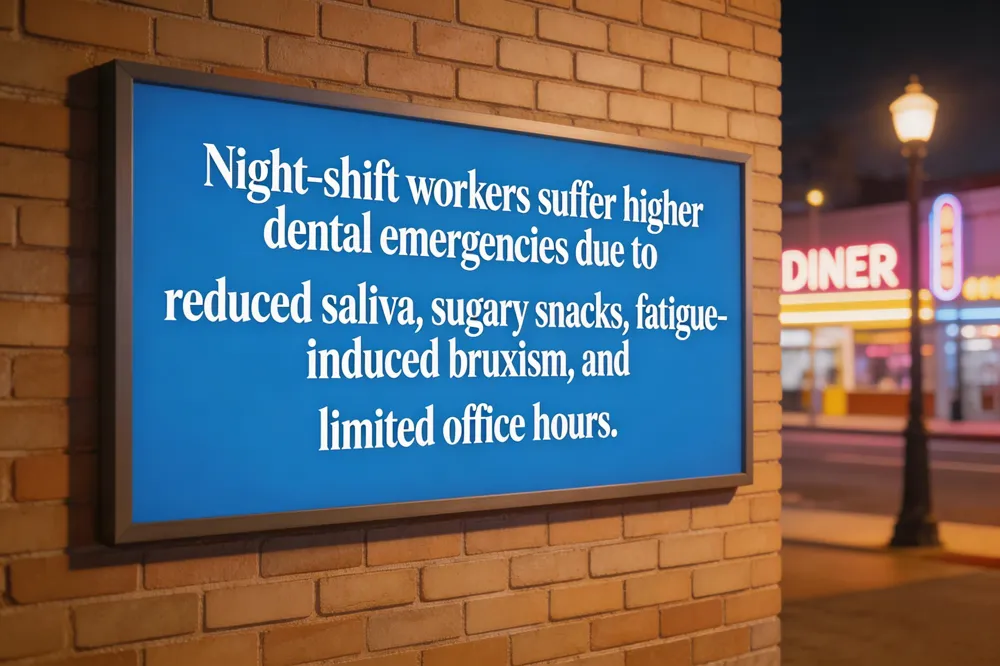 Night‑shift workers are prone to dental emergencies for several reasons. First, saliva production drops by about 50 % overnight, reducing the mouth’s natural cleaning and buffering capacity. Second, irregular schedules lead to increased consumption of sugary or acidic snacks and drinks, which accelerate enamel erosion and cavity formation. Third, fatigue often triggers bruxism and causes missed brushing or flossing, allowing plaque to build up. Fourth, most dental offices close during night hours, limiting access to routine preventive care and making it harder to address problems early. Finally, CDC data show that emergency room visits for dental issues can surge to up to 245 per hour at night and 202 per hour on weekends, underscoring the heightened risk for off‑hour workers.
What to do if you have a dental emergency on the weekend?
Call our office at (973) 555‑1234 and leave a detailed voicemail; an on‑call dentist will return your call promptly and arrange a same‑day or next‑day appointment. If you experience severe pain, swelling, uncontrolled bleeding, or facial trauma and cannot wait for a callback, go to the nearest urgent‑care center or emergency department for immediate stabilization. While waiting for professional care, rinse gently with warm water, apply a cold compress to reduce swelling, and take an over‑the‑counter pain reliever such as ibuprofen. If a tooth is knocked out, keep it moist in milk, saline, or your cheek—avoid touching the root—until you can see the dentist. Remain calm and follow these steps to protect your oral health until we can provide definitive treatment.
First‑Aid Care When You Have No Dentist Available
 When a dental emergency strikes after hours, act quickly to control pain and prevent worsening damage.
-
Warm salt‑water rinse – Mix ½ tsp salt in 8 oz of warm water and swish gently for 30 seconds. This reduces inflammation, cleans the area, and helps soothe irritated gums.
-
Cold compress – Apply an ice pack wrapped in a thin cloth to the cheek for 15‑minute intervals, with 15‑minute breaks. The cold numbs pain, limits swelling, and protects the skin.
-
OTC NSAIDs – Take ibuprofen (200‑400 mg) or acetaminophen as directed for temporary pain relief. Avoid placing aspirin directly on the gums, as it can cause a chemical burn.
-
Knocked‑out tooth – Handle the tooth by the crown only, rinse it briefly with water (do not scrub), and keep it moist in milk or your own saliva. Seek professional care within 30‑60 minutes for the best chance of re‑implantation.
-
Temporary fixes – For a broken crown or lost filling, clean the area, use over‑the‑counter dental cement or denture adhesive to seal the tooth, and avoid chewing on that side until a dentist can provide a definitive repair.
What do I do if I have a dental emergency and no dentist? If you cannot reach your dentist and the pain is severe, swelling is increasing, or you suspect an infection, go promptly to the nearest urgent‑care center or emergency department. Meanwhile, follow the steps above to stabilize the situation until professional care is available.
Night‑Time Emergency Protocol: Call Our After‑Hours Line
 If a dental emergency strikes after hours, dial our after‑hours line at (973) 555‑1234 immediately. Our on‑call dentist will triage you by phone, giving specific first‑aid instructions and, when needed, arranging a same‑day appointment at our Paterson office.
Immediate phone triage – Describe the symptom (toothache, knocked‑out tooth, swelling, bleeding). The dentist will advise whether a cold compress, warm salt‑water rinse or OTC ibuprofen is appropriate while you wait.
Same‑day appointment logistics – If the dentist deems it urgent, a slot will be secured for you within a few hours; you’ll receive directions and a brief pre‑visit checklist (avoid chewing on the affected side, bring any tooth fragments).
Specific instructions – • Toothache: warm salt‑water rinse, cold pack, ibuprofen. • Knocked‑out tooth: handle by crown only, rinse gently, store in milk or saliva, keep moist. • Swelling: cold compress 15‑minute intervals, elevation, ibuprofen.
When to go to urgent‑care or ER – Uncontrolled bleeding after 15‑20 minutes, severe facial swelling that impairs breathing or swallowing, high fever, or a dental abscess requires immediate emergency‑room care. Stay calm, keep the area clean, and follow the dentist’s guidance.
When to Head to the Emergency Room for Extreme Dental Pain
 Severe dental pain that is accompanied by facial swelling, fever or any sign of airway compromise (difficulty breathing or swallowing) should prompt an immediate trip to the emergency department. In the ER, clinicians can provide rapid pain relief through IV analgesics or a local anesthetic injection, and they can prescribe antibiotics if an infection is suspected. Diagnostic tools such as digital X‑rays and laboratory tests help identify the source of the problem—whether it’s an abscess, a fractured tooth, or a deep infection. However, the emergency room cannot perform definitive dental work; procedures like crowns, root canals, permanent extractions, or tooth reconstructions are beyond its scope. After stabilizing the patient, the ER staff will refer them to an emergency dentist for definitive treatment. Our Paterson, NJ practice can see you promptly to resolve the underlying dental issue and prevent recurrence.
Going to the ER for Severe Tooth Pain: What to Expect
 An emergency department is appropriate when tooth pain is uncontrolled despite OTC ibuprofen or acetaminophen, especially if accompanied by facial swelling, fever, difficulty swallowing, or signs of a spreading infection. In the ER, staff will first assess airway and vital signs, then provide immediate interventions such as a strong analgesic, a cold compress, and possibly a prescription for antibiotics or a short course of steroids to reduce inflammation. They may also perform a quick X‑ray to rule out an abscess but will not place a permanent filling, crown, or root canal. After stabilization, you will be referred to a dentist for definitive care within 24‑48 hours. Because an ER visit can cost $2,400 on average—far higher than a typical dental office fee—using after‑hours dental clinics or a same‑day emergency dentist is usually more cost‑effective when the situation is not life‑threatening.
Financial Solutions for Emergency Dental Care Without Insurance or Money
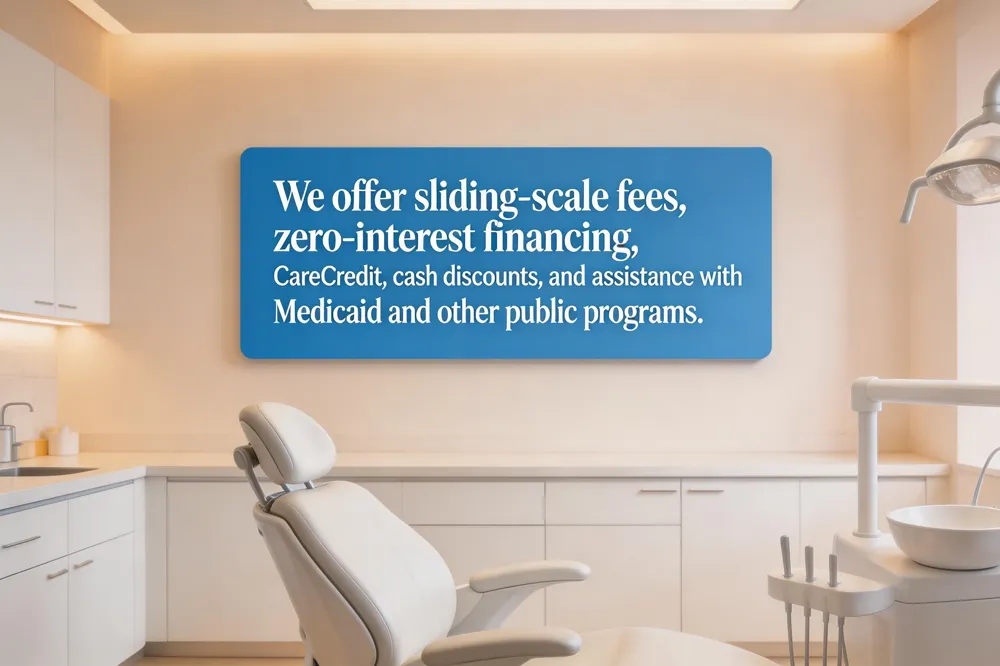 When a dental emergency strikes and you have no money, first control pain at home with OTC ibuprofen or acetaminophen, a cold compress, and avoid chewing on the affected side. Call our Paterson office (973‑555‑1234) immediately; our multilingual team can arrange same‑day triage and prioritize urgent cases even without insurance. We offer sliding‑scale fees, zero‑interest financing, and CareCredit options, plus cash‑pay discounts and in‑house membership plans to lower out‑of‑pocket costs. If you qualify for public benefits, we can help you use Medicaid, TennCare TeleDentistry, or other state programs to cover treatment. For immediate low‑cost relief, nearby community health clinics or dental‑school programs provide affordable emergency services. Our staff will guide you through payment discussions in English, Spanish, or Arabic, ensuring prompt, compassionate care without financial stress.
Stay Prepared, Stay Healthy
Night‑shift workers should keep our after‑hours phone number saved on their phones or work badge so help can reach a dentist the moment a problem arises. A simple dental‑emergency kit at the workplace—containing gauze, dental wax, a small container of milk (or a tooth‑preservation solution), a cold pack, and over‑the‑counter pain relievers—provides immediate first aid while you wait for professional care. Regular, six‑month check‑ups and the use of custom‑fit mouthguards during high‑risk activities dramatically lower the chance of trauma or grinding‑related damage. Our practice is equipped with digital X‑rays, intra‑oral cameras, and a multilingual team (English, Spanish, Arabic) to diagnose quickly, offer affordable treatment plans, and communicate clearly with every patient, even after hours.