Your Guide to Urgent Oral Care: When Minutes Matter
Defining a Dental Emergency: Separating Urgent from Routine
A dental emergency is any situation that poses an immediate risk to your oral health or requires urgent attention to stop severe pain, uncontrolled bleeding, or a spreading infection. These situations are distinct from routine issues that can safely wait for a scheduled appointment.
- Life-Threatening Emergencies: These require immediate medical care, such as visiting a hospital emergency room. They include uncontrolled bleeding, severe facial trauma or broken jaw, and soft-tissue infections causing significant swelling that could compromise your airway.
- Urgent Dental Emergencies: These require prompt, same-day attention from a dentist. Common examples are a knocked-out permanent tooth, a badly cracked or broken tooth with pain, a painful dental abscess (infection), and severe tooth pain unrelieved by over-the-counter medication.
- Issues for a Regular Appointment: Not all dental pain or damage is an emergency. A mild toothache, a small chip without pain, a lost filling or crown with no discomfort, a broken braces wire, or an object stuck between teeth can typically be addressed during normal office hours. However, if pain or bleeding becomes severe, it escalates to an emergency.
Immediate Actions: First-Aid Steps for Common Emergencies
Knowing what to do before you reach professional care can significantly impact the outcome. Here are first-aid steps for frequent urgent situations.
For a Knocked-Out (Avulsed) Tooth
Time is the most critical factor. The best chance of saving the tooth occurs if it is returned to its socket within 30 minutes to one hour. Handle the tooth only by the crown (the chewing surface), not the root. If dirty, gently rinse it with water—do not scrub. Try to reinsert it into the socket, facing the correct way. If this isn't possible, keep the tooth moist by placing it in a container of cold milk, saline solution, or even saliva (inside your cheek). Call and see a dentist immediately.
For a Severe Toothache or Suspected Abscess
Rinse your mouth with warm water and floss gently to remove any trapped food. To reduce swelling, apply a cold compress or ice pack to the outside of your cheek. Over-the-counter pain relievers like ibuprofen or acetaminophen can provide temporary relief. Do not place aspirin directly on your gums or tooth, as this can burn the tissue. A dental abscess is a serious infection that can spread; seek professional care promptly.
For a Cracked or Broken Tooth
Rinse your mouth with warm water to clean the area. If there is bleeding, apply gentle pressure with a piece of clean gauze or a tea bag for 10-15 minutes. Use a cold compress on the outside of your face to minimize swelling and alleviate pain. Save any broken tooth fragments and bring them to your dental appointment.
For Soft-Tissue Injuries (Bitten Lip, Tongue, or Cheek)
Rinse the area gently with cool water. Apply pressure with a clean cloth or moistened gauze to control bleeding. A cold compress held against the outside of the mouth can help reduce swelling. If bleeding is severe or does not stop after 15-20 minutes of steady pressure, seek immediate medical attention at an emergency room.
Navigating After-Hours and Financial Concerns
Dental emergencies rarely happen at convenient times. Your first call should always be to your regular dentist. Many practices have an after-hours emergency contact number. If you do not have a regular dentist, seek an emergency dental clinic in your area. For life-threatening situations like uncontrolled bleeding or difficulty breathing due to swelling, call 911 or go directly to a hospital emergency room.
It's important to know that while emergency rooms can provide pain medication and antibiotics, they do not perform restorative dental procedures like fillings, crowns, or replanting teeth. You will still need to see a dentist for definitive care.
Understanding your dental insurance coverage for emergencies and knowing the costs involved can reduce stress. Many dental practices work with patients to provide flexible payment options and accept a wide range of insurance plans to make urgent care accessible.
Local Resources in Paterson, NJ: Accessible and Compassionate Care
For residents in and around Paterson, New Jersey, finding reliable, immediate care is essential. Look for a practice that specializes in emergency dentistry and offers same-day appointments to address your urgent needs without delay. An ideal emergency dental provider combines experience with a compassionate approach, understanding the anxiety that often accompanies dental trauma.
A practice with a multilingual team (for example, offering services in English, Spanish, and Arabic) ensures clear communication during stressful situations. Modern, state-of-the-art technology allows for accurate diagnosis and efficient treatment, helping you return to comfort quickly. Full-service practices can manage the emergency and provide any necessary follow-up treatments—such as root canals, crowns, or implants—all in one location.
Prevention: The Best Strategy for Avoiding Dental Crises
While not all emergencies are avoidable, many can be prevented with proactive care. Maintaining excellent daily oral hygiene by brushing twice a day and flossing daily is your first defense. Attending regular dental check-ups and cleanings allows your dentist to identify and treat small problems, like decay or a weak filling, before they turn into painful emergencies.
Wearing a custom-fitted mouthguard during sports activities significantly reduces the risk of traumatic injuries to your teeth and jaws. Avoid using your teeth as tools to open packages or chew on hard objects like ice, popcorn kernels, or hard candy, which can cause cracks and fractures.
| Emergency Type | Key Immediate Action | When to Seek Professional Care |
|---|---|---|
| Knocked-Out Tooth | Keep tooth moist in milk. | Immediately, ideally within 30-60 minutes. |
| Severe Toothache/Abscess | Rinse with warm water, use cold compress. | As soon as possible, same day. |
| Badly Cracked Tooth | Save pieces, rinse mouth, apply cold compress. | As soon as possible, same day. |
| Uncontrolled Bleeding | Apply firm pressure with clean gauze. | If bleeding persists 15+ minutes, go to ER. |
| Lost Filling/Crown | Use temporary dental cement or sugarless gum. | Schedule appointment soon to prevent damage. |
Defining a Dental Emergency: Separating Urgent from Routine
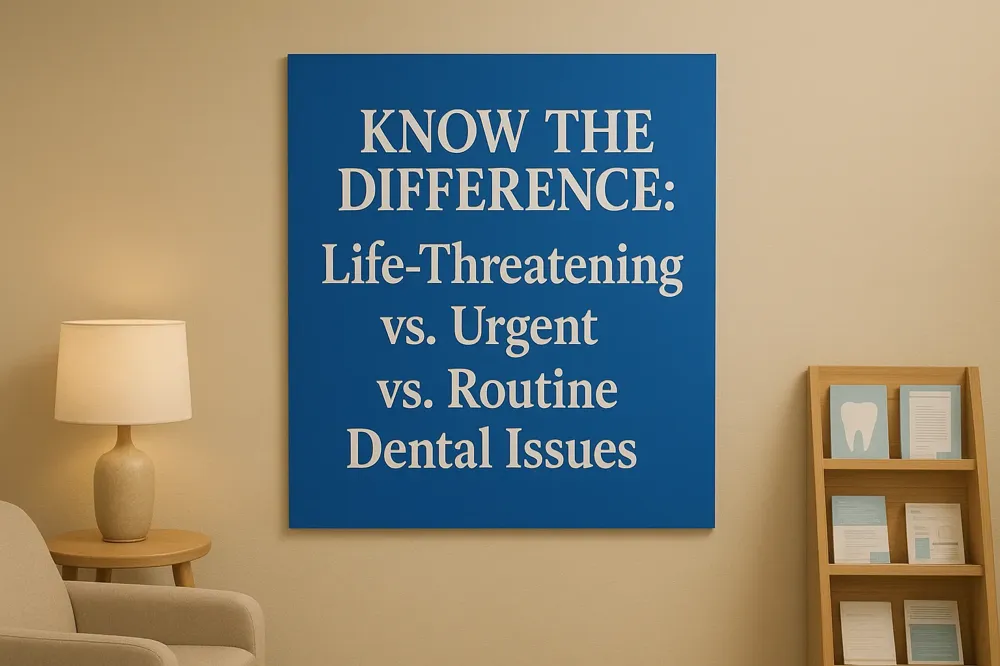
Understanding What Constitutes a Dental Emergency
Dental emergencies are situations involving your teeth or gums that require immediate professional attention. According to the American Dental Association (ADA), this includes conditions that are potentially life-threatening. An emergency needs immediate treatment to stop bleeding, remedy a serious infection, or alleviate severe pain. It also includes any urgent oral health issue requiring immediate intervention to prevent further biological, functional, or aesthetic complications.
Ignoring such problems can lead to significant consequences. These include the spread of dental infection spreading to deep spaces in the neck or face, permanent tooth damage, tooth loss, and the need for more complex and costly procedures later. Prompt care is essential to safeguard your health and your smile.
Recognizing Life-Threatening Dental Emergencies
Certain situations are critical and demand immediate medical intervention, often at a hospital emergency room. These life-threatening dental emergencies include:
- Uncontrolled bleeding from the mouth that does not stop with pressure.
- Soft-tissue infections with significant swelling that could potentially block your airway.
- Trauma involving broken facial bones, such as a suspected broken jaw.
If you experience any of these, it is vital to call 911 or go to the nearest emergency department immediately.
Common Urgent, Non-Life-Threatening Emergencies
Many dental crises are urgent but not immediately life-threatening. These require a prompt visit to your dentist, often on the same day. Key examples include:
- Severe, persistent toothache unrelieved by over-the-counter medication.
- A badly cracked or broken tooth, especially if it causes pain or leaves sharp edges.
- A knocked-out (avulsed) permanent tooth.
- A partially dislodged (extruded) tooth.
- A dental abscess, often indicated by a painful, pimple-like swelling on the gum or facial swelling.
- A lost or broken dental filling or crown that causes pain or sensitivity.
- A severe soft tissue injury (to the tongue, cheek, gums, or lips) with bleeding that is difficult to control.
For these issues, your first step should always be to call your dentist's office. Many practices, including full-service dental offices in communities like Paterson, intentionally reserve time in their daily schedules to accommodate emergency patients.
What Is Typically NOT a Dental Emergency?
Not every dental concern requires an urgent, after-hours appointment. Some issues can safely wait for a regularly scheduled visit. These non-emergency situations generally include:
- A dull or mild toothache without severe pain.
- A small, painless chip or crack in a tooth.
- A broken wire or bracket on braces that is not cutting into your cheek or gums.
- An object stuck between teeth that cannot be removed with gentle flossing.
- A minor cut or sore inside the mouth.
It is important to monitor these conditions. If severe pain, significant bleeding, or signs of infection (like swelling or fever) develop, the situation escalates into an emergency, and you should seek immediate care.
The Critical First Step: Call Your Dentist
In any suspected dental emergency, your first action should be to contact your dental practice. A professional assessment over the phone can provide crucial guidance. Your dentist or a trained staff member can perform basic triage to determine the urgency of your situation and advise on immediate first-aid steps you can take at home.
They will also instruct you on whether to come into the office, go to an urgent care center, or proceed directly to a hospital emergency room. This initial call ensures you receive the most appropriate and efficient care pathway.
| Emergency Category | Common Examples | Typical Action Required |
|---|---|---|
| Life-Threatening | Uncontrolled bleeding, airway-threatening swelling, broken facial bones. | Go to nearest hospital emergency room or call 911. |
| Urgent (Non-Life-Threatening) | Knocked-out tooth, severe toothache, painful abscess, broken tooth with pain. | Call dentist immediately for same-day emergency appointment. |
| Non-Emergency (Routine) | Dull toothache, small painless chip, minor soft tissue irritation. | Schedule a routine dental appointment for evaluation. |
Immediate Actions: First-Aid Steps for Common Emergencies
What does immediate management of a dental emergency typically involve?
A dental emergency can be distressing, but knowing the right first steps can make a significant difference. Immediate management is about stabilizing the situation and minimizing further damage until you receive professional care. The most critical action is always to contact your dental practice immediately for instructions. Their team can provide specific guidance and arrange prompt dental care. While you prepare to see the dentist, several first-aid steps for dental emergencies can offer temporary relief and help preserve your oral health.
These initial steps often include rinsing the mouth with warm water, gently flossing to dislodge trapped food, and applying a cold compress to the outside of the cheek to reduce swelling. For traumatic injuries, careful handling of tooth fragments or a knocked-out tooth is paramount. Managing bleeding with clean gauze and avoiding harmful practices, such as placing painkillers directly on gums, are also key parts of initial response. Remember, these are temporary measures; definitive treatment must come from your dentist.
For a Severe Toothache
A severe toothache that disrupts your daily activities is a sign you need attention. Start by rinsing your mouth thoroughly with warm water. Next, use dental floss gently to remove any food particles that may be trapped and causing pressure. If you notice swelling on your face, apply a cold compress or an ice pack wrapped in a cloth to the outside of your cheek for 15-minute intervals. You can take over-the-counter pain relievers like acetaminophen or ibuprofen according to the package directions. A crucial warning: never place aspirin or any painkiller directly on your gums or the aching tooth, as this can cause chemical burns to the sensitive tissue.
For a Knocked-Out (Avulsed) Permanent Tooth
This is a true dental emergency where time is of the essence. Your actions in the first 30 to 60 minutes are critical for the tooth's survival. Always handle the tooth by its crown—the white part you normally see—and avoid touching the root. If the tooth is dirty, rinse it briefly under lukewarm water; do not scrub it or remove any tissue fragments. If you feel comfortable, try to gently reinsert it into the empty socket, making sure it is facing the correct way. Do not force it. If reinsertion is not possible, place the tooth in a container of cold milk, a saline solution, your own saliva, or a commercial tooth preservation product. You must see a dentist immediately.
For a Badly Cracked or Broken Tooth
A significant crack or break often exposes the sensitive inner layers of the tooth and requires urgent dental care. First, collect any broken tooth fragments you can find. Rinse your mouth gently with warm water, and rinse the fragments as well. If there is bleeding from the gum area, use a piece of sterile gauze and apply gentle pressure for about 10 minutes. To manage pain and swelling, hold a cold compress against the outside of your mouth near the injury. Save the broken pieces and bring them to your dental appointment, as they may aid in repair.
For a Dental Abscess
A dental abscess is a serious infection that appears as a painful, swollen area on the gum, sometimes with pus. This condition can damage tissue and spread, so you must see a dentist immediately. While waiting for your appointment, you can temporarily ease discomfort by rinsing your mouth several times a day with a mild saltwater solution. Mix half a teaspoon of table salt into eight ounces of warm water. This rinse can help soothe the area and may encourage drainage.
For a Lost Filling or Crown
While not always a same-day emergency, a lost dental restoration leaves your tooth vulnerable and sensitive. For a lost filling, as a very temporary measure, you can carefully place a piece of sugarless gum or over-the-counter dental cement into the cavity. For a lost crown, save it in a safe container. You may attempt to temporarily re-cement it using a small amount of over-the-counter dental cement, toothpaste, or denture adhesive. It is vital that you never use super glue or household adhesives. Bring the crown with you to your dental appointment for possible reattachment.
For a Badly Bitten Lip, Tongue, or Soft Tissue Injury
Injuries to the soft tissues of the mouth can cause significant bleeding. First, clean the area gently with cool water. Then, use a clean cloth, gauze, or a moistened tea bag to apply firm, direct pressure to the wound for 15 to 20 minutes. To reduce swelling, apply a cold compress to the outside of the mouth. If the bleeding does not stop after 20 minutes of continuous pressure, you should seek immediate care at an emergency room or urgent care center while continuing to apply pressure.
| Emergency Type | Key First-Aid Action | What to Avoid | Urgency Level |
|---|---|---|---|
| Severe Toothache | Rinse, floss, cold compress, OTC pain relief | Placing aspirin on gums | Urgent - Call dentist soon |
| Knocked-Out Tooth | Handle by crown, rinse, store in milk, see dentist ASAP | Scrubbing root, letting tooth dry | Immediate - True emergency (Rank 1) |
| Broken Tooth | Save pieces, rinse, cold compress for swelling | Ignoring it due to no pain | Immediate/Urgent (Rank 1) |
| Dental Abscess | Saltwater rinses, see dentist immediately | Delaying treatment | Immediate - Serious infection |
| Lost Filling/Crown | Temporary cement/sugarless gum, save crown | Using super glue | Prompt attention needed (Rank 3) |
| Soft Tissue Injury | Direct pressure with gauze, cold compress | Using unclean materials | Urgent if bleeding persists (Rank 2) |
Navigating After-Hours and Financial Concerns
Navigating After-Hours Protocol
A dental emergency doesn't wait for business hours. Severe pain, a knocked-out tooth, or uncontrolled bleeding can happen at any time. Your first action should always be to call our Paterson dental practice. We provide a clear after-hours emergency contact number on our voicemail for precisely these situations. Our team is trained to perform basic emergency triage over the phone, offering immediate first-aid advice and scheduling a prompt appointment, often for the same day.
This direct line ensures you receive professional guidance when you need it most. We can instruct you on how to preserve a knocked-out tooth, manage bleeding, or alleviate severe discomfort until you reach our office. Our compassionate, multilingual staff is here to support you through the process, making communication clear and reducing anxiety during a stressful time.
When to Go to an Emergency Room (ER)
While your dentist is the primary resource, certain situations require immediate hospital care. Go directly to the ER for life-threatening conditions. These include uncontrolled bleeding that does not stop with firm pressure, severe facial swelling that is making it difficult to breathe or swallow, or any suspected broken facial bones from trauma.
It is crucial to understand the ER's role. Hospital emergency departments are equipped to manage medical crises, provide pain medication, and administer antibiotics for infections. However, they do not perform restorative dental procedures. They cannot place fillings, recement crowns, replant knocked-out teeth, or perform root canals.
You will still need to see a dentist as soon as possible for definitive treatment. The ER visit is a critical stopgap for stabilizing a severe medical situation arising from a dental issue, but it is not a replacement for dental care.
Understanding the Financial Impact
Choosing where to seek care has significant financial implications. A visit to the emergency department for non-traumatic dental pain averages $749 if the patient is not hospitalized. In contrast, a typical dental office visit for the same problem may cost between $90 and $200. This cost disparity, often three times higher for the ER, highlights the importance of accessing direct dental care when possible.
This high cost contributes to a national burden, with dental-related ER visits costing the healthcare system approximately $1.6 billion annually. Many of these visits are for preventable conditions like abscesses and untreated cavities. Seeking timely care from a dentist not only benefits your health but can also alleviate unnecessary financial strain on you and the healthcare system.
Options for Financial Assistance
Do not let cost concerns delay treatment for a painful or dangerous dental condition. If you are uninsured or underinsured, discuss your situation openly with the dental practice. Many offices, including ours, offer flexible payment plans or sliding-scale fees based on your income to make emergency care accessible.
There are also community resources available. Federally Qualified Health Centers (FQHCs) and public health dental clinics provide emergency services on a sliding fee scale. You can locate these by calling 211 or visiting 211.org for a referral. Dental schools are another excellent resource for reduced-cost care, where treatments are performed by supervised students.
Navigating Dental Insurance
For those with insurance, understanding your coverage is key. Many dental practices in the Paterson area, including multi-specialty clinics, accept major insurance plans. This often includes Medicaid and managed care plans like United Healthcare Community Plan. Always confirm with the office about your specific plan's coverage for emergency procedures to avoid unexpected costs.
Key Takeaways for Urgent Situations
Prompt action is paramount in a dental emergency. Delaying care can lead to increased pain, the spread of infection, the need for more complex (and expensive) procedures, and even tooth loss. Your health and comfort are the top priorities.
The best course of action is to contact a dental professional first. We are equipped to assess your situation, provide immediate relief, and deliver the definitive treatment you need. Our practice is committed to offering state-of-the-art emergency care with a compassionate touch, ensuring you receive efficient treatment without unnecessary delay or financial hardship. As a full-service dental home, we provide continuity of care that can positively impact emergency treatment outcomes.
| Situation | Recommended Action | Primary Goal | Key Consideration |
|---|---|---|---|
| After-hours toothache | Call dentist's emergency line | Get professional advice & appointment | Manage pain with OTC meds, cold compress |
| Uncontrolled bleeding | Go to Emergency Room | Stabilize life-threatening condition | ER does not fix dental cause |
| Knocked-out tooth at night | Call dentist, preserve tooth in milk | Reimplant tooth quickly | Highest success within 30-60 minutes |
| No insurance for severe pain | Discuss payment plans, seek FQHC | Get urgent treatment to stop infection | 211 can help find low-cost options |
| Swollen jaw, trouble breathing | Go to Emergency Room immediately | Protect airway, get IV antibiotics | Follow up with dentist within 24 hours |
Local Resources in Paterson, NJ: Accessible and Compassionate Care
Are there dentists in Paterson, NJ, that accept Medicaid or offer emergency dental care?
Yes, there are dental practices in Paterson that offer both emergency dental care and accept Medicaid. For instance, West Broadway Dental, a large multi-specialty clinic with over 35 years of service in the community, explicitly accepts Medicaid and lists emergency dentistry among its services. This accessibility ensures that prompt, professional care is available to a wider segment of the local population. It is always wise to call ahead to confirm specific insurance coverage and to secure an emergency dental appointment. Establishing a relationship with such a practice means you have a reliable point of contact when a dental emergency arises.
The Value of a Full-Service "Dental Home"
Having a full-service dental practice as your primary care provider is invaluable during an emergency. When you are an established patient, the team already has your complete dental and medical history on file. This continuity allows for faster, more informed decision-making. A full-service practice can handle the entire emergency process in one location, from the initial assessment and pain relief to any necessary follow-up treatments like crowns, root canals, or dental implants. This seamless approach reduces stress and ensures your long-term oral health is managed comprehensively. full-service dental home continuity of care impact emergency treatment outcomes
Features of a Quality Emergency Dental Practice
When choosing an emergency dental practice, certain features indicate a high standard of care and accessibility:
- Same-Day Appointments: Look for practices that prioritize emergency visits and offer same-day dental emergency treatment.
- Compassionate, Multilingual Staff: A team fluent in languages like English, Spanish, and Arabic is crucial in a diverse community like Paterson. Compassionate communication reduces anxiety during stressful situations.
- Experience and Technology: A practice with decades of collective experience, combined with state-of-the-art diagnostic and treatment technology, is well-equipped to handle a wide range of dental emergencies accurately and efficiently.
- Clear After-Hours Protocol: A reliable practice will have a defined plan for emergencies outside normal business hours, such as an emergency phone number or after-hours voicemail instructions for reaching an on-call dentist.
Examples of Emergency Services Offered
A full-service emergency dental practice provides a broad scope of urgent treatments. This comprehensive capability means you can receive all necessary care without being referred elsewhere. Typical emergency services include:
- Immediate diagnosis and pain management for severe toothaches.
- Treatment for dental trauma: repairing chipped or broken teeth, and attempting to reimplant knocked-out teeth.
- Emergency tooth extractions for severely damaged or infected teeth.
- Management of dental infections and abscesses, including incision and drainage procedures.
- Temporary and permanent repair of lost fillings, crowns, or other dental restorations.
Pediatric Emergency Dentistry
Dental emergencies can be especially frightening for children and their parents. A quality practice offers family-centered pediatric emergency services. This includes having dentists and staff trained to calmly manage young patients' anxiety and pain. Some practices are further equipped to provide treatment under sedation or, for very complex cases, in a hospital operating room setting. This specialized care ensures that children receive the gentle, effective treatment they need during a stressful event.
Building Your Dental Emergency Kit
Being prepared at home can help you manage a dental emergency more effectively before you reach the dentist. Assemble a simple kit containing these items:
- Your dentist's office and after-hours contact numbers.
- Sterile gauze pads and cotton balls to control bleeding.
- Dental floss to dislodge food trapped between teeth.
- A small container with a lid (for storing a knocked-out tooth).
- Table salt (to mix with warm water for a soothing rinse).
- A cold compress or instant ice pack to reduce swelling.
Having these items readily available allows you to take crucial first-aid steps, such as applying pressure to a bleeding wound or properly storing an avulsed tooth in milk, which can significantly impact treatment outcomes.
Overview of Key Emergency Care Topics
This section has outlined the local resources and essential features that define accessible, high-quality emergency dental care in Paterson, NJ.
| Topic | Key Points | Why It Matters for Emergency Care |
|---|---|---|
| Insurance & Access | Practices accepting Medicaid exist. Confirming coverage in advance is advised. | Ensures financial accessibility for urgent dental care within the community. |
| Full-Service Dental Home | Provides continuity, comprehensive records, and complete follow-up care. | Leads to faster, more informed treatment and better long-term outcomes. |
| Practice Features | Look for same-day appointments, multilingual staff, experience, and clear after-hours plans. | Reduces wait times, eases communication, and ensures professional, timely care. |
| Emergency Services | Includes pain relief, trauma care, extractions, infection management, and restoration repair. | A single practice can address the full spectrum of urgent dental problems. |
| Pediatric Care | Family-centered services with possible sedation options for children. | Provides gentle, specialized treatment for young patients in distress. |
| Home Preparedness | A basic kit with dentist contacts, gauze, floss, a container, salt, and a cold compress. | Enables effective initial first aid for dental emergencies to stabilize the situation before professional help. |
Prevention: The Best Strategy for Avoiding Dental Crises
Routine Care is Key
Many urgent dental visits are caused by untreated decay, which leads to abscesses, severe toothaches, or broken teeth. These situations are largely preventable. Scheduling regular dental check-ups and professional cleanings every six months is your primary defense. During these visits, your dentist can detect small cavities, weak fillings, or early signs of gum disease long before they escalate into painful dental emergencies. Early intervention means simpler, less invasive treatments and protects your long-term oral health.
Protective Gear
Sports injuries are a common cause of traumatic dental emergencies, such as knocked-out tooth or broken teeth. Wearing a mouthguard during any contact or recreational sport is essential. While over-the-counter guards offer some protection, a custom-fitted mouthguard from your dentist provides superior comfort, retention, and shock absorption. This personalized fit ensures your teeth and jaw are better shielded from impacts, significantly reducing your risk of injury.
Lifestyle Habits
Your daily habits play a major role in preventing dental damage. Avoid using your teeth as tools to open packages, tear tags, or crack nuts. Similarly, refrain from chewing on hard objects like ice, unpopped popcorn kernels, hard candies, or pen caps. These actions place extreme pressure on your teeth and can easily cause chips, cracks, or fractures, transforming a healthy tooth into a dental emergency.
Good Oral Hygiene
A consistent and thorough oral hygiene routine is the cornerstone of prevention. Brush your teeth twice daily with a fluoride toothpaste, and floss at least once a day to remove plaque from between teeth and under the gumline, areas your brush can't reach. While guidelines like brushing for two minutes are helpful, the key is thorough plaque removal to prevent the decay and gum inflammation that can lead to serious problems.
Managing Underlying Conditions
Your overall health directly impacts your oral health. Systemic conditions like diabetes can impair your body's ability to fight infection, increasing the risk and severity of dental infections. Effectively managing such conditions with your physician is crucial. Additionally, quitting smoking greatly improves gum health and circulation, making your mouth more resilient against disease and healing faster from minor issues before they become emergencies.
Final Message from Your Dentist
Dental emergencies are often sudden and distressing, but being informed and prepared empowers you to respond effectively. Establishing a relationship with a trusted dental practice ensures you have expert guidance and prompt care when you need it most. Remember, quick professional intervention is vital for saving teeth, alleviating severe pain, and preventing minor issues from becoming major oral health crises.
| Prevention Focus | Key Action | Primary Benefit |
|---|---|---|
| Routine Check-ups | Visit dentist every 6 months | Early detection of decay & disease |
| Sports Safety | Wear custom-fitted mouthguard | Prevents traumatic tooth fractures & loss |
| Daily Habits | Avoid chewing hard objects | Reduces risk of cracks and chips |
| Home Care | Brush 2x daily & floss 1x daily | Removes plaque to prevent decay & gum disease |
| Health Management | Control diabetes & quit smoking | Lowers infection risk & improves healing |
Your Guide to Urgent Oral Care: When Minutes Matter
Defining a Dental Emergency: Separating Urgent from Routine
A dental emergency is any sudden issue requiring immediate professional attention to stop bleeding, alleviate severe pain, or save a tooth. Conditions like uncontrolled bleeding, a knocked-out permanent tooth, a painful abscess with swelling, or broken facial bones are clear emergencies.
In contrast, many issues are urgent but not immediate life-threatening emergencies. These include a dull toothache, a minor chip without pain, a lost filling, a loose orthodontic wire, or an object stuck between teeth. While these need prompt attention, they can often be addressed during regular office hours.
If you are ever unsure whether your situation is an emergency, the safest step is to call your dentist immediately. A professional can help assess the urgency over the phone and provide specific guidance.
Immediate Actions: First-Aid Steps for Common Emergencies
Knowing what to do in the first few minutes can dramatically improve outcomes. Here are key steps for common scenarios:
- Knocked-Out Permanent Tooth: Time is critical. Retrieve the tooth by the crown (the white chewing surface), not the root. If dirty, rinse it gently with water; do not scrub. If possible, gently try to reinsert it into the socket, ensuring it faces the correct way. If you cannot reinsert it, place the tooth in a container of cold milk or a saline solution. Seek a dentist immediately, ideally within 30 to 60 minutes, for the best chance of saving the tooth.
- Severe Toothache or Abscess: Rinse your mouth with warm water. Gently floss to remove any trapped food that may be causing pressure. To reduce swelling, apply a cold compress to the outside of your cheek. Over-the-counter pain relievers like acetaminophen or ibuprofen can provide temporary relief. Never place aspirin or any painkiller directly on the gums, as this can burn the tissue.
- Chipped or Broken Tooth: Rinse your mouth with warm water. Save any broken tooth fragments you can find. If there is bleeding, apply clean gauze to the area with firm pressure for about 10 minutes. Use a cold compress on the outside of your mouth to minimize swelling and pain.
- Severe Soft-Tissue Injury (Lip, Tongue, Cheek): Clean the area gently with cool water. Use a clean cloth or piece of gauze to apply firm, direct pressure to control bleeding. Apply a cold compress to the outside of the mouth to reduce swelling. If bleeding does not stop after 15 to 20 minutes of continuous pressure, seek immediate care at an emergency room.
- Lost Filling or Crown: If a crown comes off, save it and bring it to your appointment. For a lost filling, you can temporarily place a piece of sugar-free gum in the cavity or use an over-the-counter dental cement. Do not use super glue to try to reattach a crown or filling.
Navigating After-Hours and Financial Concerns
Dental emergencies rarely happen at convenient times. Your first action should always be to call your dental practice. Many offices have an after-hours emergency contact number for their patients of record. If you cannot reach your dentist or do not have one, urgent care centers or hospital emergency rooms can provide initial care for pain and infection, such as prescribing antibiotics or pain medication.
It is important to know that while emergency rooms are vital for life-threatening trauma like broken facial bones, they do not perform restorative dental procedures like fillings or crowns. A follow-up visit with a dentist will always be necessary.
Cost can be a major concern. A visit to the emergency room for dental pain can cost three times more than a visit to a dental office for the same issue. Understanding your dental insurance coverage for emergencies beforehand is wise. Many compassionate dental practices work with patients to navigate insurance and offer flexible financing options to make urgent care accessible.
Local Resources in Paterson, NJ: Accessible and Compassionate Care
For residents of Paterson and surrounding areas, seeking timely, expert care is crucial. Look for a local dental practice that explicitly offers same-day emergency appointments. A practice with over 40 years of experience often indicates deep community trust and clinical expertise.
Modern, state-of-the-art technology ensures accurate diagnosis and efficient treatment. Perhaps most importantly during a stressful emergency, a compassionate, multilingual team (such as English, Spanish, and Arabic speakers) ensures clear communication and comfort for you and your family, making the experience less daunting.
Prevention: The Best Strategy for Avoiding Dental Crises
While accidents happen, many dental emergencies can be prevented with proactive care:
- Maintain excellent daily oral hygiene by brushing twice a day and flossing daily.
- Attend regular dental check-ups and cleanings every six months to catch small problems before they become painful emergencies.
- Wear a custom-fitted mouthguard during any contact sports or recreational activities.
- Avoid using your teeth as tools to open packages or crack nuts.
- Do not chew on hard objects like ice, popcorn kernels, or hard candy.
| Emergency Condition | Key Immediate Action | Critical "Don't" |
|---|---|---|
| Knocked-Out Tooth | Place in milk; see dentist within 1 hour. | Do not touch or scrub the tooth root. |
| Severe Toothache | Rinse with warm water; use cold compress. | Do not put aspirin directly on the gum. |
| Broken Tooth | Save fragments; rinse mouth. | Do not ignore it due to lack of pain. |
| Lost Crown | Save it; bring to dentist. | Do not use super glue to reattach it. |
| Bitten Lip/Tongue | Apply pressure with clean cloth. | Do not assume heavy bleeding will stop on its own. |