Understanding Crown Care
Dental crowns are used when a tooth is weakened by decay, fracture, extensive filling, or after a root‑canal procedure; they restore strength, protect the remaining structure, and improve appearance. The most common crown materials include all‑ceramic (porcelain or zirconia) for superior aesthetics, porcelain‑fused‑to‑metal for a balance of strength and look, metal‑only crowns for durability in back teeth, and newer composite resin options for short‑term use. A typical crown case begins with a consultation and X‑ray, followed by tooth preparation and a digital or physical impression (60–90 minutes). For traditional crowns a temporary restoration is placed while the lab fabricates the permanent crown over 10–14 business days, after which a second visit (30–45 minutes) completes the cementation. Same‑day CEREC crowns streamline this process into a single 90‑120 minute appointment, eliminating the temporary crown and reducing bacterial exposure. Throughout every step, practices in Paterson, NJ and surrounding areas prioritize patient comfort—using local anesthesia, gentle oral‑hygiene instructions, and multilingual staff (English, Spanish, Arabic) to ensure clear communication and a calm experience for diverse patients.
Initial Consultation & Cost Planning
 During the initial consultation (30‑45 minutes) the dentist conducts a comprehensive exam, takes any needed X‑rays or digital scans, and evaluates bite and surrounding anatomy. Material selection follows, with shade‑matching to blend the crown with natural teeth. Traditional crowns typically cost $1,200‑$1,800 (porcelain or metal‑ceramic), while all‑ceramic, zirconia, or E‑Max options can reach $2,000‑$2,500. Implant‑supported crowns run $1,200‑$2,500, not including the implant fixture ($1,000‑$2,000) and abutment ($200‑$500). After placement, the 3‑3‑3 rule helps manage early pain: 600 mg ibuprofen every three hours for up to three days, seeking dental care if pain persists beyond that or exceeds 3‑out‑of‑10. This brief yet thorough visit provides a clear treatment plan, realistic timeline, and transparent cost estimate, allowing patients to make informed decisions about their restorative care.
First Crown Appointment – Preparation & Anesthesia
 During the first crown appointment the dentist numbs the tooth with a local anesthetic, removes any decay, and reshapes the tooth (30‑45 min). An impression is taken either with traditional putty or, preferably, a digital intra‑oral scanner (15‑30 min) that sends a 3‑D model to the lab or to an on‑site CEREC unit. For a conventional crown the visit lasts 60‑90 min; same‑day CAD/CAM crowns require 90‑120 min because design and milling happen in the chair. A temporary crown protects the tooth while the permanent one is fabricated (10‑14 days).
Q: How long does the first crown appointment take? A: 60‑90 min for a traditional crown; 90‑120 min when CEREC design and milling are included.
Q: Is local anesthesia always used for permanent crown placement? A: It is routinely used for vital teeth to block pressure and movement; non‑vital teeth after root‑canal may be treated without anesthesia, though many dentists still offer a small dose for comfort.
Q: What are the steps in the crown placement procedure? A: Examine and X‑ray, anesthetize, remove decay and shape the tooth, take an impression or digital scan, place a temporary crown, then later remove it, check fit and shade, and cement the permanent crown.
Second Crown Appointment – Final Fit & Post‑Root‑Canal Care
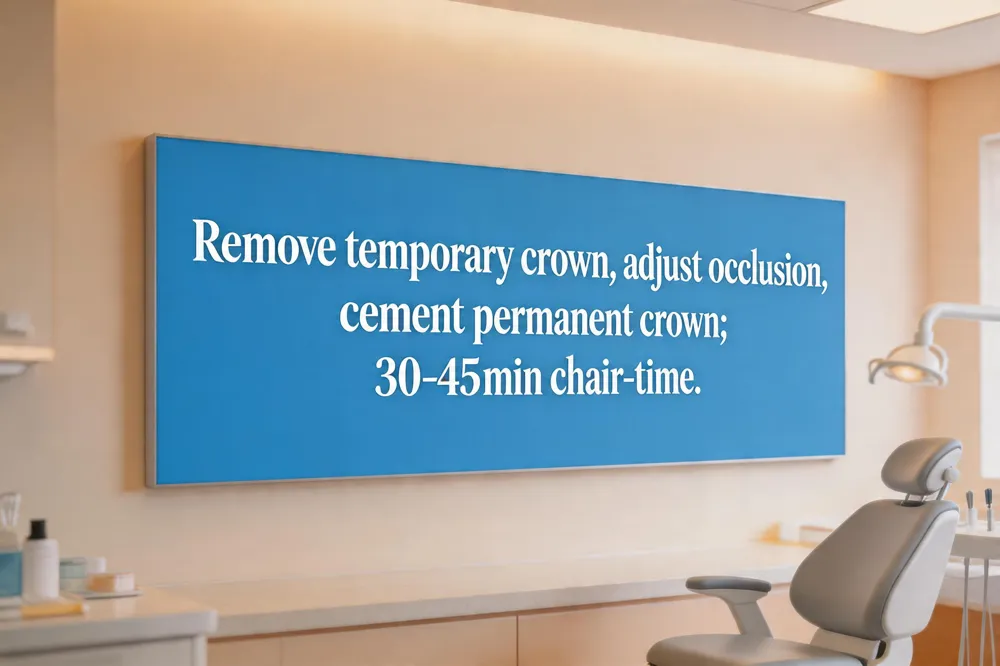 During the second visit the dentist removes the temporary crown, checks the fit of the permanent restoration and makes any minor adjustments to occlusion or shade. Cementation uses a high‑strength resin or glass ionomer cement that is light‑cured for immediate bond strength, and the crown is polished before final seating. For teeth that have undergone root‑canal therapy, the clinician verifies that the post‑and‑core is stable, isolates the canal to prevent bacterial leakage, and may place a protective liner before cementation. Typical chair‑time for this appointment ranges from 30 to 45 minutes; if the crown fits perfectly and no adjustments are needed, the procedure can be completed in about 30 minutes, while polishing or bite‑checks may extend it toward the upper end of the range.
Same‑Day CEREC Crowns – Speed, Accuracy, and Limitations
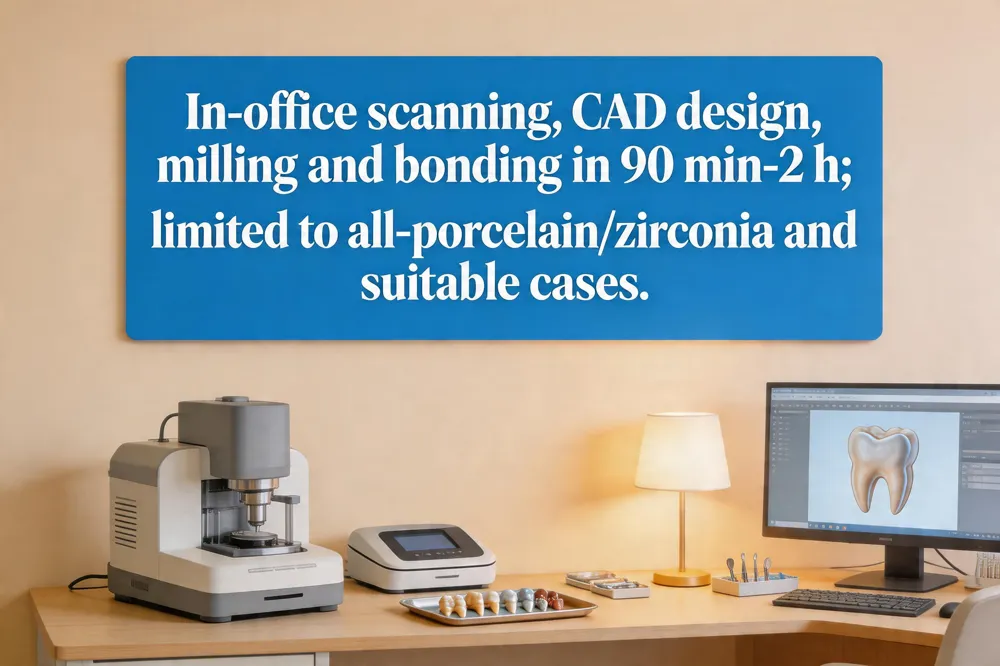 Digital scanning, CAD design, and in‑office milling make a same‑day CEREC crown possible in a single visit. After local anesthesia, the dentist reshapes the tooth (30‑45 min), captures a high‑resolution 3‑D intra‑oral scan, and uses CAD software to design the restoration (15‑30 min). The crown is then milled from a ceramic block (15‑30 min), polished, and bonded (10‑15 min). Typical single‑visit duration is 90 minutes to 2 hours, allowing patients to leave with a permanent crown and a natural‑looking crown and eliminating the need for a temporary prosthesis. Advantages include reduced bacterial exposure, fewer appointments, and precise fit. Limitations include suitability mainly for all‑porcelain or zirconia restorations, which may be less durable than metal‑ceramic options, potential shade‑matching challenges, and exclusion of teeth with extensive decay, deep fractures, or complex root‑canal anatomy. In short, same‑day crowns save time and improve comfort, but case selection must be careful to ensure long‑term success.
Longevity, Pain Management, and Lab Fabrication Timelines
 Why does it take about two weeks to make a crown?
After tooth preparation, a digital scan or impression is sent to an external lab. Skilled technicians clean the model, mill or cast the chosen material, add porcelain layers, and polish the restoration. This workflow typically requires 7‑14 days, with temporary crowns protecting the tooth in the meantime.
Is it painful to get a crown done?
The dentist numbs the tooth with local anesthesia, so patients feel only pressure during reshaping and impression taking. Once anesthesia fades, mild sensitivity to hot, cold, or sweet foods may last a few days and is manageable with over‑the‑counter analgesics. Persistent pain should be reported to the dentist.
How long does a dental crown last?
Crowns usually last 5‑15 years; metal and porcelain‑fused‑to‑metal restorations can reach 10‑30 years. Proper oral hygiene, regular check‑ups, and a night guard for grinders extend longevity. Poor brushing, gum disease, hard foods, or untreated grinding shorten the lifespan.
Putting It All Together – Your Seamless Crown Experience
From the first consultation to the final cementation, modern crown therapy follows a clear, patient‑focused timeline. In a traditional two‑visit plan, the initial appointment (60‑90 minutes) involves local anesthesia, tooth reduction, and a digital or putty impression; a temporary acrylic or composite crown protects the tooth while the laboratory fabricates the permanent restoration over 10‑14 business days. The second visit (30‑45 minutes) removes the temporary piece, checks fit and shade, and permanently bonds the crown.
With same‑day CEREC or CAD/CAM technology, the entire process collapses into a single 90‑120‑minute visit. After a brief preparation (30‑45 minutes), an intra‑oral scanner captures a high‑resolution 3‑D image, which is instantly designed on a computer and milled from a high‑strength ceramic block in 15‑30 minutes. The finished crown is tried in, polished, and bonded—all before the patient leaves the office, eliminating the need for a temporary restoration.
Throughout every step, our multilingual team (English, Spanish, Arabic) ensures clear communication and comfort, while state‑of‑the‑art digital imaging and milling guarantee precise fit and natural aesthetics. Ready to experience a streamlined, stress‑free crown? Schedule a personalized consultation today and let us craft a treatment plan that fits your schedule, budget, and smile goals.