Why Understanding Dentures Matters
Over 40 % of U.S. adults wear dentures, yet many still hesitate because of lingering myths—such as the belief that dentures are only for seniors, look fake, or require endless maintenance. These misconceptions can delay treatment, affect nutrition, and undermine confidence. At our Paterson practice, we prioritize clear, evidence‑based education, offering personalized guidance on all denture options—full, partial, implant‑supported, and overdentures—so patients can make informed choices that fit their lifestyle and budget. By debunking myths and providing compassionate support, we help each individual regain a functional, natural‑looking smile with peace of mind.
Types of Dentures and Modern Materials
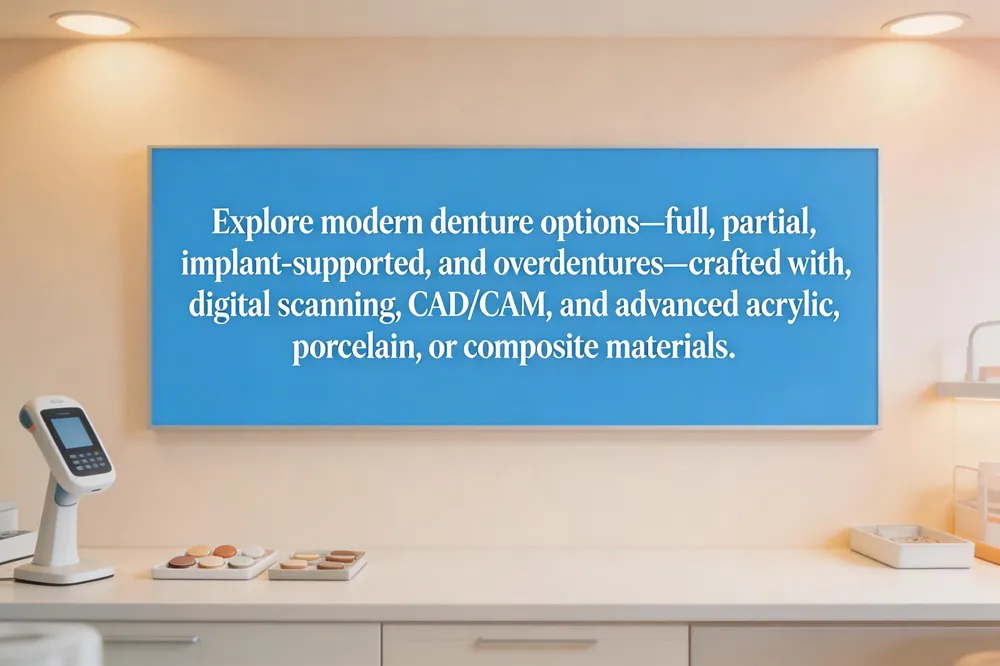 Modern dentistry offers several denture options that can be tailored to any adult, regardless of age. Complete (full) dentures replace all teeth in an upper or lower arch and rely on suction, adhesive, or implant support for retention. Partial dentures fill gaps where natural teeth remain; they are secured with metal clasps or precision attachments that bond to the existing teeth. Implant‑supported dentures are anchored to titanium implants placed in the jawbone, eliminating the need for adhesives and providing superior stability. Overdentures combine the support of a few remaining natural teeth with one or more implants, helping preserve the remaining dentition while enhancing fit.
All of these appliances are now custom‑fabricated using digital intra‑oral scanning and computer‑aided design (CAD/CAM). The digital workflow captures the exact contours of the gums and bite, allowing the laboratory to mill or 3‑D‑print high‑quality acrylic, porcelain, or composite bases that mimic the translucency, color, and texture of natural teeth. This precision reduces the adjustment period and improves comfort compared with older, bulky designs.
Because the process is based on the patient’s anatomy rather than age, dentures are suitable for anyone who has experienced significant tooth loss—whether from decay, trauma, periodontal disease, or congenital conditions. The combination of modern materials, digital design, and a variety of retention methods ensures a natural appearance, reliable function, and a confident smile for patients of all ages.
Debunking Common Myths About Full Dentures
 Full dentures replace all natural teeth in an arch, but many patients worry about stability, speech, bone loss, and cost. Modern, custom‑made dentures are designed to a the gums with a snug, suction‑based fit, and when properly fabricated they stay securely in place during everyday activities. Initial instability is usually due to an ill‑fitted prosthesis; a brief adjustment period and occasional relining resolve most slip‑through problems.
Speech changes are also common at first. The “new‑shoe” feeling can make words sound muffled, but with daily practice and, if needed, brief speech therapy most wearers regain clear pronunciation within a few weeks.
A pervasive myth links dentures to rapid bone resorption. In reality, bone loss occurs after any tooth extraction, not because of the denture itself. Well‑fitted dentures actually help distribute chewing forces and can slow the rate of resorption compared with a completely edentulous ridge left unsupported.
Cost‑wise, dentures are a non‑surgical, lower‑expense alternative to implant‑supported options. While implants require surgery and higher upfront investment, dentures provide functional aesthetics without the need for invasive procedures. Routine care—brushing with a soft‑bristle brush, using a non‑abrasive denture cleanser, and overnight soaking—keeps them comfortable and extends their 5‑10‑year lifespan. Regular dental check‑ups ensure optimal fit, oral health, and timely adjustments.
Partial Dentures: Myths, Care, and Eating Comfort
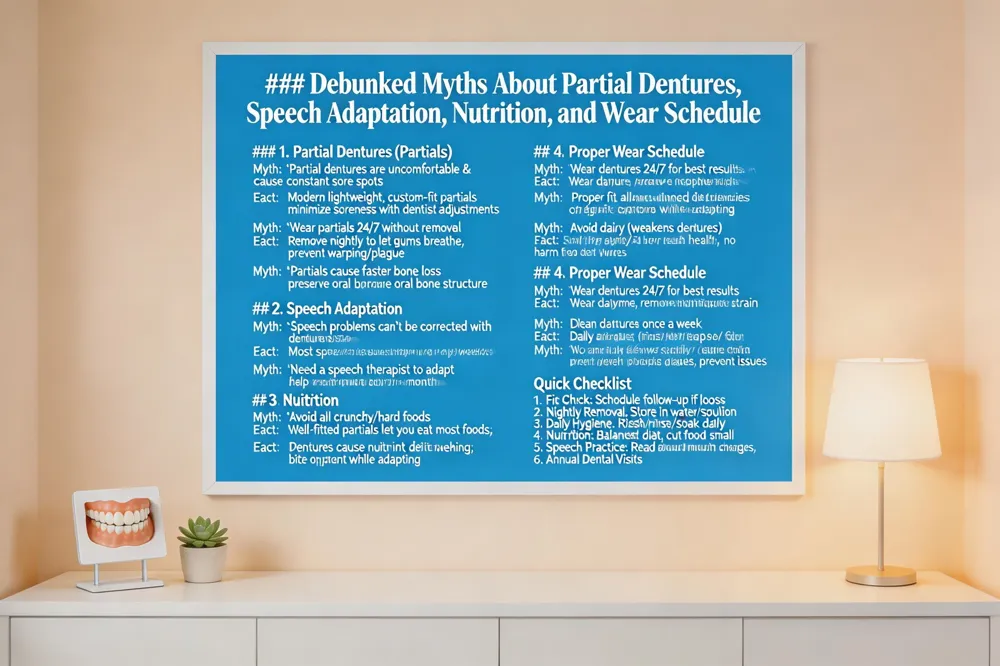 Partial dentures are custom‑fabricated appliances that replace one or more missing teeth while anchoring to the remaining natural teeth with metal clasps or precision attachments. Modern designs use high‑quality acrylic or metal frameworks that are color‑matched to the patient’s dentition, making them virtually indistinguishable from natural teeth and providing a secure, comfortable fit.
Adjustment period and speech – When you first receive a partial denture, a brief “new‑shoe” sensation and slight speech changes are normal. Most patients adapt within a few days to a week. Practicing aloud and using gentle mouth‑exercises helps restore clear pronunciation quickly. If speech difficulties persist beyond the adjustment phase, a dentist can fine‑tune the fit or recommend speech‑therapy techniques.
Nutrition and daily wear schedule – Partial dentures enable a wide variety of foods once you become accustomed to chewing on both sides of the mouth. Begin with softer items and gradually re‑introduce firmer foods as confidence grows. New partial dentures are typically worn for most of your waking hours—about 8 to 12 hours each day. Removing them at night reduces plaque buildup, allows gum tissue to breathe, and prevents irritation. Soak the appliances overnight soaking in a mild, non‑abrasive cleaning solution to maintain shape and hygiene.
What not to do with dentures – Do not wear them continuously; avoid toothpaste, boiling water, or harsh chemicals; never store them in hot water or open air; and never skip regular dental check‑ups. Promptly address any looseness, soreness, or discoloration with your dentist to ensure long‑term comfort and function.
Daily Denture Care: Cleaning, Soaking, and Maintenance
 Could you please provide the markdown text that you’d like me to rewrite?
Affordability, Insurance, and Multilingual Support in Paterson, NJ
 Paterson, New Jersey offers a range of affordable denture options that often cost between $1,200 and $2,000 for a basic full set, whereas implant‑supported dentures typically exceed $3,000–$5,000 due to surgical fees and implant components. For many residents, Medicaid and NJ FamilyCare cover a portion of denture expenses, and many private dental insurance plans reimburse up to 50 % of the cost for both conventional and implant‑supported prosthetics. local practices in the city—such as Baldwin Family Dental, Imagine Smiles, and Perinton Dental Group—maintain multilingual staff fluent in English, Spanish, and Arabic, ensuring clear communication for the diverse population. Community health initiatives, including the Passaic County Oral Health Program and local senior‑center outreach, provide free screenings, education on denture hygiene, and assistance navigating insurance benefits. These resources collectively lower financial barriers, promote proper oral health maintenance, and help Paterson’s residents of all ages and backgrounds access high‑quality denture care.
Your Path to a Confident Smile Starts Here
Let's review the key myths we’ve debunked: dentures are not just for seniors, they can look natural, they are comfortable when custom‑made, and they require only simple daily care—brushing with a soft brush, rinsing after meals, and overnight soaking. Modern full, partial, and implant‑supported dentures are affordable, non‑surgical options that restore chewing, speech, and facial aesthetics for adults of any age. If you’re ready to explore the best solution for your smile, schedule a personalized consultation with our skilled team. We offer a free, easy‑to‑read care PDF and provide multilingual assistance to ensure every patient feels confident and informed throughout the process.