A Smile Restored is a Life Transformed
The Profound Emotional and Social Impact
Missing teeth significantly affect more than just the ability to chew. It often impacts speech, leading to slurred pronunciation and self-consciousness in social and professional settings. This loss can erode confidence, causing individuals to withdraw from social interactions, smile less freely, and hesitate in daily activities. The change in facial structure, like sagging cheeks, can also make a person look older, further affecting self-esteem and overall quality of life.
A Reliable and Accessible Solution
Dentures offer a dependable and often affordable solution to these challenges. They are removable prosthetic devices crafted to replace missing teeth and surrounding tissues. By restoring a complete, natural-looking smile, dentures quickly address both aesthetic and functional concerns, allowing patients to eat, speak, and engage with renewed confidence. Modern technology ensures these appliances are comfortable, durable, and closely resemble natural teeth.
The process of getting dentures is designed to be straightforward and accessible. A comprehensive dental examination and impressions are taken to create a custom fit. Many practices offer financing options and accept insurance to lower financial barriers. Some providers even have on-site labs, dramatically speeding up creation, with some patients receiving their new smile in just a day or two.
Personalized, Compassionate Care for a Smooth Transition
The journey to a new smile is supported by personalized, compassionate care. Dentists and dental teams provide clear guidance through every step, from the initial consultation to follow-up adjustments. This support is crucial during the initial adjustment period, which may involve mild discomfort or changes in speech that typically subside within a few weeks.
Practices emphasize a no-pressure, judgment-free environment. Many offer satisfaction guarantees and craftsmanship warranties, providing peace of mind. Practical tips for new wearers, such as starting with soft foods and practicing speaking, are shared to ease the transition and help patients adapt quickly to their new dentures.
| Treatment Aspect | Key Features for Patient Comfort | Supporting Services for Confidence |
|---|---|---|
| Consultation & Planning | Free exams, personalized treatment plans tailored to budget and mouth. | Financing options, insurance acceptance, and price guarantees. |
| Fabrication & Fitting | Custom-made for natural look and comfortable fit; fast turnaround with on-site labs. | Use of advanced 3D imaging and printing technology for precision. |
| Post-Procedure Support | Follow-up adjustments for optimal fit; guidance on eating and speaking. | Satisfaction guarantees, long-term warranties, and accessible repair services. |
| Ongoing Care | Instructions for daily cleaning and overnight soaking to maintain hygiene. | Regular dental check-ups to monitor oral health and denture condition. |
Understanding Your Options: A Guide to Full and Partial Dentures
Understanding Your Options: A Guide to Full and Partial Dentures
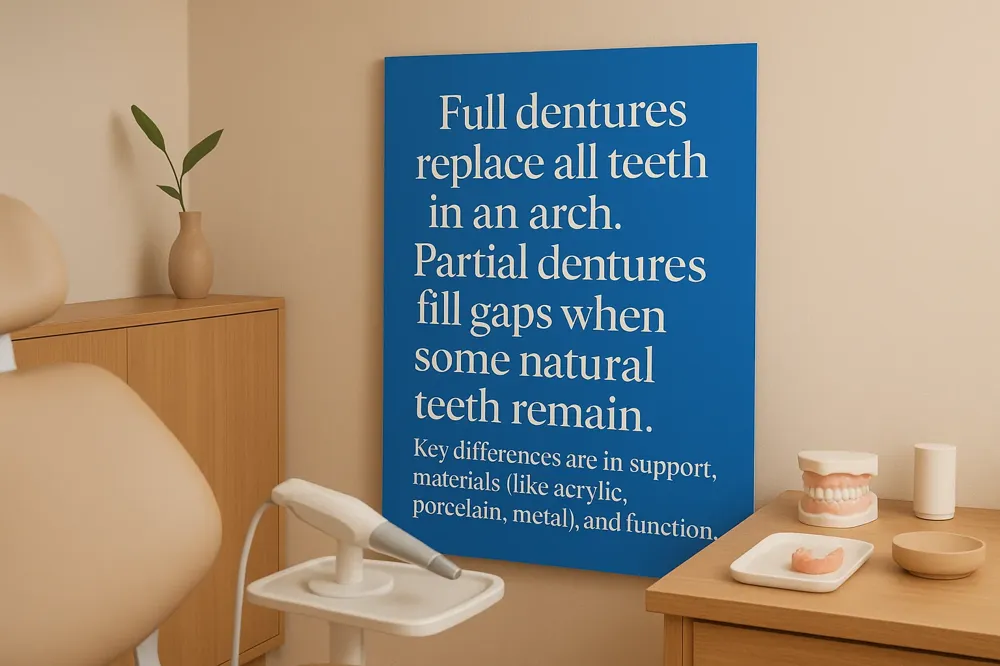
Dentures are custom-made prosthetic devices designed to replace missing teeth. They are broadly categorized into two main types: complete (full) dentures and partial dentures. The choice between them depends primarily on how many natural teeth you have lost.
Complete dentures replace every tooth in an arch—either the upper jaw, lower jaw, or both. They consist of a flesh-colored acrylic base that sits directly on your gums. Partial dentures, on the other hand, are used when some healthy natural teeth remain. They fill the specific gaps, often using a framework with clasps that attach to your existing teeth for stability.
The fundamental difference lies in support and application. Full dentures rely on the contours of your gums and palate for retention, while partials utilize both the gums and your remaining teeth. This structural distinction influences their fit, feel, and function in daily life.
What Are the Materials Used in Dentures?
The materials chosen for your dentures significantly impact their comfort, durability, and appearance. Modern dentures are crafted from a combination of substances to meet different needs.
- Acrylic Resin: This is the most common material for the gum-colored base of both full and partial dentures. It's lightweight, can be tinted to match natural gum shades, and is relatively easy to adjust.
- Porcelain or Ceramic: Often used for the artificial teeth themselves, these materials offer excellent aesthetics and stain resistance, closely mimicking the look and translucency of natural tooth enamel.
- Metal Alloys: Metals like cobalt-chromium are used to create strong, thin frameworks for partial dentures. These metal bases are durable, distribute biting forces well, and can be less bulky than all-acrylic options.
- Flexible Resins: Some modern partials are made from flexible, nylon-based materials. These are metal-free, offering a very natural look and comfortable fit, as they gently clasp the adjacent teeth.
The selection of materials is a collaborative decision between you and your dentist, balancing factors like strength, aesthetics, allergy concerns, and budget.
What is the Downside to Full Dentures?
While transformative, full dentures come with challenges that new wearers should anticipate. They can initially feel bulky, especially upper dentures that cover the roof of the mouth, which may temporarily affect taste sensation. A significant adjustment period is required to learn to speak clearly and eat comfortably.
Stability can be a concern; without the support of tooth roots or implants, dentures may slip or rock during chewing or speaking, often requiring adhesive creams for security. Over years, the jawbone naturally shrinks where teeth are missing, which changes the fit of the denture. This necessitates periodic relining—adding material to the base—or eventual replacement to maintain comfort.
Dietary adjustments are common. Wearers often avoid very hard, sticky, or tough foods to prevent discomfort or potential damage to the appliance.
What Are the Advantages and Disadvantages of Removable Partial Dentures?
Removable partial dentures offer a practical middle ground for many patients.
| Advantage | Disadvantage | Key Consideration |
|---|---|---|
| Cost-effective, non-surgical solution. | Adjustment period with possible speech or comfort issues. | More affordable than implants or bridges. |
| Preserves tooth alignment by preventing shifts. | Increased plaque around clasped teeth, raising decay risk. | Requires meticulous oral hygiene. |
| Removable for easy cleaning and gum rest. | Potential instability compared to fixed options. | May feel less secure during eating. |
| Restores function for chewing and speaking. | Can stress abutment teeth over long term. | Regular dental check-ups are critical. |
Are Full Mouth Dentures Worth It?
For individuals missing all their teeth, full mouth dentures are a profoundly valuable solution. They restore essential oral functions, enabling you to eat a balanced diet and speak with clarity. Aesthetically, they provide a complete, natural-looking smile and support your facial muscles, preventing the sunken appearance that often accompanies tooth loss. This restoration of both function and appearance can dramatically boost self-confidence and quality of life. As a non-surgical and generally more affordable option than full-arch implants, they represent a worthwhile and reliable investment in your long-term well-being.
What is an Advantage of Full Dentures?
A primary advantage of full dentures is their ability to comprehensively restore oral function and facial aesthetics. They enable effective chewing, allowing for a more varied and nutritious diet, which supports overall health. By replacing a full arch of teeth, they also provide crucial support for your lips and cheeks, maintaining your facial structure and contributing to a more youthful appearance. This holistic restoration is key to regaining confidence in your smile and daily interactions.
Is Getting a Partial Denture Worth It?
Yes, partial dentures are an excellent and worthwhile option for replacing several missing teeth while preserving your remaining healthy ones. They effectively restore your smile's appearance and fill gaps that can impair chewing and speech. A significant benefit is their role in oral health; by preventing neighboring teeth from drifting into empty spaces, they help maintain proper bite alignment and jaw function. As a removable, non-invasive solution, they offer a balance of functionality, aesthetics, and accessibility.
Determining the Right Type for You
Choosing between full and partial dentures is a decision best made in consultation with your dental professional. They will evaluate key factors:
- Extent of Tooth Loss: Are you missing all teeth in an arch or just several?
- Condition of Remaining Teeth: Are the existing teeth healthy enough to support a partial denture?
- Oral and Jawbone Health: What is the state of your gums and underlying bone structure?
- Lifestyle and Budget: What are your functional needs, aesthetic desires, and financial considerations?
This comprehensive assessment ensures the recommended solution aligns with your health and personal goals.
Advanced Denture Options
Modern dentistry offers enhanced versions of traditional dentures for greater stability or faster results.
- Implant-Supported Dentures: These are secured by small titanium posts surgically placed in the jawbone. They 'snap' onto these implants, offering superior retention, comfort, and chewing power compared to conventional dentures. They also help preserve jawbone density.
- Immediate Dentures: Placed immediately after tooth extraction, these allow you to leave the dental office with a full smile. They act as a temporary healing appliance, protecting gum tissue and letting you adapt to denture-wearing without a waiting period, before transitioning to a permanent set.
| Denture Type | Best For | Primary Benefit | Material Examples |
|---|---|---|---|
| Complete Dentures | Full tooth loss in an arch. | Restores full arch function & aesthetics. | Acrylic base, porcelain teeth. |
| Removable Partials | Several missing teeth, healthy teeth remain. | Prevents teeth shifting, cost-effective. | Metal framework, acrylic teeth. |
| Implant-Supported | Seeking maximum stability & bone preservation. | Stops denture slippage, improves bite force. | Acrylic denture on titanium implants. |
| Immediate Dentures | Need teeth replaced day of extraction. | No period without teeth, faster adaptation. | Typically acrylic resin. |
Consulting with an experienced dental team is the best way to navigate these options. They can craft a personalized plan using modern denture technology and compassionate care to ensure your new smile is comfortable, functional, and confidence-boosting.
Navigating the Adjustment: From First Bite to Confident Smile

The Initial Adaptation Period
When you first receive your dentures, it's common to experience a period of adjustment. Your mouth muscles need time to learn to work with the new removable oral appliances. This initial phase can include feeling a bulky sensation, temporary difficulty with speak more clearly with dentures, and some challenges with eating. An increase in saliva is also a typical reaction. It's important to remember that this phase is temporary and is a normal part of the adjustment period for full dentures as your tongue and cheeks learn the new contours of your mouth.
How Hard Is It to Eat with Full Dentures?
Eating with full dentures can be challenging at first. Your mouth muscles need time to adapt, and you'll need to learn new chewing techniques. Initially, you may experience difficulty with slipping or discomfort. To manage this, start with soft foods cut into small pieces. Examples include mashed potatoes, yogurt, scrambled eggs, and well-cooked pasta. Chew slowly and try to use both sides of your mouth simultaneously to help stabilize the dentures. With consistent practice—usually over a few days to weeks—most people adjust and become comfortable improving chewing ability with dentures and eating a wide variety of foods.
Practical Tips for Eating with New Dentures
Adopting a few simple techniques can make learning to eat with your new dentures much easier and safer.
- Start Soft: Begin your diet with soft, easy-to-chew foods and gradually reintroduce firmer items as your confidence grows.
- Small Bites: Cut your food into small, manageable pieces to reduce the amount of chewing force needed.
- Chew Evenly: Distribute food on both sides of your mouth when you chew. This balanced pressure helps keep the denture stable.
- Avoid Problem Foods: Initially, steer clear of very hard, sticky, or tough foods that could dislodge or damage your appliance.
What Can You Not Eat with Partial Dentures?
With partial dentures, it's wise to avoid foods that are particularly sticky, hard, or tough, as they can dislodge or damage the appliance. This includes items like:
- Sticky: Caramel, gum, and taffy.
- Hard: Hard candies, nuts, and popcorn kernels.
- Tough: Steak, crusty bread, and raw carrots. It's best to cut foods into small pieces and chew slowly, using your back teeth. This careful approach allows you to enjoy a balanced diet while protecting your investment and maintaining your partial dentures for a functional smile.
Strategies for Regaining Clear Speech Quickly
Missing teeth and new dentures can temporarily affect dentures for speech clarity by altering tongue placement and airflow. To regain clear speech:
- Practice Reading Aloud: Spend time each day reading a book or newspaper out loud in a quiet room. This helps your tongue and lips adapt to forming words with the dentures in place.
- Repeat Tricky Words: If you notice specific sounds are difficult, slowly repeat words containing those sounds.
- Speak Slowly: Don't rush your conversations initially. Speaking at a slightly slower pace gives your muscles time to coordinate.
- Be Patient: Minor slurring or clicking sounds are common at first and typically improve within a few weeks as your mouth adjusts.
Does "Monkey Mouth" from Dentures Go Away?
Yes, the initial "monkey mouth" appearance—where lips may seem overly full or protruded—often does go away. This temporary swelling or lip protrusion typically subsides as your lips adjust to the new dentures and any post-procedure inflammation decreases. A properly designed denture should ultimately support your lips and cheeks from behind, much like natural teeth, to restore facial structure and prevent a sunken appearance. If the protruded look persists, it may indicate that the dentures need a precise adjustment for a more comfortable, custom-made dentures for comfortable fit.
How Long Does It Take to Get Used to Wearing a Partial Denture?
Getting used to wearing a partial denture is a gradual process. Most patients feel significantly more comfortable within the first three to four weeks, with full adaptation typically taking between three to nine weeks. The timeframe can be shorter if only a few teeth are being replaced. To speed up adjustment, practice speaking and eating soft foods at home to build confidence. Consistent, daily wear is key to helping your mouth adapt and is part of the adjusting to partial dentures process.
The Realistic Timeline for Comfort and Confidence
While everyone's journey is unique, a general timeline can help set realistic expectations for your dentures adjustment period.
| Time Period | What to Expect | Key Actions |
|---|---|---|
| First Few Days | Sore spots, increased saliva, speech changes, difficulty eating. | Stick to soft foods, practice speaking, use dental adhesives for dentures if recommended. |
| First 1-4 Weeks | Discomfort decreases, speech improves, eating becomes easier. | Gradually add more foods, attend follow-up appointments for adjustments. |
| 1-3 Months | Mouth muscles are adapted; dentures feel more natural. | Enjoy a wider diet, speak with confidence, boost confidence with dentures. |
| Ongoing | Minor adjustments may be needed as gums and bone change. | Maintain excellent daily care for dentures and partials and regular dental check-ups. |
With patience and persistence, the initial challenges give way to restored function and a confident smile. Following your dentist's care instructions and attending all scheduled follow-up visits are crucial steps in ensuring a smooth and successful denture process to your new dentures.
The Swift Path: Immediate Dentures for Day-One Confidence
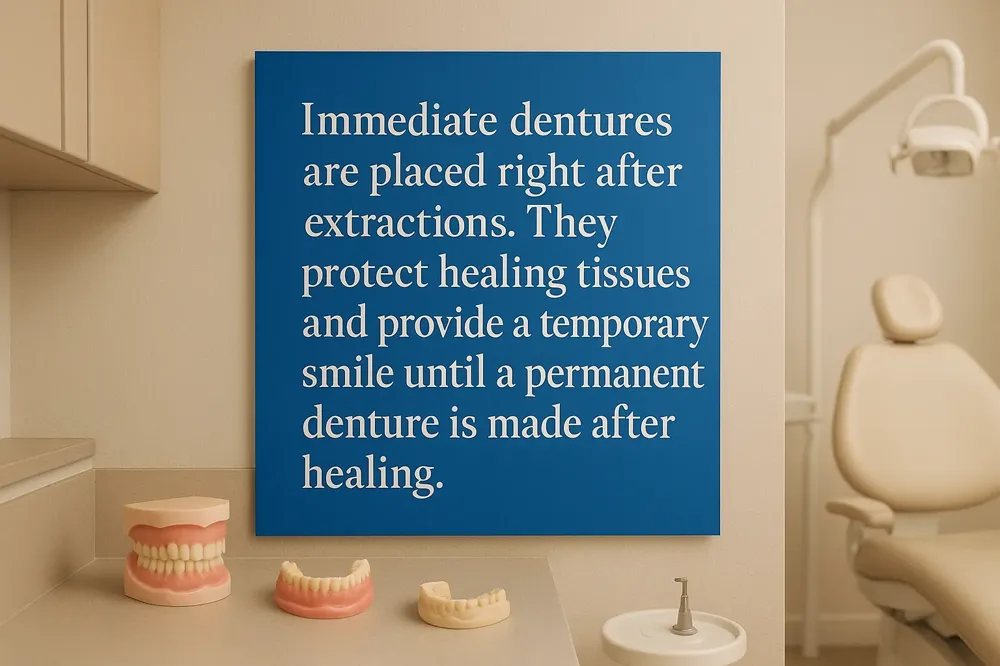
The Swift Path: Immediate Dentures for Day-One Confidence
When facing the need for multiple extractions, the prospect of being without teeth for weeks or months can be daunting. Immediate dentures, often called instant or same-day dentures, offer a compassionate solution. These are removable prosthetic devices fabricated in advance and placed immediately after your teeth are removed. You walk out of the dental office with a complete, natural-looking smile on the very same day, avoiding a visible gap during the healing process.
How immediate dentures protect healing tissues and preserve appearance
Beyond aesthetics, immediate dentures play a crucial therapeutic role. The acrylic base acts as a protective bandage over the sensitive extraction sites, helping to:
- Control bleeding and minimize initial swelling.
- Protect the forming blood clots, which are essential for proper healing.
- Support facial muscles and lips, preventing the sunken, aged facial appearance that can follow tooth loss. This protection helps promote faster, more comfortable recovery while allowing you to maintain your facial contours and confidence in social and professional settings from day one.
Are instant dentures any good?
Instant dentures are an excellent temporary solution with specific advantages and limitations. Their primary benefit is providing immediate function and aesthetics, sparing you the emotional and social impact of being toothless. They facilitate a quicker adaptation to speaking and chewing with a prosthetic. However, because they are crafted before extractions and placed on gums that will shrink and change shape significantly, they rarely fit as precisely as permanent dentures. This often leads to increased need for adjustments, potential for sore spots, and less stability during eating. They are a good transitional appliance, but most patients will require a new, permanently fitted denture after the jawbone and gums have fully healed, typically within several months to a year.
Understanding the process: consultation to permanent transition
The journey with immediate dentures typically unfolds in distinct phases:
| Phase | Key Activities & Appointments | Purpose & Patient Experience |
|---|---|---|
| Consultation & Planning | Comprehensive exam, impressions, shade selection. | The dental team plans your new smile and fabricates the denture based on models of your current teeth and gums. |
| Extraction & Insertion | Removal of indicated teeth; placement of the immediate denture. | You leave the office with teeth. The denture may feel bulky, and some soreness is normal as it protects healing sites. |
| Healing & Adjustment | Multiple follow-up visits over the next 3-6 months for adjustments and soft relines. | As swelling subsides and gums reshape, the fit loosens. Frequent appointments are crucial to add material (reline) for comfort and stability. |
| Transition to Permanence | Final impressions once healing is complete; fabrication of a new permanent denture. | After 6-12 months, your jawbone stabilizes. A new denture is crafted for a superior, long-term fit, function, and comfort. |
This structured process ensures you are supported at every stage, from immediate restoration to a final, optimized solution for your long-term oral health and confidence.
Ensuring a Secure Fit: Maintenance and Daily Care for Lasting Confidence
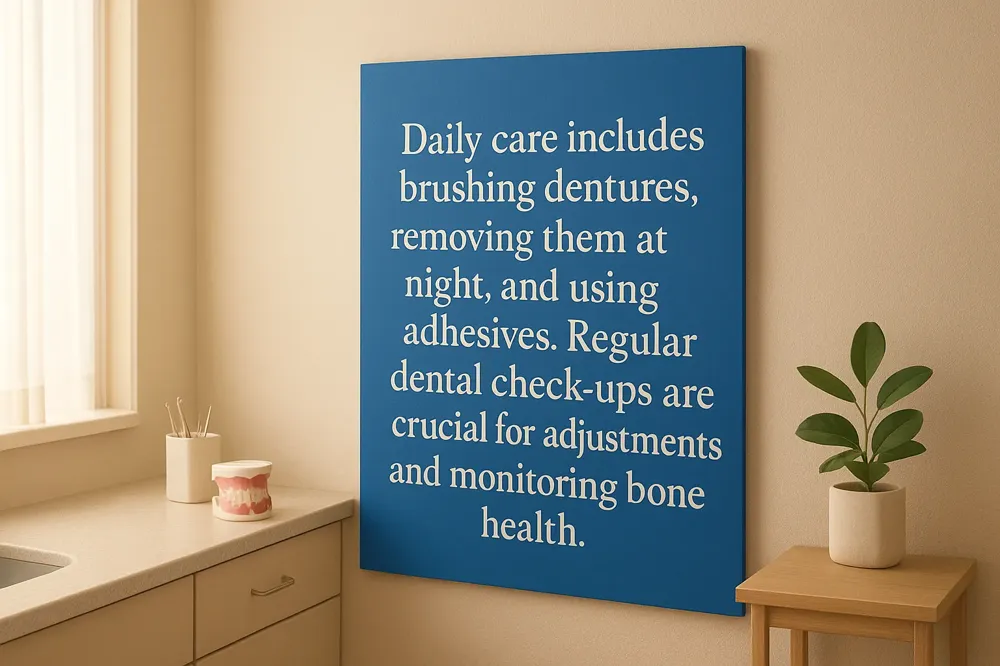
Essential daily care for dentures and partials to ensure hygiene, longevity, and a fresh smile.
A consistent daily cleaning routine is fundamental for maintaining the hygiene, appearance, and longevity of your dentures or partials. This simple yet essential practice prevents plaque buildup, staining, and odors, ensuring your smile remains fresh and natural-looking.
First, always handle your dentures over a soft towel or a sink filled with water to prevent breakage if dropped. Remove your dentures and rinse them under lukewarm water after every meal to wash away food particles. For a thorough daily cleaning, use a soft-bristled denture brush and a mild, non-abrasive denture cleaner or soap. Avoid using regular toothpaste, hot water, or harsh cleaners, as these can scratch or warp the denture material.
Brush all surfaces gently, including the teeth, gum-colored base, and any clasps. After brushing, rinse the dentures completely before placing them back in your mouth. It is equally important to clean your natural mouth tissues. Brush your gums, tongue, roof of your mouth, and any remaining natural teeth twice daily with fluoride toothpaste to stimulate circulation and remove plaque.
Is it okay to wear partial dentures all the time?
No, it is not recommended to wear partial dentures all the time. It is crucial to remove them for sleep to allow your gums and jawbone to rest and recover, preventing irritation and bone loss. Removing them nightly also provides an essential opportunity for thorough cleaning to prevent plaque buildup and oral infections. Furthermore, taking them out for several hours daily helps maintain the health of the remaining natural teeth and gums that support the partial denture. Consistent, proper denture care—including this daily removal—is key to ensuring comfort, hygiene, and the long-term success of your restoration.
The critical importance of removing dentures at night for oral and gum health.
Dentists universally recommend removing dentures for at least eight hours each day, typically overnight. This practice allows the oral tissues underneath to rest, significantly reducing the risk of irritation, inflammation, and infection. Extended wear without this break can trap bacteria and food debris, promoting harmful plaque that may lead to gum disease and decay of any remaining natural teeth.
Furthermore, removing your dentures at night helps maintain jawbone health. Your jawbone requires natural stimulation to stay strong; constant pressure from a denture can accelerate bone resorption, the natural shrinkage of the jawbone after tooth loss. This nighttime rest period is a simple, proactive step to help slow this process and preserve your facial structure.
What is a good product to hold dentures in place?
Several effective products can securely hold dentures in place. For upper dentures, creams or adhesive pads like Poligrip or Fixodent create a strong seal against the palate. For lower dentures, cushion grip adhesives are often recommended as they provide a soft, flexible bond that absorbs pressure. Powder adhesives are another versatile option, offering a thin, secure layer suitable for many wearers. Ultimately, the best choice depends on your comfort, fit, and any sensitivity, and our dental team at our Paterson practice is happy to provide personalized recommendations during your visit.
How products like adhesives and cushions can enhance stability and comfort.
Modern dental adhesives for dentures and cushions are valuable tools for improving stability, comfort, and confidence, especially for new wearers or those with less-than-perfect fit. Adhesives can fill minor gaps between the denture and your gums, creating a secure seal that reduces slipping during activities like eating or speaking. This can make chewing more comfortable and efficient.
Cushions or liners provide a soft, protective layer that absorbs impact and distributes biting forces more evenly across the gums, which can alleviate sore spots. While these products are helpful, they are not a permanent substitute for a well-fitting denture. If you find yourself relying heavily on adhesives, it may be a sign your dentures need a professional adjustment or reline to ensure a better fit.
The role of regular dental check-ups in maintaining fit and addressing issues like bone resorption.
Routine dental visits are essential for all denture wearers, not just those with natural teeth. Your dentist will check the fit, function, and condition of your dentures, making minor adjustments to prevent discomfort. They also monitor your oral health for signs of irritation, infection, or changes in your mouth's structure.
A key focus is monitoring jawbone health. Even with dentures, bone resorption continues gradually, which will change how your dentures fit over time. Your dentist can perform procedures like a denture reline every one to two years, which adds material to the denture base to restore a snug fit against your changing gums. This proactive maintenance for full dentures prevents issues like a sunken facial appearance, improves comfort, and extends the life of your dentures.
What is the 3-3-3 rule for teeth?
The 3-3-3 rule is a simple guide for excellent oral hygiene. It means you should brush your teeth three times a day—ideally after breakfast, after lunch, and before bed—for three minutes each session, ensuring you clean every surface thoroughly. The final part of the rule is to replace your toothbrush or brush head every three months to keep it effective. This proactive routine is especially beneficial for those prone to cavities or gum issues. Remember, this rule complements, but does not replace, the essential daily practice of cleaning between your teeth with floss or interdental brushes.
| Aspect of Care | Core Action | Benefit & Rationale |
|---|---|---|
| Daily Cleaning | Brush with soft brush & denture cleaner, rinse after meals. | Prevents stains, plaque, and odors; maintains appliance hygiene. |
| Nightly Removal | Take dentures out for 8+ hours, typically overnight. | Allows gums to rest, reduces infection risk, slows jawbone resorption. |
| Adhesive Use | Apply creams, powders, or cushions as needed for stability. | Enhances security during eating/speaking, improves comfort. |
| Oral Hygiene | Brush gums, tongue, and natural teeth twice daily. | Removes plaque, stimulates tissues, supports overall oral health. |
| Dental Visits | Schedule check-ups regularly, typically every six months. | Enables fit adjustments, monitors bone health, prevents major issues. |
Beyond the Smile: The Holistic Benefits for Your Health and Confidence
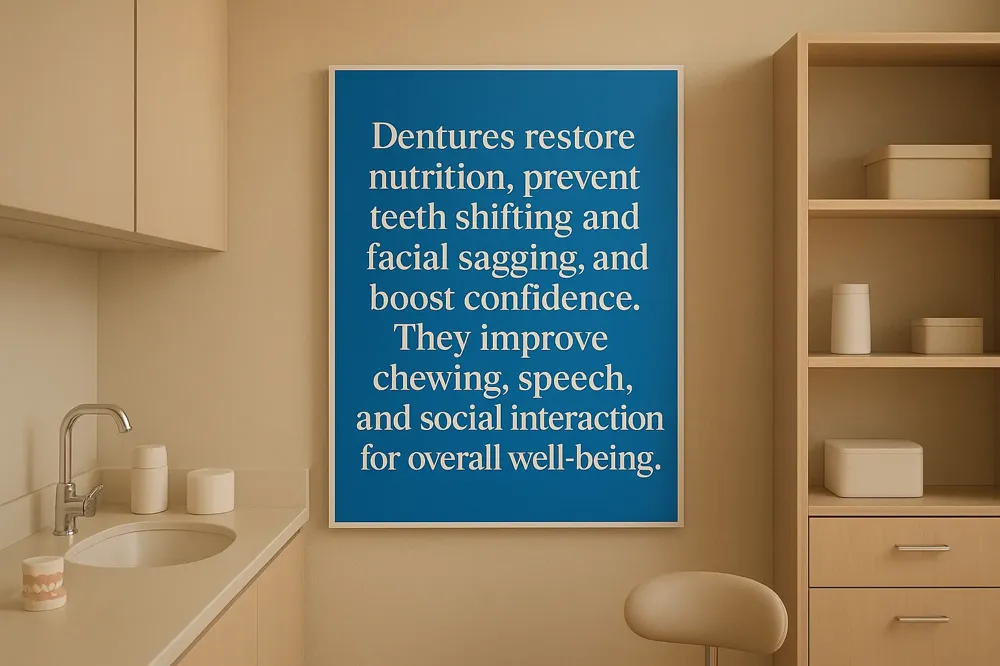
Do dentures help give you confidence?
Yes, dentures can profoundly restore confidence by providing a natural-looking smile and restoring the ability to speak and eat properly with dentures, which directly combats the self-consciousness often caused by tooth loss. Modern, custom-made dentures for comfortable fit are designed to look and feel like your own teeth, allowing you to smile freely without hesitation. This restoration of your appearance and oral function can significantly improved self-esteem with dentures and overall quality of life. For an even greater boost in stability and confidence, implant-retained dentures offer a secure, permanent solution that feels most like natural teeth. Ultimately, by addressing both aesthetic and functional concerns, dentures empower you to face the world with renewed self-assurance.
How dentures restore proper nutrition by enabling a varied, balanced diet
Missing teeth often force individuals to avoid hard, crunchy, or chewy foods, leading to a limited diet that can lack essential nutrients. Dentures restore effective chewing ability, allowing you to comfortably eat a wider variety of foods. This improved chewing function aids digestion and nutrient absorption, supporting your overall wellness. With properly fitted dentures, you can enjoy fruits, vegetables, and proteins that might have been off-limits. This return to a balanced diet is a cornerstone of better physical health and energy levels, reinforcing the daily confidence that comes from taking care of your body.
The role in preventing long-term oral health issues like teeth shifting, jawbone deterioration, and facial sagging
When teeth are missing, the remaining natural teeth can gradually shift into the empty spaces, causing misalignment, bite problems, and uneven wear. Partial dentures fill these gaps, preventing this movement and helping to maintain proper dental alignment. Additionally, tooth loss leads to jawbone shrinkage because the bone is no longer stimulated by tooth roots. Over time, this can cause the jawbone to shrink, leading to a sunken facial appearance with sagging cheeks and lips. Dentures, especially implant-supported dentures vs conventional dentures that mimic tooth roots, help support the jawbone and facial muscles. They fill out the face, preserving its natural contours and preventing the prematurely aged look associated with bone loss.
The direct psychological lift: from improved self-esteem in social settings to renewed confidence in professional and personal interactions
The impact of dentures extends far beyond physical function. Restoring a complete, natural-looking smile directly addresses the embarrassment and self-consciousness that often accompany tooth loss. This can transform social interactions, making you feel more at ease smiling, speaking, and eating in public. In professional settings, clear speech and a confident appearance can enhance communication and personal presentation. The psychological benefits include increased happiness, a sense of empowerment, and a greater willingness to engage in social activities and relationships. By restoring both your smile and your oral capabilities, dentures provide a foundation for improved mental well-being and a more active, fulfilling lifestyle.
| Benefit Category | Physical Health Impact | Confidence & Psychological Impact | Key Supporting Fact |
|---|---|---|---|
| Nutrition & Diet | Enables chewing diverse foods; aids digestion and nutrient intake. | Freedom to eat socially without worry; supports overall vitality. | Dentures restore improve chewing ability with dentures for a balanced diet, from crunchy vegetables to meats. |
| Oral & Facial Structure | Prevents teeth shifting; supports jawbone; reduces facial sagging. | Maintains youthful appearance; reduces self-consciousness about aging effects. | Dentures prevent teeth shifting with partial dentures and support facial muscles with partial dentures to prevent a sunken look. |
| Social & Professional Life | Improves speech clarity; restores comfortable eating and speaking. | Boosts self-esteem in conversations, meetings, and social gatherings. | A natural-looking smile allows confident interaction in personal and professional settings. |
| Long-Term Well-being | Helps maintain oral health; prevents further dental issues. | Provides lasting psychological lift and sense of normalcy. | Customized dentures improve quality of life by restoring function and aesthetics long-term. |
A Compassionate Partnership: Your Journey with a Trusted Dental Practice
What celebrity wears dentures?
Many celebrities from various fields have relied on dentures to maintain their public image. Historical figures like George Washington wore dentures crafted from unconventional materials. In Hollywood, Clark Gable wore dentures after losing teeth to gum disease early in his career. Contemporary figures, including supermodel Janice Dickinson and musician Nikki Sixx, have also been open about their use of dentures. Even modern politicians are often rumored to utilize dental prosthetics for a complete smile. This demonstrates that dentures are a practical and effective solution embraced by many to restore confidence and function.
Why is professional guidance crucial for denture success?
A successful denture experience begins with expert assessment and planning. An experienced dental team evaluates your oral health, jawbone density, and lifestyle needs to recommend the best type—be it complete, partial, or implant-supported dentures. They consider factors when choosing dentures like material choice (acrylic, metal, or ceramic) and fit, which are critical for comfort and function. Without professional guidance, poorly fitting dentures can cause soreness, speech issues, and even accelerate jawbone loss. A trusted practice ensures your prosthetic is not just a device, but a personalized solution crafted for your unique anatomy and daily life.
What steps are involved in the denture process?
The journey to a new smile typically follows a structured, multi-visit path designed for precision and comfort.
| Step | Primary Activity | Key Detail for Patient Comfort |
|---|---|---|
| Initial Consultation | Comprehensive oral exam and discussion of goals. | Dentist assesses gum health, remaining teeth, and takes X-rays. |
| Impressions & Design | Creating precise molds (impressions) of your mouth. | May use traditional putty or modern 3D digital scanning for accuracy. |
| Fitting & Try-In | Testing a wax or prototype model of the denture. | Allows you to preview the fit, bite, and aesthetics before final creation. |
| Insertion & Adjustment | Placing the final denture and making minor tweaks. | Addresses initial pressure points for immediate comfort. |
| Ongoing Support | Follow-up visits for fit checks and oral health monitoring. | Essential as gums and jawbone change shape over time. |
How do patient-centered features make the journey easier?
Leading dental practices remove common barriers to care through tangible benefits that prioritize your well-being and budget.
- Affordability & Transparent Pricing: Many offer clear, upfront cost estimates and budget-friendly options, with basic replacement dentures starting at accessible price points per arch. Savings plans for patients without insurance can further reduce costs.
- Flexible Financing: Acceptance of major insurance providers and partnerships with third-party lenders mean over 99% of patients can be approved for financing. Options often include low-interest plans and manageable monthly payments.
- Speed & Convenience: An on-site dental lab dramatically shortens wait times. Some patients receive their dentures in as little as a day and a half, allowing for a rapid restoration of smile and function.
- Confidence-Building Guarantees: Practices may offer robust warranties on craftsmanship (e.g., up to 7 years) and satisfaction guarantees. These can include a 90–100 day period to address concerns and a promise to match or beat competitor pricing.
Why does compassionate, multilingual care build trust?
Beyond technical skill, the demeanor and approach of the dental team are foundational to a positive experience. A compassionate practice fosters an environment of no pressure and no judgment, where patients feel heard and respected. For non-native English speakers, access to multilingual staff (commonly in Spanish and Arabic) ensures clear communication about complex procedures and care instructions, eliminating anxiety. Patient reviews frequently highlight attributes like kindness, patience, and genuine care as pivotal factors in feeling comfortable and confident throughout the treatment journey. This human-centered partnership is what transforms a clinical procedure into a supportive path toward renewed confidence.
Your Confident Smile Awaits
The Swift Path to Your New Smile
Modern dental care offers a remarkably efficient journey from tooth loss to a restored, confident smile. The process for getting dentures or partials is designed for speed and comfort, beginning with a thorough dental examination. Using advanced techniques like 3D imaging, your dental team takes precise impressions of your mouth to craft a custom prosthetic. For many, immediate dentures can be placed right after tooth extraction, allowing you to leave the office with a complete smile the very same day. This means you never have to experience a period without teeth, and you can begin adapting to speaking and eating with your new smile immediately.
Follow-up appointments ensure your dentures fit perfectly as your gums heal. This streamlined, patient-focused approach minimizes disruption to your daily life. The combination of experienced care and modern technology transforms what was once a lengthy process into a swift solution. You can quickly regain the ability to eat, speak, and smile with assurance, rebuilding your confidence without a long wait.
Modern Comfort Meets Natural Beauty
Today’s dentures are a far cry from the bulky, uncomfortable devices of the past. Crafted from advanced materials like acrylic resins, flexible polymers, and durable metals, they are designed for a secure and comfortable fit. These materials are selected to mimic the look and feel of natural gum tissue and teeth, providing a result that is both aesthetically pleasing and highly functional. The customization doesn’t stop at color and shape; the fit is tailored to your unique facial structure to support your lips and cheeks, helping to restore a more youthful appearance.
This focus on individualized design means your new smile will look and feel like your own. The technology ensures stability, reducing concerns about slipping or clicking. Whether you need a full or partial denture, the outcome is a prosthetic that feels like a natural part of you, allowing you to engage in social and professional settings with renewed self-assurance. The comfort and natural look provided by these modern advancements are foundational to restoring your confidence quickly and effectively.
Taking Your First Step with Confidence
Embarking on the journey to a new smile begins with a simple conversation. Consulting with a compassionate and experienced dental team is the most important step. During a consultation, your dentist will review your oral health, discuss your lifestyle, and explain all available options, from full and partial dentures to implant-supported solutions. This conversation ensures your treatment plan is personalized to your needs, budget, and desired outcome.
Many practices offer transparent pricing, financing options, and satisfaction guarantees to make quality care accessible. There is no pressure, only professional guidance to help you make the best decision for your health and happiness. By taking this first step, you are moving directly toward a solution that will restore not just your smile, but your comfort, function, and confidence. Your path to a beautiful, confident smile is closer than you think.
| Topic Covered | Key Point | Patient Benefit |
|---|---|---|
| Treatment Process | Streamlined steps from exam to placement, often with same-day options. | Quick restoration of smile and function with minimal life disruption. |
| Modern Materials & Design | Use of advanced, customized materials for a natural look and secure fit. | Enhanced comfort, stability, and aesthetics that boost daily confidence. |
| Professional Consultation | Personalized assessment and planning with a trusted dental team. | A clear, tailored path forward that addresses individual needs and concerns. |
| Accessibility & Support | Available financing, guarantees, and compassionate care practices. | Reduced barriers to starting treatment and achieving a satisfying result. |