Preparing for the Unexpected
When a tooth must be removed urgently—because of severe decay, an infection, trauma, or crowding—the first step is understanding why the extraction is necessary. Your dentist will explain the specific problem, such as a fractured crown, advanced gum disease, or an impacted molar, and discuss the benefits of removal, including pain relief and prevention of further oral complications. Next, gather a complete medical history: list every prescription, over‑the‑counter drug, vitamin, and supplement, and note any allergies, heart conditions, diabetes, or blood‑thinning medications. This information allows the clinician to adjust medications, prescribe antibiotics if needed, and choose the safest anesthesia or sedation option. Finally, arrange logistics before the appointment. Set up a ride home, especially if sedation is used, and stock soft foods (yogurt, mashed potatoes, smoothies) and ice packs for the first 48‑72 hours. Preparing these details in advance helps the extraction proceed smoothly and supports a faster, complication‑free recovery.
Pre‑Procedure Planning
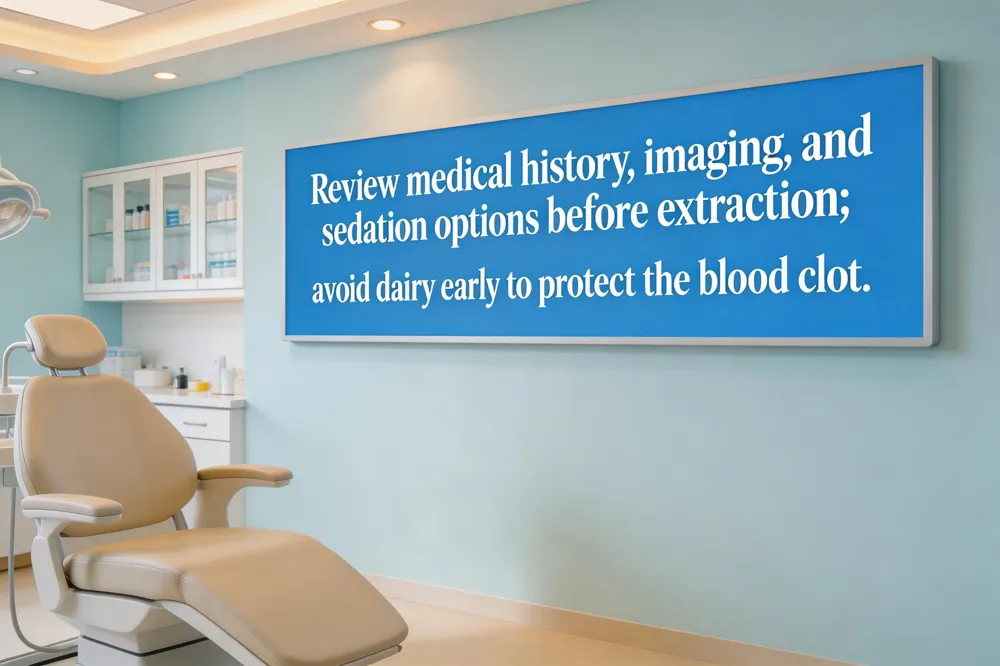 A successful extraction starts with a thorough medical‑history review and complete medication disclosure, especially blood thinners, supplements, or vitamins that may need to be paused. The dentist will also obtain diagnostic imaging—usually a dental X‑ray or CT scan—to assess the tooth’s position, root anatomy, and proximity to nerves or sinuses, which guides whether a simple or surgical extraction is required. Sedation options, ranging from nitrous oxide to oral or IV sedation, are discussed to address anxiety and ensure comfort during the procedure.
Why no dairy after tooth extraction? Dairy can leave a sticky residue that traps bacteria around the fresh socket, increasing infection risk and jeopardizing the blood clot needed for healing. Its mild acidity and proteins may also irritate delicate gum tissue, so milk, cheese, yogurt, and ice cream are best avoided for the first few days.
Tooth extraction cost: In Paterson, NJ a simple extraction runs $100‑$300, while a surgical removal costs $300‑$800 per tooth. National averages are $177 for simple and $180‑$550 for surgical extractions, with wisdom‑tooth cases often $1,200‑$3,000. Fees may rise with X‑rays, sedation, or bone grafts, though many insurance plans cover part of the expense.
Emergency tooth extraction no insurance: Uninsured patients can receive same‑day emergency extractions for a flat fee of $250‑$350, with cash, credit, or debit accepted. Flexible payment plans and discount dental plans help keep out‑of‑pocket costs low.
Can I eat before tooth extraction with local anesthesia? Yes—light a,,2 glitter3 hours before the appointment are fine. Choose easy‑to‑digest foods like toast, yogurt, or fruit, and avoid heavy, greasy, or spicy meals. After the extraction, wait until numbness subsides before chewing to prevent accidental bites.
Day‑Of‑Extraction Logistics
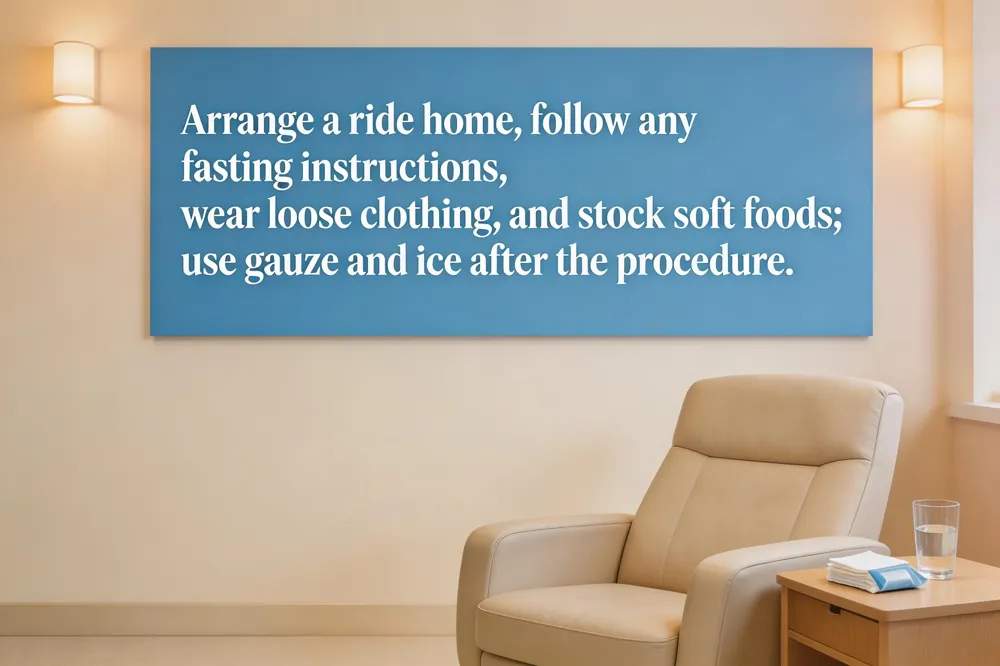 Before you arrive for a tooth extraction, arrange a ride home especially if sedation or nitrous oxide is planned, because the numbing agents can impair coordination. Follow any fasting instructions your dentist gave—usually no solid food for 6‑8 hours if general anesthesia is used, but clear liquids are allowed up to the hour before the appointment. Dress in loose, comfortable clothing and avoid jewelry or makeup that could interfere with monitoring equipment. Stock your kitchen with soft‑food staples such as yogurt, applesauce, mashed potatoes, scrambled eggs, and smoothies so you can eat without stressing the socket.
What to do after tooth extraction – Bite gently on clean gauze for 30‑45 minutes to form a clot, keep your head slightly elevated](https://www.gentledental.com/resources/articles/dos-donts-after-tooth-extraction) and apply a cold compress on the cheek for the first 24 hours (https://www.gentledental.com/resources/articles/dos-donts-after-tooth-extraction). Take prescribed or over‑the‑counter analgesics (avoid aspirin) (https://www.gentledental.com/resources/articles/dos-donts-after-tooth-extraction) and rest while avoiding strenuous activity. Do not rinse, spit, or use a straw for the first day (https://www.gentledental.com/resources/articles/dos-donts-after-tooth-extraction); after 24 hours, rinse gently with warm salt water (½ tsp salt per 8 oz) a few times daily (https://www.gentledental.com/resources/articles/dos-donts-after-tooth-extraction). Follow a soft‑food diet and refrain from smoking, alcohol, and chewing on the extraction side for several days. Contact your dentist if bleeding persists or pain worsens.
First night after tooth extraction – Keep gauze on the site for 30‑45 minutes, changing as needed (https://www.gentledental.com/resources/articles/dos-donts-after-tooth-extraction), and use an ice pack in 15‑minute on/off cycles (https://www.gentledental.com/resources/articles/dos-donts-after-tooth-extraction). Take pain medication before the anesthetic wears off, elevate your head with pillows (https://www.gentledental.com/resources/articles/dos-donts-after-tooth-extraction), and eat cool, soft foods like applesauce or yogurt (https://www.gentledental.com/resources/articles/dos-donts-after-tooth-extraction). Avoid hot, crunchy, or chewy items and any straw use.
How to relieve pain after tooth extraction – Use the dentist‑prescribed pain regimen, apply a cold compress for 20‑minute intervals during the first day (https://www.gentledental.com/resources/articles/dos-donts-after-tooth-extraction), and keep your head elevated (https://www.gentledental.com/resources/articles/dos-donts-after-tooth-extraction). After 24 hours, begin gentle warm salt‑water rinses (https://www.gentledental.com/resources/articles/dos-donts-after-tooth-extraction) and continue soft, cool foods (https://www.gentledental.com/resources/articles/dos-donts-after-tooth-extraction). Avoid straws, smoking, alcohol, and vigorous exercise for a few days to protect the clot.
How soon can I drink water after tooth extraction – Small sips of cool or lukewarm water are safe about 1‑2 hours after the gauze is removed and bleeding has stopped. Do not use a straw; avoid hot liquids for the first 24‑48 hours.
When can I start rinsing with salt water after tooth extraction – Begin gentle salt‑water rinses on day 2 (≈24 hours post‑procedure) using ½ tsp salt in 8 oz warm water, 2‑3 times daily for the first couple of days, then 3‑4 times daily until the socket heals (about two weeks) (https://www.gentledental.com/resources/articles/dos-donts-after-tooth-extraction).
Immediate Post‑Extraction Care
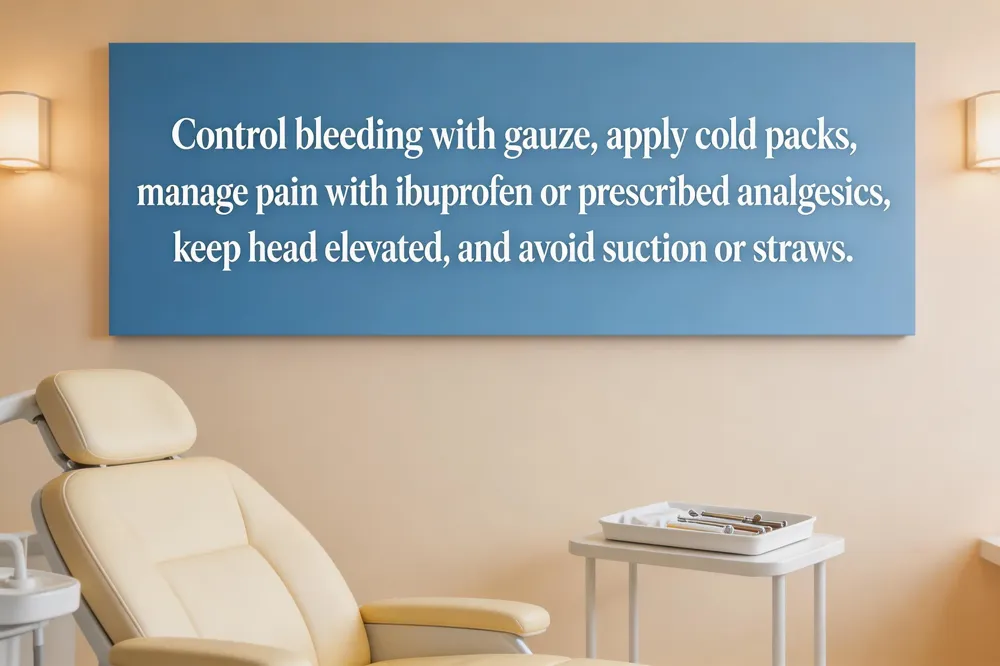 After a tooth is removed, the first priority is controlling bleeding and protecting the fresh blood clot. Bite gently on a clean gauze pad for 30‑45 minutes, replacing it as needed until the bleeding subsides; a moistened tea bag can help if bleeding persists. Apply a cold pack to the cheek for 15‑minute intervals during the first 24‑48 hours to reduce swelling and discomfort. Pain is usually managed with ibuprofen or acetaminophen, taken as directed, and a prescribed analgesic if the dentist provided one. Keep the head elevated and limit activity for the first two days to support clot stability.
Things to avoid after tooth extraction – Do not smoke, use a straw, or spit vigorously for at least 48 hours, as suction can dislodge the clot and cause dry socket. Skip hard, crunchy, sticky, hot, spicy, acidic, or alcoholic foods and beverages for the first 24‑48 hours, and avoid vigorous rinsing or brushing over the socket.
24 hour emergency tooth extraction near me – David Mmayer DDS offers 24‑hour emergency tooth‑extraction services throughout Paterson, NJ, and surrounding areas. The multilingual team provides same‑day treatment, pain relief, and after‑care guidance, with an after‑hours line staffed around the clock.
Managing Common Side Effects
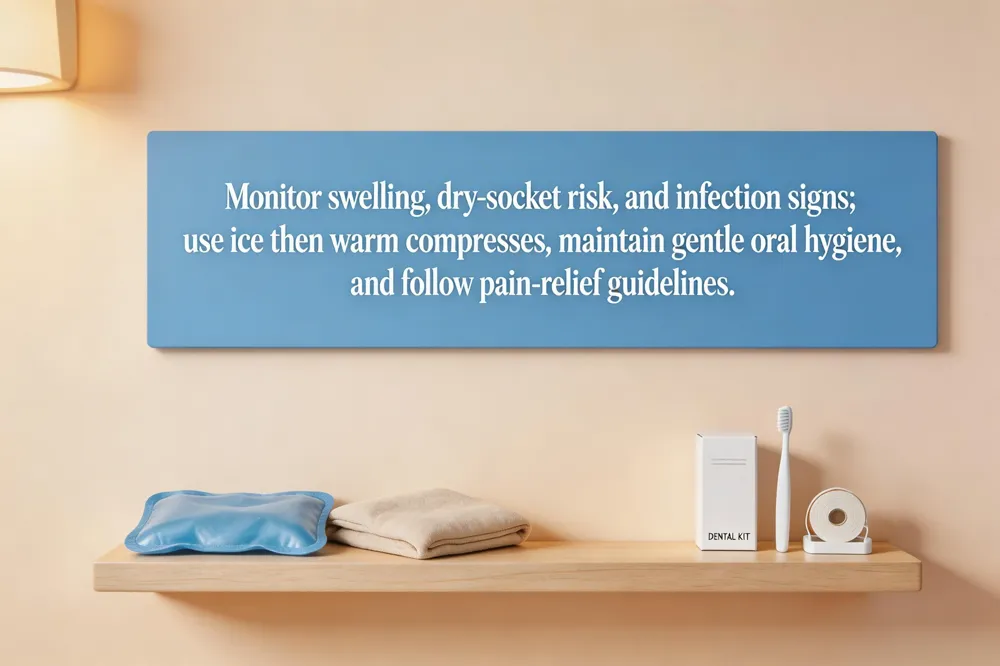 Swelling and bruising are normal after an extraction; apply an ice pack to the cheek for 15‑minute intervals during the first 24‑48 hours, then switch to a warm compress if needed. Keep your head elevated and limit strenuous activity to reduce edema.
Dry‑socket risk rises when the blood clot is dislodged. Avoid smoking, straws, and vigorous rinsing for at least 48‑72 hours. If you notice a sudden increase in pain, a foul taste, or exposed bone, contact the office immediately.
Infection monitoring includes checking for fever ≥100.4 °F, pus, excessive swelling beyond the extraction site, or worsening pain. Maintaining gentle oral hygiene and using a warm salt‑water rinse after the first 24 hours helps keep the socket clean.
Pain timelines:
- Day 3 – Pain often peaks as inflammation peaks; mild to moderate soreness is expected and can be managed with prescribed analgesics and ice. Severe or radiating pain may indicate dry socket.
- Day 7 – Most soreness should have subsided. Persistent throbbing pain, foul odor, swelling, or fever suggests a complication such as infection or dry socket and requires prompt dental evaluation.
Long‑term side effects can include bone loss, shifting of adjacent teeth, and potential sinus or nerve involvement. Restorative options like implants, bridges, or dentures help preserve the ridge and maintain function.
Nutrition and Healing
 After a tooth extraction, stick to a cool, soft, nutrient‑rich diet for the first few days: yogurt, applesauce, mashed potatoes, scrambled eggs, smooth soups, and warm broths. Include protein sources such as cottage cheese, Greek yogurt, soft tofu, or flaked fish to support tissue repair, and add vitamin‑C‑rich foods like mashed bananas, avocado, and well‑cooked carrots. Stay hydrated with water, coconut water, or lukewarm smoothies (no seeds). Avoid crunchy, hard, sticky, spicy, or acidic foods and never use a straw, as suction can dislodge the clot and cause dry socket. By day 7 the socket is filled with granulation tissue; pain meds can often be stopped, gentle salt‑water rinses continue, and normal oral hygiene resumes except directly over the site. Gradually reintroduce softer solids as comfort eases, typically after 3‑7 days. Natural healing aids include ice packs, head elevation, and optional aloe‑vera gel or turmeric‑water paste, while steering clear of smoking, alcohol, and vigorous exercise for at least two days.
Follow‑Up and Long‑Term Planning
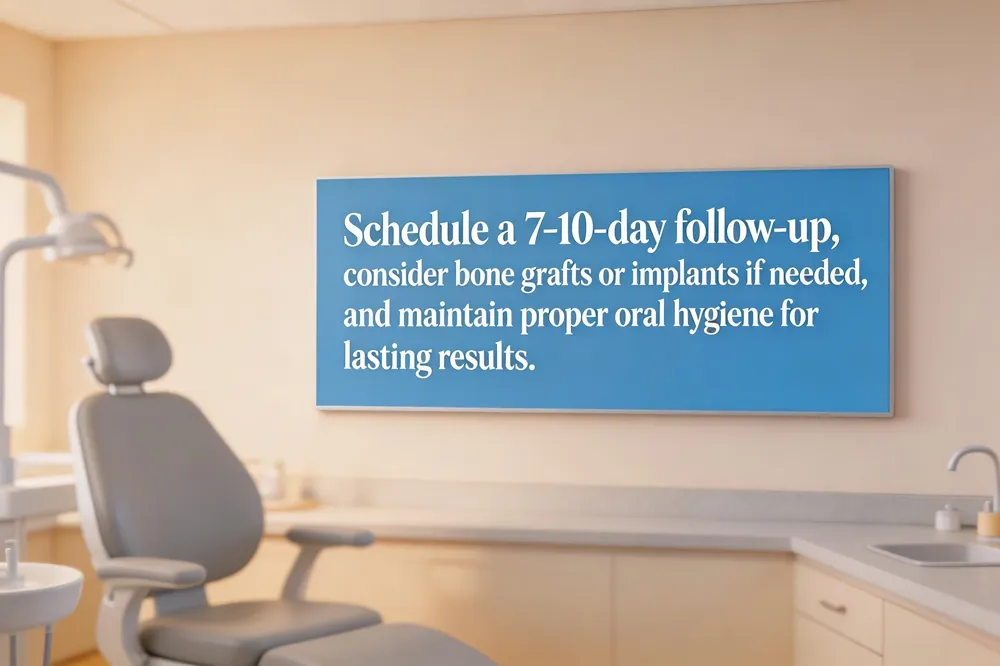 Follow‑Up appointments within 7‑10 days check the socket, remove sutures and confirm bleeding stopped. If a bone graft was placed, the dentist monitors preservation and may order radiographs before a permanent restoration. After healing, implants, bridges or dentures prevent adjacent tooth shifting and preserve jawbone health. Oral‑hygiene—brushing away from the socket, salt‑water rinses after 24 hours, and flossing once the site is closed—supports recovery.
Tooth extraction procedure: Consultation, X‑ray, anesthesia (± sedation), tooth loosening, incision or sectioning, removal, socket cleaning, optional bone graft, suturing; 30‑60 min.
Healing stages pictures: Dark‑red clot (Day 1), pink granulation (Days 2‑5), whiter tissue (Days 6‑10), bone remodeling (Weeks 2‑4).
3‑3‑3 rule: Brush three times, three minutes each, replace brush every three months.
Your Path to a Smooth Recovery
Before extraction, share a complete medication list, arrange a ride home if sedation is used, and stock soft foods, ice packs, and pain relievers. Fast as instructed, wear clothing, and bring dental records. After the procedure, bite on gauze for 30–45 minutes, keep head elevated, apply ice for 15‑minute intervals, and eat only foods for the first 48 hours. Begin salt‑water rinses after day one, avoid straws, smoking, and rinsing for at least 24‑48 hours. Schedule a follow‑up visit within one week to ensure healing and discuss replacement options. For urgent concerns such as uncontrolled bleeding, fever above 100.4 °F, severe pain, or signs of infection, call the dental office at (555) 123‑4567 or seek emergency care.