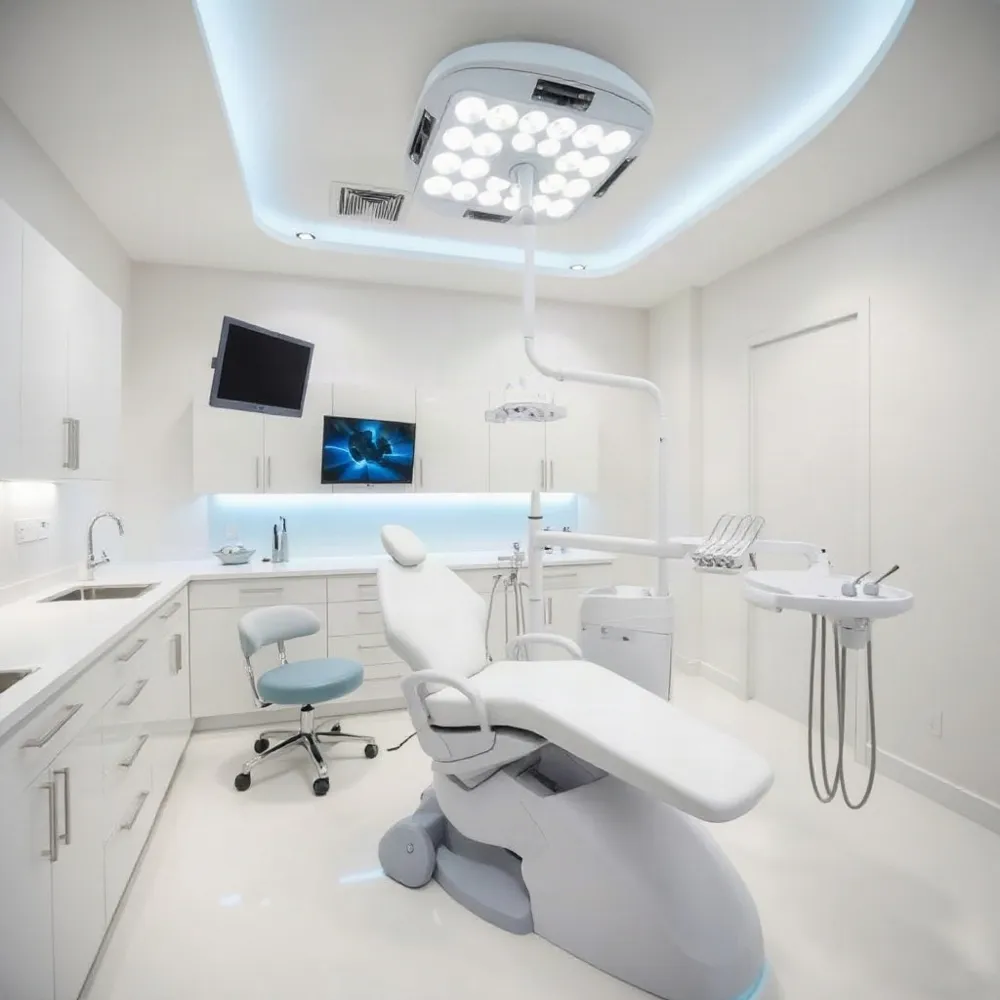
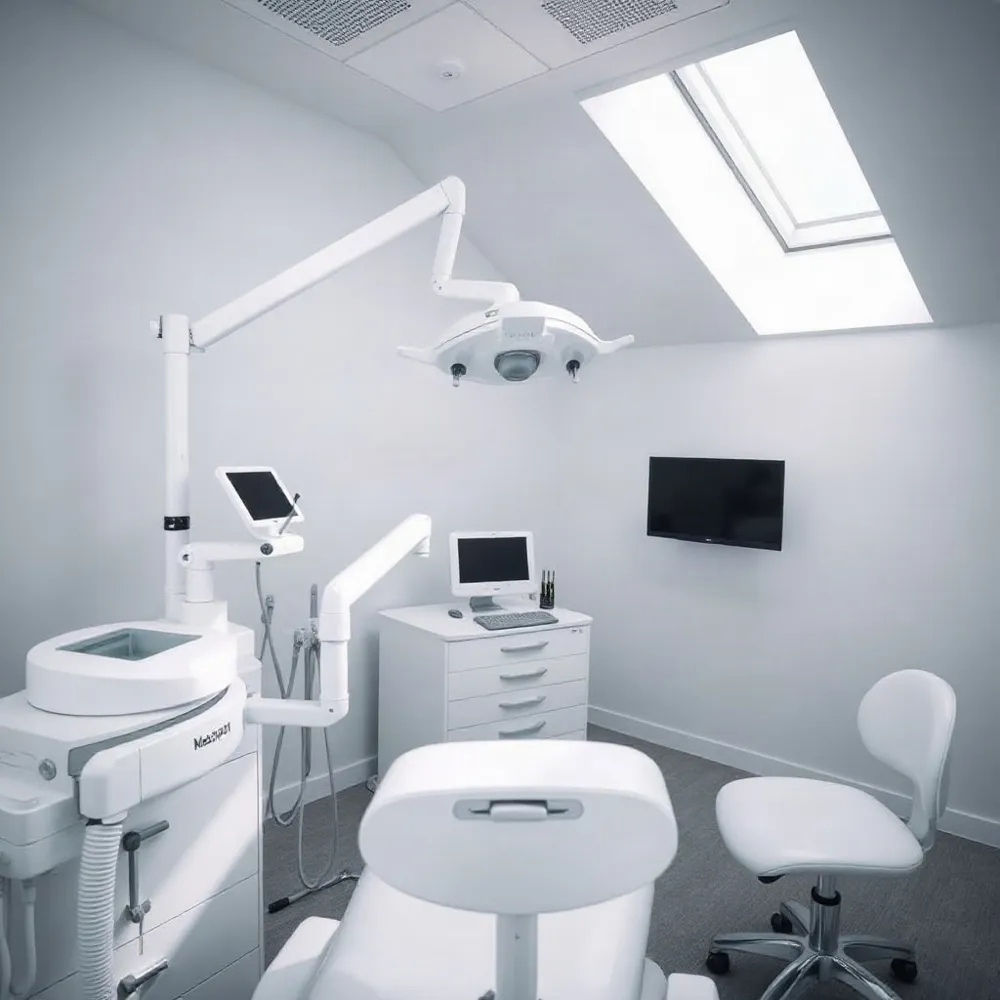
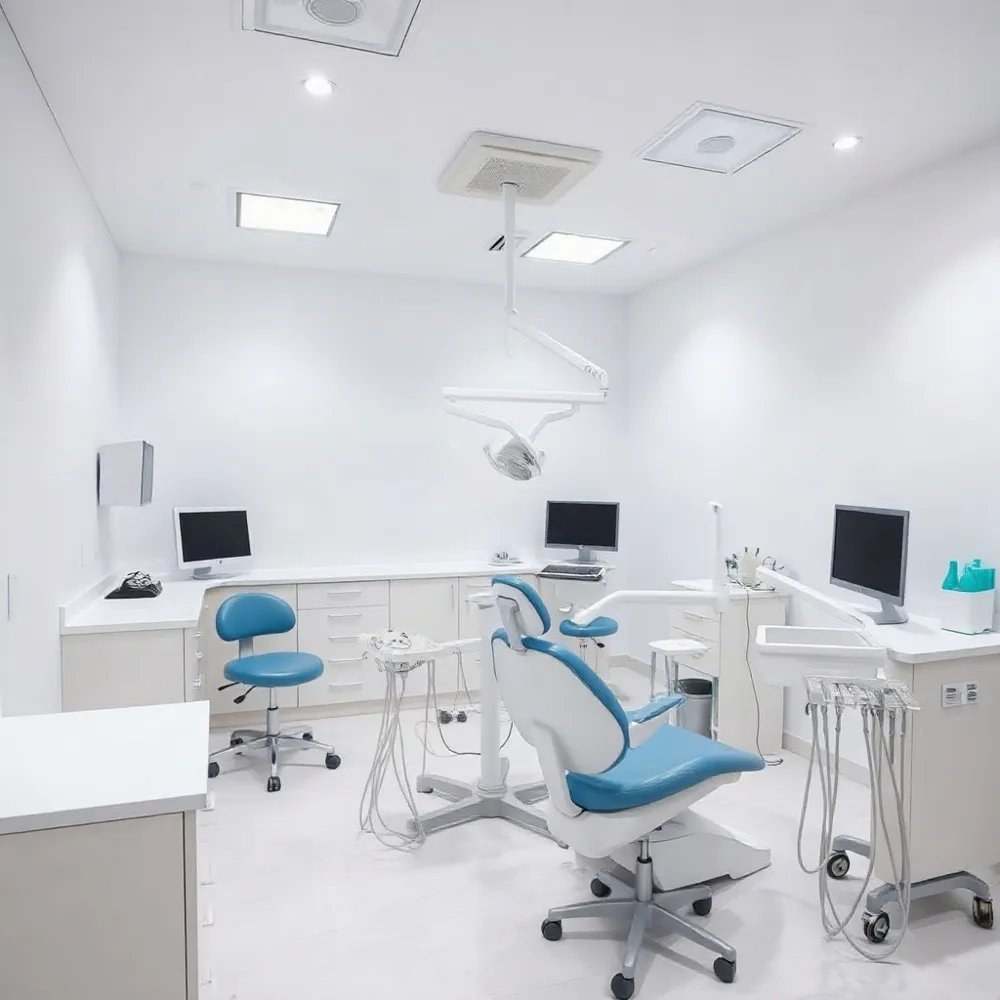
What Is a Same‑Day Crown?
A same‑day crown is a permanent tooth‑cap that is designed, milled, and placed in a single dental visit. The process begins with a digital intra‑oral scan that captures a precise 3‑D image of the prepared tooth, eliminating the need for traditional putty impressions. Using CAD/CAM (computer‑aided design and manufacturing) software—often through a CEREC system—the dentist designs the restoration on a computer, adjusts shade and shape, and then sends the data to an in‑office milling machine. A solid block of high‑strength ceramic or zirconia is milled in roughly 15‑30 minutes, polished, and bonded directly to the tooth. The overall appointment typically lasts 1 to 2 hours, encompassing tooth preparation, scanning, design, milling, and final cementation, allowing patients to leave the office with a permanent, aesthetically natural restoration in hand.
Visual and Physical Indicators of a One‑Appointment Crown
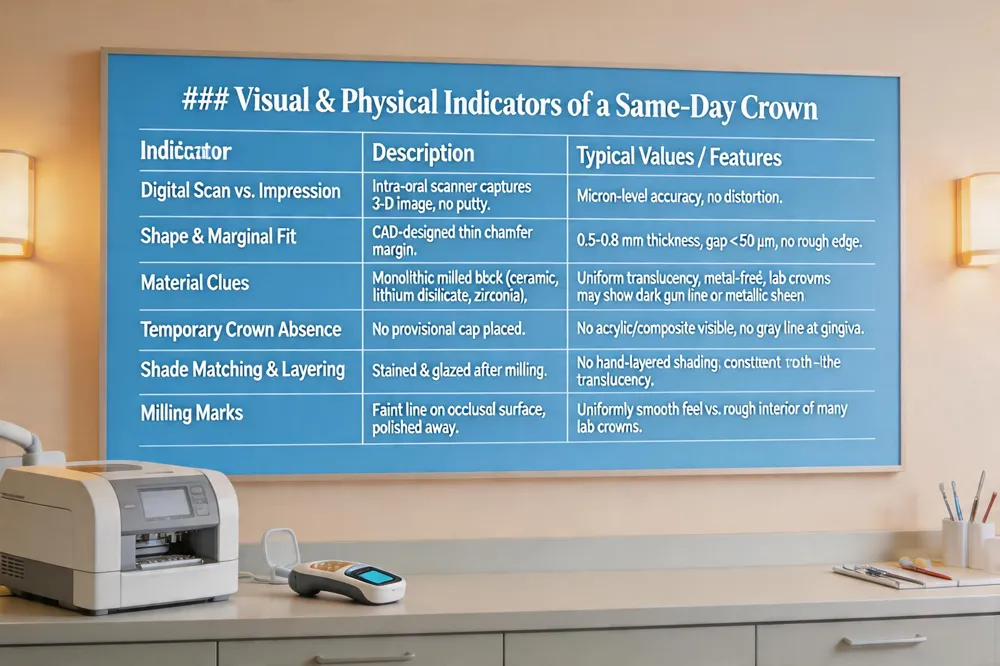
Visual & Physical Indicators of a Same‑Day Crown
| Indicator | Description | Typical Values / Features |
|---|---|---|
| Digital Scan vs. Impression | Intra‑oral scanner captures 3‑D image; no putty. | Micron‑level accuracy, no distortion. |
| Shape & Marginal Fit | CAD‑designed thin chamfer margin. | 0.5‑0.8 mm thickness, gap < 50 µm, no rough edge. |
| Material Clues | Monolithic milled block (ceramic, lithium disilicate, zirconia). | Uniform translucency, metal‑free; lab crowns may show dark gum line or metallic sheen. |
| Temporary Crown Absence | No provisional cap placed. | No acrylic/composite visible, no gray line at gingiva. |
| Shade Matching & Layering | Stained & glazed after milling. | No hand‑layered shading; consistent tooth‑like translucency. |
| Milling Marks | Faint line on occlusal surface, polished away. | Uniformly smooth feel vs. rough interior of many lab crowns. |
 Digital scan vs. traditional impression
A same‑day crown begins with a painless intra‑oral scanner that captures a 3‑D image of the prepared tooth. Unlike the messy putty used for conventional impressions, the digital scan is comfortable and provides micron‑level accuracy, eliminating the distortion that can lead to gaps.
Shape and marginal fit
Because the CAD software designs the crown directly from the scan, the margins are usually a thin (0.5‑0.8 mm) chamfer that follows the tooth line precisely. The gap at the edge is often less than 50 µm, so you won’t feel a rough edge or a visible ledge that can trap food.
Material clues
Same‑day crowns are milled from a solid block of ceramic, lithium disilicate, or zirconia. The restoration is monolithic—no layered porcelain—so it appears uniformly translucent and metal‑free. Metal‑based or porcelain‑fused‑to‑metal lab crowns, on the other hand, may show a dark gum line or a metallic sheen at the margin.
Absence of a temporary crown
If you never received a provisional cap, the restoration you leave with is the permanent one. No acrylic or composite temporary material will be present on the tooth, and you won’t notice a gray line at the gingiva.
Shade matching and layering
Chair‑side crowns are stained and glazed after milling, giving a natural tooth‑like translucency. Because they are monolithic, you won’t see the hand‑layered shading that lab‑fabricated crowns sometimes display on the facial surface.
Milling marks
A well‑polished same‑day crown may show a faint, discreet milling line on the occlusal surface, which is usually polished away before placement. The surface feels uniformly smooth, unlike the slightly rougher interior of many lab crowns that require sandblasting for cement bonding.
Answers to common questions
- Can a crown be done in one appointment? Yes—a dental crown can often be completed in a single appointment using same‑day CEREC technology. The dentist takes a digital impression, designs the crown, mills it from a solid block of ceramic or zirconia, and permanently bonds it, so you leave with a finished restoration the same day.
- Temporary crown A temporary crown is a short‑term protective cap placed while the permanent crown is fabricated in a lab, usually for 2‑3 weeks. It is made from acrylic or composite resin, cemented temporarily, and removed when the final crown arrives.
- Same‑day crowns disadvantages Limited material options (primarily ceramic), potential challenges with exact shade matching for complex cases, and a slightly higher upfront cost. Not every patient is a candidate, especially those needing extensive sub‑gingival work.
- CEREC crowns vs traditional CEREC crowns are designed and milled in‑office using digital scans, allowing a permanent ceramic restoration in one visit without a temporary crown. Traditional crowns require lab fabrication, multiple visits, and often a provisional crown, but they offer a broader material range and may be more durable for high‑stress molars.
Patient Experience: Comfort, Sensitivity, and Post‑Crown Care
Patient Experience Summary
| Aspect | Details | Recommendations |
|---|---|---|
| Procedure Length | Digital scan, CAD design, chair‑side milling (1‑2 h). | Schedule a single visit; allow ~2 h for the crown. |
| Pain Management | Local anesthesia; only pressure felt. | Report any lingering discomfort promptly. |
| Post‑Procedure Sensitivity | Usually minimal; may arise from high spot, marginal gap, or decay. | Bite adjustment or X‑ray evaluation if sensitivity persists. |
| Immediate After‑Care | Brush, floss; avoid hard/sticky foods 24‑48 h. | Attend follow‑up check‑up; monitor for any irritation. |
| TMJ Concerns | Ill‑fitted crown can cause jaw pain, clicking, headaches. | Seek bite adjustment and TMJ assessment if symptoms continue. |
| Common Complaints | Fit adjustments, limited shade options, scanner limitations for deep margins, faster wear in high‑stress areas. | Communicate concerns early; dentist can adjust or plan alternative restoration. |
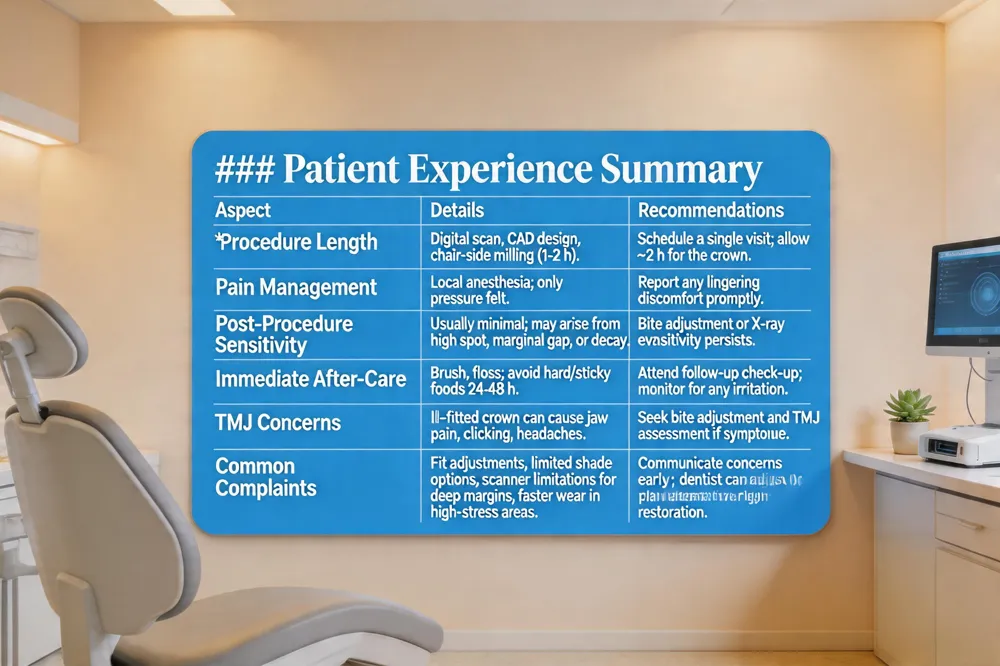 A same‑day crown begins with a digital intra‑oral scan, CAD design and chair‑side milling that usually takes 1–2 hours. Local anesthesia numbs the tooth while the dentist removes decay and shapes the tooth, then the scanner captures a 3‑D model. After the crown is milled, it is tried‑in, polished, and permanently bonded with resin cement.
Pain management is straightforward: the procedure is performed under local anesthetic, so most patients feel only pressure. Post‑procedure sensitivity is often minimal because the permanent crown is placed immediately, reducing the time the tooth is exposed. If sensitivity persists, it may be due to a high spot, marginal gap, or underlying decay; a bite adjustment or X‑ray evaluation can resolve it.
After placement, patients should maintain regular brushing and flossing, avoid hard or sticky foods for 24–48 hours, and attend a follow‑up check‑up.
Potential TMJ issues can arise if the new crown alters the bite. An ill‑fitted crown may cause jaw pain, clicking, or headaches. Most discomfort is temporary, but persistent symptoms warrant a bite adjustment and TMJ assessment.
CEREC crowns, while convenient, have reported complaints: occasional fit adjustments, limited shade options, scanner limitations for deep sub‑gingival margins, and faster wear in high‑stress areas. If the appointment runs longer than expected, patients may feel fatigued or experience mild sensitivity. Prompt communication with the dentist ensures any concerns are addressed quickly.
Warning Signs of Crown Trouble and When to Seek Help
Warning Signs & When to Seek Help
| Symptom | Possible Cause | Action Recommended |
|---|---|---|
| Pain, Sensitivity, Leaking | Gap at margin, decay beneath crown. | Contact dentist promptly; possible recement or replacement. |
| Abscess Symptoms | Infection under crown. | Immediate dental exam; may need antibiotics or root canal. |
| Gum Inflammation | Irritation, plaque buildup, poor fit. | Professional cleaning, evaluate crown margin; treat infection if present. |
| Bad Taste/Odor | Bacterial buildup from loose restoration. | Schedule cleaning; check for marginal leakage. |
| Loose or Cracked Crown | Structural failure, high occlusal forces. | Arrange urgent appointment for recementing or replacement. |
| Bite Discomfort | High spot or uneven occlusion. | Bite adjustment with articulating paper; monitor for muscle soreness. |
| Persistent Symptoms | Any ongoing pain, swelling, or infection signs. | Prompt dental evaluation; X‑ray imaging may be required. |
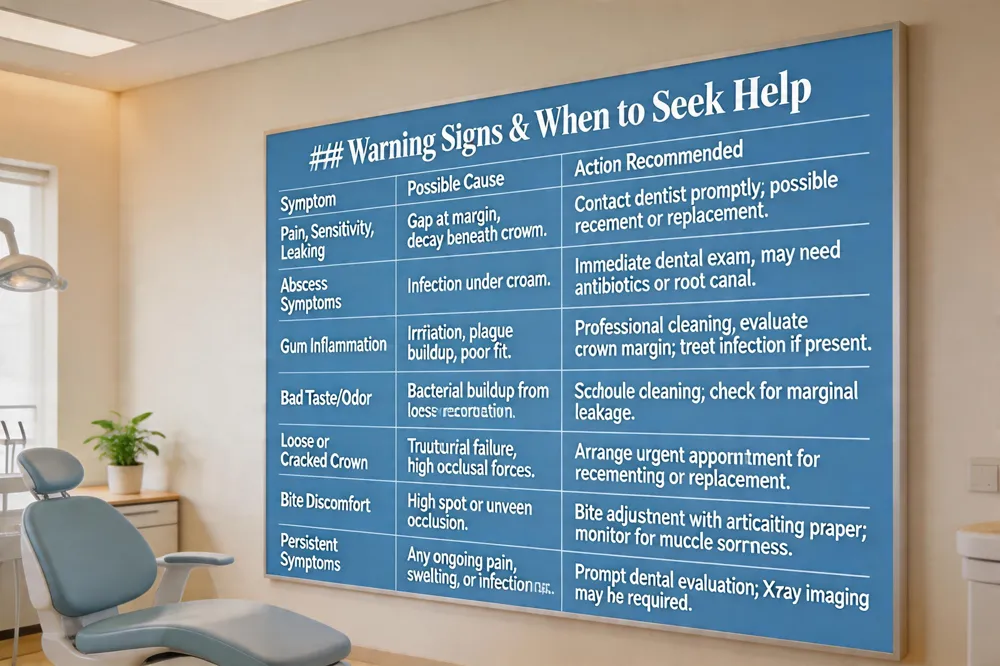 Dental crowns protect a tooth, but problems can develop over time. Common warning signs include:
Pain, sensitivity, and leaking – A crown that leaks lets bacteria and temperature changes reach the tooth’s nerve. Expect heightened sensitivity to hot, cold, or sweet foods and persistent discomfort when chewing. Gaps or discoloration at the margin often accompany a bad taste or odor.
Abscess symptoms – An abscess beneath a crown causes a throbbing ache that worsens with hot or cold stimuli. The gum may become red, swollen, and tender, sometimes forming a pimple‑like bump. Foul breath, bad taste, and occasional fever are also red flags.
Gum inflammation – Red, swollen, or bleeding gums around the crown suggest irritation or infection. Persistent inflammation can lead to recession or a dark line at the gumline, indicating a compromised margin.
Bad taste/odor – Persistent foul taste or odor often signals bacterial buildup from a loose or leaking restoration.
Loose or cracked crown – A wobbly crown, chips, cracks, or rough edges indicate structural failure. A loose crown can allow decay and may require recementing or replacement.
Bite discomfort – If the crown feels “off” when you bite, the occlusion may be uneven. A high spot can cause pressure, muscle soreness, or uneven wear. Your dentist can adjust the crown with articulating paper and fine‑grinding.
When to seek help – Any of these symptoms—especially persistent pain, swelling, or signs of infection—warrant a prompt dental exam. Early evaluation, often with X‑rays, can prevent decay, infection, or more extensive treatment such as a root canal. Regular check‑ups and good oral hygiene are the best defenses against crown complications.
Cost, Value, and Choosing Between Same‑Day and Lab‑Made Crowns
Cost, Value, & Decision Factors
| Factor | Same‑Day (CEREC) Crown | Lab‑Made Crown |
|---|---|---|
| Price (Paterson, NJ) | $900‑$1,500 (porcelain low; zirconia high) | $1,200‑$2,500 (varies by material) |
| Insurance Coverage | ~50 % typical coverage | ~50 % typical coverage |
| Materials | Solid ceramic blocks (lithium disilicate, zirconia) – metal‑free | Wider palette: porcelain‑fused‑to‑metal, gold alloys, layered ceramics |
| Durability | 10‑15 years with proper care | 10‑15 years; metal‑based may endure higher forces |
| Convenience | Single visit, no temporary crown, digital scan | 2‑3 weeks lab fabrication, provisional crown needed |
| Aesthetics | Uniform translucency, no layering lines | Can achieve complex shading via hand‑layering |
| Ideal Candidate | Patients wanting quick, single‑visit ceramic restoration | Patients needing metal strength or extensive color layering |
| Potential Drawbacks | Limited material options, higher upfront cost, shade‑matching challenges | Multiple appointments, temporary crown discomfort, longer treatment time |
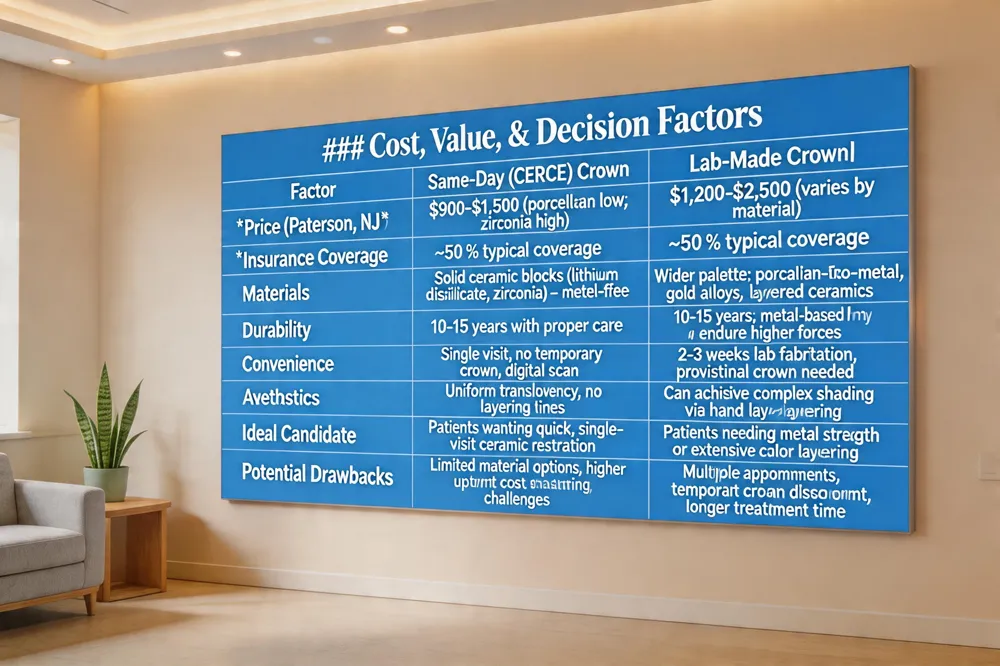 When deciding between a same‑day CEREC crown and a traditional lab‑fabricated crown, patients weigh price, insurance, material, longevity, and convenience. In Paterson, NJ, a CEREC crown typically runs $900‑$1,500 per tooth, with porcelain at the low end and stronger zirconia or layered ceramics at the high end. A $2,000 crown is within the national range for high‑quality all‑ceramic or metal‑ceramic restorations and is not unusually expensive, especially after insurance coverage—most plans cover about 50 % of the cost, reducing out‑of‑pocket expenses.
Material choice influences both aesthetics and durability. Same‑day crowns are milled from solid ceramic blocks (lithium disilicate, zirconia) that mimic natural tooth translucency and avoid metal discoloration, while lab crowns can use a broader palette, including porcelain‑fused‑to‑metal and gold alloys for extra strength. Both types last 10‑15 years with proper oral hygiene, though metal‑based lab crowns may endure higher chewing forces.
Convenience is a key advantage of CEREC crowns: a digital intra‑oral scan eliminates messy impressions, a temporary crown is unnecessary, and the permanent restoration is placed in a single 1‑2‑hour visit. Traditional crowns require two appointments, a provisional crown, and a waiting period of 2‑3 weeks for lab fabrication.
Overall, if you value a quick, single‑visit solution and are comfortable with a ceramic material, the slightly higher price of a same‑day crown is often worth it. For patients needing metal strength or extensive color layering, a lab‑made crown may be the better choice. Your dentist can help you balance cost, material, and longevity to select the optimal restoration for your smile.
Final Takeaways: Identifying and Maintaining Your One‑Appointment Crown
Look for a seamless, polished surface with no visible metal margin, a thin, precise chamfer (0.5‑0.8 mm) that follows the tooth line, and a uniform ceramic color without layered shading. If you notice gaps, rough edges, shifting, or persistent sensitivity, schedule a check‑up promptly—delays can lead to decay or infection. Same‑day crowns often cost more upfront because of CAD/CAM equipment, yet they eliminate temporary crowns, multiple visits, and associated lab fees, which can offset the price. Choose a provider who uses a reputable in‑office system (e.g., CEREC), has documented digital‑scan workflow, and offers clear post‑care instructions. Verify insurance coverage and ask about warranties to ensure long‑term value.