Why Detecting Crown Problems Early Matters
When a crown fails, bacteria can seep beneath the seal, leading to decay, gum infection, and even tooth loss. Early signs—pain, looseness, chips, or gum changes—signal that the underlying tooth may be compromised. Prompt evaluation allows the dentist to recement, repair, or replace the crown before extensive treatment, such as a root canal, becomes necessary. For Paterson, NJ residents, timely care is especially critical. The city’s diverse population and high demand for affordable dental services mean that delayed treatment can quickly become costly and disruptive. Regular check‑ups and swift attention to any warning signs protect oral health, preserve natural teeth, and support the overall well‑being of the community.
Key Symptoms of a Failing Crown
| Symptom | Typical Presentation |
|---|---|
| Pain & Sensitivity | Throbbing ache that worsens with biting, chewing, hot/cold/sweet stimuli; may be accompanied by swollen or red gums and an unpleasant taste or odor. |
| Visible Damage | Chips, cracks, rough edges, dark lines at the gum line; tiny fractures can trap plaque and feel gritty. |
| Loose or Wobbly Crown | Crown shifts, feels high when biting, or rocks on the tooth; may cause uneven bite, jaw soreness, or a “high‑spot” sensation. |
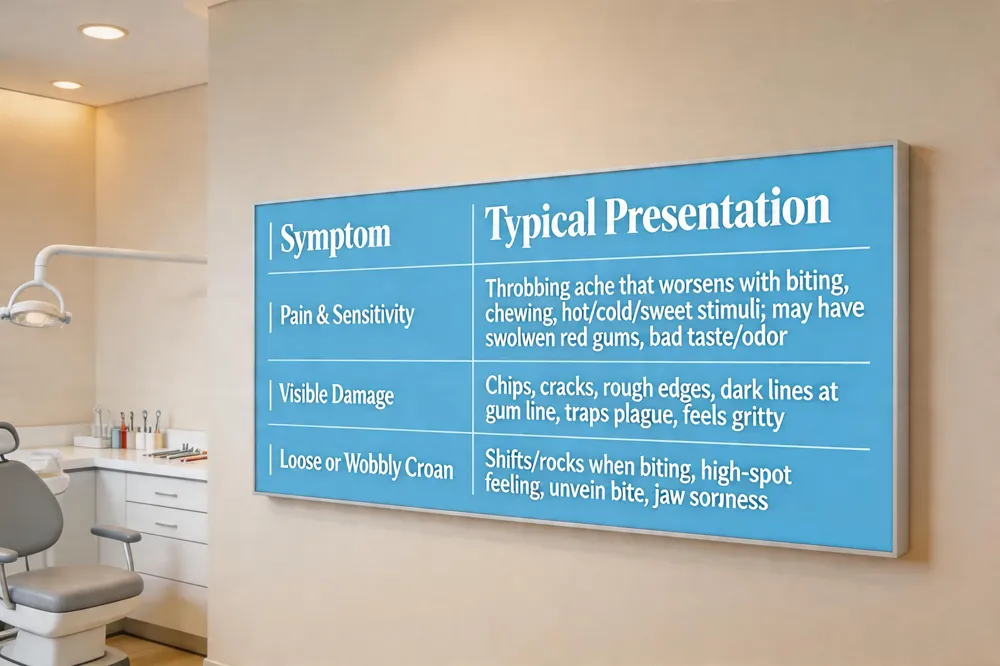 A failing dental crown often presents with a combination of pain, visible damage, and mobility.
Pain and sensitivity – You may feel a lingering, throbbing ache that worsens when biting, chewing, or exposing the tooth to hot, cold, or sweet stimuli. This discomfort can be accompanied by swollen, red, or tender gums and an unpleasant taste or odor.
Visible damage – Look for chips, cracks, rough edges, or dark lines at the gum line. Even tiny fractures can trap plaque and create a gritty sensation, making cleaning difficult.
Loose or wobbly crown – A crown that shifts or feels high when you bite indicates weakened cement or an ill‑fitting restoration. This can lead to an uneven bite, jaw soreness, or a “high‑spot” sensation.
If any of these signs appear, schedule a dental evaluation promptly to prevent infection, further decay, or tooth loss.
Understanding Crown Longevity and Replacement Limits
| Factor | Details |
|---|---|
| Typical Lifespan | 5‑15 years for most crowns; porcelain‑fused‑to‑metal, all‑ceramic, and zirconia average 10‑15 years with good oral hygiene. |
| Influencing Factors | Material choice, bite forces, bruxism, trauma, cement bond quality, and patient habits (hard foods, grinding). |
| Replacement Limit | No fixed limit; a crown can be redone as long as sufficient healthy tooth structure remains. Excessive reductions may eventually require an implant or bridge. |
| 3‑3‑3 Rule | 3 × 200 mg ibuprofen every 8 h for up to 3 days for pain control; seek dentist if symptoms persist beyond this period. |
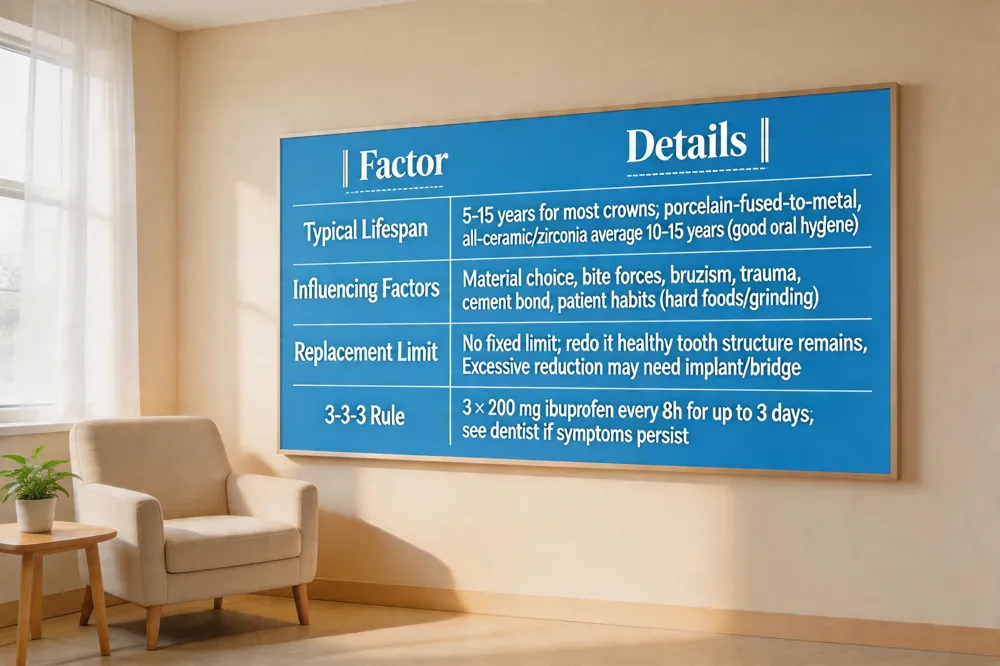 Dental crowns typically last 5 to 15 years, with porcelain‑fused‑to‑metal, all‑ceramic and zirconia crowns averaging 10‑15 years when oral hygiene is good and the patient avoids hard foods or grinding. Durability is influenced by material choice, bite forces, bruxism, trauma, and the quality of the cement bond.
How many times can a crown be replaced? There is no fixed limit; a crown can be redone as long as the underlying tooth remains healthy enough to support it. Each replacement removes a small amount of natural tooth structure, so the dentist evaluates remaining tooth material before proceeding. Repeated reductions may eventually require an alternative such as an implant or bridge when insufficient tooth remains.
What is the 3‑3‑3 rule for tooth infection? It is a short‑term pain‑control protocol: take three 200‑mg ibuprofen tablets (600 mg total) every eight hours for up to three days. This reduces inflammation and pressure on the nerve while you arrange professional care. Do not exceed three days without a dentist’s approval, and seek emergency treatment if fever, swelling, or worsening pain occurs.
When Professional Responsibility and Warranties Apply
| Situation | Dentist Responsibility |
|---|---|
| Failure due to clinical error (poor preparation, faulty cementation, inferior material, lack of informed consent) | Must repair or replace the crown at no extra cost; often covered by warranty. |
| Failure due to normal wear, decay, bruxism, poor hygiene, or patient‑related factors | Shared responsibility; dentist not automatically at fault, but may offer repair options. |
| Warranty Coverage | Many offices provide warranties that cover material defects and early failures, reinforcing standard of care. |
| Disadvantages of Crowns | Removal of healthy tooth structure, potential for increased sensitivity, risk of decay beneath crown, higher cost, and need for future replacement. |
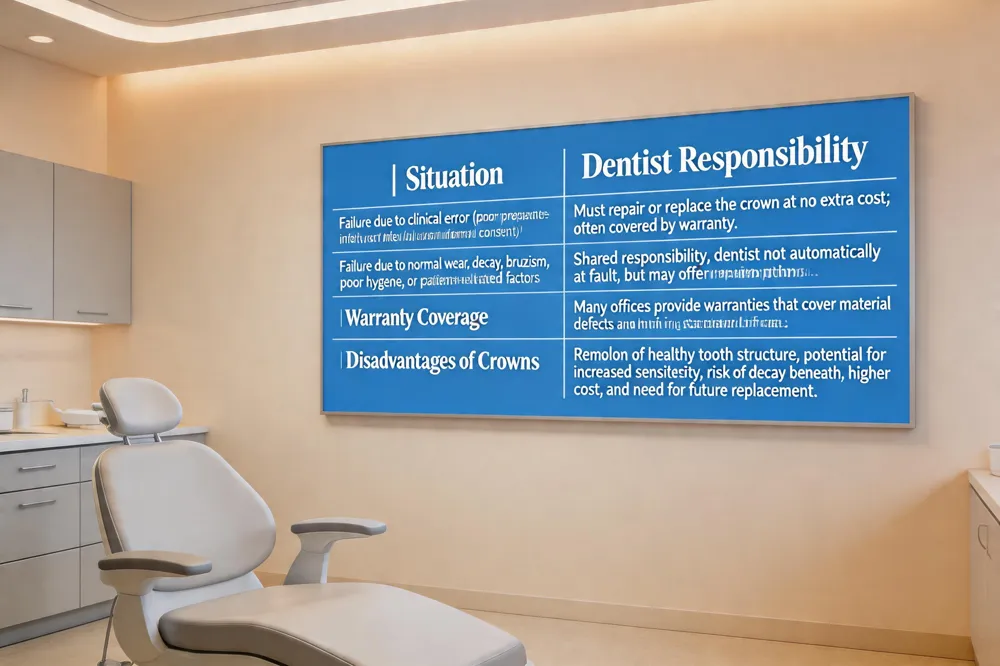 Responsibility and warranties are when a dental crown fails. Is the dentist responsible for a failed crown? A dentist is liable when failure stems from errors—insufficient tooth preparation, faulty cementation, use of inferior materials, or lack of informed consent and after‑care instructions. In such cases the clinician must repair or replace the restoration at no extra cost. However, crowns also deteriorate from wear, decay, bruxism, poor oral hygiene, or other factors; responsibility is then shared, and the dentist is not automatically at fault. Many offices offer warranties that cover failures, reinforcing the duty to meet standards. What are the disadvantages of dental crowns? They require removal of healthy tooth structure, which can weaken the tooth and increase sensitivity. Decay may develop beneath the crown, leading to infection or root‑canal treatment. Crowns are costly, may need replacement after years, and an improperly fitted crown can cause gum irritation, discomfort, or detachment, necessitating visits.
Managing Common Crown Emergencies at Home
| Emergency | Immediate At‑Home Steps |
|---|---|
| Crown Cracks but Still Attached | Rinse gently with warm water or salt‑water; avoid chewing on that side; use a soft toothbrush around the margin. |
| Crown Loosened or Fallen Off | Rinse area, store the crown in a clean container, apply a small amount of over‑the‑counter temporary dental cement or orthodontic wax to protect soft tissues. |
| Sharp Edge or Fragment | Cover with dental wax rolled into a ball to shield tongue/gums. |
| General Pain Management | Take ibuprofen as needed (follow dosing guidelines) and schedule an emergency dental appointment promptly. |
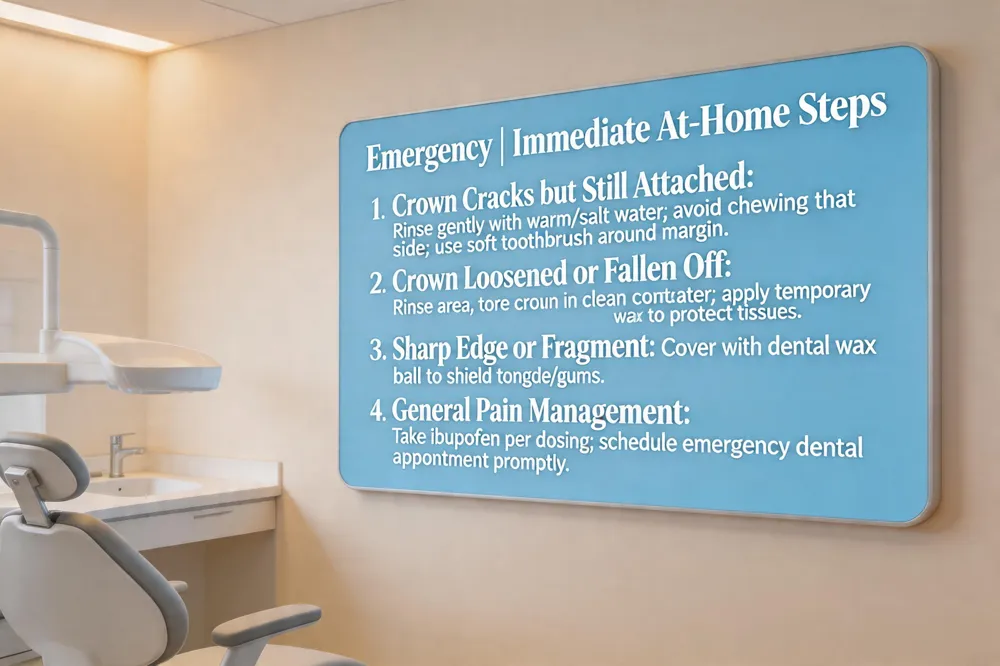 When a crown cracks, loosens, or falls off, quick at‑home steps can protect the tooth until you see a dentist. First, rinse the area gently with warm water or a salt‑water solution to keep it clean. If the crown is still attached, avoid chewing on that side and use a soft toothbrush around the margin. If it has come off, store the crown in a clean container and apply a small amount of over‑the‑counter temporary dental cement or orthodontic wax to cover sharp edges and keep the fragment in place. Dental wax, rolled into a soft ball, can temporarily shield the tongue and gums from jagged pieces. Do not pull a loose crown yourself; keep it in place or use a temporary fix and schedule an emergency appointment promptly. For any crown that broke at the gum line, rinse, protect with wax or cement, manage pain with ibuprofen if needed, and contact the dental office immediately for professional re‑cementing or replacement.
Assessing Specific Issues: Sensitivity, Bite, and Infections
| Issue | Typical Signs & Recommended Action |
|---|---|
| Sensitivity (Intermittent Pain) | Pain with temperature changes or pressure; may indicate decay, cracked tooth, loose crown, or post‑root‑canal inflammation. Seek clinical exam and X‑ray. |
| Bite Discomfort (High Spot) | Crown feels odd when biting; uneven contact may cause jaw soreness. Dentist will evaluate occlusion and reshape or re‑cement the crown. |
| Signs of Abscess | Severe throbbing pain, red/swollen gums, fever, foul taste, pus drainage. Requires urgent dental evaluation and possible antibiotics or drainage. |
| Loose Crown on Root‑Canal Tooth | Avoid chewing on that side, rinse with warm salt water, and obtain urgent professional re‑cementation or replacement. |
| Persistent Pain & Temperature Sensitivity | Indicates a poor‑fitting crown, uneven bite, swollen gums, or infection. Prompt professional assessment needed. |
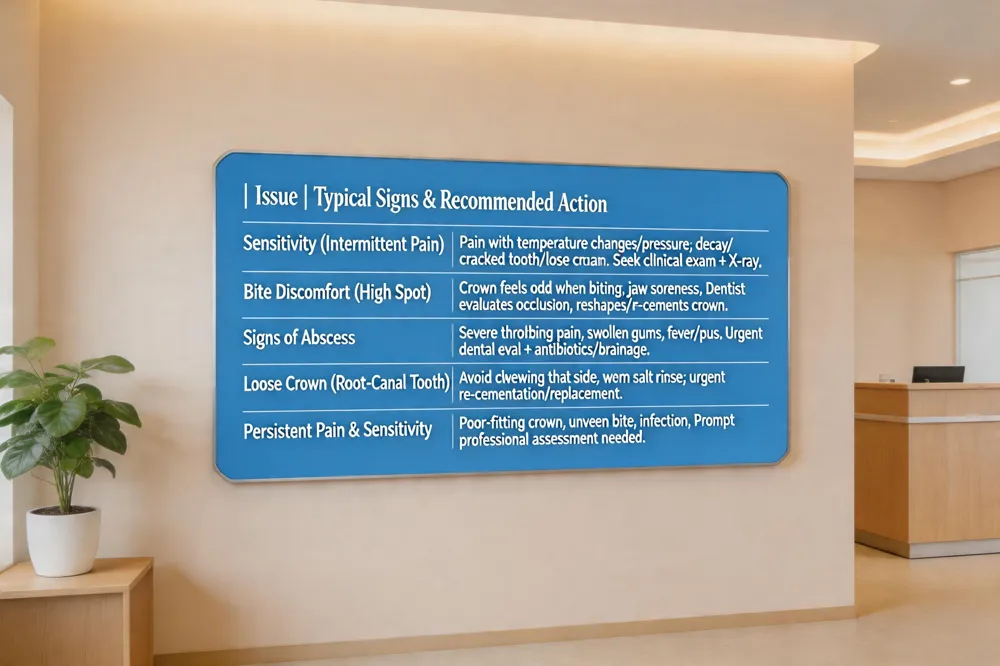 Intermittent pain under a crown often signals irritation of the tooth or surrounding tissues. Common causes include decay, a cracked tooth, a loose or poorly fitted crown, or lingering inflammation from a recent root canal. The pain may flare with temperature changes or pressure and requires a clinical exam and X‑ray to determine whether adjustment, recementation, or additional treatment such as a root canal or antibiotics is needed.
A crown that feels odd when you bite is usually a high spot or uneven contact that disrupts your bite. This can result from a crown that is too tall, loose cement, or changes in the occlusion caused by grinding. The dentist can evaluate the bite and either gently reshape the crown or re‑cement it to restore comfort.
Signs of an abscess under a crown include severe throbbing pain, redness, swelling, tenderness of the gums, fever, foul taste, and possible pus drainage. Prompt dental evaluation is essential.
If a crown on a root‑canal tooth becomes loose, avoid chewing on that side, rinse with warm salt water, and seek urgent dental care for professional re‑cementation or replacement. Do not attempt DIY repairs.
Persistent pain and temperature sensitivity can be signs of a bad‑fitting crown, along with an uneven bite, swollen gums, bad odor, or a wobbly feel when touched. These symptoms warrant immediate professional assessment.
Cost, Repair Options, and Finding Care in Paterson, NJ
| Procedure | Approximate Cost (USD) |
|---|---|
| Minor chip (polish/bond) | $150‑$300 |
| Re‑cementing a loose crown | $75‑$200 |
| Full replacement – Porcelain/All‑ceramic crown | $800‑$1,500 |
| Full replacement – Metal‑ceramic/Zirconia crown | $1,200‑$2,000 |
| Core buildup (if needed) | $100‑$250 |
| Insurance coverage | 50‑70 % after deductible (varies by plan) |
| Prompt care recommendation | Same‑day for painful/loose crowns; within 24‑48 h for chips or partial detachments. |
| Local provider | David Mayer, DMD – multilingual office, same‑day emergency repairs, free consultation. Call (973) 555‑1234. |
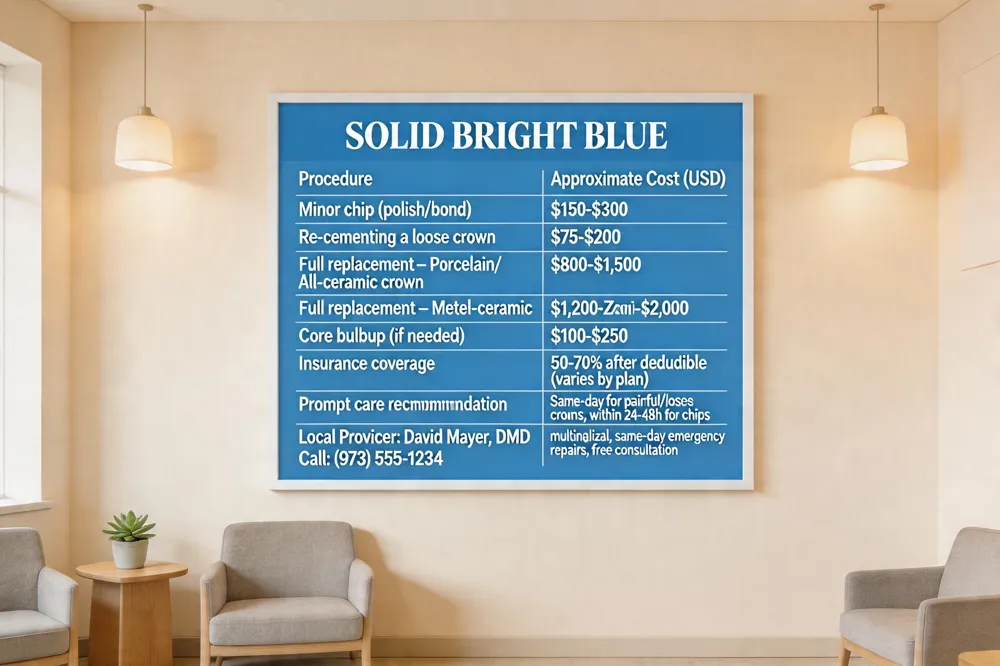 Dental crown repair costs vary by the extent of damage. A minor chip can be polished or bonded for $150‑$300, while recementing a loose crown runs $75‑$200. If the crown is fractured beyond repair, a full replacement is needed: porcelain or all‑ceramic crowns $800‑$1,500 and metal‑ceramic or zirconia crowns $1,200‑$2,000; additional procedures such as core buildup may add $100‑$250. Most insurance plans cover 50‑70 % after the deductible, reducing out‑of‑pocket expenses.
Timeliness matters: painful, sensitive, or loose crowns require same‑day care; chips or partial detachments should be seen within 24‑48 hours to prevent decay. Even stable crowns benefit from prompt attention to avoid infection and possible root‑canal treatment.
For urgent or routine crown work in Paterson, NJ, visit David Mayer, DMD. The multilingual office offers same‑day emergency repairs, comprehensive crown services, and a free consultation to determine the best material and insurance coverage. Call (973) 555‑1234 to schedule.
Take Action Early to Protect Your Smile
Regular dental check‑ups are the cornerstone of crown health. During a routine visit the dentist examines the crown’s margins, probes for mobility, and may take X‑rays to spot hidden decay or cracks before symptoms appear. Keeping the mouth clean is equally vital; brushing twice daily with a soft‑bristled brush, flossing gently around the crown, and using an antibacterial mouthwash remove plaque that can infiltrate tiny gaps and cause infection. If any warning sign—pain, looseness, chips, swelling, or a bad taste—emerges, seek emergency care promptly. Same‑day services, such as those offered by David Mayer DDS in Paterson, NJ, can recement a loose crown or repair minor damage, preventing more extensive treatment later and preserve your oral health.