Why Early Detection Matters
A dental emergency is any oral condition that causes uncontrolled bleeding, severe pain, swelling, or risk of permanent damage and requires immediate professional care. When treatment is delayed, infections can spread to the jaw, neck, or bloodstream, leading to abscesses, osteomyelitis, or even life‑threatening sepsis; a knocked‑out tooth may be lost, and a cracked tooth can progress to pulp necrosis. Prompt intervention stops bleeding, relieves pain, and prevents tissue loss, while allowing the dentist to preserve the natural tooth, control infection with antibiotics, and perform definitive procedures such as root‑canal therapy or splinting. Early detection thus safeguards oral health, reduces treatment complexity, and improves overall outcomes. Quick care also reduces anxiety, costs, and speeds return to normal eating and speaking.
Understanding Dental Emergencies
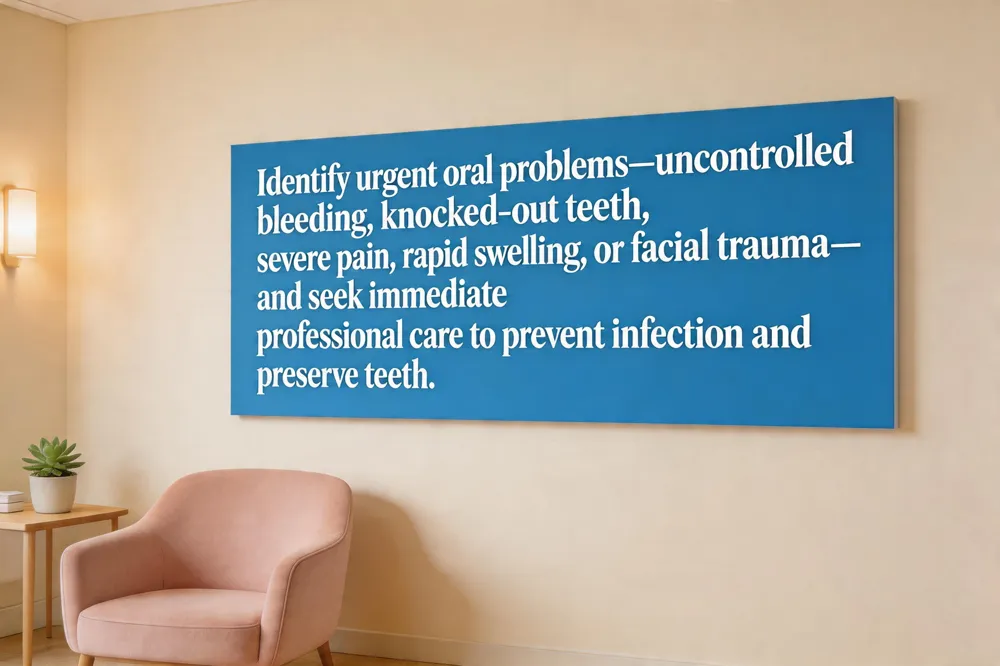 A dental emergency is any oral problem that demands immediate professional care to stop bleeding, relieve severe pain, or save a tooth. Key warning signs include uncontrolled bleeding that doesn’t cease after 15‑20 minutes of pressure, a knocked‑out tooth or loosely displaced tooth, intense throbbing pain that remains despite OTC analgesics, and rapid facial, jaw, or neck swelling—especially when accompanied by fever, chills, or a foul taste. Persistent or severe toothache, a cracked tooth or broken tooth exposing the pulp, and a dental abscess presenting as a painful, pus‑filled lump also signal urgent care. Soft‑tissue injuries such as deep lip, cheek, or tongue cuts that bleed continuously, and major facial trauma requiring stabilization, are likewise emergencies. If any of these symptoms appear, call your dentist’s emergency line immediately or proceed to the nearest emergency department for interim pain control and infection management. Prompt intervention reduces the risk of infection spread, preserves the tooth, and minimizes the need for more invasive, costly treatments.
Immediate First‑Aid Steps
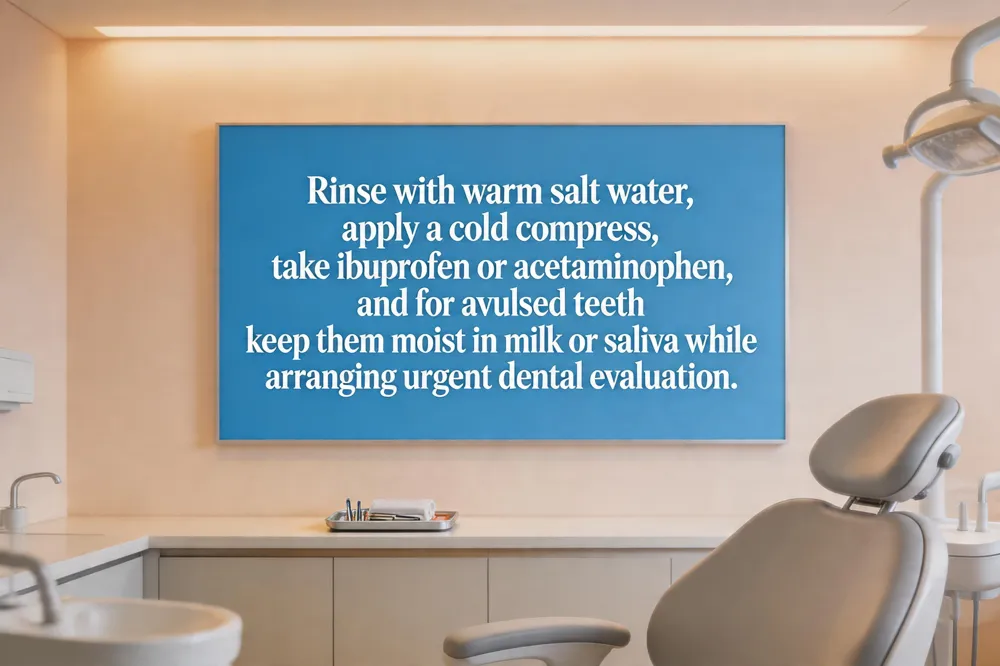 When a dental emergency strikes after hours, act quickly before you can see a dentist. Rinse the mouth with warm water or a warm salt‑water solution (½ tsp salt in a glass of warm water) to clean the area and reduce irritation. Apply a cold compress to the cheek for 10‑15 minutes each hour to control swelling and numb pain. Over‑the‑counter analgesics such as ibuprofen (600‑800 mg) or acetaminophen (1000 mg) can provide temporary relief; avoid aspirin on the gums.
Night‑time emergencies – If severe pain or swelling wakes you, follow the rinse, compress, and medication steps above. For a knocked‑out tooth, handle it by the crown, rinse gently, and store it in milk, saliva, or a tooth‑saving solution until you can see a dentist within one hour. Keep any broken crown or tooth fragment; apply a dab of toothpaste or temporary dental cement and avoid chewing on that side.
Weekend emergencies – Call your dentist’s after‑hours line first; if unreachable, go to the nearest urgent‑care center or ER for pain control. Continue rinsing, compresses, and analgesics while you wait.
Fast pain relief – In addition to cold compresses, a few drops of clove oil on a cotton ball or a cool, tea bag pressed against the gum can numb the area for a short period.
If pain is unbearable, bleeding persists, fever, or facial swelling develops, seek immediate professional care.
When to Call the Dentist or Visit the ER
 Dental offices and hospital emergency rooms serve different purposes. A dental practice can manage most urgent oral problems—broken fillings, chipped teeth, severe toothaches, or a knocked‑out tooth—by providing same‑day examinations, temporary repairs, and definitive treatments such as crowns or root canals. Hospital ERs, on the other hand, are equipped for life‑threatening conditions: uncontrolled bleeding, rapidly spreading facial swelling, airway obstruction, or infections that cause fever, difficulty swallowing, or breathing problems.
Hospitals with emergency dental – Most hospitals lack dedicated dental clinics, but their ERs will stabilize critical oral emergencies (e.g., severe infection, airway compromise) and then refer patients back to a dentist for definitive care.
What the ER can do for tooth pain – The ER can prescribe strong analgesics, start antibiotics, obtain imaging, and, if needed, perform drainage of an abscess or provide IV fluids. It cannot extract teeth, place crowns, or perform restorative work.
Can you go to the ER for tooth pain? – Yes, but only when the pain is part of a true emergency—accompanied by fever, swelling, uncontrolled bleeding, or difficulty breathing/swallowing. For milder aches without systemic signs, contact your dentist or wait for an office appointment to avoid unnecessary hospital visits.
Emergency Treatment Protocols
 For a knocked‑out tooth, hold the crown, rinse gently, and either re‑insert it or store it in milk or saline; see a dentist within 30–60 minutes. Severe toothache, swelling, or an abscess often requires an extraction under local anesthesia with care instructions.
Dental emergency room – a clinic that treats urgent oral issues such as uncontrolled bleeding, facial‑bone trauma, or avulsed teeth. Unlike a hospital ER, the focus is on restoring dental function and providing appointments for extractions and crowns.
24‑hour emergency dental extraction – available 24/7 to relieve pain and avoid complications. The team uses X‑rays, removes the tooth safely, and gives after‑care guidance.
Dental emergency guidelines – call your dentist; if the office is closed, go to an urgent‑care center or ER for severe cases. Apply pressure with gauze to control bleeding, keep a knocked tooth moist, and use OTC ibuprofen or acetaminophen as directed.
3‑3‑3 rule for tooth infection – take 600 mg ibuprofen (three 200 mg tablets) three times daily for up to three days to reduce inflammation and pain.
Financial and Access Considerations
 When a dental crisis hits and funds are tight, the first step is to confirm that the problem truly requires 24‑hour care—knocked‑out tooth, uncontrolled bleeding, or severe, unrelenting pain. Rinse the area with warm salt water, apply a cold compress, and take OTC ibuprofen or acetaminophen to manage symptoms while you locate help. Low‑cost emergency options include dental schools, where supervised students provide treatment on a sliding‑scale, and Federally Qualified Health Centers that often have emergency slots at reduced rates. Community resources such as Mission‑of‑Mercy events, the Dental Lifeline Network, and local free‑clinic listings can also offer immediate, affordable care.
If you have no insurance, call the dental office right away. Many practices offer in‑house membership plans, CareCredit, or custom payment schedules that can lower out‑of‑pocket costs. When your office is closed, urgent‑care dental clinics and state health‑department 211 services can point you to nearby sliding‑scale providers.
The NHS “2‑year rule” states that missing two consecutive years of dental check‑ups may result in removal from the NHS patient list, jeopardizing future access to publicly funded dental services. Regular visits keep you on the list and help prevent costly emergencies.
Pediatric Development and Special Guidelines
 Children’s oral development follows a predictable pattern that can be tracked with simple rules. The 7‑4 rule links a child’s age in months to the expected number of primary teeth: the first four baby teeth usually appear around seven months, and thereafter a new tooth tends to erupt roughly every four months. Subtract four from the child’s age in months to estimate how many teeth should be present (e.g., 11 months – 4 = 7 teeth). By 24 months the rule predicts a full set of 20 primary teeth, though individual variations are normal.
When a dental infection causes pain, the 3‑3‑3 rule offers a short‑term medication guideline: take 600 mg of ibuprofen (three 200‑mg tablets) three times daily, but for no longer than three days. This regimen maintains steady anti‑inflammatory levels to help control pain while the child seeks professional care.
These guidelines aid parents in recognizing normal eruption milestones and providing safe, effective interim relief for dental inflammation, promoting timely professional intervention and overall oral health.
Local Paterson Emergency Services
 Paterson residents can rely on 24‑hour dental emergency care at the office of Dr. David M. Ayer, DMD. The practice is equipped to treat severe tooth pain, knocked‑out or cracked teeth, dental abscesses, and other urgent conditions at any time, including weekends and holidays. A dedicated after‑hours line ensures that callers are connected immediately with the on‑call dentist, who can provide guidance on first‑aid steps and arrange a prompt in‑clinic evaluation. Multilingual staff fluent in English, Spanish, and Arabic make communication easy for the city’s diverse population, allowing patients to describe symptoms and receive instructions without language barriers. For immediate assistance, call (973) 555‑1234 any time. The team will direct you to the clinic for rapid pain relief, definitive treatment such as root‑canal therapy, crowns, or extractions, and compassionate care backed by over 40 years of experience and modern technology.
Take Action Early, Stay Safe
Early warning signs of a dental emergency include sudden, severe tooth pain that does not improve with over‑the‑counter medication, uncontrolled bleeding that continues after 15‑20 minutes of pressure, facial or jaw swelling (especially with fever or a foul taste), a knocked‑out or partially dislodged tooth, a cracked or broken tooth that exposes the pulp, and a rapidly spreading soft‑tissue wound that does not stop bleeding. If you notice any of these symptoms, call your dentist immediately—most offices have an after‑hours emergency line. Prompt professional care can save teeth, prevent infection from spreading, and reduce the need for more invasive, costly treatments. Our team is ready to help you quickly and compassionately, so don’t wait—reach out now.