Embracing Life with Dentures: A New Beginning
Introduction to Full and Partial Dentures
Dentures are custom-made artificial teeth attached to a gum-colored base, designed to restore smiles by replacing missing teeth. Full dentures are intended for individuals who have lost all teeth in an arch, while partial dentures are used when several teeth are missing, supported by remaining natural teeth and gums.
Restoration of Function and Aesthetics
Dentures play a crucial role in restoring essential functions such as chewing and speaking, which can be compromised by tooth loss. They also support facial muscles and help maintain the natural shape of the face, preventing a sunken appearance. Modern dentures are crafted from materials that closely resemble natural teeth, enabling a confident, natural-looking smile.
Importance of Proper Fit and Adjustment
A proper fit is essential for comfort, functionality, and oral health. Dentures are created using precise impressions of the mouth and may require several adjustments to accommodate changes in gum tissue and bone over time. Patients often experience an adjustment period during which speech and eating improve with practice. Regular dental visits ensure dentures continue to fit well and function effectively, minimizing discomfort and preventing complications.
Adjusting and Thriving with Your New Dentures
Adjustment Timeline and Challenges
Adapting to dentures typically takes a few weeks to a few months. Many individuals find that within four to six weeks, most eating difficulties improve, but full comfort and dexterity may take up to two or three months. Early challenges include soreness, increased saliva, and a feeling of bulkiness in the mouth, which generally diminish as your mouth adjusts to the new appliance. For more detailed guidance, see Adjusting to Life with Dentures.
Speech Improvement Tips
Improving speech with dentures involves consistent practice. Start by reading aloud in front of a mirror, focusing on difficult sounds like "F" and "S". This exercise helps you see how your mouth moves and correct pronunciation. Gentle biting and swallowing before speaking can stabilize dentures and reduce slipping for clearer speech. Denture adhesives may also temporarily enhance stability during conversation. Learn more about Practicing Speaking with Dentures.
Eating with Dentures and Common Hurdles
Eating with new dentures requires patience. Begin with soft, easy-to-chew foods such as soups, mashed potatoes, and pudding. Cut food into small pieces, chew slowly, and use both sides of your mouth for better denture stability. Avoid sticky, hard, or overly chewy foods until you gain confidence. Increased saliva during early wear helps with swallowing but can feel uncomfortable initially. For helpful guidance, see Eating with Dentures Comfortably.
How to Cope with Initial Discomfort and Soreness
Discomfort and sore spots are common as your gums adjust. Applying cold foods like popsicles or ice cream can soothe inflammation. Avoid trying to adjust the denture yourself; instead, consult your dentist for professional realignment or relief. Maintaining good oral hygiene, including cleaning your gums and the denture itself, prevents infections and promotes comfort. For tips on Proper Denture Care and soreness management, refer to expert advice.
Practicing Speaking and Eating
Regularly practicing speaking aloud and eating helps accelerate adaptation. Engaging in simple daily conversations and reading aloud builds muscle memory. Similarly, eating with dentures trains your bite and chewing muscles to work effectively with the prosthetic. For more practice tips, review Practicing Speech with Dentures and Eating with Partial Dentures: A Guide to Comfort.
Role of Denture Adhesive as a Temporary Aid
While well-fitting dentures generally do not need adhesives, using a denture adhesive can offer short-term stability and confidence, especially during the adjustment phase. Adhesives prevent slipping but should not replace professional fit assessments and adjustments. Always use products following manufacturer guidelines to avoid health risks. More information about using adhesives can be found at Using Denture Adhesive.
How do you learn to live with dentures?
Learning involves consistent wear, gradual exposure to various foods, and diligent cleaning routines. Patience and practice in speaking and chewing, supported by regular dental visits for adjustments, ensure a smooth transition. For comprehensive advice on Living with Partial Dentures and Adjusting to Life with Dentures, please refer to those resources.
How long does it take to get used to eating with a partial denture?
Most users adjust within four to six weeks, though full comfort can take up to two to three months. For detailed insights, see Adjusting to partial dentures.
How can I improve speaking with dentures?
Practice sounds aloud, use a mirror to monitor mouth movements, bite gently before talking, and consider adhesives for added stability. Helpful techniques are discussed in Improving Speech with Dentures and Speech changes with partial dentures.
Daily Denture Care: Keeping Your Smile Healthy
Proper daily cleaning routines
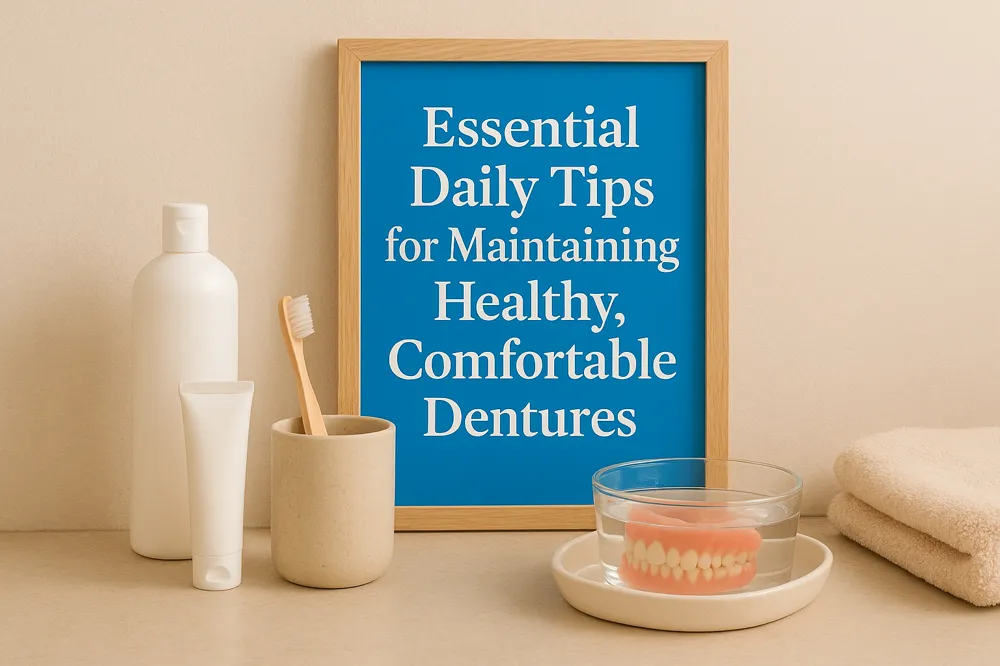
Cleaning your dentures thoroughly at least once a day is essential for maintaining oral health. Dentures should be rinsed after meals to remove food debris and brushed with a soft-bristled denture brush using non-abrasive cleaners designed specifically for dentures. Avoid regular toothpaste or harsh chemicals like bleach, as these can damage the denture material and affect their fit. For detailed guidance, refer to Proper denture care.
Soaking dentures overnight
Soaking dentures overnight in plain water or a dentist-approved denture soaking solution helps keep them moist and maintains their shape. This practice prevents the acrylic from drying out and becoming brittle, extending the life of your dentures. Always rinse dentures well before reinserting to avoid irritation. Learn more about Soaking dentures overnight.
Avoiding damaging cleaning agents
Stay clear of abrasive cleaning materials, whitening toothpaste, and hot or boiling water when cleaning dentures. These agents can warp or scratch denture surfaces, leading to uneven fitting and discomfort. Following manufacturer guidelines for denture cleansers ensures safety and effectiveness. See Proper denture care for more.
Cleaning gums, tongue, and mouth tissues
Daily oral hygiene should include gently brushing the gums, tongue, roof of the mouth, and cheeks with a soft brush or damp cloth. This routine stimulates circulation, helps prevent infections, and removes plaque buildup, supporting overall oral health while you wear dentures. Additional tips can be found at How to care for your denture.
Handling and storage of dentures
When cleaning, handle dentures carefully to avoid bending or breaking parts; clean them over a soft towel or a basin filled with water. When not wearing dentures, store them in water or an appropriate soaking solution to maintain moisture and prevent damage. Refer to Tips for Living with Complete Dentures for handling advice.
Importance of regular dental checkups
Regular dental visits, ideally once a year, are critical for maintaining denture fit and oral health. Dentists can professionally clean dentures, make adjustments to ensure comfort, and monitor for any complications. Promptly consulting your dentist if dentures become loose or cause sores helps avoid infections and ensures optimal function. For more, see When to See a Dentist for Dentures.
| Care Aspect | Recommended Frequency | Key Actions |
|---|---|---|
| Cleaning dentures | Daily | Brush with soft brush; rinse after meals (How to clean dentures) |
| Soaking dentures | Overnight | Use water or approved soaking solution (Soaking dentures overnight) |
| Oral tissue cleaning | Daily | Brush gums, tongue, roof, cheeks gently (How to care for your denture) |
| Handling dentures | Each cleaning | Handle carefully over towel or basin (Proper denture care |
| Dental checkups | Annually or as needed | Professional cleaning and adjustments (Living with dentures) |
Living Fully: What Dentures Can Do For You

Restoration of facial structure and aesthetics
Dentures play a vital role in maintaining the natural shape of your face. By supporting facial muscles, lips, and cheeks, they prevent the sunken appearance that often accompanies tooth loss. This support helps restore a youthful and natural look, boosting overall facial aesthetics. Well-fitted dentures blend seamlessly with your natural teeth, enhancing your smile's appearance and giving you confidence in social situations.
Improved eating and speaking abilities
Denture wearers often find a marked improvement in their ability to eat and speak clearly. Dentures replace missing teeth, allowing for better biting and chewing which supports proper digestion and nutrition. Speaking can initially be a challenge, but with practice—such as reading aloud or speaking in front of a mirror—clarity improves significantly. Using a proper chewing technique, like taking small bites and chewing on both sides, also enhances comfort and functionality.
Boosting confidence and emotional well-being
The restoration of your smile and facial structure with dentures significantly boosts self-esteem. Being able to smile confidently and engage in conversations without fear of embarrassment greatly improves emotional well-being. Many users report increased social interaction and participation in hobbies, leading to a more active and fulfilling lifestyle. Dentures provide a reliable, natural-looking solution that helps you regain your confidence. For more on this, see Regain Your Confidence With Dentures and Partials.
Normal life activities with dentures
Living with dentures generally does not limit your lifestyle. With a consistent routine—including proper denture care and regular dental check-ups—you can engage in everyday activities such as eating out, socializing, and speaking comfortably. Starting with soft foods and gradually reintroducing different textures eases initial adjustments. Wearing dentures consistently helps muscles adapt faster, reducing common issues like soreness and increased saliva production.
Benefits of well-fitted dentures vs. adhesives
The primary benefit of well-fitted dentures is comfort and stability without the need for adhesives. Properly fitted dentures are less likely to slip and cause irritation, making daily activities more enjoyable. While denture adhesives can provide extra security, they should be used sparingly and not replace professional adjustments. Regular visits to your dentist for fitting checks will ensure your dentures function optimally, reducing the need for adhesives and enhancing your overall experience.
Understanding Partial Dentures: Comfort, Care, and Confidence
Design and function of partial dentures
Partial dentures are removable dental appliances crafted with replacement teeth attached to a gum-colored plastic base, sometimes supported by a metal framework for added strength. They are designed to fill gaps left by multiple missing teeth while preserving the remaining natural teeth and gums. These dentures help restore normal biting and chewing functions, prevent neighboring teeth from shifting, and provide structural support to facial muscles, which maintains a natural smile and youthful appearance. For more details, see Living with Partial Dentures and Benefits of Partial Dentures.
Adjustment period and speech adaptation
Wearing partial dentures requires an adjustment period that can last from several weeks to a few months. Initially, wearers may notice discomfort, increased saliva production, and speech challenges such as lisps. These issues gradually improve as the mouth adapts to the appliance. Regular practice, including reading aloud and speaking in front of a mirror, can accelerate speech recovery. Professional adjustments by a dentist are crucial to ensure the denture fits well and to minimize sore spots or irritation. For guidance, refer to Adjusting to partial dentures and Tips for Denture Adjustment.
Eating habits and food recommendations
Eating with partial dentures starts best with soft, easy-to-chew foods such as soups, mashed potatoes, and puddings during the initial weeks. Cutting food into small pieces and using bilateral chewing helps distribute pressure evenly across the denture. Avoiding hard, sticky, or extremely chewy foods protects the denture from damage and improves comfort. Staying hydrated helps reduce dryness and friction in the mouth. For detailed eating advice, see Eating with partial dentures and Eating with partial dentures.
Importance of professional maintenance and adjustments
Routine dental checkups every six months are essential to monitor the fit and function of partial dentures. Over time, natural changes in gums and bone structure may cause the denture to become loose or cause discomfort, signaling the need for professional relining or adjustment. Proper daily hygiene, including brushing dentures with nonabrasive cleaners, rinsing after meals, and soaking overnight in water or denture solution, maintains their cleanliness and longevity. Handling dentures carefully to avoid damage is also critical. For comprehensive care tips, see Proper denture care and Partial denture cleaning tips.
Patient satisfaction and quality of life
Most individuals using partial dentures report high satisfaction, with benefits including restored ability to eat a wider range of foods, improved speech clarity, and enhanced self-esteem. The ease of cleaning and cost-effectiveness compared to implants contribute to their popularity. While wearers may feel the dentures at first, they often adapt fully and can enjoy a normal lifestyle involving socializing, eating out, and talking confidently. With proper care and regular dental support, partial dentures can significantly improve quality of life. For more insights, visit Regain Your Confidence With Dentures and Partials and life with dentures.
Practical Tips for Daily Denture Use and Avoiding Common Pitfalls

What foods should be avoided with dentures?
Hard foods like nuts, hard candies, popcorn kernels, and ice should be avoided when wearing dentures. These foods can crack, chip, or loosen your dentures, leading to discomfort or costly repairs. It's safer to choose softer foods, especially during the initial adjustment period (Eating with dentures).
Using denture adhesives appropriately
Denture adhesives can be helpful to improve retention and prevent slipping, especially during the adjustment phase or if your mouth changes over time. However, they should be used sparingly and only as a temporary aid. Overreliance can mask fit issues that require professional adjustment and may sometimes pose health risks (Using Denture Adhesive).
Handling denture slipping and discomfort
If your dentures slip, gently biting down and swallowing can realign them temporarily. Persistent slipping or discomfort should prompt a visit to your dentist for an adjustment rather than attempting self-fixes. Ill-fitting dentures can cause sore spots, irritation, or infections, so early professional care is critical (Adjusting Denture Fit).
Safe denture cleaning practices
Always handle dentures carefully, preferably over a soft towel or basin of water to prevent breaks if dropped. Clean your dentures daily with a soft-bristled brush and a denture-specific cleanser; avoid abrasive toothpaste or household cleaners. After eating, rinse your dentures to remove debris. Soak them overnight in water or a mild denture solution to keep them moist and maintain their shape. Never use hot water or bleach, as these can warp or damage your dentures (Proper denture care.
Importance of professional adjustments and avoiding DIY fixes
As your gums and jawbone naturally change, denture fit may loosen over time. Regular dental checkups allow your dentist to adjust or reline your dentures to ensure comfort and function. Avoid trying to self-adjust or repair your dentures, as this can cause further damage and discomfort. Professional care is essential to prolong your dentures' lifespan and maintain oral health (When to See a Dentist for Dentures.
How to live with full dentures
Living with full dentures involves consistent care and patience. Keep dentures moist when not worn, maintain daily cleaning, practice speaking and eating to build confidence, and use adhesives only if necessary. Regular dental visits, such as with Dr. Dodds, will help monitor denture fit and oral health. Brushing your gums and monitoring for discomfort supports long-term denture success and your overall oral well-being (Living with Full Dentures (Living with complete dentures).
Enjoying Life with Your Dentures: Confidence Through Care
Adjustment and Care Tips for Denture Wearers
Adapting to dentures involves a transition period of days to weeks, where practicing speaking and eating soft foods aids comfort. Daily cleaning with a soft brush and soaking dentures overnight keeps them in good condition and prevents infections. Avoid harsh cleaners and hot water to maintain the dentures’ shape and longevity.
The Role of Professional Support
Regular dental checkups are essential to ensure dentures fit properly and to address any discomfort or sore spots promptly. Professional guidance ensures adjustments are made safely, preserving oral health and denture function over time.
Living Fully and Confidently
With proper care and patience, individuals can restore natural smiles and engage confidently in social and eating activities. Dentures help maintain facial structure and speech, enabling a fulfilling lifestyle without significant restrictions.