

Why Bioactive Crowns Matter
Patients in Paterson, NJ are increasingly seeking restorations that last longer and protect against future decay. Bioactive crowns meet this demand by releasing calcium, phosphate, and fluoride ions that remineralize the tooth‑crown interface, reduce secondary caries, and lessen post‑operative sensitivity. When combined with chair‑side CAD/CAM and digital impression workflows, these materials can be milled or 3‑D printed in a single visit, preserving more natural tooth structure while delivering a precise, aesthetic fit. The synergy of therapeutic ion release and same‑day digital fabrication not only shortens treatment time but also supports minimally invasive, preventive dentistry. For a community where many families have limited access to routine dental care, the added antimicrobial and pH‑buffering effects of bioactive crowns help maintain oral health between visits, ultimately decreasing the need for repeat interventions and improving long‑term outcomes.
Understanding Bioactivity in Dental Materials
 What defines a dental material as bioactive?
A dental material is defined as bioactive if it elicits a specific biological response from the living tissues in the mouth, rather than being inert. This means the material interacts with your body to actively promote healing and repair, such as stimulating the growth of dentin to reverse early decay. Bioactive materials also release beneficial minerals like fluoride, calcium, and phosphate, which help restore lost tooth structure and strengthen the enamel. Additionally, they create an alkaline environment that repels cavity‑causing bacteria and reduces the risk of secondary decay. Overall, bioactivity means the material does not just patch a tooth but works with your body to improve long‑term oral health.
What defines a dental material as bioactive?
A dental material is defined as bioactive if it elicits a specific biological response from the living tissues in the mouth, rather than being inert. This means the material interacts with your body to actively promote healing and repair, such as stimulating the growth of dentin to reverse early decay. Bioactive materials also release beneficial minerals like fluoride, calcium, and phosphate, which help restore lost tooth structure and strengthen the enamel. Additionally, they create an alkaline environment that repels cavity‑causing bacteria and reduces the risk of secondary decay. Overall, bioactivity means the material does not just patch a tooth but works with your body to improve long‑term oral health.
Materials That Go Beyond Filling
 Glass ionomer cements and fluoride release – Conventional and resin‑modified glass ionomer cements (GICs/RMGIs) bond chemically to enamel and dentin while delivering a burst of fluoride followed by a sustained release. The fluoride converts hydroxyapatite to acid‑resistant fluorapatite, helping remineralize and prevent decay.
Bioactive glasses such as 45S5 Bioglass – 45S5 Bioglass releases calcium, phosphate, sodium and silica ions that precipitate a hydroxyapatite‑like layer on the restoration surface. This layer seals margins, raises local pH, and exhibits antimicrobial effects, reducing secondary caries risk.
Calcium silicate‑based cements (MTA, Biodentine) – MTA and Biodentine release calcium ions that combine with phosphate from saliva to form hydroxyapatite, providing an alkaline environment hostile to bacteria and encouraging dentin bridge formation.
Resin‑based bioactive luting cements and composite fillers – New luting cements incorporate amorphous calcium phosphate particles, delivering calcium and phosphate while maintaining strong adhesive bonds.
Therapeutic ion release for remineralization – By continuously supplying calcium, phosphate, and fluoride, these materials support the natural repair of enamel and dentin, lower plaque accumulation, and improve long‑term crown durability.
What are examples of bioactive materials in dentistry? Bioactive materials include fluoride‑releasing glass ionomer cements, bioactive glasses like 45S5 Bioglass, calcium silicate‑based cements (MTA, Biodentine), and resin‑based luting cements or composites that contain therapeutic fillers. All of these actively interact with tooth tissues to promote remineralization and preserve vitality.
The Crown of the Future: Zirconia and Smart Materials
 Zirconia has become the leading new material for dental crowns, surpassing traditional porcelain‑fused‑to‑metal (PFM) options due to its exceptional strength, biocompatibility, and natural aesthetics. Modern advancements include translucent zirconia for lifelike anterior restorations and multilayered zirconia that creates a seamless color gradient mimicking real teeth, allowing clinicians to fabricate ultra‑thin, durable crowns with minimal tooth reduction. Integrated CAD/CAM workflows now mill bioactive ceramic blocks in a single visit, delivering same‑day restorations that release calcium and phosphate ions to promote remineralization at the tooth‑crown interface. Smart composites enriched with amorphous calcium phosphate (ACP) react to low pH by releasing remineralizing ions, while self‑healing microcapsules polymerize on microcracks, extending crown longevity. Shape‑memory nickel‑titanium (NiTi) alloys provide superelasticity for endodontic files and orthodontic wires, improving flexibility and reducing procedural errors. Together, these innovations create a new generation of crowns that are strong, aesthetic, and biologically active, offering Paterson patients a durable, health‑promoting solution.
Balancing Risks: Complex Procedures and How Bioactive Materials Help
 Root canals, dental implants, and wisdom‑tooth extractions are among the most technically demanding procedures in dentistry. Root canals are often considered the riskiest because the entire infected pulp must be removed and the canal sealed; any residual bacteria can cause reinfection and persistent pain. Dental implants require surgical placement, bone grafting, and precise prosthetic integration, with potential complications such as infection, implant failure, or nerve injury. Impacted wisdom‑tooth removal carries risks of nerve damage, dry socket, and delayed healing, especially when the teeth are close to vital structures.
Bioactive sealers like Smartpaste Bio mitigate these risks by releasing calcium hydroxide and hydroxyapatite, creating an alkaline, bactericidal environment that promotes tissue healing and stabilizes the root‑canal filling. Antimicrobial peptides (e.g., STAMPs) and smart adhesives containing MDPB further reduce bacterial adhesion and glucan synthesis at the restoration margin, protecting the tooth‑crown interface. By actively neutralizing acid, delivering therapeutic ions, and discouraging biofilm formation, these smart, bioactive materials enhance the long‑term success of high‑risk procedures while supporting natural tissue regeneration.
Beyond Crowns: The Broad Role of Biomaterials in Modern Dentistry
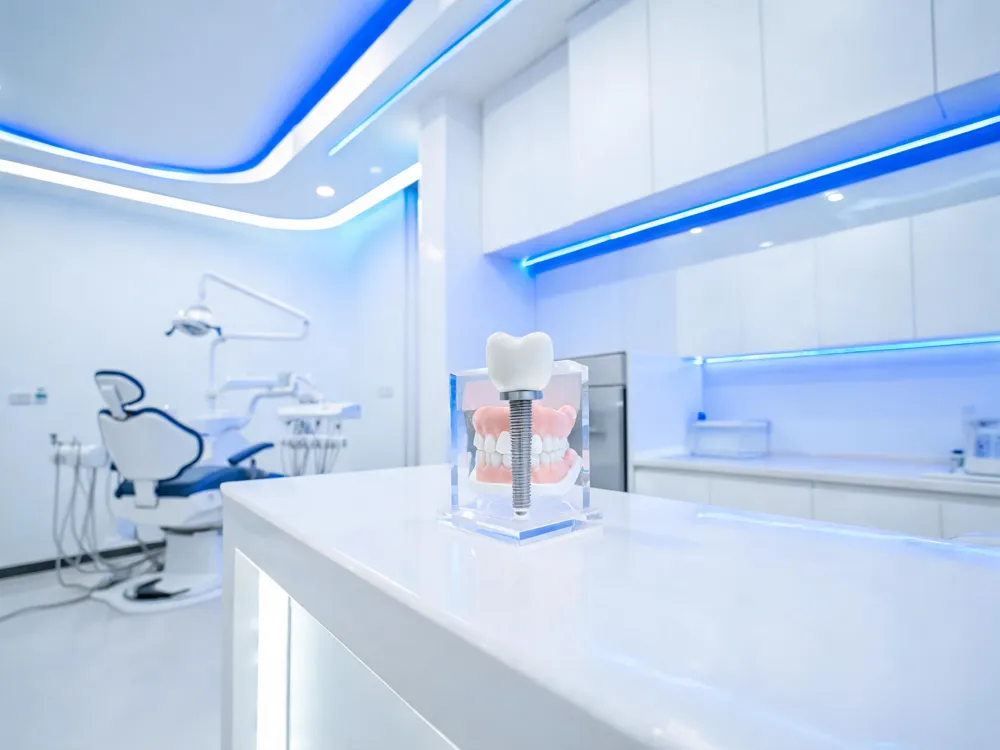 Biomaterials are the backbone of contemporary dental care, providing protection, restoration, and regeneration of damaged or missing teeth. They include metal alloys for implants, glass‑ionomer and resin‑modified cements that bond chemically to dentin, high‑strength ceramics such as zirconia, and polymer‑based composites.
Bioactive coatings on dental implants for osseointegration – Calcium‑phosphate or bioactive glass layers release Ca²⁺ and PO₄³⁻ ions, forming a hydroxyapatite‑like interface that encourages bone bonding and reduces peri‑implant inflammation.
Smart impression materials with shape‑memory properties – These polyether‑ketone‑ketone (PEKK) trays recover their original shape after deformation, cutting impression distortion and shortening setting time by up to 33 %.
3D‑printed bioactive crowns and temporary restorations – CAD/CAM‑driven additive manufacturing embeds therapeutic glass particles that continuously release calcium, phosphate, and fluoride, delivering same‑day, patient‑specific crowns while promoting remineralization.
AI‑assisted design and virtual mock‑ups for patient‑specific outcomes – Artificial‑intelligence algorithms predict optimal crown morphology and occlusion, allowing patients to preview and approve designs before milling, which reduces adjustments and chair‑time.
Nanoparticle‑enhanced ceramics for improved wear resistance – Incorporating nano‑hydroxyapatite or silver‑doped bioactive glass into zirconia or lithium disilicate increases hardness and provides antimicrobial action, extending the life of both permanent and provisional restorations.
Embracing a Health‑Focused Future
Bioactive crowns release calcium, phosphate and fluoride ions that remineralize enamel, form a protective hydroxyapatite layer, and inhibit bacterial growth, reducing secondary caries and post‑operative sensitivity. At our Paterson, NJ practice we combine these therapeutic benefits with CAD/CAM and AI‑driven design, offering multilingual support in English, Spanish and Arabic. Call today to schedule a same‑day, bioactive crown restoration tailored for optimal your perfect smile.