Why Prompt Pain Management Matters
When dental pain is ignored, an infection can spread beyond the mouth, leading to fever, facial swelling, and even systemic illness. Early self‑care—cold compresses, salt‑water rinses, OTC NSAIDs and clove oil—can lower inflammation, numb pain, and buy time until a professional can intervene. Prompt use of emergency dental services, such as same‑day treatment at clinics like Vero Dental Spa, prevents complications, reduces the need for extensive procedures, and safeguards overall health and improves recovery for a faster return to normal activities.
Immediate Home Care Techniques
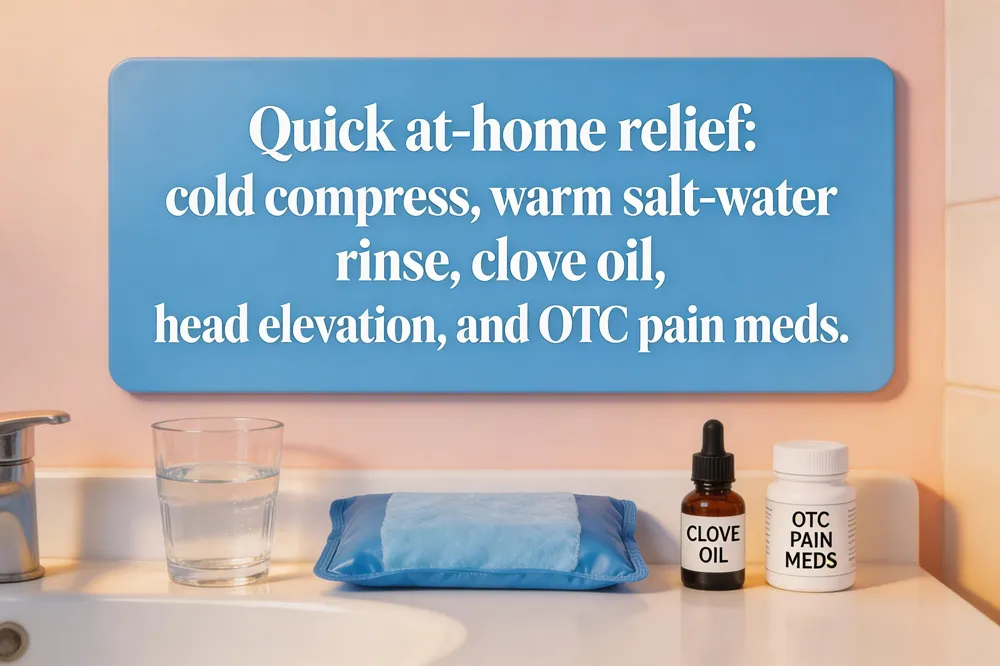 When dental pain strikes before you can see a dentist, a few simple at‑home measures can provide substantial relief.
Cold compress application – Wrap a bag of frozen vegetables or an ice pack in a thin cloth and press it against the cheek near the painful tooth for 10–15 minutes, then remove for 15 minutes. This cycle constricts blood vessels, reduces swelling by up to 40 % in the first hour, and dulls nerve signals.
Warm salt‑water rinse – Dissolve ½ teaspoon of table salt in 8 ounces of warm water. Swish for 30 seconds, then spit. Repeat every 1–2 hours. The hypertonic solution draws fluid from inflamed gums, flushes bacteria, and eases throbbing.
Clove oil and other natural anesthetics – Food‑grade clove oil contains eugenol, a natural anesthetic. Apply 1–2 drops to a cotton ball and place it on the sore tooth for 5–10 minutes. Vanilla extract or a cooled peppermint tea bag can offer similar short‑term numbing.
Head elevation while resting – Prop extra pillows beneath your head to keep it above heart level. This reduces blood flow to the oral region, lessening pressure and nocturnal throbbing.
FAQs
First aid for toothache at home: Rinse with warm salt water, apply a cold compress, use clove oil or vanilla extract, avoid extreme temperatures, keep the head elevated, and contact the office if pain persists.
Toothache remedies: Warm salt‑water rinse, cold compress, clove oil or cooled tea bag, ibuprofen (400‑600 mg) if appropriate, and seek professional evaluation promptly.
How to stop tooth nerve pain instantly: Cold compress, ibuprofen or acetaminophen, clove oil dab, gentle salt‑water rinse, and call for an emergency appointment for definitive care.
Navigating Financial and Insurance Barriers
 When a dental emergency strikes and you have limited funds, act quickly to protect your oral health while you arrange financial help. Rinse the affected area with warm, water, apply a cold compress for 15‑20 minutes, and use over‑the‑counter ibuprofen, acetaminophen, or a few drops of clove oil for temporary relief. If a tooth is knocked out, keep it moist in milk or a saline solution and bring it to the dentist.
What to do in a dental emergency with no money? Contact a local emergency‑care provider such as Vero Dental Spa in Vero Beach, FL, at (772) 778‑5550, or a community health clinic that offers sliding‑scale fees. Explain your situation; many offices provide flexible payment plans, accept Medicaid, and can prioritize same‑day treatment. While you wait, continue salt‑water rinses every 1‑2 hours and avoid extreme temperatures, hard foods, and smoking.
Emergency dental care for adults without insurance Search for practices that list cash‑pay or low‑cost options—David Mayer DMD in Paterson, NJ, accepts Medicaid, offers CareCredit financing, and provides transparent cost estimates before any procedure. Their multilingual team can guide you through payment choices, ensuring you receive prompt, compassionate care.
24‑hour emergency dental care near me Though true 24‑hour coverage is rare, many offices keep after‑hours emergency slots. Call the practice at (555) 123‑4567 any time; they can often see you the same day for severe pain, broken teeth, or infections, and will advise on immediate steps until you can be treated.
Urgent Situations and Weekend Planning
 What to do if you have a dental emergency on the weekend
If a dental emergency strikes over the weekend, stay calm and assess the situation. Rinse the area with warm salt water (½ tsp salt in 8 oz warm water) every 1‑2 hours to cleanse and reduce swelling. Apply a cold compress to the cheek for 15‑20 minutes with 15‑minute breaks to constrict blood vessels and cut swelling by up to 40 % within the first hour. Take ibuprofen 400‑600 mg every 6‑8 hours or acetaminophen 500‑1000 mg every 4‑6 hours for pain relief; alternating them broadens coverage. For a knocked‑out tooth, rinse gently, keep it moist in milk or its own socket, and bring it to the dentist. Cover sharp edges with orthodontic wax or sugar‑free gum. Call the after‑hours line at (555) 123‑4567 for immediate guidance, a Saturday appointment, or a referral to a nearby urgent‑care provider. Seek emergency care for severe bleeding, uncontrolled swelling, or signs of infection.
Dental emergency walk‑in
Our Paterson office welcomes walk‑in patients for dental emergencies. Call (973) 555‑1234 upon arrival; our multilingual team (English, Spanish, Arabic) will slot you into the schedule as quickly as possible. State‑of‑the‑art facilities can treat severe toothaches, knocked‑out or broken teeth, swelling, denture repairs, crowns, implants, and other urgent issues on the same day. While en route, use OTC pain relievers and avoid extreme temperatures or chewing on the affected side.
Emergency tooth pain near me
If you’re in Paterson, NJ, experiencing severe tooth pain, David Mayer DMD offers same‑day emergency appointments. Call (555) 123‑4567 right away; our staff will prioritize your case and use advanced technology to diagnose and treat infections, cracked teeth, or lost crowns on the spot. Prompt, compassionate care is our priority to restore comfort and oral health.
Specific Tooth Pain Scenarios
 How to relieve molar pain:
Rinse the affected area with a warm salt‑water solution (½ tsp salt in a cup of warm water) several times a day to reduce inflammation and cleanse the site. Apply a cold compress or an ice pack wrapped in a cloth to the cheek for 10 minutes each hour to numb the pain and limit swelling. Take an over‑the‑counter pain reliever such as ibuprofen or acetaminophen, and consider a few drops of clove oil on a cotton swab placed directly on the sore molar for temporary numbing. Stick to soft foods, avoid chewing on the painful side, and keep a gentle toothbrush near the area. If discomfort persists for more than two days or worsens, schedule an urgent evaluation with our Paterson dental team.
How to relieve molar pain:
Rinse the affected area with a warm salt‑water solution (½ tsp salt in a cup of warm water) several times a day to reduce inflammation and cleanse the site. Apply a cold compress or an ice pack wrapped in a cloth to the cheek for 10 minutes each hour to numb the pain and limit swelling. Take an over‑the‑counter pain reliever such as ibuprofen or acetaminophen, and consider a few drops of clove oil on a cotton swab placed directly on the sore molar for temporary numbing. Stick to soft foods, avoid chewing on the painful side, and keep a gentle toothbrush near the area. If discomfort persists for more than two days or worsens, schedule an urgent evaluation with our Paterson dental team.
Hole in tooth pain relief: Rinse the area with warm salt‑water to reduce inflammation and clear debris. Apply a cold compress to the cheek for 10 minutes each hour to lessen swelling and dull pain, and consider a few drops of clove oil on a cotton swab for temporary numbing. Over‑the‑counter ibuprofen can help control discomfort, but avoid chewing on the affected side. These measures are short‑term; a cavity needs professional treatment to prevent infection and further decay. Call our office for a same‑day appointment.
Unbearable tooth pain – what to do at home: Rinse gently with warm salt water (≈1 tsp per cup) to reduce inflammation. Apply a cold compress or ice pack wrapped in a cloth for 10 minutes at a time. Take ibuprofen 400 mg (if no contraindications) and avoid extreme temperatures. For extra relief, dab clove oil on a cotton swab or use a cooled tea‑bag compress for 15‑20 minutes. If pain remains severe or is accompanied by fever, swelling, or pus, call our office immediately for same‑day emergency dental care.
Additional Tips and Preventive Measures
 Steer clear of extreme temperatures, sticky or chewy foods, tobacco, and alcohol, as they can aggravate dental pain. After emergency treatment, maintain gentle oral hygiene with soft brushing, careful flossing, and regular salt‑water rinses to keep the area clean. Incorporate natural anti‑inflammatory remedies such as turmeric paste or crushed garlic, which may provide temporary relief while supporting healing.
Take Action Today
If your tooth pain is severe, spreading, or accompanied by fever, call an emergency dentist right away—Vero Dental Spa can be reached at (772) 778‑5550 for treatment. While you wait, reduce swelling with a 15‑minute cold compress, rinse the mouth every two hours using a warm salt‑water solution (½ tsp salt in 8 oz water), and take ibuprofen 400‑600 mg or acetaminophen 500‑1000 mg as directed. Apply a drop of food‑grade clove oil to a cotton ball for numbing, keep the head elevated, and avoid hot, sticky or chewy foods. Finally, schedule a dental appointment promptly to address the cause and complications.