Why Quick-Set Cements Are Central to Same-Day Crown Success
Same‑day crowns, powered by CAD/CAM technology, allow a dentist to design, mill, and place a permanent restoration in a single appointment. The process begins with a digital scan, which creates a precise 3D model. This model guides an in‑office milling machine that carves a crown from a solid ceramic block in about 15–20 minutes. Because the entire workflow—from scan to placement—takes roughly one to two hours, every step must be efficient and reliable. The final, critical step is cementation, the subject of this article section. This is where quick‑set dental cements become essential. After the milled crown is fitted and any minor adjustments are made, a fast‑setting cement permanently bonds the crown to the prepared tooth. These cements are formulated to reach a clinically acceptable set within minutes, so the patient can leave the office with a securely seated restoration the same day. This rapid adhesion eliminates the need for temporary crowns, which can be uncomfortable and prone to loosening, and avoids a second visit. The chemistry of quick‑set cements directly influences the crown's longevity. Resin‑based formulations, for example, provide high bond strength and low solubility, resisting micro‑leakage. Many achieve early shear bond strengths exceeding 10 MPa within five minutes, allowing immediate functional loading. When combined with the high accuracy of CAD/CAM fabrication, the cement layer remains thin—often under 50 microns—which optimizes its mechanical performance. The result is a durable, long‑lasting restoration that can withstand normal chewing forces for 10‑15 years or more with proper care. For patients, the benefits are clear: convenience, comfort, and confidence in a restoration that stays securely in place from the moment they leave the dentist's chair.
| Cement Type | Setting Time | Key Advantage | Best Use |
|---|---|---|---|
| Resin (self‑adhesive) | 2‑3 minutes | High bond strength, easy cleanup | Most same‑day crowns |
| Resin (dual‑cure) | 2‑3 minutes | Cures under opaque crowns | Lithium disilicate or zirconia |
| Resin‑modified glass ionomer | 5‑7 minutes | Fluoride release, moisture tolerant | Metal or PFM crowns |
| Glass ionomer | 5‑7 minutes | Chemically bonds, caries prevention | High‑risk patients |
Setting Time, Strength, and the Strongest Options
How long does it take for cement to set on a crown?
Quick‑set cements used in same‑day crown procedures begin to harden within minutes of placement. The initial set occurs within 2 to 5 minutes, depending on the formulation, allowing the dentist to complete the appointment efficiently. Full polymerisation and 24‑hour strength development continue after the patient leaves, with the cement reaching maximum strength after about 24 hours. During this period, patients are advised to avoid biting on hard or sticky foods to protect the restoration.
What is the strongest dental cement for crowns?
| Cement Type | Compressive Strength | Key Advantage |
|---|---|---|
| Self‑adhesive resin cement | 200–300 MPa | High strength, no separate etching needed |
| Glass‑ionomer cement | 100–150 MPa | Fluoride release, good for high‑caries risk |
| Dual‑cure resin cement | 200–300 MPa | Complete cure under opaque crowns |
Resin‑based cements, particularly dual‑cure formulations, are considered the strongest options for same‑day crowns. PANAVIA™ V5 is noted as one of the strongest dentin bonding cements, providing durable adhesion for crowns, bridges, and veneers. These cements offer high compressive strength and reliable bond durability, ensuring long‑term success for patients.
Temporary vs. Permanent Cements: Choosing the Right Luting Agent
What is the best temporary dental cement for crowns?
When a temporary crown is needed, dentists often rely on over‑the‑counter products like zinc oxide eugenol (ZOE) or non‑eugenol formulas. These temporary cements are designed for short‑term retention, allowing easy removal when the permanent crown is ready. They protect the prepared tooth and reduce sensitivity but are not intended for long‑term durability.
Patients should understand that temporary cement only provides a temporary hold. Using the wrong cement can lead to crown failure or damage. Professional guidance is essential, as your dentist will recommend or provide the appropriate temporary cement for your specific situation.
Why permanent cements are needed for final crowns
Permanent cements, also known as definitive luting agents, are crucial for the final restoration. Unlike temporary cements, permanent formulations like PANAVIA™ V5 provide superior bonding and longevity. They are designed to withstand the strong forces of chewing, maintain a tight seal against bacteria and food particles, and last for many years.
The transition from temporary to permanent cement is a critical step. A permanent cement must create a strong, long‑term adhesive bond that integrates with the prepared tooth and the crown material. This ensures the restoration remains stable and functional over its lifespan.
Classification of crown cements
Dental cements for crowns are broadly classified into temporary and permanent categories. Temporary cements, such as ZOE, allow easy removal of a provisional crown. Permanent cements, including resin‑modified glass ionomers or adhesive resin cements, provide a strong, durable bond.
Permanent cements can be further divided into conventional and resin‑based types. Conventional cements (e.g., zinc phosphate, glass ionomer) rely on mechanical interlocking, while resin cements (e.g., PANAVIA™ V5) use adhesive chemistry for a stronger, more durable hold.
Factors influencing cement selection
Choosing the right cement depends on several factors. The crown material (ceramic, zirconia, porcelain) and its translucency influence the cement type. The condition of the tooth—such as remaining enamel, dentin exposure, or high caries risk—also plays a role.
Your dentist will consider preparation design, moisture control, and the patient's bite forces. For example, resin cements are preferred for esthetic restorations, while glass ionomer cements may be chosen for teeth with high decay risk due to their fluoride release. The dentist's expertise and the specific clinical scenario guide the final choice, ensuring optimal retention and long‑term success.
| Cement Type | Primary Use | Key Property |
|---|---|---|
| Temporary (ZOE) | Provisional crowns | Easy removal, short‑term hold |
| Permanent (Resin) | Final crowns | High bond strength, long‑term durability |
| Resin‑Modified Glass Ionomer | Final crowns | Fluoride release, moisture tolerance |
| Conventional (Zinc Phosphate) | Final crowns | Mechanical retention, proven longevity |
Are Same‑Day Crowns Worth the Investment?
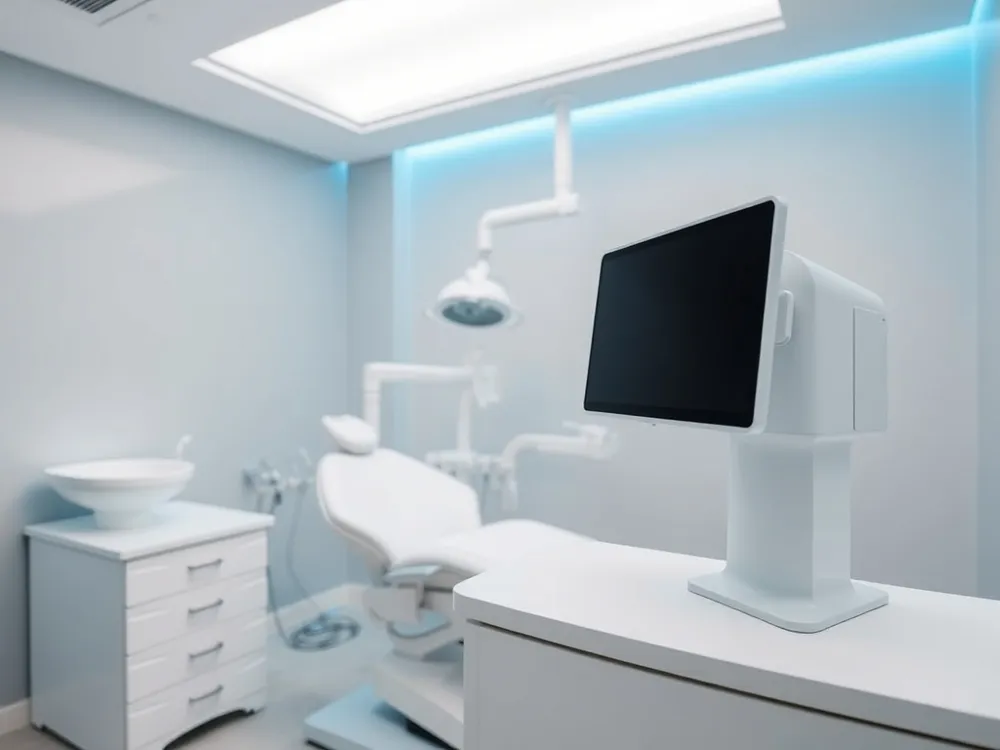
Is the single‑visit convenience worth it for your schedule?
Same‑day crowns eliminate the need for a temporary restoration, multiple numbing shots, and a second appointment. The entire workflow—digital scan, CAD design, in‑office milling, and final cementation—is completed while you wait, typically in one to two hours. Patients report less discomfort and anxiety because digital impressions replace messy putty, and there is no period of wearing a provisional crown that may loosen. This convenience is a major advantage for busy patients who want to restore a damaged tooth without interrupting work or family commitments.
How long do same‑day crowns last? What does the data say?
Clinical studies report survival rates for same‑day crowns above 95 % at five years when proper cementation protocols are followed. At ten years, the longevity remains comparable to traditional lab‑fabricated crowns, often exceeding 90 %. The ceramic materials used—such as lithium disilicate and zirconia—have flexural strengths of 360–400 MPa and 800–1,200 MPa, respectively, making them durable against normal chewing forces. The precision of digital scanning and CAD/CAM milling ensures a marginal fit below 50 µm, which contributes to marginal integrity and reduces the risk of micro‑leakage over time. Modern quick‑set resin cements bond chemically to the ceramic and tooth structure, providing immediate strength and long‑term stability.
When might a traditional lab crown be a better choice?
Traditional lab crowns remain preferable in certain clinical situations. If the tooth is fractured below the gum line, the intraoral scanner may not capture an accurate digital image, and a lab‑fabricated crown with a sub‑gingival margin can be better. For full‑mouth reconstructions, cases requiring multiple units, or patients with severe bruxism (grinding), a conventional lab crown may offer superior strength and customization. Additionally, if a patient prefers a metal‑ceramic (PFM) restoration, which has decades of documented success, a lab‑fabricated option is appropriate.
How should you decide with your dentist?
Your dentist evaluates tooth condition, aesthetic goals, and functional demands before recommending a crown type. Same‑day crowns are excellent for single‑tooth restorations in teeth without complex bite issues, and they provide immediate results. For back molars needing maximum strength or for compromised teeth requiring full coverage, a traditional lab crown may be advised. Patient‑centered decision making involves discussing your lifestyle, budget, and long‑term expectations. Both options have proven track records, and the final choice should balance convenience, durability, and clinical appropriateness.
| Consideration | Same‑Day Crown | Traditional Lab Crown |
|---|---|---|
| Number of visits | 1 | 2+ |
| Temporary crown | Not needed | Required for 1–2 weeks |
| Fabrication time | 1–2 hours | 7–14 days |
| Typical materials | Lithium disilicate, zirconia, ceramic | PFM, gold, all‑ceramic |
| Flexural strength (MPa) | 360–1,200 | 100–600 (varies by material) |
| 5‑year survival rate | >95 % | >95 % |
| Best for | Single‑tooth, non‑complex cases | Multi‑unit, bruxism, sub‑gingival margins |
| Insurance coverage | Usually same codes as traditional | Usually same codes as traditional |
Managing Infection Pain While You Await Treatment
What is the 3‑3‑3 Rule for Tooth Infection?
The 3‑3‑3 rule is a temporary, short-term pain management strategy designed for dental emergencies when immediate professional care isn't possible. It involves taking 600 mg of ibuprofen (three 200 mg tablets of over-the-counter Motrin or Advil) three times daily for a maximum of three days.
This protocol helps reduce inflammation and control pain from a tooth infection or severe toothache, making the wait for a dental appointment more tolerable. It is crucial to understand that this is not a treatment for the infection itself. The rule is a way to manage symptoms temporarily while you arrange to see a dentist.
Safety Considerations and Limits
This approach has strict limits. The 3‑3‑3 rule should not be used by individuals with certain health conditions, including stomach ulcers, kidney disease, or a history of bleeding issues. Always read labels and ensure ibuprofen does not conflict with any of your existing medications.
Because it is strictly a bridge to professional care, this protocol must never be extended beyond three days. Prolonged use without treatment allows the underlying infection to worsen, potentially leading to serious complications like a dental abscess or facial swelling. The goal is symptom management, not a cure.
When to Seek Emergency Dental Care
The 3‑3‑3 rule is only appropriate for minor to moderate pain. You must seek immediate emergency care if you experience:
- Visible facial or gum swelling.
- Difficulty breathing or swallowing.
- A fever, which indicates a spreading infection.
- Pain that is unmanageable with ibuprofen.
These are signs of a serious dental infection requiring urgent professional intervention. Never delay professional treatment; the 3‑3‑3 rule is a temporary comfort measure, not a substitute for addressing a dental emergency.
From Scan to Bond: How Digital Workflows Shape Cement Performance
The success of a same-day crown rests on an integrated digital chain that prepares a precise foundation for quick-set dental cements. Each step in this chain—from scanning to milling—optimizes conditions for the cement to perform its critical bonding function under tight time constraints.
How digital scanning sets the stage
Instead of messy putty impressions, an intraoral scanner captures thousands of 3D images of the prepared tooth in seconds. This creates a highly accurate digital model that eliminates common errors like air bubbles, distortion, or material shrinkage. The precise fit that follows reduces the thickness of the cement layer, which is essential for thin-film bonding: a thick cement layer would increase polymerization stress and risk marginal gaps, while a thin, uniform layer (typically 25–50 µm) allows quick-set cements to achieve maximum bond strength quickly.
Why cement space matters
During crown design, CAD software adds a predetermined cement space—often 20–40 µm—between the tooth and the restoration. This controlled gap is far more consistent than the variable space left by traditional impression techniques. The result is a marginal gap frequently below 50 µm, which allows the dentist to seat the crown fully and enables the quick-set cement to work in its intended thin film. A well-defined cement space directly supports the cement’s ability to seal and retain the restoration from the moment of placement.
Fast milling, faster bonding
Once the design is finalized, an on-site milling machine carves the crown from a ceramic block in 10–20 minutes. The speed of this in‑office fabrication means the cement must be ready to bond immediately after fit‑check and adjustments. Quick-set cements are formulated to reach a clinically acceptable set within minutes, matching the typical 1–2 hour appointment window. The high accuracy of the milled fit minimizes the cement volume needed, allowing the cement’s adhesive chemistry—whether via micromechanical interlock or chemical bonding to the ceramic—to act effectively.
Managing moisture and heat in rapid polymerization
Same-day crown workflows place extra demands on cements. The prepared tooth is often slightly moist, so moisture-tolerant formulations (e.g., self-adhesive resin cements or resin-modified glass ionomers) are preferred. At the same time, rapid polymerization generates heat; modern quick-set cements are designed with low-exotherm initiators to keep pulp temperature rise below the safe limit of 5 °C. These features protect patient comfort while ensuring that the bond forms quickly and reliably.
Future trends: smarter adhesives
Advancements in cement chemistry continue to refine same-day crown outcomes. Newer self-etch and universal adhesive systems simplify the bonding protocol by combining etching, priming, and bonding in one step, reducing chair time. Bioactive cements that release fluoride or calcium ions for enamel remineralization are gaining traction. Integration with digital workflows is also improving: some systems now allow the CAD software to recommend specific cement types based on the crown material and preparation geometry, paving the way for even more predictable and personalized cementation.
| Digital Workflow Step | What It Does | How It Helps Quick‑Set Cements |
|---|---|---|
| Intraoral scanning | Captures precise 3D tooth image, eliminates putty | Ensures accurate fit for thin cement layer |
| CAD cement space (20–40 µm) | Pre‑programs gap between crown and tooth | Allows uniform film thickness; minimizes polymerisation stress |
| In‑office milling (10–20 min) | Carves crown from ceramic block | Enables immediate cementation; cement sets within appointment window |
| Moisture‑tolerant formulation (e.g., self‑adhesive resin) | Bonds even when tooth is slightly moist | Reduces technique sensitivity; allows one‑step placement |
| Low‑exotherm initiators | Controls heat from setting reaction | Protects pulp from thermal damage; permits rapid cure |
| Future developments (bioactive, universal adhesives) | Releases protective ions; simplifies protocol | Promotes long‑term health; further cuts chair time |
Putting It All Together: Quick-Set Cement and Same-Day Crown Success
Recap of Cement Chemistry and Setting Dynamics
Quick-set cements achieve a strong, permanent bond within minutes, making the same-day crown procedure possible. The chemistry is carefully designed: dual-cure resin-based cements combine light and chemical initiation, ensuring complete polymerization even beneath opaque ceramic crowns. This rapid setting eliminates the need for temporary crowns and multiple appointments, while providing immediate retention and a durable seal against microleakage.
Key Take-Aways for Patients Choosing a Crown
When you choose a same-day crown, you benefit from the precision of digital scanning and CAD/CAM design, which creates a crown with an extremely accurate fit. This allows the cement to work in a thin, uniform layer, maximizing its bond strength. The quick-set cement reaches high early strength, so you can leave the office with a fully functional restoration, able to bite and chew normally. No temporary crown means less sensitivity and no worry about displacement.
The Lasting Impact of Rapid, Accurate Digital Dentistry
The integration of digital imaging, in-office milling, and advanced cement science represents a major advancement. It streamlines restorative workflows, reducing chair time and eliminating the discomfort of traditional impressions. This precision reduces the risk of post-operative complications and contributes to the long-term success and durability of your crown, often lasting 10-15 years or more with proper care.
Encouragement to Discuss Cement Options with Your Paterson Dentist
Your dentist will evaluate your specific tooth condition, the crown material, and your aesthetic goals to select the best quick-set cement for your restoration. Feel free to ask about the bonding process and what to expect during and after placement. Discussing these options ensures a personalized, comfortable, and successful treatment experience.