Introduction
Dental crowns, also called caps, are full‑coverage restorations that encase the entire visible portion of a tooth to restore strength, shape, and function. Unlike fillings, which only replace the decayed portion of a tooth, crowns protect the whole tooth and are used when enamel loss or structural compromise is extensive. The decision to place a crown versus a filling depends on several clinical factors: the size of the cavity (crowns are indicated when more than 50‑60% of the tooth is missing), presence of a large or failing filling, cracks or fractures that extend below the enamel, a tooth that has undergone root‑canal therapy, and functional demands such as grinding (bruxism) or high chewing forces in posterior teeth. Patient age, aesthetic concerns, and material preferences also play a role.
Structural Reasons for Choosing a Crown
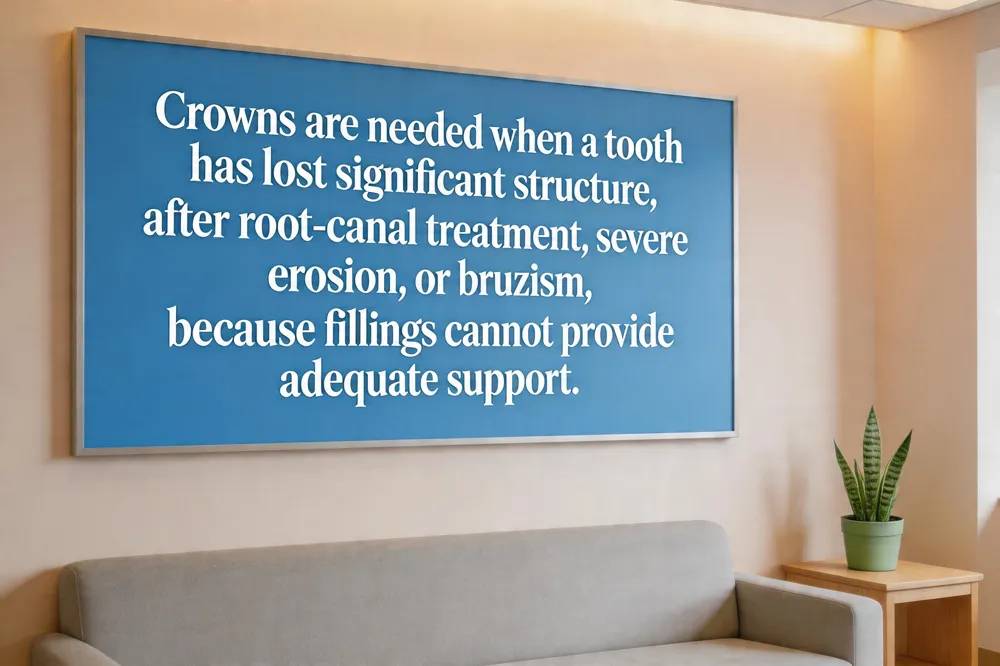 A dental crown is indicated when a tooth has lost a substantial amount of structure and a simple filling cannot provide adequate support. Large or deep cavities, extensive decay, or a filling that occupies more than half of the tooth’s surface remove the protective enamel needed for a filling to hold. After root‑canal treatment the tooth becomes brittle and requires a crown to prevent fracture. Severe acid erosion from GERD or a diet rich in acidic drinks wears away enamel, and bruxism (grinding) creates micro‑cracks and thinning that a crown can reinforce.
When do you need a crown vs filling? Fillings are suitable for small cavities where most healthy enamel remains; crowns are needed when less than about one‑third of the tooth width is intact, or when the tooth must bear heavy chewing forces.
Root canal removes infected pulp, cleans the canals, and seals them; a crown is placed afterward to restore strength and protect the now non‑vital tooth.
Types and cost Metal crowns ($800‑$1,500) are strongest but visible; all‑porcelain ($900‑$2,000) offers best aesthetics; PFM ($600‑$1,500) balances strength and look; zirconia ($1,000‑$2,500) provides high strength with tooth‑colored translucency.
Disadvantages Include higher cost, permanent removal of healthy enamel, possible post‑procedure sensitivity, risk of loosening, chipping, gum irritation, and rare allergic reactions.
Can a tooth rot under a crown? Yes—if plaque accumulates at the margin, decay can develop beneath the crown. Good oral hygiene, flossing around the crown, and regular check‑ups are essential to prevent this.
Materials, Costs, and Insurance Coverage
 Dental crowns come in several material options, each balancing strength, aesthetics, and price. Metal crowns (gold or base‑metal alloys) are the most durable and usually the least expensive, ranging from $800‑$2,500. Porcelain‑fused‑to‑metal (PFM) crowns combine metal strength with a tooth‑colored exterior and cost $800‑$2,400. All‑ceramic choices such as zirconia provide metal‑free strength and natural translucency; zirconia crowns typically run $1,000‑$2,500, while high‑end all‑porcelain can approach $2,000‑$3,000.
Most private dental insurance plans cover medically necessary crowns at about 50 % of the fee, often with an annual maximum of $1,000‑$2,500. Patients can lower out‑of‑pocket expenses with dental discount plans, selecting less costly materials, or receiving care at a dental school.
Same‑day CAD/CAM technology (e.g., CEREC) allows many crowns, especially zirconia, to be milled and placed in a single visit, reducing the need for temporary crowns and potentially lowering overall costs.
In Paterson, NJ we offer a transparent estimate before treatment, a range of crown materials, and bilingual staff to help you navigate insurance benefits and discount options.
Procedure Steps, Timing, and Patient Comfort
 Preparing a tooth for a crown starts with local anesthesia to ensure a painless experience. The dentist removes decayed or damaged tissue, cleans the tooth, and reshapes it, reducing the crown 1.5–2 mm to make room for the restoration. An impression or intra‑oral 3‑D scan captures the tooth’s new shape for the laboratory or for same‑day CAD/CAM milling. A temporary crown protects the tooth while the permanent one is fabricated.
If a CEREC or other CAD/CAM system is used, the entire process can be completed in one visit—about 60‑90 minutes for preparation, digital scanning, milling and cementation. Traditional crowns require two appointments: the first for preparation and impression, the second for fitting and cementing the permanent crown. The laboratory typically needs one to two weeks to mill, sinter and stain the restoration, during which a temporary crown is worn.
Patients usually feel only pressure during preparation; anesthesia prevents sharp pain. Mild sensitivity to temperature may linger for a few days and is managed with OTC analgesics. Crowns are long‑term, lasting 10‑20 years on average, though they are not truly permanent and may need replacement.
Clinical Outcomes, Longevity, and After‑Care
 Dental crowns on front teeth typically last between 5 and 15 years, with many patients enjoying 10‑15 years of service; porcelain crowns usually fall in the 10‑15‑year range, while high‑strength zirconia can reach 15‑20 years or more when oral hygiene is diligent. Factors that influence durability include material choice, the amount of remaining healthy tooth structure, bite forces (especially from bruxism), and the quality of the cementation. Regular brushing twice daily with fluoride toothpaste, careful flossing around the crown margin, antibacterial mouthwash use, and routine dental cleanings are the cornerstone of good oral‑hygiene practice. Patients should avoid extremely hard, sticky foods and consider a night guard if they grind their teeth. Complications such as loose, chipped, or painful crowns, gum irritation, or secondary decay at the margin require prompt evaluation by a dentist. Before‑and‑after photos of front‑tooth crowns illustrate dramatic aesthetic improvement: discolored or chipped teeth become natural‑looking, seamless with the smile, boosting confidence and function. While crowns provide lasting protection, they do require removal of healthy enamel and can cause temporary sensitivity; cost and potential allergic reactions to metal are additional considerations.
Patient Decision‑Making, Alternatives, and Practice Support
 When a tooth is damaged, the first step is to assess how much healthy structure remains. Small to moderately sized cavities can be restored with a composite filling, preserving most of the natural enamel. Larger cavities, extensive decay, or a tooth that has undergone root‑canal treatment often require a full‑coverage crown to prevent fracture and protect the pulp.
A cap (inlay/onlay) covers only the damaged portion of the biting surface, requiring less tooth reduction and typically costing less than a crown. It is a good intermediate option when more than half of the tooth is still sound. A full crown encircles the entire visible tooth, offering greater strength and durability, especially for molars, cracked teeth, or teeth with large existing fillings.
Cost‑saving strategies include opting for metal‑based crowns for molars, using dental insurance benefits, and considering same‑day CAD/CAM crowns that eliminate temporary restorations.
Multilingual communication is essential; our office provides explanations in English, Spanish, and Arabic, ensuring patients understand the pros and cons of fillings, caps, and crowns and can make an informed decision that fits their budget and oral‑health goals.
Conclusion
The decision to place a dental crown depends on several key factors: the amount of remaining healthy tooth structure (often less than 50‑60% remaining), the presence of extensive decay, large existing fillings, cracks, or a root‑canal‑treated tooth, and functional demands such as grinding or high bite forces. Personalized treatment planning is essential—evaluating the tooth’s location, patient aesthetic goals, allergic sensitivities, and budget ensures the optimal material (zirconia, PFM, gold, or all‑ceramic) and approach (traditional two‑visit or same‑day CAD/CAM). Our Paterson, NJ team combines digital imaging, intra‑oral scanning, and experienced restorative expertise to assess each case, discuss options, and fabricate precise, durable crowns that restore function and confidence while preserving oral health.