Why Emergency Dental Care Matters
Quick action can mean the difference between saving a tooth and permanent loss. When a permanent tooth is knocked out, re‑implantation within 30‑60 minutes—ideally within 30 minutes—greatly improves survival, while prompt care for broken teeth or severe pain reduces infection risk. Preventive habits such as twice‑daily brushing with fluoride toothpaste, daily flossing, regular six‑month check‑ups, and wearing properly fitted mouthguards during sports cut the incidence of trauma and cavities. A pediatric dentist brings specialized training in child behavior, anatomy, and emergency protocols, offering calm, child‑friendly environments for urgent care, immediate radiographs, splinting, and follow‑up monitoring. Their expertise ensures timely, safe treatment that protects both current oral health and future development, and supports long‑term confidence in smiling and overall well‑being.
Immediate First‑Aid for Common Tooth Injuries
Quick‑Reference Table – Immediate First‑Aid
| Injury Type | Immediate Action | Recommended Follow‑up |
|---|---|---|
| Chipped / Cracked Tooth | Rinse mouth with warm water. Preserve any fragments in milk or saliva. Avoid using the tooth. | Schedule dental exam within 24 h; X‑ray if needed. |
| Knocked‑out Permanent Tooth | Pick up by crown only, rinse briefly in milk or saline (no scrub). Re‑insert into socket ** child bites clean cloth or store in milk/saliva. Call office immediately (aim for <30 min). | Same‑day emergency appointment; possible splinting. |
| Loose / Displaced Tooth (Subluxation) | Soft diet, gentle oral hygiene. Keep tooth in socket. | X‑ray at ~1 wk and 2‑3 wk; possible temporary splint. |
| General Bump / Minor Trauma | Cold compress 10‑15 min, rinse with warm water, check for looseness/fracture. OTC pain relief if needed. | Call office promptly for evaluation and possible X‑ray. |
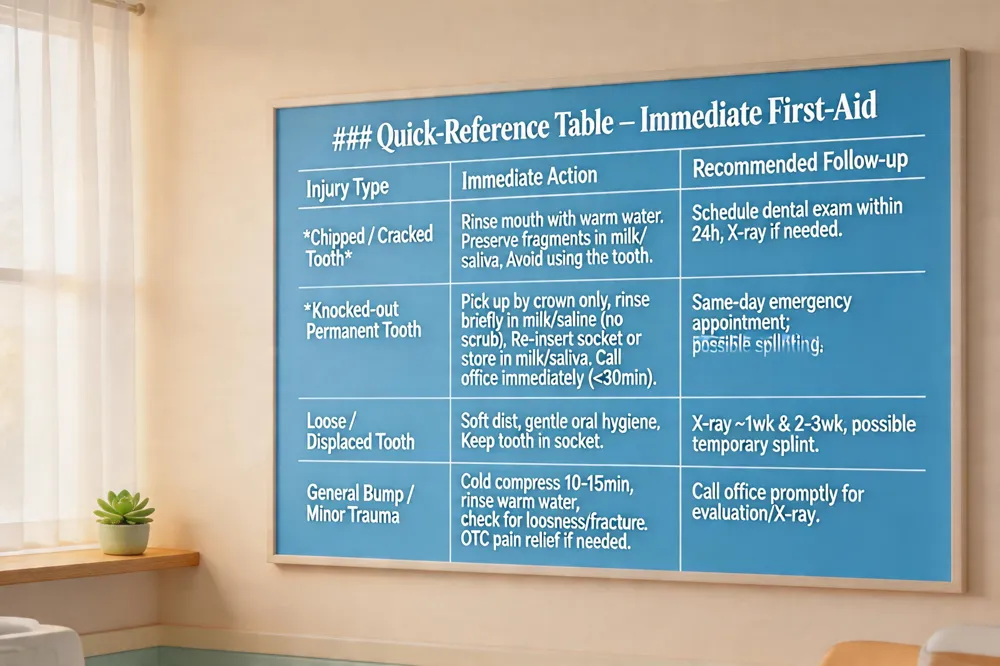 When a child experiences a dental injury, Staying calm is the first step. Apply gentle pressure with clean gauze to stop any bleeding and place a cold compress on the cheek to reduce swelling. For a chipped or cracked tooth , rinse the mouth with warm water, preserve any fragments in milk or saliva, and avoid using the tooth until a dentist can assess it.
Knocked‑out permanent teeth – Pick up the tooth by the crown only, rinse briefly in milk or saline (do not scrub), and either re‑insert it into the socket and have the child bite on a clean cloth, or store it in milk, saline, or the child’s own saliva. Call the office immediately (e.g., 201‑555‑1234) for a same‑day appointment; the best chance of saving the tooth is within 30 minutes. Do not re‑implant a baby tooth—keep the area clean and seek professional evaluation.
Loose or displaced teeth (subluxation) – The tooth remains in its socket but may be mobile. Begin a soft‑diet, gentle oral‑hygiene routine. Healing typically starts within 1–2 weeks, with full periodontal‑ligament repair by 2–3 weeks; a temporary splint may be placed. Follow‑up X‑rays are scheduled at about one week and again at two to three weeks.
If a child bumps a tooth, rinse with warm water, apply a cold compress for 10‑15 minutes, and check for looseness or fracture. Call the dental office promptly for evaluation, possible X‑rays, and appropriate treatment. Over‑the‑counter acetaminophen or ibuprofen can ease pain, but a professional assessment within an hour gives the best chance for optimal outcomes.
Managing Soft‑Tissue and Gum Injuries
Quick‑Reference Table – Soft‑Tissue & Gum Injuries
| Injury | First Steps | Care Tips |
|---|---|---|
| Bleeding Gum / Soft‑Tissue Cut | Apply steady pressure with clean, damp gauze 5‑10 min. Rinse with cool water or mild salt‑water solution. | Cold compress 10 min, soft cold foods, acetaminophen/ibuprofen. Seek professional care if bleeding persists or wound deep. |
| Tooth Intrusion (Pushed into Gum) | Do NOT extract. Rinse gently, cold compress, soft foods. | Call office immediately; dentist decides on natural re‑eruption, repositioning, or extraction. |
| Front Tooth Hit | Warm water rinse, cold compress, check for looseness/fracture. | Prompt X‑ray and evaluation; treat to prevent complications. |
| Chipped / Cracked / Knocked‑out Tooth | Control bleeding, cold compress, rinse permanent tooth in milk, hold by crown, attempt re‑placement or store in milk/saliva. | Baby teeth: never re‑insert; seek urgent care. |
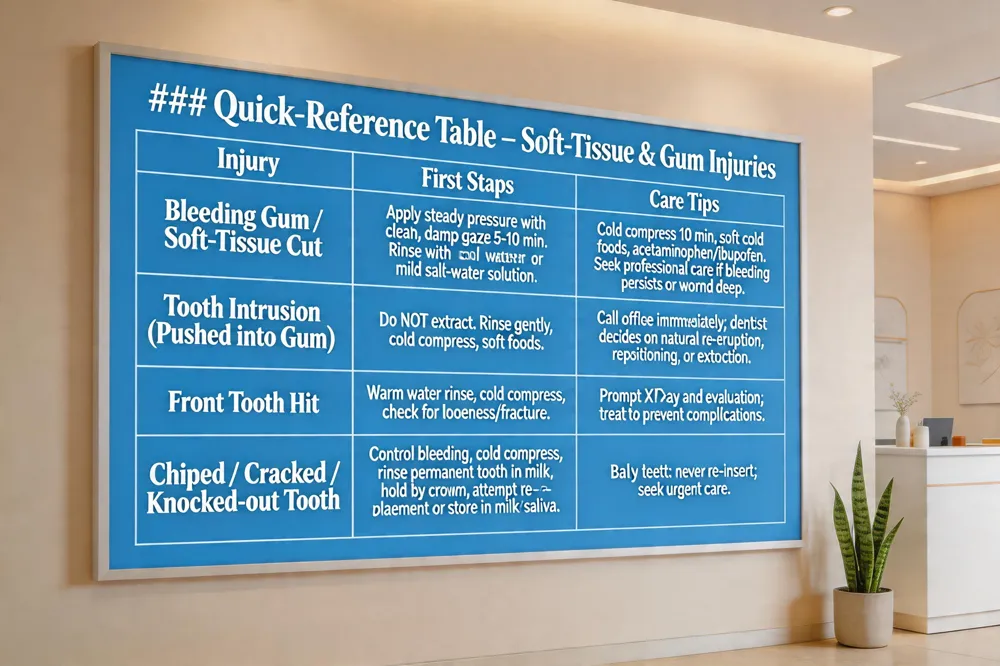 Children’s mouths are vulnerable to falls, sports impacts, and everyday mishaps that can cause gum bruising, tooth intrusion, or soft‑tissue cuts. The first step is to stay calm and assess the child for bleeding, swelling, or loose teeth. For a gum injury from a toddler’s fall, apply steady pressure with a clean, damp gauze for 5‑10 minutes (control bleeding with sterile gauze and pressure), rinse with cool water or a mild salt‑water solution, and place a cold compress on the cheek for 10 minutes. Offer soft, cold foods and age‑appropriate acetaminophen or ibuprofen if needed. If bleeding persists, the wound is deep, or infection signs appear, bring the child to our Paterson office for professional cleaning, possible suturing, or antibiotics.
When a tooth is pushed into the gum, do not attempt to extract it. Rinse gently, use a cold compress, and keep the child comfortable with soft foods. Call the office immediately; our pediatric specialists will determine whether the tooth will re‑erupt naturally, needs repositioning, or extraction, protecting the developing permanent tooth.
If a front tooth is hit, rinse with warm water, apply a cold compress, and check for looseness or fracture. Prompt evaluation, X‑rays, and appropriate treatment prevent complications.
For any chipped, cracked, or knocked‑out tooth, control bleeding, use a cold compress, and—if the tooth is permanent—rinse it in milk, hold by the crown, and attempt re‑placement or storage in milk/saliva. Baby teeth should never be re‑inserted (see guidelines). Contact our multilingual team right away for a same‑day appointment; we will smooth sharp edges, stabilize loose teeth, and arrange follow‑up care to ensure optimal healing.
Special Considerations for Primary (Baby) Teeth
Quick‑Reference Table – Primary (Baby) Teeth Considerations
| Injury Type | Concern for Permanent Successor | Immediate Action |
|---|---|---|
| Intrusion (Pushed into Gum) | Can damage developing tooth bud → enamel defects, malformation. | Rinse gently, cold compress, do NOT pull. Contact emergency team for X‑ray and evaluation. |
| Premature Loss | Loss of arch space → misalignment of permanent teeth. | Consider space maintainer; schedule regular follow‑ups. |
| Chip / Fracture | May transmit force/infection to bud → discoloration, shape issues. | Preserve fragment if possible, schedule X‑ray, cleaning, and appropriate restoration. |
| General Trauma | Risk of infection, root resorption, dilaceration. | Prompt professional assessment; monitor with periodic X‑rays. |
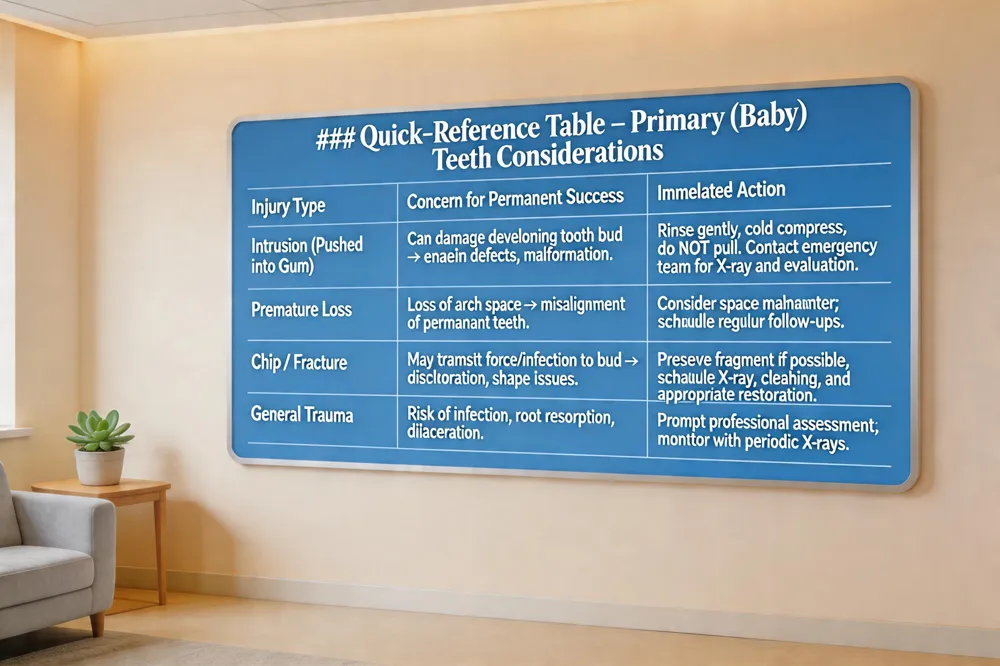 Primary teeth play a critical role in guiding the eruption of permanent teeth. An injury to a baby tooth can transmit force, blood, or infection to the developing tooth bud, potentially causing enamel hypoplasia, discoloration, irregular shape, or root malformations such as dilaceration. Prompt evaluation allows the dentist to monitor the permanent successor with X‑rays and intervene early, reducing the risk of cavities, sensitivity, or misalignment.
Intrusion Injuries
When a baby tooth is pushed back into the gum after a fall, the first step is to stay calm, rinse the mouth gently with clean water, and apply a cold compress to reduce swelling. Do NOT attempt to pull or reposition the tooth, as this can damage the underlying permanent tooth. Contact a pediatric‑friendly emergency team immediately for X‑ray assessment and to determine whether the tooth can re‑erupt naturally or requires removal. Follow‑up visits will monitor healing and protect the permanent tooth.
Space Maintain‑ and Follow‑Up
If a primary tooth is lost prematurely, a space maintainer may be placed to preserve the arch space for the permanent tooth. Regular check‑ups every few months ensure proper development and allow early detection of any delayed complications.
Frequently Asked Questions
- Trauma to baby teeth affect permanent teeth? Yes. Injuries can transmit force or infection to the underlying tooth bud, leading to enamel defects, shape irregularities, or root malformations. Timely professional assessment and follow‑up X‑rays help preserve the future smile.
- Baby tooth pushed back into gum after fall – Stay calm, rinse, apply a cold compress, and seek urgent dental evaluation. Do not pull the tooth; the dentist will decide on natural re‑eruption or extraction.
- Dental trauma baby teeth – Even minor chips can affect the permanent tooth. Bring the child promptly for X‑rays, cleaning, and appropriate treatment—smoothing, bonding, splinting, or extraction—while monitoring the permanent successor.
- What are common dental emergencies for kids? Broken or cracked teeth, knocked‑out teeth, severe toothaches, gum or facial swelling, jaw injuries, and soft‑tissue cuts that bleed excessively.
- 24‑hour emergency dental walk‑in – Our practice offers 24‑hour emergency dental walk‑in care for severe pain, avulsed teeth, broken crowns, and other urgent issues. Call or walk in at any time; we’ll triage, provide immediate relief, and arrange follow‑up, with compassionate, multilingual staff and state‑of‑the‑art technology.
When to Seek Professional Care and What to Expect
Quick‑Reference Table – Red‑Flag Symptoms & Next Steps
| Red‑Flag Symptom | Why It’s Important | Recommended Action |
|---|---|---|
| Severe, persistent tooth pain | Indicates possible pulp involvement or infection. | Call office immediately; may need urgent X‑ray or emergency treatment. |
| Uncontrolled bleeding > few minutes | May signal vascular injury or deeper trauma. | Apply pressure, seek emergency dental care right away. |
| Swelling spreading beyond injury site | Possible infection or cellulitis. | Cold compress, monitor, and contact dentist promptly. |
| Fever or systemic signs | Suggests infection spreading. | Seek medical/dental evaluation ASAP; may need antibiotics. |
| Discolored or non‑responsive tooth after trauma | Indicates necrosis or severe damage. | Immediate dental exam; possible root canal or extraction. |
| Loose permanent tooth or displaced tooth | Risk of periodontal damage. | Emergency appointment; possible splinting or repositioning. |
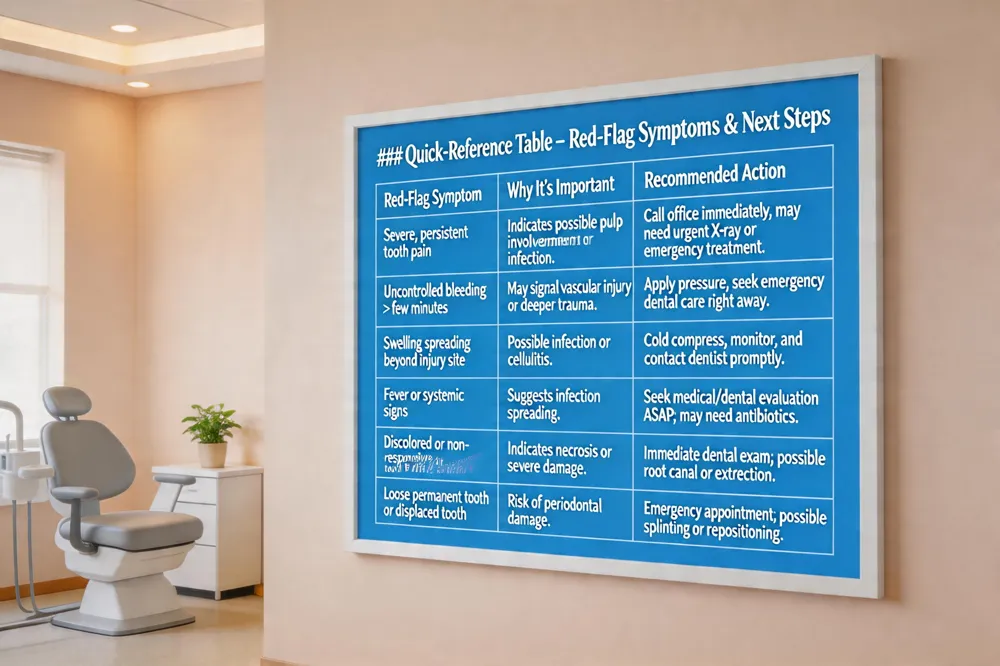 Red‑flag symptoms that indicate a dental emergency include severe, persistent tooth pain, uncontrolled bleeding that does not stop after a few minutes, swelling that spreads beyond the injury site, fever, discoloration of the tooth, or any sign of infection. If a permanent tooth is displaced, loose, or knocked out, immediate attention is essential. Even a seemingly small chip that changes bite alignment or causes difficulty opening the mouth should be evaluated promptly.
When a child hits his front tooth, stay calm, rinse the mouth with warm water, and apply a cold compress to the cheek for 10‑15 minutes. Use clean gauze to control any bleeding and check the tooth for looseness or fracture. Avoid hard foods, keep the area clean, and call our office right away so we can perform a clinical exam and X‑rays if needed.
Our office offers same‑day emergency appointments for dental trauma and severe pain. After you call, we prioritize the case, confirm the child’s insurance, and schedule a prompt visit—often within the same day. For families on Medicaid, we provide 24‑hour emergency dental care and work directly with Medicaid to cover urgent procedures such as temporary crowns, extractions, or splinting. If you are unsure whether urgent‑care or an ER is appropriate, remember that most tooth pain is best managed by a dentist; only seek ER care for high fever, facial swelling that threatens the airway, or trauma with breathing difficulty. Our multilingual team (English, Spanish, Arabic) is ready to guide you through the process and ensure your child receives compassionate, efficient care.
Preventing Future Dental Trauma
Quick‑Reference Table – Prevention Strategies
| Strategy | How It Helps | Implementation Tips |
|---|---|---|
| Custom‑fit Mouthguard | Absorbs impact, protects teeth & gums. | Get fitted at dental office; wear during sports & high‑impact activities. |
| Boil‑and‑bite / Stock Guard | Reduces risk of chipped/fractured teeth. | Choose appropriate size; replace when worn. |
| Supervised Play & Safe Habits | Minimizes accidental falls & impacts. | No running with objects in mouth; avoid chewing hard items (ice, popcorn kernels, hard candy). |
| Regular Dental Check‑ups (every 6 months) | Early detection of vulnerable teeth, occlusion issues. | Schedule appointments; discuss sealants, fluoride, and mouthguard needs. |
| Education & Multilingual Guidance | Ensures families understand prevention & emergency steps. | Provide instructions in English, Spanish, Arabic; use visual aids. |
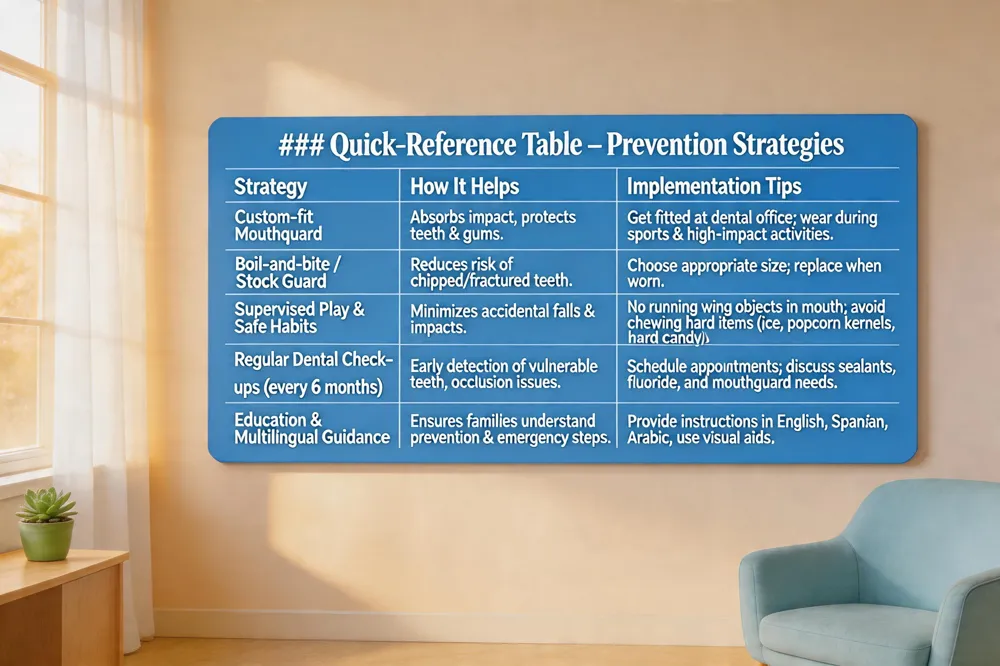 Consistent use of properly fitted mouthguards during sports and high‑impact activities is one of the most effective ways to protect children’s teeth and gums. Custom‑made guards offer the best fit, but even boil‑and‑bite or stock guards can significantly reduce the risk of chipped, fractured, or knocked‑out teeth. In addition to protective gear, parents should encourage safe play habits: supervise younger children, discourage running or walking with objects in the mouth, and advise against chewing hard items such as ice, popcorn kernels, or hard candy. Regular dental check‑ups every six months provide early detection of cavities, misaligned teeth, or other conditions that could predispose a child to injury. During these visits, the dentist can assess the need for sealants, fluoride treatments, and personalized recommendations for mouthguard use, reinforcing a proactive approach that keeps smiles healthy and resilient.
Keeping Your Child’s Smile Safe
Key takeaways: Children’s dental emergencies—knocked‑out permanent teeth, chipped teeth, severe toothaches, or soft‑tissue cuts—require prompt, calm action. Handle an avulsed tooth by the crown only, rinse gently, and re‑insert or store it in milk or saliva within 30 minutes for the best chance of survival. Use a cold compress for swelling, give age‑appropriate ibuprofen or acetaminophen, and never place aspirin directly on gums. Keep a basic emergency kit (gauze, a sealed container, saline, and pain relievers) and your pediatric dentist’s after‑hours line handy.
Resources and contact information: Charlotte Hall Emergency Dentist (301) 884‑2299, Lexington Park Dentistry (301) 863‑7077, Bumble Bee Pediatric Dentistry (512) 351‑7771, and your local pediatric dental clinic’s emergency number. Store these numbers in a visible place.