Getting Started
What are same‑day partial dentures?
Same‑day partial dentures, also called immediate partial dentures, are a temporary tooth replacement option. They are custom-fabricated before your tooth extraction, using impressions of your existing teeth and gums. On the day of your procedure, your dentist removes the affected teeth and places the partial denture immediately. This means you leave the office with a complete smile, avoiding any period without teeth.
Why timing matters for tooth loss
After a tooth extraction, your gums and jawbone begin to heal and reshape. This natural process can take several months. If you wait for complete healing before getting a denture, you may be without teeth for an extended period. Same-day partial dentures eliminate this waiting time, restoring your ability to smile, speak, and eat soft foods right away. They also act as a protective bandage over the extraction sites, reducing bleeding and shielding sensitive tissues.
Patient expectations before the first visit
The process begins with a consultation. Your dentist will examine your oral health, take impressions and bite records, and discuss tooth shade and shape. The partial denture is then fabricated in a dental lab or on-site using digital technology. On the day of extraction, the denture is fitted and adjusted. You should expect some initial soreness and a need for follow-up appointments, as the fit will change during healing. Immediate dentures are a temporary solution, typically worn for 4 to 8 months before a more precise permanent denture is made.
Immediate vs. Conventional Dentures: What Sets Them Apart
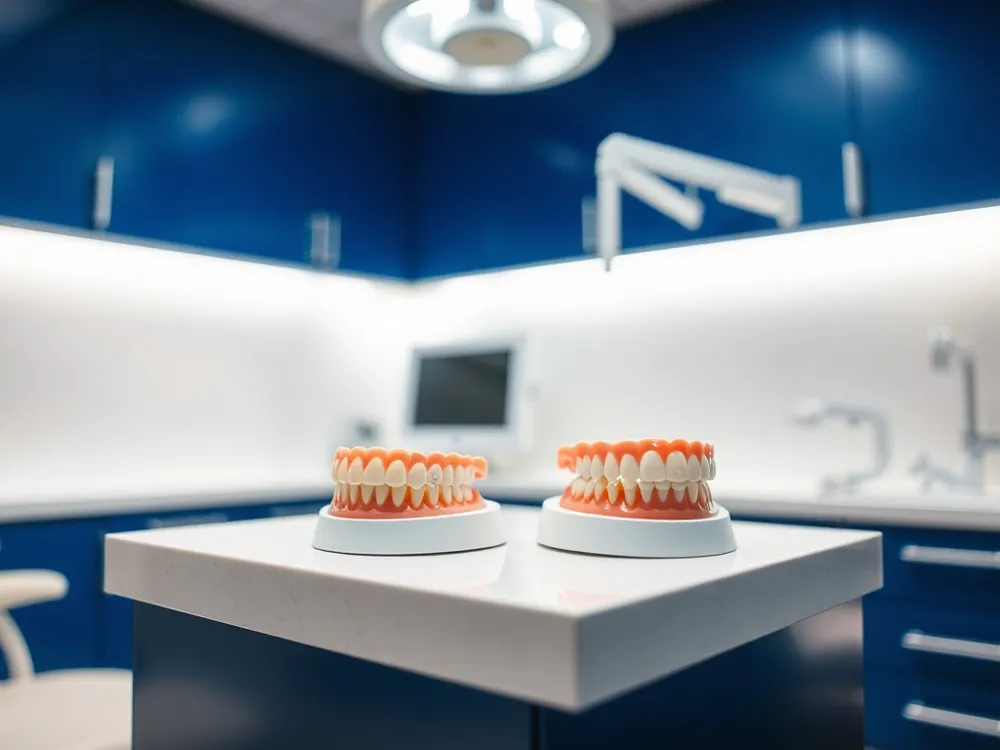
What is the difference between conventional dentures and immediate dentures?
Conventional dentures are created after your mouth has fully healed from tooth extraction. This process begins after a healing period of several weeks to months, allowing gum tissue and bone to stabilize. The final prosthesis is then custom-fitted to this stable oral anatomy. The result is a precise fit, which typically provides greater comfort, stability, and longevity from the start.
Immediate (same‑day) dentures are fabricated beforehand using impressions taken while your natural teeth are still present. They are inserted immediately after tooth extraction, so you leave the dental office with a full set of teeth the same day. This eliminates the period without teeth, offering immediate functional and aesthetic restoration.
Timeline and Fit Considerations
| Type | Extraction to Prosthesis | Initial Fit | Adjustment Needs | Long-Term Durability |
|---|---|---|---|---|
| Conventional | Weeks to months (post-healing) | Custom-fit to healed tissue | Fewer adjustments | Higher (5-7+ years) |
| Immediate | Same day (pre-made) | Less precise due to healing | Frequent relines & adjustm. | Lower (18-24 months) |
Because your gums and bone shrink during healing, immediate dentures often become loose and require periodic adjustments or relines to maintain comfort. They are considered a transitional appliance. In contrast, conventional dentures, designed for healed tissues, require fewer follow-up visits and offer a longer functional lifespan.
Are Immediate Dentures Meant to Last?
Purpose as a Transitional Appliance
Immediate dentures are designed as a temporary, transitional appliance. Placed on the same day as tooth extraction, they act as a protective bandage over healing gums and help patients avoid a period without teeth. Their primary role is to maintain appearance and function during the initial healing phase, not to serve as a permanent fixture.
Typical Wear Period and Fit Changes
The typical wear period for immediate dentures is about four to six months. During this time, your gums and jawbone will naturally shrink and reshape as they heal, a process that often causes the denture's fit to become loose or uncomfortable. This change in fit is expected and is why frequent adjustments or relines are necessary.
Path to a Permanent Solution
Because immediate dentures are not meant for lifelong use, a permanent alternative is needed for long-term stability and comfort. Once your mouth has fully healed, your dentist can create conventional dentures, which are custom-molded for a precise fit. For a more stable and bone-preserving option, implant-supported dentures are an excellent permanent choice. Ultimately, immediate dentures are a valuable first step but not a final one. They are a bridge to a more lasting and comfortable solution.
Modern Denture Technologies: The Newest Options
What are the newest types of types of dentures and partial dentures available?
Dental technology has evolved significantly, offering a range of modern solutions that surpass traditional options in comfort, fit, and aesthetics.
Digitally Designed Dentures
Many practices now use 3D imaging and digital scanning to create precise models of your mouth. This data is used to mill dentures in an on-site lab, allowing for same‑day dentures and a more accurate fit. This technology minimizes the need for multiple adjustments and reduces overall wait time.
Implant-Supported Options
For maximum stability, modern implant-supported dentures are a top choice. These include snap-in (removable) and fixed (non-removable) varieties. They are anchored by titanium posts in the jaw, preventing slipping and preserving bone density. Some practices offer less invasive mini dental implants, making this solution more accessible.
Flexible and Aesthetic Partials
Modern flexible partial dentures are made from lightweight, clear thermoplastic or nylon. They offer a metal-free design with gum-colored clasps that blend seamlessly, eliminating the visible clips of traditional partials. This design provides superior comfort on sensitive gums.
Advanced Materials: Zirconia and Suction
Zirconia dentures (often with implant support) are exceptionally durable and natural-looking, resisting stains and wear. For those without implants, advanced suction-type dentures use a unique design that enhances suction against the palate for a secure, adhesive-free fit.
| Modern Solution | Key Feature | Benefit |
|---|---|---|
| 3D-Printed / Milled | Digital precision fabrication | Same-day delivery, accurate fit |
| Implant-Supported | Anchored to jawbone posts | No slipping, preserves jawbone |
| Flexible Thermoplastic | Soft, clear resin base | Metal-free, comfortable, discreet |
| Zirconia-Based | High-strength ceramic material | Durable, stain-resistant, natural look |
| Suction-Type | Enhanced palatal seal | No dental glue, stable fit |
Partial Denture Types and Costs Explained
What are the types of partial dentures and their costs?
Choosing the right partial denture depends on understanding the different materials and how they affect cost, comfort, and longevity.
Cast-Metal Partials (Framework and Clasps)
Cast-metal partial dentures use a durable metal framework, often made of cobalt-chrome or titanium, to support acrylic teeth and a gum-colored base. They attach to remaining natural teeth with metal clasps, offering exceptional strength, stability, and a thinner, less bulky design. This makes them a long-lasting and reliable choice, though the metal clasps can sometimes be visible when smiling.
Acrylic (Flipper) Partials
Acrylic partial dentures, also called flippers, are a lightweight and affordable option typically used as a temporary solution. They consist entirely of acrylic resin, making them easy to repair but less durable and more prone to breakage than metal-based alternatives. Their simpler design also means they can feel bulkier in the mouth.
Flexible Nylon/Acetal Resin Partials
Flexible partial dentures are made from a thermoplastic material like nylon (e.g., Valplast) or Acetal Resin. These are metal-free, comfortable, and blend naturally with the gums as they are slightly translucent. They are a good choice for patients with acrylic allergies, but they can be harder to repair and may not offer the same stability as cast-metal options, especially for replacing multiple teeth.
Hybrid Designs
Some partial dentures combine a metal framework with a flexible base, aiming to provide the strength of metal with the aesthetic benefits of a flexible, gum-colored material. These hybrid designs can be a premium option that offers a good balance of stability and natural appearance.
Average Cost Ranges for Each Material Type
The cost of a partial denture is influenced by the material, lab fees, geographic location, and case complexity. The table below provides typical cost ranges:
| Material Type | Typical Cost Range (per appliance) | Key Characteristics |
|---|---|---|
| Acrylic (Flipper) | $695 – $1,200 | Most affordable, lightweight, temporary use, less durable. |
| Cast Metal | $1,000 – $2,500 | Strong and stable, long-lasting, thin design, metal clasps may be visible. |
| Flexible Nylon (Valplast) | $800 – $1,500 | Metal-free, comfortable, natural gum appearance, harder to repair. |
| Acetal Resin | $1,650 – $3,000 | Metal-free aesthetic, good retention, more durable than basic nylon. |
| Hybrid (Metal + Flexible) | $1,200 – $2,800+ | Combines metal strength with flexible base for comfort and aesthetics. |
According to Aspen Dental, the average patient pays around $1,319 per arch for a flexible partial denture. Remember that additional fees for extractions, impressions, or adjustments can increase the total cost. Your dentist will provide a detailed treatment plan with a precise estimate based on your specific needs.
Same‑Day Partial Denture Process: From Scan to Smile
Can you get a partial denture in one day?
Yes, a same‑day partial denture is often possible. Modern technology allows dentists to design, fabricate, and fit a partial denture within a single appointment, eliminating the typical multi‑week wait. The entire process focuses on convenience without sacrificing quality, provided you are a suitable candidate.
Initial consultation and candidate screening
The journey begins with a thorough exam and discussion of your oral health, lifestyle, and goals. The dentist evaluates your gum health, jawbone density, and the condition of remaining teeth. They also review your medical history for factors like uncontrolled diabetes or smoking that may affect healing. This step determines if same‑day treatment is appropriate for you.
Digital scanning or quick‑set impressions
Instead of traditional messy impression materials, the dentist uses a digital intraoral scanner to create a precise 3D model of your mouth. This digital scan is fast, comfortable, and highly accurate. For some cases, a quick‑set impression may be used as an alternative. The data is sent directly to an in‑office lab.
In‑office fabrication (3‑D printing or milling)
Using the digital scan, the dentist designs your custom partial denture with specialized software. The prosthetic is then fabricated in‑house using advanced 3D printing or milling technology. This process takes only a few hours, allowing you to receive your new partial denture on the same day.
Same‑day fitting and minor refinements
Once fabricated, the partial denture is tried in your mouth. The dentist checks the fit, bite, and appearance. Minor adjustments are made on the spot to ensure comfort and stability. You leave the office with a natural‑looking, functional partial denture that day.
Follow‑up adjustments and relining schedule
After placement, your gums and bone will naturally change shape as they heal. This means your same‑day partial denture may loosen over time. Follow‑up visits are essential for soft relines or adjustments, typically scheduled at intervals over the following months. These appointments help maintain a comfortable, secure fit until your mouth is fully healed.
Eligibility criteria (bone density, health conditions)
Ideal candidates are in good overall and oral health. Sufficient jawbone density is important for implant‑supported same‑day partials. Uncontrolled systemic conditions, heavy smoking, or severe bruxism may disqualify you. A comprehensive evaluation ensures the best outcome for your specific situation.
Comparison of Same‑Day vs. Traditional Partial Dentures
| Feature | Same‑Day Partial Denture | Traditional Partial Denture |
|---|---|---|
| Time to placement | Same day (hours) | Several weeks to months |
| Fabrication method | Digital scanning, 3D printing/milling | Physical impressions, laboratory fabrication |
| Number of appointments | Typically one, plus follow‑ups for relines | Multiple (impressions, try‑in, delivery) |
| Fit at delivery | Good, with adjustments; may need relines as gums heal | Very precise, as gums are fully healed |
| Cost range | $700 – $3,000+ depending on material | $1,300 – $4,000+ depending on material |
| Ideal for | Patients wanting immediate function, no toothless period | Patients prioritizing a perfect fit and long‑term stability |
| Longevity | Transitional (6–12 months) before permanent denture | Several years with proper care |
| Adjustment needs | More frequent early adjustments (2–4 relines) | Fewer adjustments required |
Modern same‑day partial dentures offer a fast, convenient solution for tooth replacement. While they require more follow‑up care than traditional dentures, the ability to restore your smile and function immediately is a significant advantage. Your dentist will help you decide if this approach aligns with your health, timeline, and budget.
Living with Your New Partial Denture: Wear, Eating, and Care
How many hours a day should you wear new partial dentures?
Most dentists recommend wearing new partial dentures for about 8 to 10 hours per day to allow your mouth to adjust while preventing gum irritation. Initially, your dentist may ask you to wear them all day so any fit issues can be identified. After the adjustment period, you should remove your dentures at night to allow your gums to rest and reduce the risk of infections. Start with soft foods and gradually increase wear time as you become more comfortable. Regular wear supports your facial muscles and helps maintain jawbone health by providing necessary stimulation during chewing.
Because gums and bone shrink as they heal after extraction, the fit of immediate dentures often changes over time, leading to looseness or discomfort that requires adjustments or relines. Immediate dentures also protect your gum tissue as your mouth heals from the extraction. Most partial dentures have clasps that fit around existing teeth to increase retention. You may need to have your immediate dentures periodically adjusted or relined for comfort. Be prepared to have regular follow up visits with your dentist to refit your immediate dentures as their fit can change as your mouth heals.
Patients can safely have 8–12 teeth extracted in one day for dentures, depending on overall health, sedation options, and immediate denture plans. After the area has healed, your dentist will make an impression of your mouth and order an immediate denture from that impression. Healing time before permanent dentures can take between 3 to 6 months. After your mouth has fully healed, your dentist will take several bite impressions to create a denture custom-molded to the exact shape of your mouth.
Is it better to eat with or without your partial dentures?
It is better to eat with your partial dentures because they are designed to restore your ability to chew properly, making eating easier and more enjoyable. Without them, missing teeth can cause nearby teeth to shift, leading to bite problems and increased risk of tooth decay or gum disease. Wearing your partials distributes chewing force evenly, which protects your remaining natural teeth from strain. To adjust, start with soft foods like soups, mashed potatoes, and yogurt, then gradually introduce firmer options while avoiding sticky or hard items. Over time, eating with partials becomes natural and supports better overall oral health.
Patients can eat with immediate dentures by starting with soft foods, small bites, avoiding hard/sticky foods, using denture adhesive if needed, and cleaning dentures and mouth after meals. Immediate dentures immediately fill gaps in your mouth after a tooth extraction, protect your gums during the healing process, and help to minimize gum bleeding. The adjustment to wearing dentures can begin gradually during the healing period with same‑day dentures, allowing patients to naturally develop speech patterns and become accustomed to denture wear before the final prosthesis is placed.
Are there dentists in Paterson, NJ that accept Medicaid and offer affordable denture options?
Yes, several dental practices in Paterson, NJ accept Medicaid and provide affordable denture options. For example, West Broadway Dental, New Smile Dentistry, Hello Dental ‑ Haledon, and Caring Family Dental are among the top‑rated Medicaid‑friendly practices in the area. Many of these offices offer budget‑friendly denture solutions, including same‑day partial dentures and flexible payment plans to help manage costs. However, not every practice accepts Medicaid—Union Dental explicitly does not—so it’s always best to call ahead to confirm coverage and current promotions. A full‑service office with a multilingual team can also help guide you through affordable denture options while accepting your insurance.
The practice provides low-cost denture options, custom partial dentures, and clear payment plans to keep care accessible. The practice also features a multilingual team (English, Spanish & Arabic), over 40 years of experience, and state-of-the-art technology for comfortable, efficient dental care. They also accept both dental and medical insurance and offer CareCredit financing, ensuring that same‑day denture treatments remain affordable for a wide range of patients. Most dental insurance plans classify partial dentures as a major restorative service, typically covering about 50% after a deductible is met, though coverage depends on annual maximums, waiting periods, and in-network status. Third‑party financing is also available, as 99 % of patients who apply are approved.
| Type of Denture | Average Cost (per plate) | Key Features | Typical Lifespan |
|---|---|---|---|
| Acrylic Partial (Flipper) | $600 - $1,000 (single), $1,200 - $2,000 (full set) | Lightweight, temporary, less durable | 1-2 years (temporary) |
| Cast Metal Partial | $1,700 - $4,000 | Durable metal frame, strong clasps, longer lifespan | 5-7+ years |
| Flexible Partial | $1,500 - $2,800 | Nylon base, metal‑free, natural look, comfortable | 3-5 years |
| Premium/Custom Denture | $2,000 - $4,000+ per plate | High‑quality materials, precise fit, aesthetic | 5-7+ years with care |
Your Next Steps
Begin with a personalized consultation.
A dental professional will assess your oral health and discuss whether a same‑day partial denture fits your needs. Evaluation of bone density and gum condition determines candidacy.
Discuss insurance and financing.
Many plans cover partial dentures as a major restorative service (often 50% after deductible). Ask about payment plans or cash discounts if you lack insurance.
Confirm same‑day suitability.
Immediate partial dentures work best for patients missing a few teeth who want instant function and aesthetics—and who are ready for several follow‑up adjustments during healing.
Maintain your new denture daily.
Brush with a soft denture brush and non‑abrasive cleaner. Soak overnight in a denture solution, and attend regular dental visits for relines and fit checks.