Rising Preference for Partial Dentures Among Seniors
Seniors increasingly choose partial dentures because they offer superior stability and a boost in confidence. By anchoring to existing healthy teeth, partials stay securely in place during speech and chewing, reducing the slipping and discomfort common with full dentures. This anchorage also preserves jawbone health; natural teeth continue to stimulate the bone, slowing the resorption that full‑arch prosthetics often accelerate. Modern partial dentures benefit from lightweight metal frameworks—such as cobalt‑chromium or titanium—and flexible acrylic‑ or nylon‑based materials that mimic natural teeth while remaining comfortable. Digital impressions and CAD/CAM milling further improve fit, shortening treatment time and minimizing adjustment visits. Together, these advances give seniors a durable, natural‑looking solution that supports nutrition, speech, and overall quality of life.
Why Seniors Are Choosing Partial Dentures
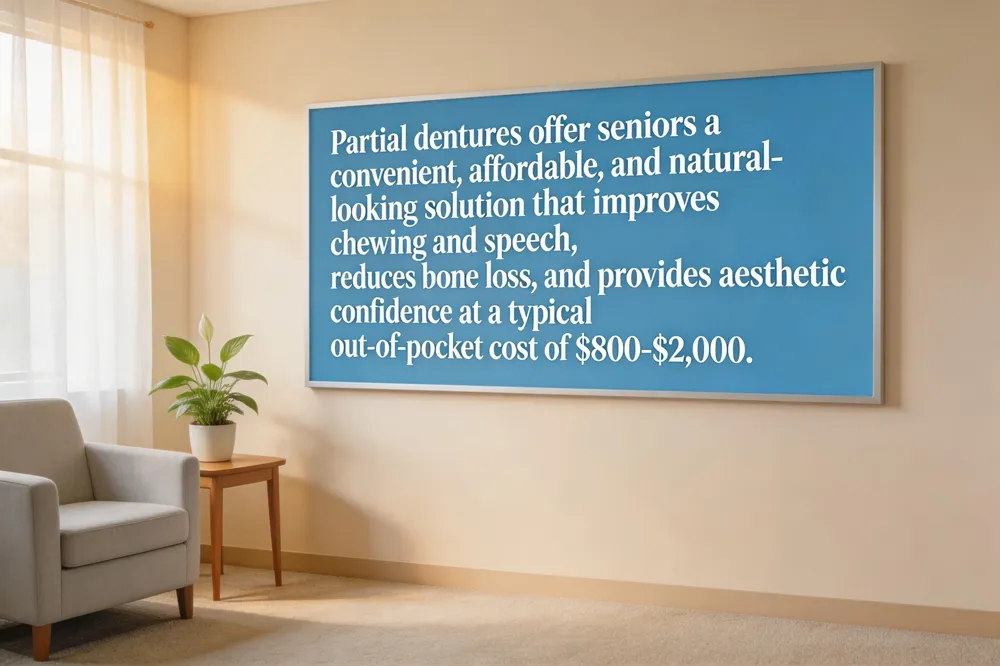 Partial dentures have become a go‑to solution for many older adults because they combine convenience, affordability, and natural‑looking results.
Convenient and affordable options – Most seniors can expect to pay between $800 and $2,000 for a partial denture, with metal‑framework styles averaging around $1,800 and acrylic versions near $1,400. At Aspen Dental the typical price is about $1,279, and many practices offer 25 % discounts, insurance coverage, or flexible financing to keep out‑of‑pocket costs manageable.
Improved chewing and speech – By anchoring to existing teeth, partials distribute biting forces more evenly, allowing a wider variety of foods and clearer articulation. Studies show a 15‑40 % boost in chewing efficiency and higher speech satisfaction scores compared with full dentures.
Reduced bone loss – Preserving natural teeth maintains stimulation of the jawbone, slowing the resorption that often accompanies full‑arch prostheses. Research indicates partials can cut bone loss by up to 30 % versus full dentures, helping retain facial structure and reducing the “sunken‑face” appearance.
Aesthetic benefits – Modern partials use lightweight metal or flexible acrylic frameworks that mimic natural tooth color, shape, and translucency. The result is a discreet, comfortable restoration that boosts confidence without the bulk of a full plate.
Quick answers to common queries – A three‑tooth partial typically costs $600‑$1,200, while full dentures range from $1,500‑$3,600. The most comfortable full dentures are custom‑made, implant‑supported designs that eliminate adhesives and provide a secure, natural feel.
Overall, partial dentures offer seniors a balanced, cost‑effective path to restored function, oral health, and a confident smile.
Financial Considerations and Insurance Options
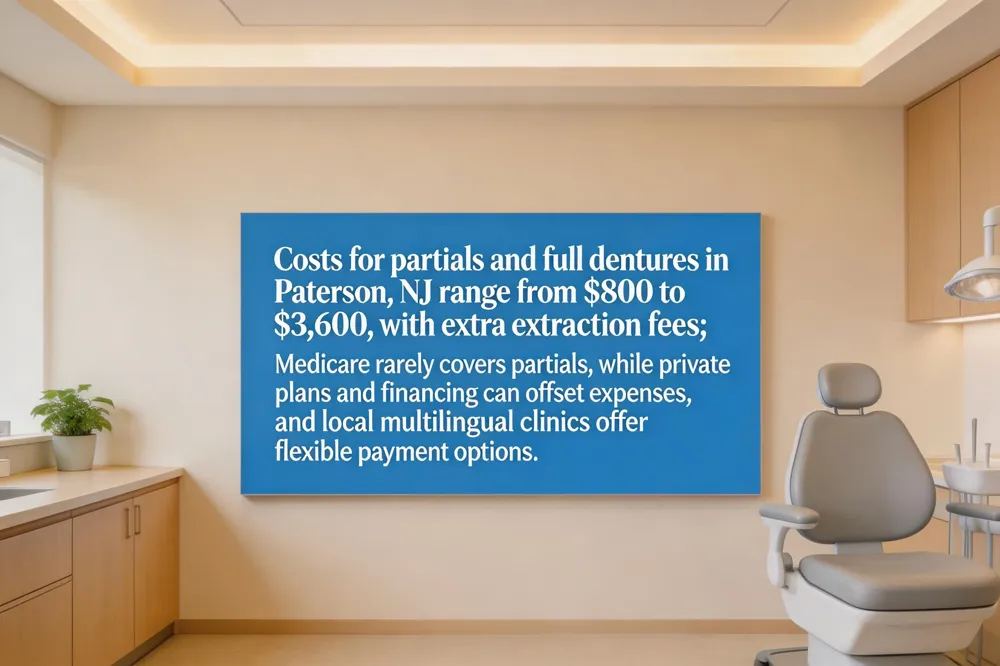 When seniors in Paterson, NJ evaluate denture options, cost, coverage, and local services are top priorities.
Front‑tooth partials – Custom removable appliances replace missing anterior teeth using a rigid metal framework, acrylic base with clasps, or flexible metal‑free resin. They restore a natural smile, improve speech, and support facial structures while being non‑invasive and budget‑friendly.
Extraction costs & full denture pricing – A complete set of full dentures typically ranges from $1,800 to $3,000. Each extraction adds $150‑$300, so a full‑denture‑with‑extractions case in Paterson runs roughly $2,200‑$3,500. Insurance may cover portions of both denture and extraction fees, and flexible financing spreads the balance.
Best dentures for seniors – Implant‑supported dentures provide top stability and bone preservation, while full‑arch acrylic dentures offer an affordable alternative. Partial dentures are ideal for seniors retaining healthy teeth, preventing shifting and preserving jawbone health.
Medicare coverage – Medicare generally excludes partial dentures unless tied to a medically necessary procedure performed during an inpatient stay. Most seniors rely on out‑of‑pocket payment, Medicare Advantage plans, or private dental insurance.
Affordable pricing list – Economy dentures start at $800 ($33/mo), EconomyPlus at $1,200 ($50/mo), Premium at $1,600 ($67/mo), Ultra‑Premium at $1,900 ($79/mo), and Digital Real Fit 3D dentures at $2,250 ($94/mo).
Local Paterson services – Senior patients can receive custom full and partial dentures from a multilingual team (English, Spanish, Arabic) using digital scanning and same‑day repairs. Consultations are available to match each senior’s oral‑health needs and budget.
Comparisons, Comfort, and Community Support
 Cost comparison: partial vs full dentures
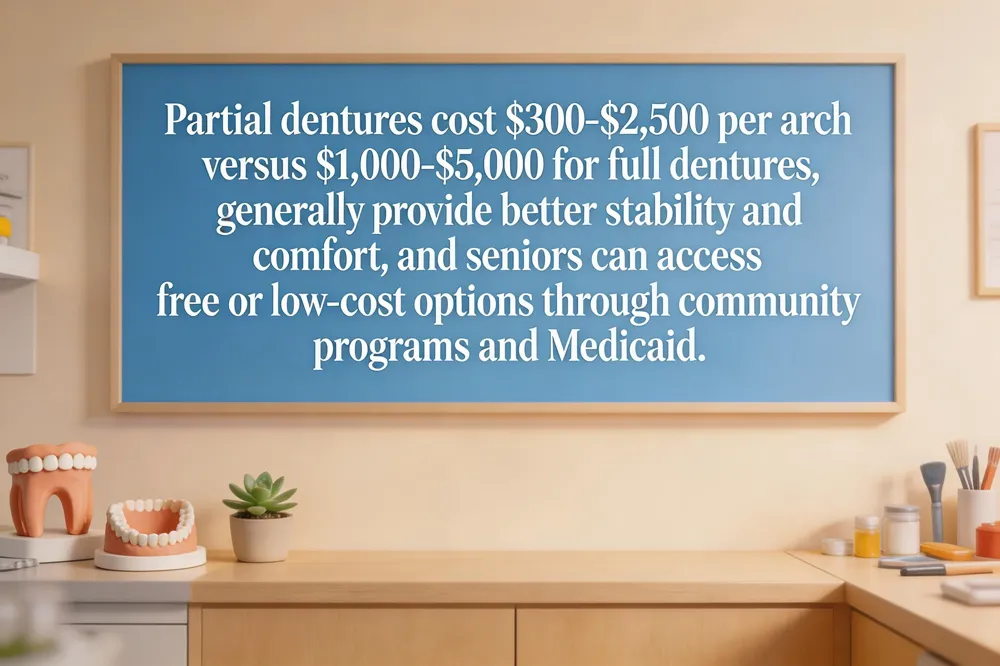
Partial dentures generally cost less because they replace only a few missing teeth and require fewer materials and less lab work. A partial denture ranges from $300 to $2,500 per arch, while a full denture typically falls between $1,000 and $5,000 per arch, depending on material and customization. Insurance often covers a higher percentage of partials, making them more affordable.
Cost comparison: partial vs full dentures
Partial dentures generally cost less because they replace only a few missing teeth and require fewer materials and less lab work. A partial denture ranges from $300 to $2,500 per arch, while a full denture typically falls between $1,000 and $5,000 per arch, depending on material and customization. Insurance often covers a higher percentage of partials, making them more affordable.
Partial denture cost without insurance Without insurance, partial dentures usually run between $1,200 and $1,500 per arch. A basic acrylic‑base partial is at the lower end, while metal‑framework or premium acrylic options are higher. In Paterson, NJ most offices report an average out‑of‑pocket cost of around $1,279 and offer flexible financing plans.
Snap‑in denture cost Snap‑in dentures cost $5,000‑$13,000 per arch, with many patients paying about $8,100 for a single arch. A full‑mouth restoration can reach $10,000‑$25,000 or more, depending on the number of implants and material choices. Insurance may cover part of the expense, and most practices provide financing options.
Comfort comparison: full vs partial dentures Full dentures rely on gums and bone, often requiring suction or adhesive, which can cause soreness and pressure points. Partial dentures attach to existing teeth with clasps or precision connectors, providing greater stability and more even force distribution. Many seniors find partials less intrusive after adjustments.
Dentures for seniors on Medicare Original Medicare (Parts A and B) does not pay for dentures. Medicare Advantage (Part C) plans may include limited denture benefits, typically one set every five years with copays. Seniors can also explore stand‑alone dental insurance or Medicaid for coverage.
Free dentures for seniors in Paterson, NJ Low‑income seniors may qualify for free or low‑cost dentures through New York’s Donated Dental Services model, NJ State Dental Services, or community health‑center clinics. Eligibility requires proof of age, income, and a physician’s statement of need. Our office can assist with paperwork, payment plans, and discounted repairs for those who do not qualify for free programs.
Overall Cost, Materials, and Long‑Term Options
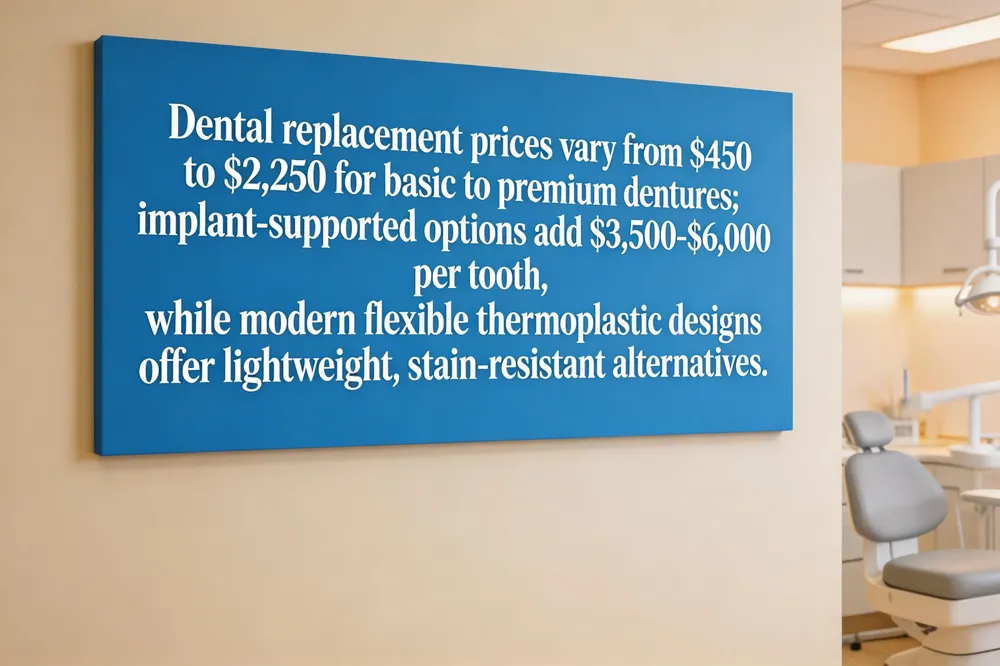 Dental replacement costs for seniors vary widely. A basic single‑arch denture can start at $450‑$800, while premium, customized sets often range from $1,200‑$2,250. Full‑arch dentures that use higher‑quality acrylic or porcelain may cost $1,500‑$2,500, and implant‑supported options add $3,500‑$6,000 per tooth, plus any bone‑grafting or surgical fees. Insurance, Medicare Advantage, and financing plans (e.g., low‑interest monthly payments) can reduce out‑of‑pocket expenses, and many Paterson, NJ practices offer multilingual staff to help seniors navigate coverage.
Flexible denture technology uses thin nylon‑based thermoplastic bases that bend to the gum contour, eliminating metal clasps and adhesives. These lightweight, stain‑resistant appliances provide a natural look and quick fabrication, though they may be pricier than traditional acrylic and offer slightly less bite strength.
Partial dentures preserve remaining natural teeth, helping maintain jaw‑bone density and offering better chewing efficiency than full dentures. They are typically 30‑50 % less expensive than full‑arch sets and require fewer adjustments, making them a cost‑effective choice for seniors with only a few missing teeth.
Non‑implant dentures—full, partial, or immediate—sit on the gums and are retained by suction, adhesives, or metal frameworks. They are non‑invasive, affordable, and can be relined as oral tissues change, though they may rely on adhesives and can contribute to bone loss over time. Modern digital scanning and CAD/CAM techniques now improve fit and aesthetics for these traditional options.
Choosing the Right Solution for Each Senior Patient
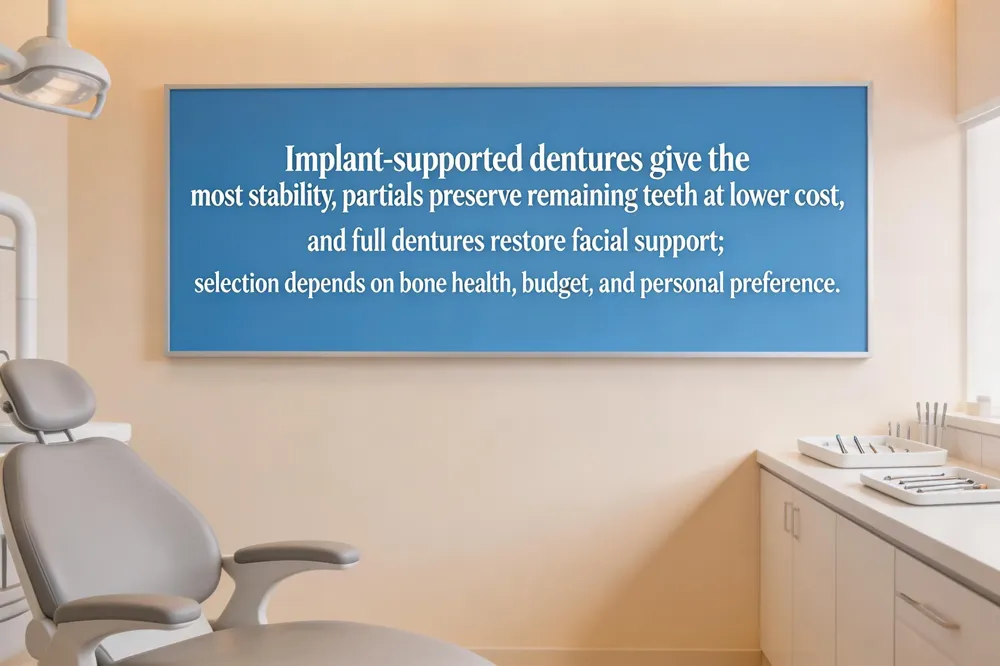 Best denture type for elderly – For seniors with adequate bone health and budget, implant‑supported dentures give the most stable, comfortable, and chewing‑efficient result. When several healthy teeth remain, a removable partial denture preserves those teeth, costs less, and is easier to clean. If all teeth are missing, a traditional full denture restores facial support but may need adhesives and an adjustment period; immediate dentures can be placed right after extractions to avoid a temporary toothless phase.
Dentures vs implants – Dentures are removable, low‑cost, and can be fabricated quickly without surgery, but they can slip, require nightly soaking, and may accelerate jawbone loss. Implants involve surgical placement of titanium posts that act like natural roots, offering permanent, stable, bone‑preserving support. Although implants have higher upfront costs and a healing period, they often last a lifetime and reduce the need for frequent replacements.
Permanent (non‑removable) dentures – These are implant‑supported prosthetics fixed to surgically placed posts, eliminating daily removal. After osseointegration, a custom denture is snapped onto the implants, providing a slip‑free, natural‑looking bite that can last decades with proper hygiene.
Partial denture cost near Paterson, NJ – Prices range from $1,200 to $2,500 depending on material and complexity. Insurance may cover 50‑80 %, reducing out‑of‑pocket costs to $300‑$800. Financing options start at $50‑$70 per month.
Full denture cost – Standard sets run $1,800‑$3,500; premium customized options can exceed $8,000. Basic full dentures at a Paterson office start around $500 per arch, with insurance, Medicaid, and CareCredit financing available.
Dentures for seniors without insurance – Affordable membership plans, low‑interest financing, cash discounts, and local assistance programs help seniors obtain quality dentures without insurance. A free consultation with a multilingual team can create a budget‑friendly, personalized solution.
Additional FAQs and Real‑World Examples
 Four‑tooth partial pricing – A partial denture that replaces four missing teeth typically costs between $1,000 – $1,800. Acrylic‑based bases average $1,200‑$1,400, while metal‑framework or precision‑attachment designs range $1,600‑$1,800. Dental insurance often reduces out‑of‑pocket costs to $500‑$900.
Insurance coverage details – Out‑of‑pocket prices range $500‑$2,500. Most plans cover 30‑50 % after any waiting period, or apply a 25 % discount, bringing patient costs to $250‑$1,300. Verify your insurer’s maximum allowable amount and obtain pre‑authorization. Our staff can help submit claims and explain remaining balances.
Celebrity denture story – Ben Affleck, after addressing dental issues, chose dentures to restore his smile and confidence on and off screen.
Financing for fixed incomes – Options include Medicaid or state clinic programs, dental school clinics, nonprofit clinics, dentist‑off payment plans, third‑party financing, and dental discount plans. Obtaining multiple quotes helps negotiate the best price.
Dentures for the very elderly – Even 90‑year‑olds benefit from modern dentures: they improve chewing, speech, and facial support while preserving remaining bone and teeth, making them a viable solution at any age.
Embracing Partial Dentures for a Comfortable Senior Life
Partial dentures give seniors a stable, comfortable fit that restores confidence in daily activities. By anchoring to existing teeth, they prevent slippage while allowing a wider variety of foods, and the natural‑tooth support improves speech and facial aesthetics. Financially, partials are 25–40 % less expensive than full dentures or implants, with average costs ranging from $800 to $2,000 and many plans covering a large portion; flexible payment plans, CareCredit, and Medicare Advantage benefits further reduce out‑of‑pocket expenses. In Paterson, NJ, practices such as David M.ayer, DDS and Rivers Dentistry offer multilingual staff, digital scanning, and customized metal‑framework or flexible partials, ensuring seniors receive personalized, affordable care close to home. Regular check‑ups and easy cleaning keep the prosthesis healthy for longterm years.