Introduction
Same‑day crowns are a modern restorative solution created entirely in the dental office using CAD/CAM (computer‑aided design/manufacturing) technology. A digital intra‑oral scan captures a precise 3‑D model of the prepared tooth, which is then designed on a computer and milled from a high‑strength ceramic block—often lithium disilicate or zirconia—within a single appointment. For busy professionals, this workflow eliminates the traditional two‑visit schedule, temporary crowns, and the associated discomfort, allowing patients to return to work or daily activities almost immediately. The digital impression replaces messy putty molds, enhances accuracy, and preserves more natural tooth structure, delivering a durable, aesthetically natural restoration in just 60‑90 minutes.
What Is a Same‑Day Crown and How It’s Made
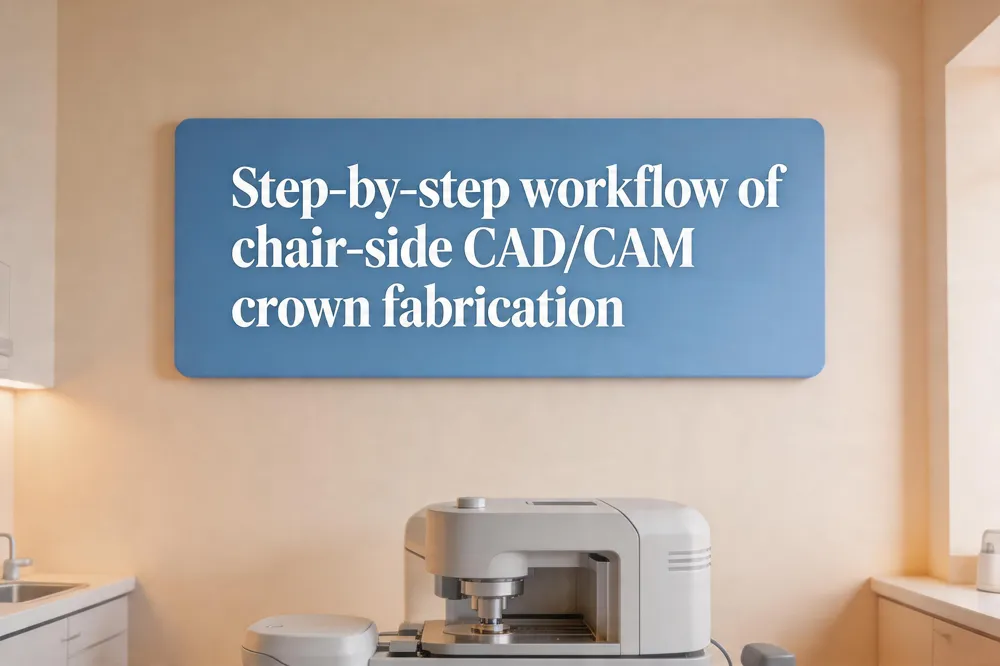 The digital model is sent to chair‑side CAD/CAM technology software, where the restoration is designed in real time. Practitioners can adjust the shape, size, and shade to match the patient’s natural dentition, often using a spectrophotometer for precise color matching. Once the design is approved, an on‑site milling unit—most commonly the FDA‑cleared CEREC system—carves the crown from a solid block of high‑strength ceramic such as lithium disilicate or zirconia. Milling typically takes 15–30 minutes, after which the crown is inspected, polished, and permanently bonded to the tooth.
Can a crown be made the same day? Yes. With chair‑side CAD/CAM technology a crown can be fabricated and placed in one appointment, usually within 60–90 minutes, eliminating the need for a temporary crown and a second lab visit.
Do dentists make their own crowns? Many dentists now fabricate crowns in‑office using CAD/CAM systems like CEREC, controlling fit, shape, and shade while delivering same‑day results. Complex cases may still be sent to an external lab, but routine restorations are often completed entirely by the dentist’s team.
Clinical Performance: Are Same‑Day Crowns as Good as Traditional Crowns?
 Same‑day crowns, fabricated chair‑side with CAD/CAM systems such as CEREC, have been shown to achieve marginal gaps of ≤30 µm and internal fit within 50 µm, which falls in the clinically acceptable range for long‑term success. High‑strength ceramics like lithium disilicate and zirconia provide strength and wear resistance comparable to lab‑crafted porcelain‑fused‑to‑metal (PFM) or gold alloy crowns, while offering superior aesthetics that mimic natural enamel. Clinical studies in U.S. journals report five‑year survival rates of 90‑95%% for CAD/CAM‑milled crowns, matching the performance of conventional restorations. However, traditional crowns can be milled or cast from metal‑ceramic or gold, which may deliver a slightly tighter internal fit and greater fracture resistance for heavily loaded molars or complex multi‑unit bridges. In routine cases—moderate decay, cracked teeth, or post‑root‑canal restorations—same‑day crowns provide comparable fit, strength, and aesthetics, with the added benefits of no temporary crown, reduced appointment visits, and lower infection risk. For highly demanding aesthetic or structural scenarios, a laboratory‑crafted crown may still be preferred. Overall, modern in‑office CAD/CAM crowns are an excellent, efficient option for most patients, balancing clinical performance with convenience.
Cost Considerations for Patients in New Jersey
 The average crown cost in New Jersey ranges from $800 to $3,500, reflecting material choice and additional procedures. Porcelain crowns for anterior teeth fall between $1,200 and $3,500; porcelain‑fused‑to‑metal crowns run $800 to $2,500; metal crowns cost $1,000 to $3,000; and zirconia crowns are $1,500 to $3,000. Temporary resin crowns are the most budget‑friendly at $400 to $800, though they lack long‑term durability.
Most dental insurance plans cover 50‑80 % of the crown cost after any deductible, leaving the patient responsible for the remaining balance at the time of service. Many New Jersey practices—such as Union Dental in Paterson and Austin Park Dental in Ohio—offer financing options like CareCredit, allowing patients to spread payments over time while still receiving same‑day restorative care.
Practical Tips, Patient Guidance
 CEREC crowns, while convenient, have a few drawbacks. Because they are milled from a single ceramic block, they lack the layered shading of lab‑crafted restorations and may not match nuanced front‑tooth colors as precisely. Metal‑free ceramics also offer slightly lower fracture resistance than metal‑based options, which can be a concern for heavy grinders. Complex cases—deep sub‑gingival margins, extensive decay, or severe bite issues—often still require a traditional laboratory crown for optimal fit and strength, and minor occlusal adjustments are common after placement.
Crowns can be used on mildly crowded teeth to improve shape and appearance, but the dentist must remove a small amount of enamel to create space. This works best for modest crowding; severe misalignment usually needs orthodontic treatment before a crown is considered.
For patients with bruxism, zirconia crowns are favored because of their high fracture toughness and durability, offering protection against grinding forces.
When managing an acute tooth infection at home, the 3‑3‑3 rule guides pain relief: alternate 600 mg ibuprofen with 1000 mg acetaminophen every three hours, up to three doses of each in 24 hours, staying within safe dosage limits. Persistent pain warrants prompt dental evaluation.
Why Same‑Day Crowns Are the Secret Weapon for Busy Professionals
 Same‑day crowns, fabricated with CAD/CAM systems such as CEREC, streamline restorative dentistry into a single‑visit workflow. After the tooth is prepared, a digital intra‑oral scan captures a 3‑D model, the crown is designed in real time, milled from a high‑strength ceramic block, and bonded—all within 60‑120 minutes. This eliminates temporary restorations, reduces the risk of bacterial infiltration, and saves patients the multiple appointments that traditionally require 2–3 weeks.
The convenience translates into higher patient satisfaction. Surveys of U.S. dental patients show a 70 % preference for single‑visit restorations, and busy professionals report less time off work, immediate aesthetic results, and the ability to resume normal eating and speaking right after treatment. Practices that offer same‑day crowns consistently report satisfaction scores above 4.5 / 5.
Case selection remains critical for optimal outcomes. Ideal candidates include teeth with moderate decay, large fillings, cracks, or after root‑canal therapy where sufficient healthy structure remains for retention. Complex cases—such as deep sub‑gingival margins, extensive loss of tooth structure, or heavy bruxism—may still require conventional laboratory‑fabricated crowns to achieve the best durability and fit.
Maintaining oral health after a crown follows the 2‑2‑2 rule: brush twice a day for at least two minutes, floss daily, and schedule professional cleanings twice a year. This simple routine helps preserve the restoration, prevents secondary decay, and supports long‑term success.
Overall, the single‑visit, digitally precise, and aesthetically pleasing nature of same‑day crowns makes them a powerful tool for professionals who value time, comfort, and high‑quality dental care.
Conclusion
Same‑day crowns combine digital scanning, CAD/CAM design, and in‑office milling to deliver a permanent, aesthetically matched restoration in a single visit. Patients benefit from eliminating temporary crowns, reduced chair time, precise marginal fit (≤ 30 µm), and immediate function—making the treatment ideal for busy professionals. If you reside in Paterson, NJ, we invite you to schedule an appointment at our full‑service practice, where state‑of‑the‑art CEREC technology ensures high‑strength ceramic crowns with natural translucency. Our multilingual team (English, Spanish, Arabic) provides compassionate, clear communication and personalized care, ensuring every patient feels comfortable and confident throughout the process. Contact us today to experience efficient, high‑quality restorative dentistry.