Why Denture Choices Matter Today
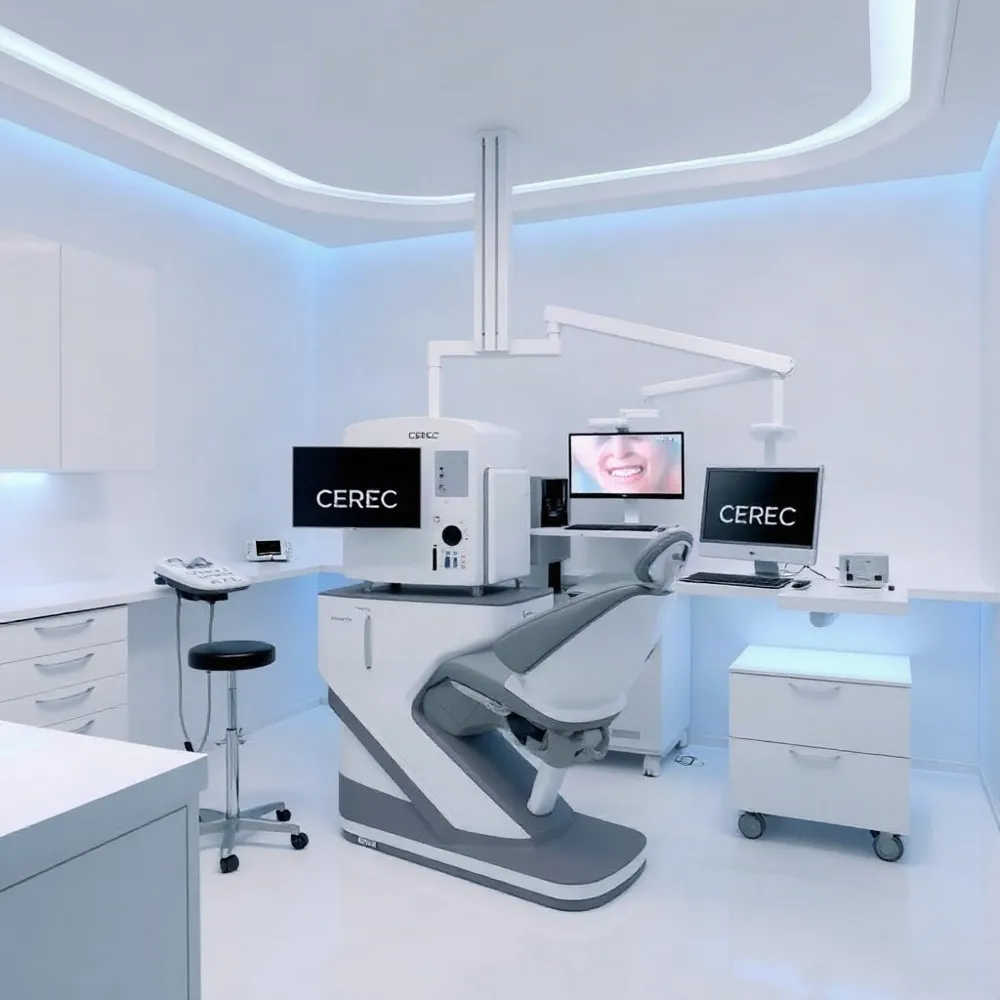
Tooth loss affects a growing segment of the population, driven by aging, chronic disease, and limited access to preventive care. Modern digital impressions, intra‑oral scanning, and CAD/CAM milling now produce dentures that fit more precisely, reduce chair‑time, and look natural. Because each patient’s oral anatomy, budget, and lifestyle differ, clinicians must prioritize shared decision‑making: evaluating the number of missing teeth, bone health, and personal preferences before recommending full, partial, or implant‑supported options. This patient‑centered approach ensures optimal comfort, function, and long‑term satisfaction and helps preserve facial aesthetics while supporting nutrition.
Assessing Oral Health and Common Guidelines
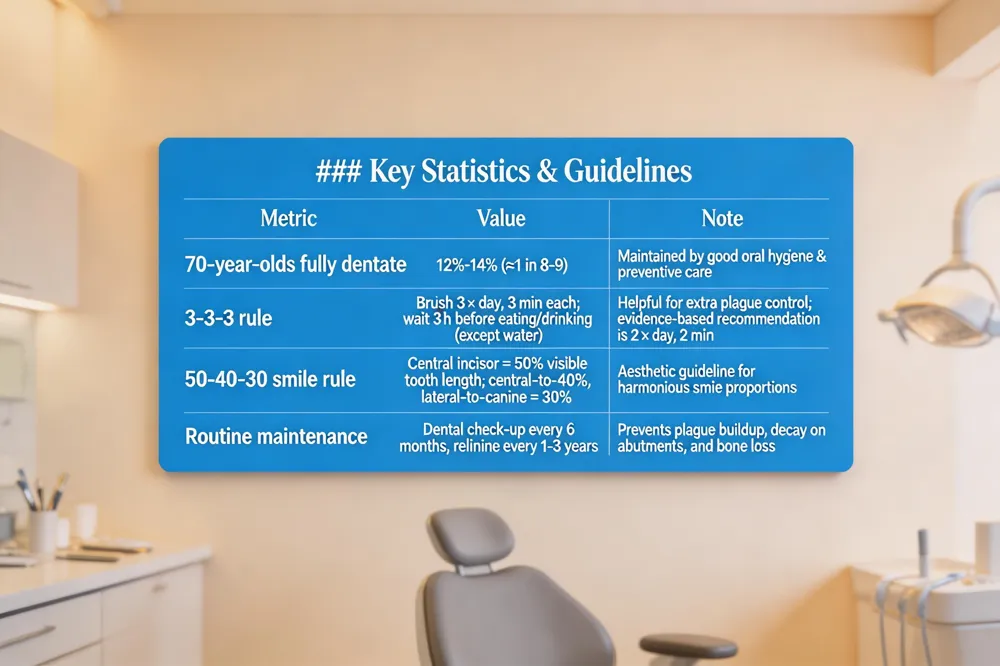
Key Statistics & Guidelines
| Metric | Value | Note |
|---|---|---|
| 70‑year‑olds fully dentate | 12 %‑14 % (≈1 in 8‑9) | Maintained by good oral hygiene & preventive care |
| 3‑3‑3 rule | Brush 3 × day, 3 min each; wait 3 h before eating/drinking (except water) | Helpful for extra plaque control; evidence‑based recommendation is 2 × day, 2 min |
| 50‑40‑30 smile rule | Central incisor = 50 % visible tooth length; central‑to‑lateral = 40 %; lateral‑to‑canine = 30 % | Aesthetic guideline for harmonious smile proportions |
| Routine maintenance | Dental check‑up every 6 months; relining every 1‑3 years | Prevents plaque buildup, decay on abutments, and bone loss |
 Maintaining a healthy dentition in later life is essential for function and confidence. How many 70‑year‑olds still have all their teeth? Approximately 12 %‑14 % of 70‑year‑olds retain a full set of natural teeth, meaning roughly one in eight to nine septuagenarians are fully dentate. This small but significant group benefits from regular preventive care, good oral hygiene, and avoidance of risk factors such as smoking and untreated decay.
Advantages and disadvantages of removable partial denture – Removable partial dentures (RPDs) are a cost‑effective, non‑surgical solution that replaces missing teeth while preserving adjacent healthy teeth. They are easy to clean, adjust, and repair, and quickly restore chewing and speech. However, RPDs can be less stable than fixed restorations, may require an adaptation period, and poor fit or inadequate hygiene can lead to plaque buildup, decay on abutment teeth, and accelerated bone loss. Routine dental visits for relining and maintenance are crucial.
What is the 3‑3‑3 rule for teeth? The rule suggests brushing three times daily for three minutes each, then avoiding food or drink (except water) for three hours before bedtime. While helpful for extra plaque control, the evidence‑based recommendation remains twice‑daily brushing for two minutes, daily flossing, and regular check‑ups.
What is the 50‑40‑30 rule in dentistry? This aesthetic guideline defines ideal smile proportions: the central‑incisor contact occupies 50 % of visible tooth length, the central‑to‑lateral contact 40 %, and the lateral‑to‑canine contact 30 %, creating a harmonious visual balance.
Partial Dentures: Options, Benefits, and Practical Concerns
Removable Partial Denture (RPD) Overview
| Aspect | Advantages | Disadvantages |
|---|---|---|
| Cost | Generally lower than implants or fixed bridges | May require periodic relining/adjustment |
| Surgical invasiveness | Non‑surgical, removable | Can be less stable than fixed restorations |
| Hygiene | Easy to clean and repair | Poor fit or inadequate cleaning can cause plaque, decay, bone loss |
| Function | Restores chewing & speech quickly | Adaptation period needed; clasps may cause irritation |
| Flexibility | Available in acrylic, metal‑framework, or flexible nylon‑based resin | Flexible resin repairs are rare; may harbor bacteria if not cleaned properly |
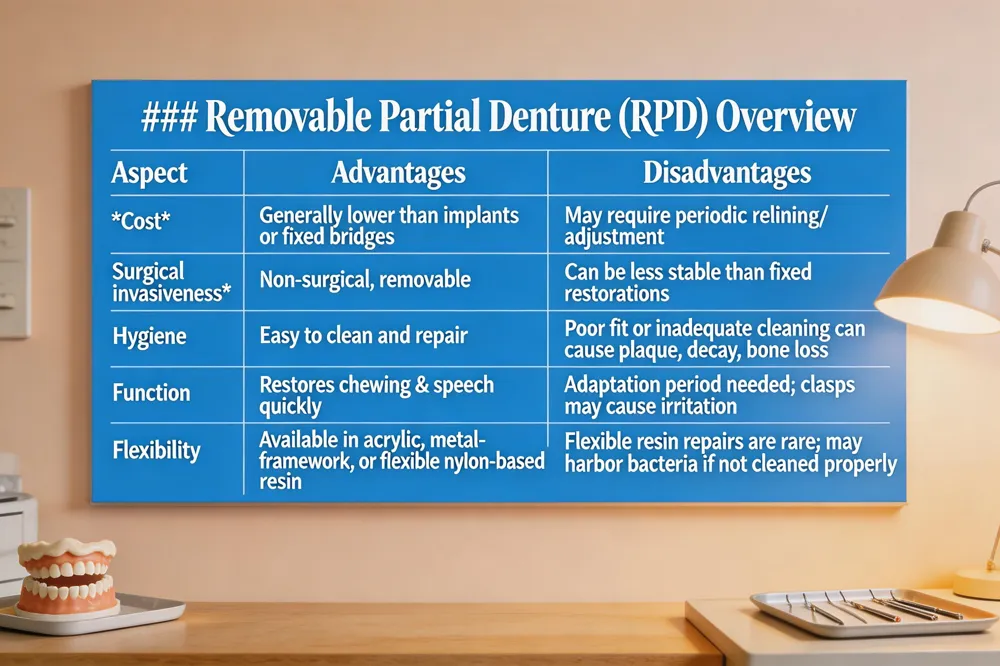 Partial dentures are designed to replace one or more missing teeth while preserving the remaining natural dentition. Modern digital impression and CAD/CAM technology enable a highly realistic appearance: custom‑shaped acrylic or porcelain‑fused‑metal bases are tinted to match gum shade, and tooth‑level shading mimics translucency and texture for a lifelike smile.
Disadvantages include reduced stability compared with fixed restorations, potential irritation from clasps, and the need for nightly removal and diligent hygiene; poor fit can lead to sore spots, plaque buildup, and accelerated bone resorption.
Flexible partial dentures—made from a thin, nylon‑based thermoplastic resin—offer a lightweight, metal‑free option that flexes to the gums, eliminates clasp‑related irritation, and resists staining. However, they must be cleaned carefully to prevent bacterial harboring, and repairs are rarely possible.
From a value perspective, partials restore chewing function and speech more quickly than full dentures, often allowing patients to resume normal meals within a few weeks of adaptation.
Dentists may recommend partials over implants when patients seek a non‑invasive, cost‑effective solution, especially when bone volume is insufficient for implants or when multiple teeth are missing and the remaining teeth can support a clasp‑retained prosthesis.
Tailoring Partial Dentures for Specific Tooth Locations
Design Choices by Tooth Location
| Location | Typical Materials | Retention Mechanism | Key Benefits |
|---|---|---|---|
| Back teeth (molars/premolars) | Acrylic teeth on gum‑colored base; metal framework or flexible clear‑plastic clasps | Metal clasps or flexible clasps that flex to gums | Strong chewing stability; multiple fabrication options (removable, flexible, implant‑supported) |
| Front teeth (incisors/canines) | Acrylic, cast metal, or lightweight flexible resin | Gum‑friendly clasps that blend with tissue | Aesthetic restoration, speech clarity, facial support; cost‑effective alternative to implants/bridges |
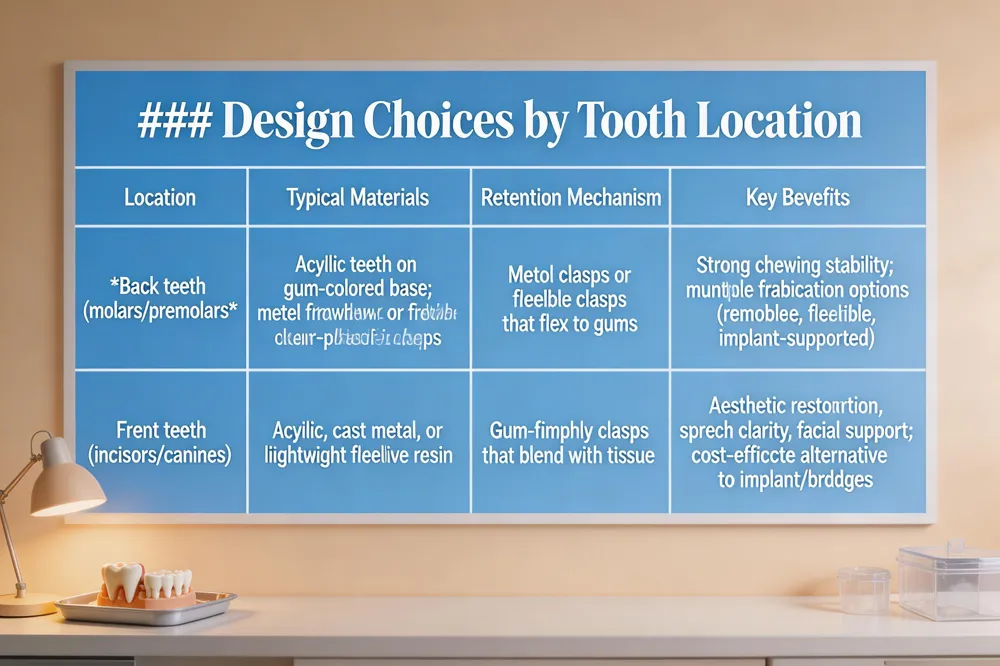 Partial dentures can be customized to restore both back‑teeth and front‑teeth while preserving the remaining natural dentition.
Partial dentures for back teeth – These appliances replace missing molars or premolars with acrylic teeth mounted on a gum‑colored base that is secured by a metal framework or flexible clear‑plastic clasps. The design offers strong chewing stability and can be fabricated as removable acrylics, flexible partials, or fixed implant‑supported units for patients who are surgical candidates. Precise digital impressions, a wax try‑in, and final adjustments are completed within a few weeks, and daily cleaning plus periodic check‑ups keep the restoration comfortable and durable.
Partial dentures for front teeth – Anterior partials restore smile aesthetics, speech clarity, and facial support. They are made from acrylic, cast metal, or lightweight flexible resin, with gum‑friendly clasps that blend seamlessly with surrounding tissue. The process involves a comprehensive exam, accurate impressions, and a trial fitting before the final, personalized denture is delivered, offering a cost‑effective alternative to implants or bridges.
Best boil‑and‑bite dentures online – Look for kits that use medical‑grade thermoplastic, provide a custom‑fit at‑home molding process, and include a satisfaction guarantee. Brands such as Easy Denture’s Nuvo‑Flex and Self‑Fit full‑dentures offer FDA‑registered materials, easy cleaning kits, and 30‑day smile guarantees.
What are the best dentures to buy online? – The top choices are custom‑made from high‑quality acrylic or porcelain through a professional dental lab, with virtual impression verification, money‑back guarantees, and multilingual support when needed.
Pictures of good‑fitting dentures – A properly fitted denture rests flush against the gum line, shows uniform tooth shape and color, and allows a natural, confident smile. Online galleries from reputable practices, especially those serving Paterson, NJ, provide before‑and‑after photos that illustrate ideal fit and aesthetic outcome.
Full Denture Varieties, Costs, and Non‑Implant Choices
Denture Types & Approximate Costs (US $)
| Denture Type | Description | Typical Cost Range |
|---|---|---|
| Conventional (complete) denture | Fabricated after healing post‑extraction | $1,000‑$3,500 (both arches) |
| Immediate denture | Placed right after extractions | Similar to conventional, often slightly higher due to urgent delivery |
| Implant‑supported overdenture | Clips onto 4‑6 implants | $5,000‑$15,000 |
| Non‑implant high‑quality options | Traditional acrylic base, metal‑framework partials, flexible thermoplastic (Valplast) | $800‑$2,500 per arch depending on material |
| Partial denture (acrylic base) | Removable partial for missing teeth | $695‑$1,200 per arch |
| Partial denture (metal‑framework) | More durable, better fit | $1,200‑$2,500 per arch |
| Partial denture (flexible‑resin) | Lightweight, metal‑free | $800‑$1,500 per arch |
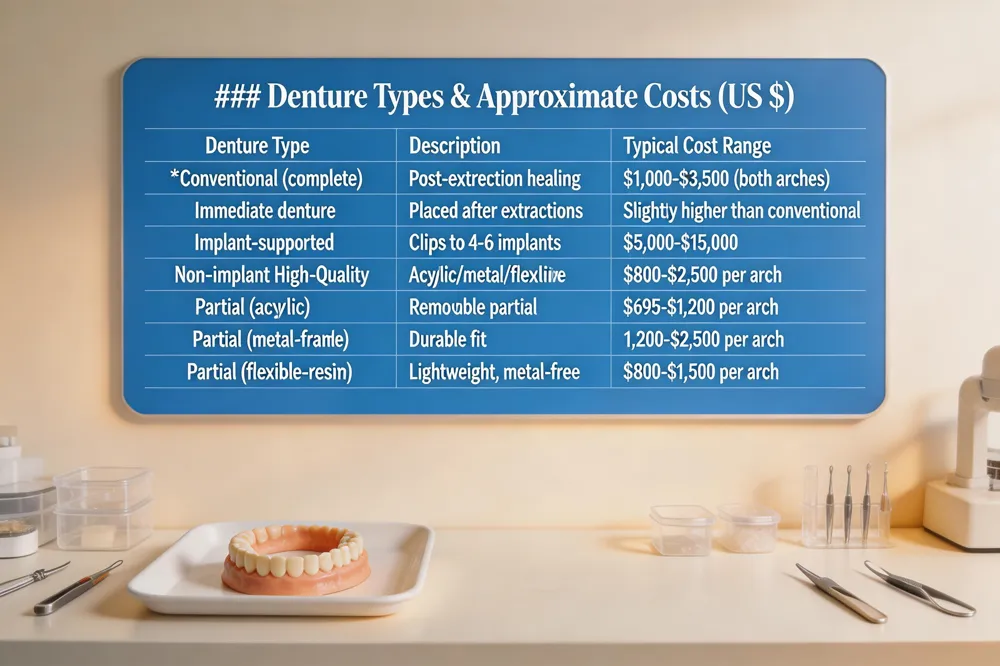 Full denture classifications include conventional (complete) dentures made after healing, immediate dentures placed right after extractions, and implant‑supported overdentures that snap onto 4–6 implants. For patients who prefer not to undergo surgery, high‑quality non‑implant options such as traditional acrylic bases, metal‑framework partials, and flexible thermoplastic (Valplast) dentures offer natural aesthetics and reliable stability. Full set of dentures cost typically $1,000–$3,500 for both arches, with basic single‑arch options starting around $800 in New Jersey and premium custom‑fabricated sets reaching $6,500 or more; implant‑retained versions run $5,000–$15,000. Upper partial dentures range $800–$2,200 and bottom partials $500–$2,500, depending on material—acrylic, metal‑framework, or flexible resin. Types of partial dentures and cost: acrylic bases $695–$1,200 per arch, metal‑framework $1,200–$2,500, flexible‑resin $800–$1,500. Cost‑effective solutions include same‑day digital CAD/CAM printing, transparent financing, and insurance plans that cover a portion of medically necessary dentures. Our multilingual Paterson team offers free exams, personalized estimates, and flexible payment plans to match any budget.
Materials, Technology, and Ongoing Care for Dentures
Materials, Workflow & Care Routine
| Component | Common Materials | Advantages |
|---|---|---|
| Base | High‑impact acrylic, flexible thermoplastic, metal‑reinforced acrylic | Durability, lifelike translucency, resistance to staining |
| Teeth | Shade‑matched composite, porcelain‑fused‑metal, acrylic teeth | Natural appearance, good wear resistance |
| Workflow | Digital intra‑oral scanning → CAD/CAM milling/printing (same‑day fit) | Precise fit, fewer adjustment visits |
| Daily Care | Gentle brushing, overnight soaking in non‑abrasive solution | Prevents plaque, maintains hygiene |
| Professional Maintenance | Relining every 1‑3 years, periodic check‑ups | Extends denture life, preserves oral health |
| Tooth‑Shape Guide | Anatoform Trubyte classifications | Ensures proper size, contour, and facial harmony |
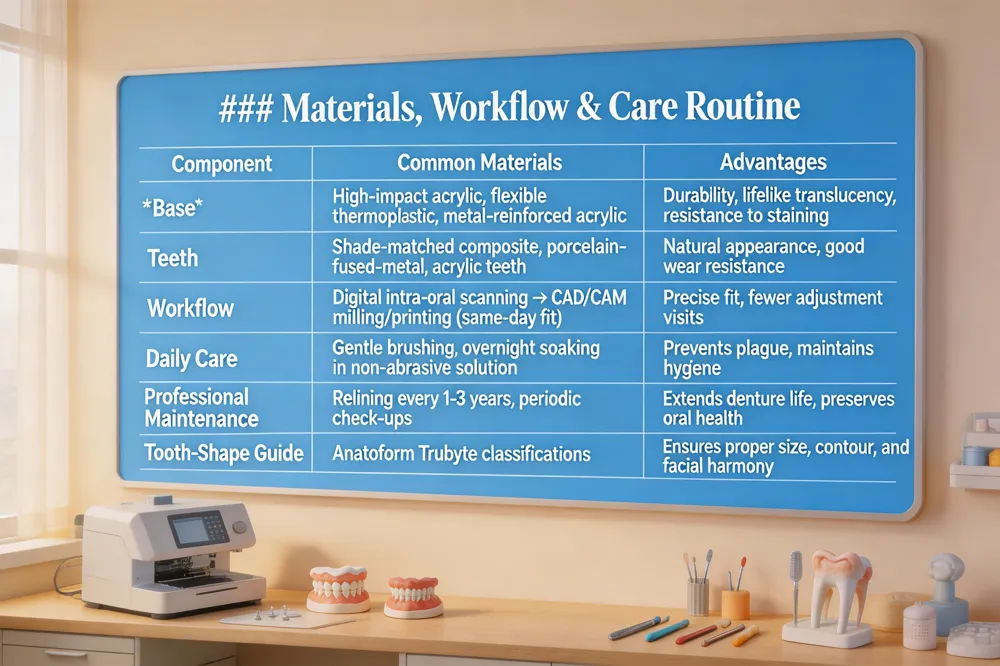 Modern denture workflows begin with digital intra‑oral scanning and CAD/CAM milling and CAD/CAM milling, delivering precise, same‑day fits that reduce adjustment visits. Clinicians choose high‑impact acrylic, flexible thermoplastic or metal‑reinforced bases for durability and lifelike translucency, while shade‑matched composite teeth enhance realism. Daily care includes gentle brushing, overnight soaking in a non‑abrasive solution, and regular relining every 1–3 years. A denture teeth shape guide matches tooth size, contour, and facial form—using classifications like Anatoform Trubyte to achieve natural harmony and optimal bite.
Your Next Steps Toward a Comfortable, Natural Smile
Start by scheduling a comprehensive oral exam so the dentist can assess your gum health, bone density, and the number of remaining teeth. Ask about digital imaging and CAD/CAM scanning, which provide precise impressions and faster turnaround. Discuss your budget, insurance coverage, and financing options such as interest‑free plans or health‑fund entitlements. Finally, choose a qualified prosthodontist or dentist with a multilingual team—English, Spanish, Arabic—to ensure clear communication and culturally sensitive care throughout treatment for your smile and confidence.