A Quick Overview
Dentures restore missing teeth, improving chewing, speech and facial support while boosting confidence. When choosing between full and partial dentures, consider how many teeth are missing, the health of remaining teeth, bone density, budget, and lifestyle preferences. Full dentures replace an entire arch and are ideal when no natural teeth remain; partial dentures fill gaps and attach to existing teeth, preserving bone and preventing shifting. At our Paterson office, patients begin with a comprehensive exam and digital impressions, receive a customized treatment plan, and experience a step‑by‑step journey that includes fittings, adjustments, and education on daily care to ensure long‑term comfort and oral health.
Understanding Denture Types and Materials
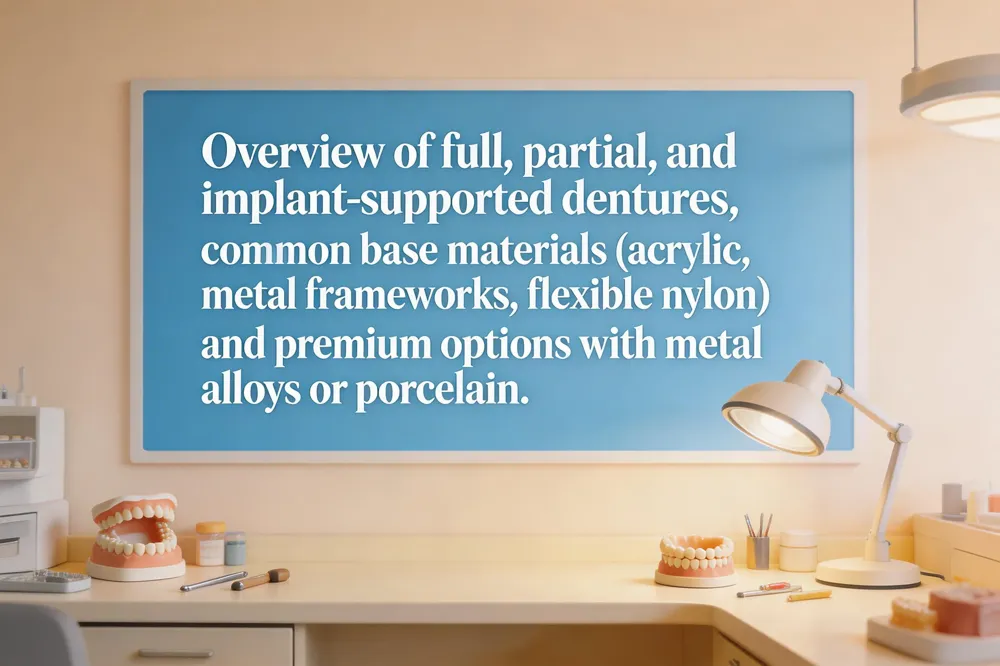 Dentures fall into three primary categories: full (complete) dentures replace all teeth in an arch, removable partial dentures that restore only the missing teeth while clasping onto existing ones, and implant‑supported dentures are anchored to dental implants for added stability. The most common base material is acrylic resin, prized for its lightweight nature and ease of adjustment. For patients who need extra strength, many partials and implant‑supported dentures incorporate a metal framework—often cobalt‑chromium or titanium—while flexible nylon (polyamide) bases are popular for a lightweight, metal‑free design that conforms gently to the gums. Some premium options combine acrylic with reinforced metal alloys or porcelain‑fused‑to‑metal to enhance durability and achieve a highly natural appearance.
Flexible dentures are removable appliances whose base is made from a soft, thermoplastic nylon material instead of rigid acrylic or metal. The nylon conforms to soft, providing a comfortable fit without metal clasps or adhesives. They are lightweight, hypoallergenic, and less likely to fracture, making them suitable for patients with metal sensitivities or partial tooth loss. However, nylon bases can harbor bacteria more readily, have lower impact strength than acrylic, and may require diligent daily cleaning and regular check‑ups.
When deciding between full and partial dentures, consider the extent of tooth loss and the health of remaining teeth. Full dentures are ideal when an entire arch is missing or the remaining teeth are severely compromised, while partial dentures work well when several healthy teeth remain to support the prosthesis. Partials generally offer greater stability and help prevent shifting of natural teeth, whereas full dentures rely on the gums and often need adhesives. Cost, comfort, and long‑term oral‑health goals will ultimately guide the best choice.
Cost Considerations for Your Smile
 When you begin the search for dentures in Paterson, NJ, the first question most patients ask is "how much will it cost?"
Full dentures cost – A complete arch typically runs between $1,200 and $3,500, depending on the material (acrylic, metal‑reinforced, porcelain, or polymer), laboratory fees, and any ancillary procedures such as extractions, relining, or adjustments. National price ranges are broader, from a basic $452 set to premium, fully customized solutions exceeding $6,514. Many local practices offer a “basic” single‑arch denture starting near $499, but that price usually excludes follow‑up visits and extensive lab work.
Partial dentures cost (upper and lower) – For a single arch, prices fall between $800 and $2,500. Acrylic‑based partials cluster around the lower end ($1,400), while metal‑framework designs can reach $1,800 or more. The average cost per arch is about $1,279 before insurance discounts. If both upper and lower partials are needed, total expenses range from $1,600 to $5,000, again influenced by material choice and lab complexity.
Factors that influence final cost – Material selection, the need for extractions, the extent of laboratory customization, relining or rebasing, and the presence of implant support all add to the bill.
Making treatment affordable – Most dental insurers cover a portion of removable prosthetics, especially when medically necessary. Practices in Paterson frequently partner with financing companies and accept CareCredit, allowing patients to spread payments over months with low‑interest plans. Ask your dentist about payment‑by‑care‑credit options and any promotional discounts that can reduce out‑of‑pocket costs.
Advantages and disadvantages of partial dentures – Partial dentures restore missing teeth, improve aesthetics, and help preserve facial muscles while being less invasive and more affordable than implants or fixed bridges. They are removable for easy hygiene, but can be bulky or slip if not properly fitted, and visible clasps may affect appearance. Proper cleaning is essential to prevent plaque buildup around clasp teeth and to avoid gum irritation or decay.
Practical Care and Lifestyle Tips
Daily Cleaning Routine and the 3‑3‑3 Rule
A consistent hygiene schedule keeps removable dentures comfortable and long‑lasting. Remove the denture each night, brush it with a soft‑bristled brush and a non‑abrasive denture cleanser, and soak it in a cleaning solution or water overnight. While the denture rests, gently rinse the gums, tongue, and palate. The 3‑3‑3 rule reinforces oral health: brush three times a day (morning, after lunch, before bed) for at least three minutes each session, and schedule a dental check‑up every three months. This rhythm helps prevent plaque buildup, gum irritation, and early wear of the prosthesis.
Foods to Avoid When Wearing Partial or Full Dentures
Optimal function and denture integrity depend on diet choices. Steer clear of:
- Sticky or chewy items (caramel, gum, taffy, popcorn) that can dislodge the appliance.
- Hard foods (nuts, ice cubes, hard candy, popcorn kernels) that may fracture acrylic bases or metal clasps.
- Acidic foods (citrus fruits, pickles, tomato sauces, vinegar dressings) that can corrode metal components.
- Tough, fibrous meats or raw vegetables (steak, jerky, raw carrots) requiring excessive bite force.
- Small, particulate foods (seeds, certain breads) that can lodge in crevices and cause irritation.
Downsides of Full Dentures and Mitigation Strategies
Full dentures can be less stable, leading to slippage, sore spots, and speech challenges, especially as jawbone resorption progresses. To mitigate these issues:
- Use denture adhesives sparingly and only as needed for added retention.
- Schedule regular relining or rebasing with your dentist to accommodate gum‑ridge changes.
- Practice chewing on soft foods first, gradually introducing firmer textures as comfort improves.
- Maintain meticulous regular cleaning to prevent odor, plaque, and gum inflammation.
- Consider implant‑supported options if bone loss becomes pronounced, as implants stimulate the jawbone and enhance stability.
Patient Journey: From Consultation to Comfortable Chewing
 When patients first visit our Paterson office, a comprehensive exam and precise impressions set the stage for a custom solution.
Partial dentures for front teeth – Front‑area partial dentures replace missing anterior teeth by attaching to remaining teeth or implants. Made from acrylic, metal, or flexible resin, they restore the smile’s aesthetics, support the lips and cheeks, improve speech, and provide an affordable, non‑invasive alternative to implants or bridges. Proper daily cleaning and nightly removal help them last five to ten years, with periodic adjustments as the mouth changes.
Partial dentures for back teeth – Posterior partial dentures restore molars and premolars, returning the crushing and grinding power essential for nutrition. Fabricated with a gum‑colored acrylic or flexible base and secured by metal clasps or seamless designs, they are comfortable and virtually invisible. Ideal candidates have healthy surrounding teeth and no severe bone loss. The process includes consultation, impression, laboratory fabrication, and a series of adjustments to achieve optimal bite stability.
Adjustment timeline for full dentures – Most patients become comfortable chewing within 2 to 3 months of placement. The first 1‑2 weeks involve soft foods and small bites as gums heal and a slight slip may be felt. Gradual practice on both sides, use of denture adhesive, and slow chewing help the denture settle. By about 6 months, wearers typically enjoy the full range of favorite foods without difficulty.
Putting It All Together – Your Personal Denture Plan
 Choosing the right denture begins with a clear assessment of four key factors. Number of missing teeth determines whether a full-arch solution (complete denture) or a partial appliance is appropriate. Oral health—including gum condition, bone density, and the health of any remaining teeth—guides the clinician in selecting a design that will preserve structure and minimize future bone resorption. Budget influences material choices (acrylic resin for cost‑effectiveness versus metal‑reinforced or porcelain options) and the need for adjunctive procedures such as extractions or implant support. Finally, lifestyle considerations—dietary habits, speech needs, and willingness to adapt to an adjustment period—help personalize the final recommendation.
At our Paterson, NJ dental practice, a multilingual team (English, Spanish, and Arabic) walks you through each step, from the initial exam and digital impressions to material selection and fit‑adjustment appointments. Our clinicians explain the pros and cons of full dentures versus partial dentures, discuss financing plans, and answer any cultural or language‑specific concerns.
Next steps: Schedule a comprehensive consultation to evaluate your oral anatomy, discuss your goals, and receive a personalized treatment plan. We offer flexible financing, including low‑interest payment options, and coordinate follow‑up care to ensure your dentures remain comfortable, functional, and aesthetically pleasing for years to come.
Your Smile, Your Choice
At our practice we begin with a thorough assessment of your oral health, lifestyle, and aesthetic goals, allowing us to tailor a denture solution—full, partial, or implant‑supported—that fits your unique situation. Every step, from impression taking to final placement, is guided by a commitment to comfort, optimal function, and natural‑looking results, ensuring you can eat, speak, and smile with confidence. To help you make an informed decision, we offer a complimentary, no‑obligation evaluation where our specialists will discuss options, answer questions, and outline a personalized treatment plan. Call (555) 123‑4567 or email smiles@yourclinic.com to schedule your free consult.