Why Diabetes Matters in Dental Emergencies
Diabetes mellitus affects approximately 10.5% of the U.S. population — over 34 million people. Uncontrolled diabetes leads to oral complications such as dry mouth, delayed wound healing, candidiasis, and increased susceptibility to periodontitis. These conditions heighten the risk of infection and slow recovery after any dental procedure.
During an emergency, diabetic patients face additional challenges. Elevated blood glucose impairs immune function, allowing infections to spread quickly. Dental procedures can trigger hypoglycemic episodes, especially if the patient has not eaten. Special precautions — including scheduling morning appointments, chairside glucose monitoring, and coordinating with the patient’s physician — are essential to ensure safe, effective emergency care.
Understanding Diabetes and Its Oral Manifestations
What Is Diabetes and How Does It Affect the Mouth?
Diabetes is a metabolic condition in which the body either cannot produce enough insulin (type 1) or cannot use insulin effectively (type 2) Diabetes mellitus causes hyperglycemia; type I (5‑10%) is autoimmune, type II (85‑90%) is common.. Over time, this leads to persistently high blood glucose levels. This chronic hyperglycemia creates a complex environment in the mouth, often with noticeable and treatable effects. Without proper management, diabetes can impact everything from saliva production to the body’s ability to heal after a dental procedure. Understanding these changes is the first step in providing safe, effective dental care.
Common Oral Signs of Uncontrolled Diabetes
One of the most common oral complaints is xerostomia (dry mouth) Diabetes increases the risk of gum disease (periodontitis), dry mouth, and oral infections., which significantly increases the risk of tooth decay. When combined with elevated sugar levels in oral fluids, the risk of cavities rises sharply. Many diabetic patients also develop periodontitis Diabetes increases the risk of gum disease (periodontitis), dry mouth, and oral infections., a severe form of gum disease that destroys the supporting structures of the teeth. The link is twofold: high blood sugar fuels bacterial growth, and the disease impairs the body’s immune response. As a result, dental infections can spread more rapidly and with greater severity. Additionally, patients often experience delayed wound healing Uncontrolled diabetes leads to oral issues: xerostomia, burning mouth, delayed wound healing, infections, candidiasis, parotid enlargement, gingivitis, periodontitis., making even simple procedures like a filling more complicated. Other frequent findings include burning mouth syndrome, candidiasis (oral thrush) Uncontrolled diabetes leads to oral issues: xerostomia, burning mouth, delayed wound healing, infections, candidiasis, parotid enlargement, gingivitis, periodontitis., and a higher susceptibility to oral abscesses.
The Impact of Poor Glycemic Control
The severity of oral complications is directly tied to glycemic control. Poorly controlled diabetes, indicated by an HbA1c level of 8% or higher Poor glycemic control (HbA1c >8%) markedly raises the risk of periodontal disease and delays wound healing after dental procedures., dramatically increases the risk of periodontitis and slows healing after any dental procedure Uncontrolled diabetes impairs wound healing, raising infection risk after dental procedures.. For instance, for every 1% increase in HbA1c, the odds of developing gum disease rise by approximately 18% For every 1% increase in hemoglobin A1C level, the odds of periodontitis increase by 18%.. This bidirectional relationship means that treating gum disease can modestly improve blood sugar control (by about 0.3–0.5% reduction in HbA1c at 3–6 months) Regular periodontal therapy can lower HbA1c by 0.3–0.5% in type 2 diabetes, while failing to manage oral health can make diabetes harder to control. The result is a cycle that can be broken only with coordinated medical and dental care. Consequently, dentists often use HbA1c values as a vital guide for treatment planning—from routine cleanings to emergency extractions.
Blood Glucose Targets for Safe Dental Procedures

Safe blood sugar level for tooth extraction
For tooth extraction, a safe blood sugar level is generally below 180 mg/dL on the day of surgery, with many surgeons preferring fasting glucose in the range of 80–130 mg/dL for optimal healing. An HbA1c below 7% is also preferable, indicating good long‑term control. If fasting glucose exceeds 180–200 mg/dL or HbA1c is significantly above 8%, the procedure may be postponed to reduce risks of infection and poor healing. Stable blood sugar protects the extraction site and supports recovery. Your dentist will coordinate with your physician to confirm safe levels before proceeding.
What should your A1C be for dental surgery?
For most dental surgeries, a target HbA1c below 7% is recommended to ensure safe healing and minimize complications. This helps your body fight infection and recover properly after procedures like tooth extractions, implants, or gum surgery. Keeping your A1C under 7% also reduces the risk of delayed wound healing or implant failure. Patients with well‑controlled diabetes and an HbA1c under 7% typically have fasting glucose between 80–130 mg/dL, supporting a safe surgical outcome.
Safe A1C levels for dental treatment
Safe A1C levels for dental treatment are generally below 7%, indicating good glycemic control and lower risk of complications. For routine cleanings, an A1C under 7% is typically safe. For invasive procedures such as oral surgery or implant placement, many guidelines recommend levels under 8%. Levels between 7% and 8% may require caution and coordination with the patient’s physician. Patients with A1C above 8% or poor control may need to postpone elective dental care until blood sugar is better managed.
Managing Hypoglycemia and Hyperglycemia in the Dental Office
What Is the Most Common Diabetes Emergency in the Dental Office?
Hypoglycemia (blood glucose ≤70 mg/dL) is the most common medical emergency related to diabetes in dental practice. It often results from taking insulin without adequate food intake, stress, or unexpected physical activity. Symptoms include shakiness, sweating, confusion, irritability, and blurred vision. Severe hypoglycemia can lead to seizures or unconsciousness.
Step‑by‑Step Emergency Protocol
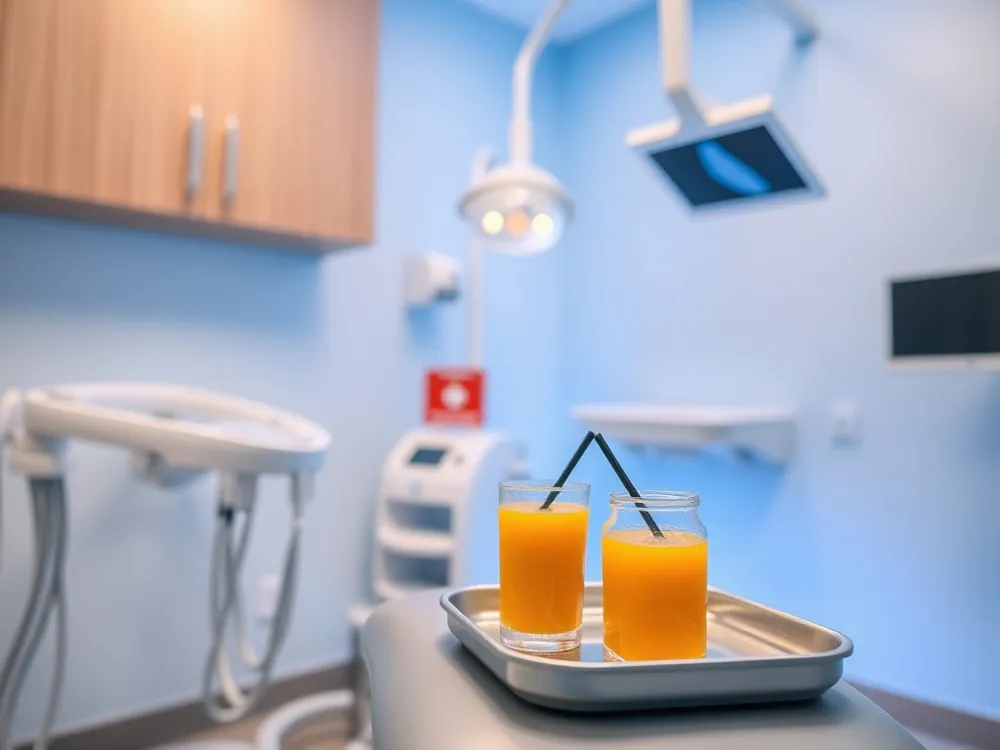
If hypoglycemia is suspected, stop treatment immediately. For a conscious patient, check blood glucose with a glucometer and administer 15–20 g of rapid‑acting oral carbohydrates—e.g., glucose tablets, fruit juice, or honey. Re‑check glucose after 15 minutes and repeat until above 70 mg/dL. If the patient is unconscious or seizing, do not give oral carbs; call emergency services and administer 1 mg glucagon intramuscularly or subcutaneously. For hyperglycemia (elevated blood sugar), symptoms include frequent urination, thirst, fatigue, and blurred vision. If glucose exceeds 240 mg/dL or signs of ketoacidosis appear, postpone elective treatment and refer for medical evaluation.
Staff Training and Equipment Requirements
Dental offices must train all staff to recognize hypoglycemia signs and properly use a glucometer. Essential emergency supplies include a blood glucose meter, fast‑acting oral glucose sources, a glucagon kit, and basic airway management equipment. Regular drills and a written emergency protocol ensure a coordinated response, reducing risk for diabetic patients.
Practical Modifications for Dental Appointments
Scheduling and Medication Timing
Morning appointments are recommended to leverage higher endogenous cortisol, which reduces hypoglycemia risk. Schedule visits to avoid peak insulin activity. Confirm the patient has eaten normally and taken their prescribed medications. For procedures requiring fasting, coordinate with the physician to adjust insulin dosing. Keep appointments short and non‑stressful.
Use of Local Anesthetics and Epinephrine
Local anesthesia with epinephrine is generally safe for well‑controlled diabetic patients but should be used cautiously. Limit doses in patients with hypertension. Avoid aspirin‑containing compounds as they can potentiate hypoglycemic agents.
Infection Prevention and Post‑Operative Monitoring
Poor glycemic control increases infection risk and delays healing. Consider antibiotic prophylaxis for invasive procedures. Monitor blood glucose before and after treatment. Advise meticulous oral hygiene, a soft diet, and watch for signs of infection. Ensure the dental team can recognize and manage hypoglycemia emergencies.
Local Resources and Practitioners in Paterson, NJ
What dental offices offer emergency care for diabetic patients in Paterson, NJ?
Residents of Paterson, NJ have several excellent options for emergency dental care that understand the needs of diabetic patients. West Broadway Dental, the largest multi-specialty clinic in North Jersey, has served the community for over 35 years, offering a comprehensive range of services from routine cleanings to emergency care and orthodontics. Their 25 treatment rooms and advanced technology ensure prompt and effective treatment for urgent dental issues.
Comfort Dental Care, located at 599 Broadway, is led by Dr. Jorge Bastidas with over 30 years of experience. The practice is equipped with state-of-the-art technology including digital X-rays, intraoral cameras, and the CariVu™ cavity detection system, enabling rapid diagnosis and treatment planning. This clinic also offers a one-year dental warranty, reflecting confidence in their high-quality work.
Abra Dental, with a newly opened office at 370 Broadway, provides an additional option for patients needing flexible scheduling. Their hours include Saturday appointments, making it easier to find a time that accommodates medication schedules and blood sugar monitoring.
Can I find a dentist on Broadway in Paterson, NJ that accepts Medicaid?
Yes, several dentists along Broadway in Paterson accept Medicaid, making dental care accessible. West Broadway Dental is a reliable choice, proudly accepting Medicaid along with other major insurance plans like United Healthcare, Amerigroup, Horizon, and Wellcare. Their multilingual team assists patients in Spanish, Arabic, Hindi, and Mandarin, ensuring clear communication about treatment plans and diabetes management. Abra Dental may also accept Medicaid, but patients are encouraged to confirm directly with the practice.
Which dental practices in Paterson have multilingual staff and convenient locations?
Choosing a dentist with a convenient location and multilingual staff can simplify care, especially during a diabetic emergency. The following table summarizes key options for diabetic patients in Paterson, NJ:
| Practice Name | Location | Multilingual Staff | Special Features for Diabetic Patients |
|---|---|---|---|
| West Broadway Dental | Broadway | Spanish, Arabic, Hindi, Mandarin | Largest clinic; accepts Medicaid; 35+ years of experience. |
| Comfort Dental Care | 599 Broadway | English, Spanish | State-of-the-art diagnostic tech; same-day emergency care; evening/weekend hours. |
| Abra Dental | 370 Broadway | Likely English, Spanish | Extended and weekend hours; convenient for flexible scheduling. |
| Smile Central Dental | 140 Market Street | English, Spanish, Arabic | Specialized emergency care for diabetic patients with tailored protocols. |
Patient Empowerment and Preventive Strategies
How a Dentist Helps with Type 2 Diabetes and Oral Health
A dentist helps manage type 2 diabetes by preventing and treating periodontitis, a severe gum disease with a bidirectional link to blood sugar control. Professional cleanings, including scaling and root planing, can reduce HbA1c by about 0.5%. For patients, daily oral hygiene—brushing with fluoride toothpaste, flossing, and using xylitol products for dry mouth—is essential. Self‑monitoring glucose and scheduling morning appointments after a normal meal reduce hypoglycemia risk. The American Dental Association recommends in‑office HbA1c testing (CDT codes D0411/D0412 and maintaining a hypoglycemia protocol. Regular coordination with healthcare providers empowers patients to improve both gum health and diabetes management.
Key Takeaways for Safe Emergency Dental Care
Key Takeaways for Safe Emergency Dental Care
- Coordinate with your medical team. Share recent HbA1c and medication details with your dentist. Your physician can adjust insulin or oral hypoglycemic doses before procedures to avoid metabolic instability.
- Maintain stable blood glucose. Schedule morning appointments after a normal meal. Check blood glucose before treatment; a safe range is 70–180 mg/dL for most dental procedures.
- Know the hypoglycemia protocol. If symptoms appear (shakiness, sweating, confusion), stop treatment and take 15–20 g of fast-acting carbs (e.g., glucose tablets, fruit juice). Recheck after 15 minutes. For severe cases (unconsciousness), call emergency services immediately.