Embracing Digital Scanning for Faster Restorations
3D intra‑oral scanners capture a digital replica of the prepared tooth and surrounding gum in seconds, replacing messy putty trays. The wand glides quickly, causing little to no gag reflex and eliminating the unpleasant taste of impression material, which greatly improves patient comfort. Because the scan is uploaded to CAD software, the dentist can design the crown, send the file to an on‑site mill or external lab, and often deliver a finished restoration within the same appointment, shortening the workflow.
From Scan to Crown: The Speedy Workflow
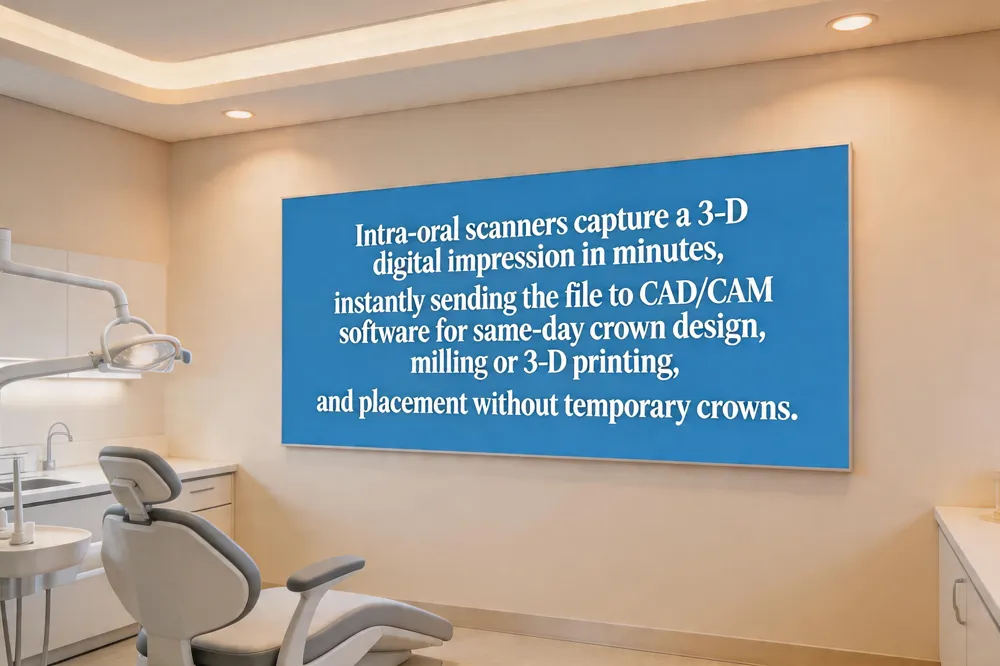 Dental offices now turn a quick intra‑oral scan into a finished crown.
Dental crown scanner
3D intra‑oral scanners capture a precise 3‑D image of the prepared tooth in minutes, eliminating the need for traditional impression materials and the associated laboratory shipping time. The model is instantly sent to the lab or on‑site CAD/CAM, eliminating trays and reducing chair time.
iTero scanner
3D intra‑oral scanners capture a digital impression of a tooth in seconds, eliminating traditional impression materials. Its optics integrate with CAD software, giving clinicians high accuracy while patients enjoy comfort.
Intraoral scanner
Digital scans produce a precise 3D model that can be instantly uploaded to CAD software for crown and bridge design. This removes distortion and enables same‑day milling.
CEREC
CEREC technology uses intraoral 3‑D scanning to capture digital impressions of the prepared tooth in minutes. After the scan, the crown is designed and milled from zirconia or ceramic in 15–30 minutes, then bonded—no temporary crowns or extra visits.
Time Savings in the Lab
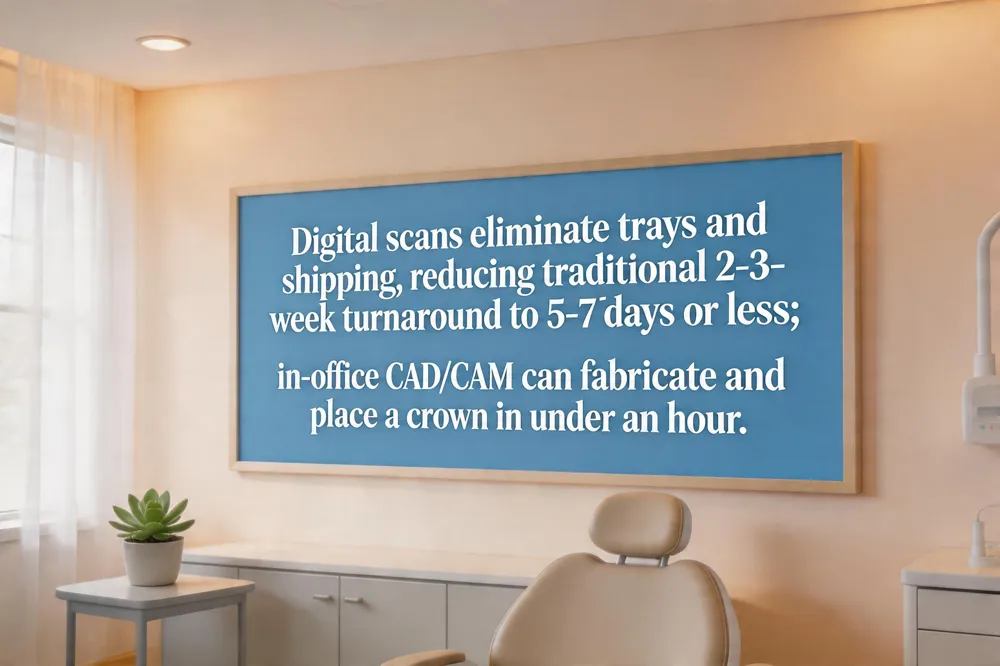 Traditional impressions require trays, alginate or silicone, and a wait for the material to set, often resulting in a 2‑3 week turnaround for a crown. With 3D intra‑oral scanning, the digital file is transmitted instantly to the dental laboratory, cutting the waiting period to 5‑7 days or less. In‑office CAD/CAM milling or 3‑D printing can fabricate a restoration in a single appointment, reducing the overall treatment timeline from weeks to minutes.
How long does crown fabrication take? Crown fabrication traditionally takes about one week after the lab receives the impression, with complex materials sometimes needing up to ten days. A temporary crown protects the tooth during this period.
How quickly can a crown be made? Same‑day crowns can be designed, milled or printed and placed in about one hour, thanks to in‑office scanning and CAD/CAM technology. Lab‑crafted crowns still require 1‑2 weeks.
How long does it take to 3‑D print a crown? The printing step itself takes 15‑45 minutes after the digital design is finalized. Including scanning and CAD customization, the entire workflow can be completed in under an hour, allowing patients in Paterson, NJ to leave with a finished restoration in a single visit.
Cost Landscape for Modern Restorations
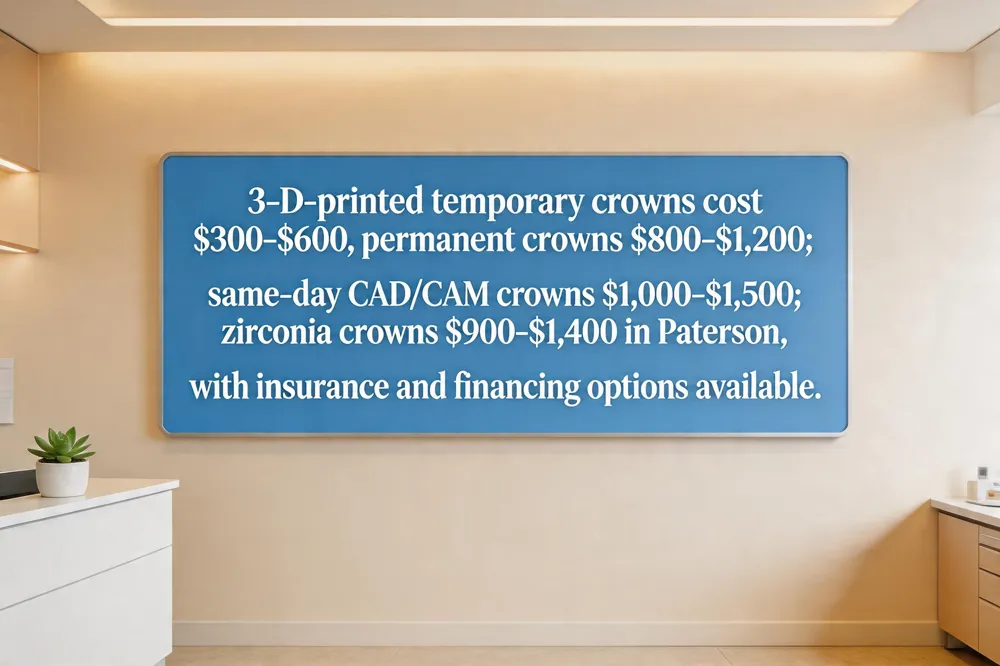 Modern restorations balance cutting‑edge technology with patient‑friendly pricing. In Paterson, a 3‑D‑printed temporary crown typically costs $300‑$600, while a permanent 3‑D‑printed crown ranges $800‑$1,200; nationwide the average falls between $500 and $1,500 depending on material and lab fees. Same‑day crowns, produced by CAD/CAM milling or 3‑D printing, usually run $1,000‑$1,500 in the United States. Insurance often covers a portion as a major procedure, and many offices offer financing or payment plans. Zirconia crowns, milled from a solid zirconium‑dioxide block, provide metal‑free strength and natural aesthetics. In Paterson they are priced $900‑$1,400 per tooth, with options ranging from high‑strength 3Y to highly translucent 5Y. With proper oral hygiene, a zirconia restoration can last 10‑15 years or more, making it a durable, cost‑effective choice for both front and back teeth. When patients consider the long‑term benefits—fewer adjustment visits, reduced material waste, and the convenience of a single‑appointment solution—the overall value of digital and zirconia restorations often outweighs the modest price premium.
The Role of Dental Technology and Professionals
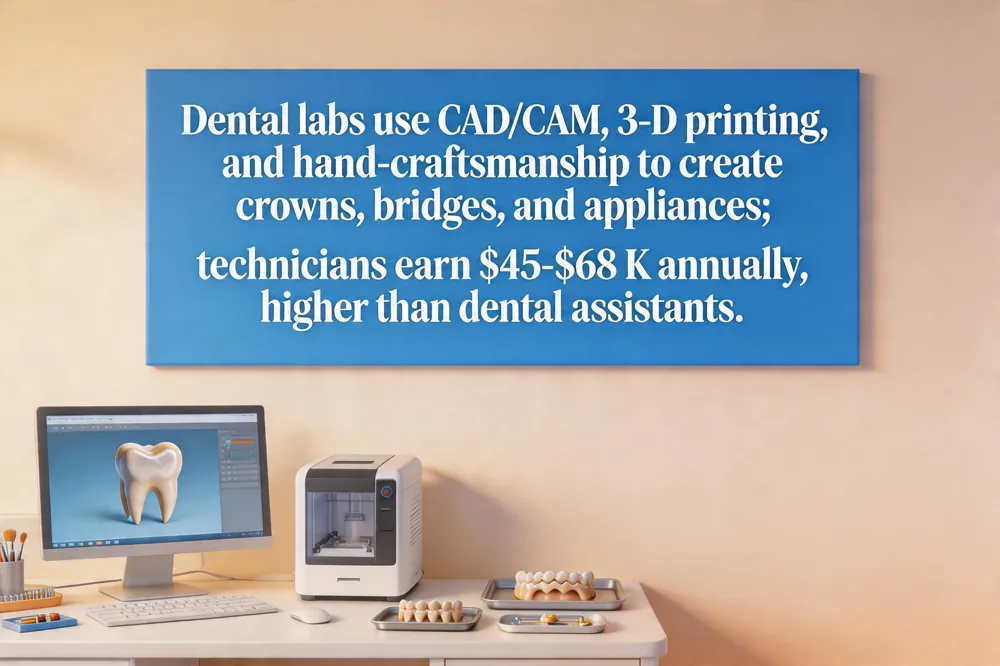 Dental technology encompasses the design, construction, and fitting of custom appliances—crowns, bridges, dentures, implants, and orthodontic devices—using materials such as porcelain, gold, and high‑strength ceramics. Technicians work in labs or alongside dentists, employing hand‑craftsmanship, CAD/CAM software, and 3‑D printing to create precise, aesthetic restorations; many also provide chair‑side services for removable appliances.
Educational pathways vary: most programs are two‑year associate degrees or professional certificates, with one‑year intensive tracks available. A four‑year bachelor’s degree exists for those seeking deeper study, and part‑time or evening options can extend the timeline.
Salary comparisons show dental lab technicians typically out‑earn dental assistants. While assistants average $38‑$42 K annually, technicians earn $45‑$68 K, reflecting the advanced technical skill set required. In New Jersey, the average annual pay for a dental laboratory technician is $58,700 (≈ $28.22 per hour).
Patient Care Extras and Pain Management
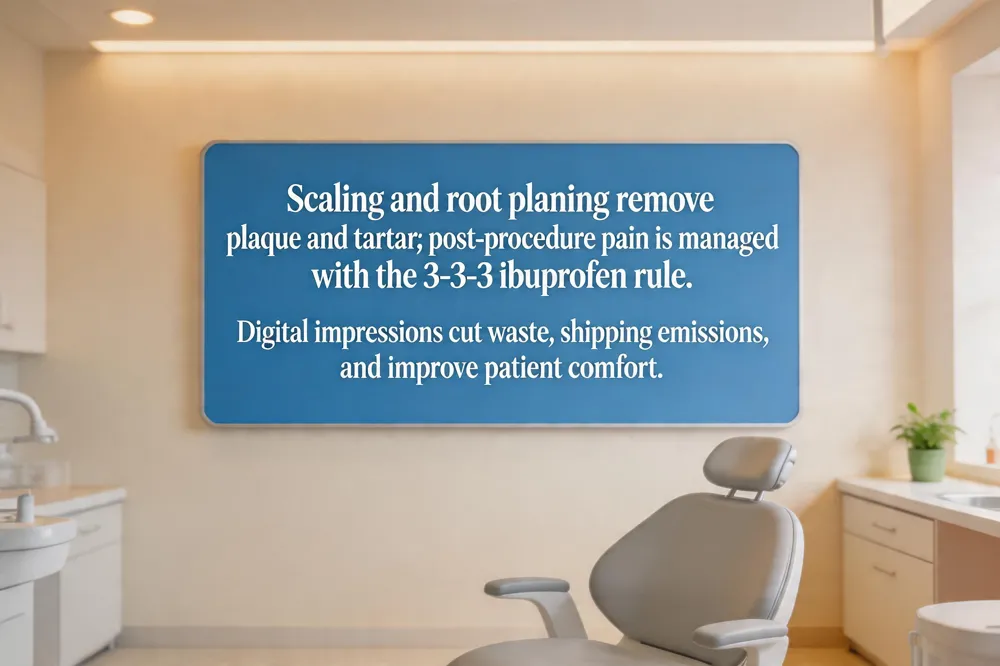 Scaling of teeth is a deep‑cleaning procedure that removes plaque, tartar and bacterial buildup from both visible surfaces and below the gum line. Using hand scalers or ultrasonic instruments—often after a local anesthetic—the dentist or hygienist loosens deposits and smooths root surfaces (root planing) to reduce inflammation, bleeding and the risk of bone loss. Post‑procedure discomfort is common, and the 3‑3‑3 rule helps manage it: take 200 mg of ibuprofen every 3 hours, not exceeding three days, to control inflammation and pain.
Environmental benefits of digital impressions are significant. 3‑D intra‑oral scanners eliminate disposable impression trays and materials reducing waste and the practice’s carbon footprint. The instant electronic transmission of scans also cuts shipping emissions and speeds up crown and bridge fabrication, improving both patient comfort and sustainability.
Looking Ahead: Faster, Greener, Patient‑Centric Care
Digital dentistry will keep advancing with faster scanners, AI‑driven design and fully automated milling, making same‑day crowns routine. In Paterson, NJ, these tools reduce visits, cut wait times, and let multilingual teams explain treatment instantly, improving access for the city’s diverse families. Eliminating disposable trays and shipping physical models also lowers waste, supporting a greener practice while patients enjoy a comfortable, efficient experience that builds trust and satisfaction for everyone.