Why Dental Emergencies Matter Beyond the Mouth
Dental emergencies are defined by the American Dental Association as conditions that require immediate attention to stop severe pain, control bleeding, or prevent the spread of infection. Examples include acute toothaches, abscesses, knocked‑out teeth, fractured crowns, and uncontrolled gum bleeding.
These oral events are not isolated to the mouth; they are a key component of the oral‑systemic connection. Pathogenic bacteria from untreated cavities or periodontitis can enter the bloodstream (bacteremia), triggering systemic inflammation and seeding distant organs. Research links such bacterial translocation to cardiovascular disease, stroke, endocarditis, pneumonia, and even neurodegenerative disorders like Alzheimer’s.
When oral infections are left untreated, the inflammatory load rises, raising C‑reactive protein and cytokine levels that exacerbate chronic conditions such as diabetes, rheumatoid arthritis, and hypertension. Severe infections can progress to deep‑neck space involvement (e.g., Ludwig angina) or sepsis, posing life‑threatening risks. Prompt dental evaluation and early intervention are therefore essential not only for preserving teeth but also for protecting overall health and reducing downstream medical costs.
Foundations of the Oral‑Systemic Link
Oral Health Practices & Systemic Benefits
| Practice | Frequency | Primary Oral Benefit | Systemic Benefit |
|---|---|---|---|
| Brushing with fluoride toothpaste | 2×/day | Removes plaque, prevents caries | Lowers systemic inflammation (CRP) |
| Flossing or interdental cleaning | Daily | Disrupts sub‑gingival biofilm | Reduces bacteremia risk |
| Low‑sugar diet | Ongoing | Decreases acid production, caries | Improves glycemic control |
| Professional cleaning & check‑up | ≥2×/year | Early detection of disease | Early identification of systemic risk markers |
| Antimicrobial mouthwash (e.g., chlorhexidine) | As directed | Controls pathogenic load | Decreases systemic cytokine spill‑over |
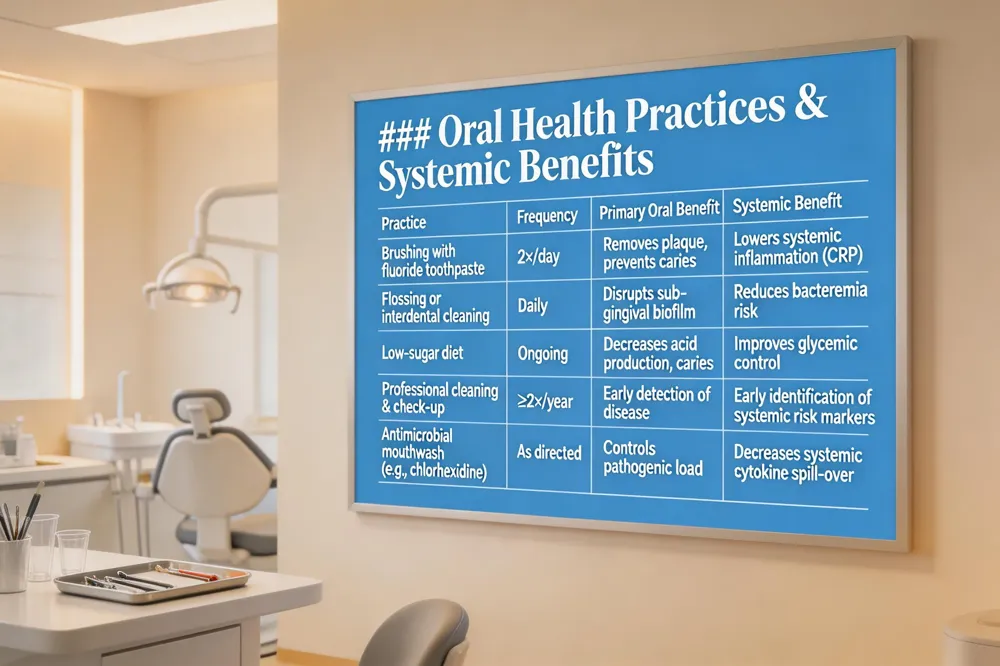 Oral health is the complete well‑being of the teeth, gums, and supporting structures that enables eating, speaking, and smiling without pain. It means the absence of cavities, gum disease, oral cancer, and tooth loss, all largely preventable through daily brushing, flossing, a low‑sugar diet, and Professional dental cleanings and check‑ups are recommended at least twice a year to prevent and detect oral disease early. oral‑systemic link describes how inflammation from periodontitis raises systemic inflammatory markers and how pathogenic bacteria can enter the bloodstream, potentially influencing distant organs. Research consistently associates poor oral health is linked to increased risk of heart disease, stroke, diabetes, Alzheimer’s disease, and pregnancy complications with cardiovascular disease, stroke, diabetes, Alzheimer’s disease, rheumatoid arthritis, adverse pregnancy outcomes, respiratory infections, certain cancers, and kidney disease. The relationship with diabetes is bidirectional: Diabetes and gum disease have a bidirectional relationship: uncontrolled diabetes raises the risk of severe gum disease, while untreated gum disease can make blood‑sugar control more difficult. Maintaining good oral hygiene reduces bacterial load and systemic inflammation, supporting overall health and quality of life. Maintaining good oral hygiene—brushing, flossing, and a low‑sugar diet—helps control plaque and reduces systemic inflammation. Regular dental check‑ups are essential for early detection of oral disease, preventing its spread, and mitigating systemic complications. Professional dental cleanings and check‑ups are recommended at least twice a year to prevent and detect oral disease early.
Dental Emergencies: Types, Signs, and When to Seek Help
Dental Emergency Types & Immediate Management
| Emergency Type | Typical Signs | First‑Aid Action | When to Call 911 |
|---|---|---|---|
| Traumatic injury (fractured, luxated, avulsed tooth) | Pain, mobility, empty socket | Control bleeding, cold compress, store avulsed tooth in milk/saliva | Airway compromise, severe uncontrolled bleeding |
| Infectious problem (periapical abscess, cellulitis, deep‑neck infection) | Swelling, fever, pus, trismus | Analgesia, cold compress, pressure, empiric antibiotics | Rapid spread, difficulty breathing, high fever |
| Post‑procedural complication (dry socket, uncontrolled bleeding) | Severe throbbing pain, empty socket, continuous bleeding | Sitz bath, analgesics, pressure dressing | Persistent bleeding >15 min, signs of infection |
| Systemic signs (fever, chills, malaise) | General ill‑feeling, elevated temp | Monitor vitals, analgesia, seek urgent care | Signs of sepsis, hypotension, altered mental status |
 Dental emergencies are conditions that require immediate attention to control pain, bleeding, infection, or prevent life‑threatening complications. They fall into three main categories: (1) traumatic injuries such as fractured, luxated, or avulsed teeth; (2) infectious problems including periapical abscesses, cellulitis, and deep‑neck space infections; and (3) post‑procedural complications like dry socket, uncontrolled bleeding, or failed restorations.
Key warning signs that indicate urgent care are severe throbbing toothache that does not improve with over‑the‑counter analgesics, uncontrolled gum bleeding, facial swelling or fever, a knocked‑out tooth (which should be kept moist in milk or saliva and re‑implanted within an hour), a draining pus bump, or any trauma that threatens the airway.
Patients can recognize a true emergency by noting sudden, worsening pain or swelling, loss of a tooth or restoration, or signs of systemic infection (fever, chills, malaise). If any of these occur, call the dental office immediately or go to the emergency department for life‑threatening symptoms.
Initial management includes analgesia (ibuprofen or acetaminophen), cold compresses, pressure to control bleeding, and empiric antibiotics for suspected infection. Traumatic teeth should be gently repositioned only if feasible; avulsed teeth must be stored in a suitable medium. Prompt referral to an oral surgeon or the patient’s dentist for definitive treatment—drainage, re‑implantation, or restoration—prevents progression, preserves oral structures, and reduces systemic health risks.
When Oral Infections Reach Beyond the Mouth
Systemic Conditions Linked to Oral Infections
| Oral Condition | Pathway to Systemic Effect | Example Systemic Disease |
|---|---|---|
| Periodontitis (chronic) | Bacteremia → endotoxin & cytokine spill‑over | Cardiovascular disease, atherosclerosis |
| Dental abscess (acute) | Direct spread → sepsis, endocarditis | Endocarditis, osteomyelitis |
| Chronic gingivitis | Elevated CRP & IL‑6 | Diabetes exacerbation, rheumatoid arthritis |
| Poor oral hygiene (high bacterial load) | Aspiration of pathogens | Aspiration pneumonia (elderly, immunocompromised) |
| Maternal periodontitis | Inflammatory mediators cross placenta | Pre‑term birth, low‑birth‑weight infants |
 Bacteremia and systemic spread
When plaque‑driven gum disease or a deep dental abscess breaches the oral barrier, pathogenic bacteria enter the bloodstream (bacteremia). These microbes can seed distant sites, causing endocarditis, sepsis, or osteomyelitis of facial bones. The inflammatory cascade from periodontal infection raises C‑reactive protein and cytokines (IL‑6, TNF‑α), amplifying systemic inflammation.
Link to cardiovascular, respiratory and pregnancy complications
Research consistently links chronic periodontal inflammation to atherosclerotic plaque formation, increasing the risk of heart attack, stroke and hypertension. Aspiration of oral bacteria promotes pneumonia, especially in the elderly or immunocompromised. Pregnant women with periodontitis have higher rates of preterm birth and low‑birth‑weight infants due to inflammatory mediators crossing the placenta.
Impact on chronic diseases such as diabetes and rheumatoid arthritis
A bidirectional relationship exists between diabetes and gum disease: hyperglycemia worsens periodontitis, while periodontitis elevates HbA1c and insulin resistance. Systemic inflammation from untreated oral disease can exacerbate rheumatoid arthritis and may contribute to neurodegenerative conditions like Alzheimer’s disease.
Can dental problems cause other health issues?
Yes—oral infections and inflammation can affect the whole body, contributing to cardiovascular disease, respiratory infections, pregnancy complications, diabetes control challenges, certain cancers, Alzheimer’s disease and rheumatoid arthritis. Regular dental cleanings, twice‑daily brushing, flossing and a low‑sugar diet reduce these systemic risks.
Can a tooth infection cause systemic issues?
When a tooth infection spreads beyond the pulp, bacteria can enter the bloodstream, leading to endocarditis, sepsis, or worsening of existing systemic conditions.
Systemic disease dental management
Effective care begins with a detailed medical history, coordination with physicians, and, when needed, antibiotic prophylaxis or modified surgical techniques. Patients on anticoagulants, bisphosphonates or with cardiac risk require tailored protocols to prevent complications while preserving oral health.
Periodontitis: A Portal to Chronic Systemic Illness
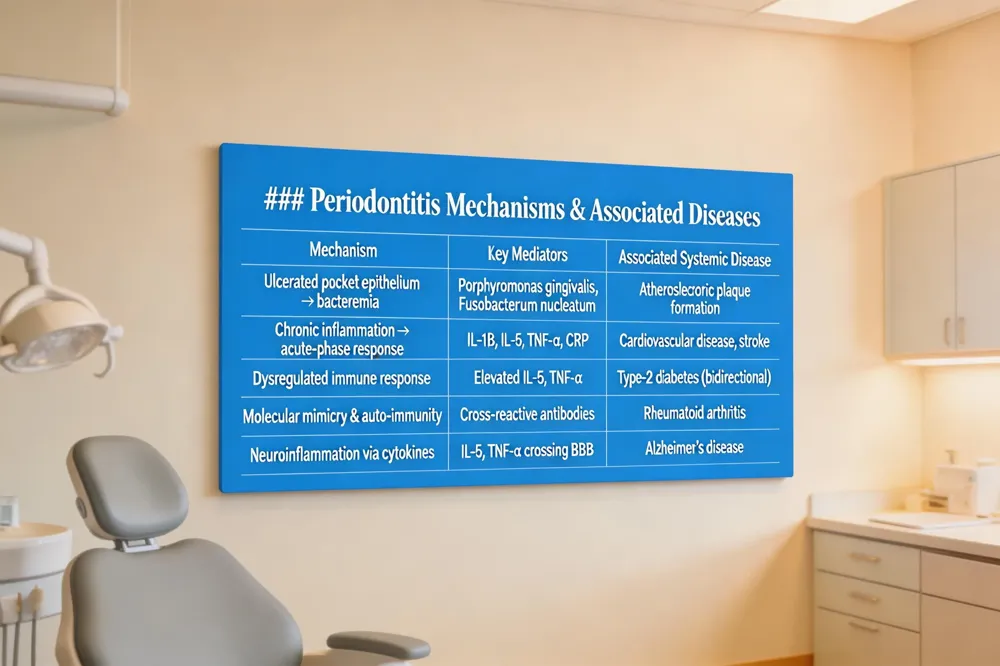
Periodontitis Mechanisms & Associated Diseases
| Mechanism | Key Mediators | Associated Systemic Disease |
|---|---|---|
| Ulcerated pocket epithelium → bacteremia | Porphyromonas gingivalis, Fusobacterium nucleatum | Atherosclerotic plaque formation |
| Chronic inflammation → acute‑phase response | IL‑1β, IL‑6, TNF‑α, CRP | Cardiovascular disease, stroke |
| Dysregulated immune response | Elevated IL‑6, TNF‑α | Type‑2 diabetes (bidirectional) |
| Molecular mimicry & auto‑immunity | Cross‑reactive antibodies | Rheumatoid arthritis |
| Neuroinflammation via cytokines | IL‑6, TNF‑α crossing BBB | Alzheimer’s disease |
 Inflammatory mechanisms of gum disease
Periodontitis is a bacterial‑driven, chronic inflammatory infection of the supporting structures of the teeth. Plaque‑induced bacterial biofilm triggers a host response that releases cytokines (IL‑1β, IL‑6, TNF‑α) and acute‑phase proteins such as C‑reactive protein. Persistently elevated systemic inflammatory markers increase endothelial dysfunction and promote atherosclerotic plaque formation. In addition, ulcerated pocket epithelium allows oral pathogens (e.g., Porphyromonas gingivalis, Fusobacterium nucleatum) to enter the bloodstream, producing transient bacteremia and endotoxemia that can seed distant organs.
Inflammatory mechanisms of gum disease
Periodontitis is a bacterial‑driven, chronic inflammatory infection of the supporting structures of the teeth. Plaque‑induced bacterial biofilm triggers a host response that releases cytokines (IL‑1β, IL‑6, TNF‑α) and acute‑phase proteins such as C‑reactive protein. Persistently elevated systemic inflammatory markers increase endothelial dysfunction and promote atherosclerotic plaque formation. In addition, ulcerated pocket epithelium allows oral pathogens (e.g., Porphyromonas gingivalis, Fusobacterium nucleatum) to enter the bloodstream, producing transient bacteremia and endotoxemia that can seed distant organs.
Strongest evidence linking periodontitis to specific diseases Large epidemiologic studies and meta‑analyses consistently associate periodontitis with cardiovascular disease, stroke, type‑2 diabetes, adverse pregnancy outcomes (pre‑term birth, low birth weight), rheumatoid arthritis, Alzheimer’s disease, and several cancers. The bidirectional relationship with diabetes is especially robust: hyperglycemia worsens gum inflammation, while periodontal treatment can lower HbA1c by up to 0.4 %. Cardiovascular risk is supported by detection of periodontal pathogens in atherosclerotic plaques and higher CRP levels in gum‑diseased patients.
Role of shared risk factors Smoking, poor diet, obesity, and genetics predispose individuals to both periodontal disease and systemic illnesses, confounding causality. Nonetheless, the convergence of these risk factors amplifies the systemic inflammatory load, making oral health a useful early indicator of broader health problems. Routine dental cleanings, diligent oral hygiene, and coordinated medical‑dental care are therefore essential components of a comprehensive whole‑body health strategy.
Oral‑systemic link periodontal disease Periodontal disease triggers chronic inflammation and occasional bacteremia, linking it to cardiovascular disease, diabetes, rheumatoid arthritis, pregnancy complications, Alzheimer’s disease, and certain cancers. While shared risk factors complicate causal inference, treating gum disease reduces systemic inflammatory burden and may improve overall health outcomes.
Dental management of systemic diseases PDF The guideline recommends pre‑operative medical review, physician collaboration, modified antibiotic dosing, and careful monitoring of infection for patients with diabetes, cardiac disease, oncology, or renal impairment. It provides risk‑assessment tables, drug‑interaction charts, and emergency protocols for bleeding or infection.
Systemic diseases in dentistry Dentists must recognize that conditions such as diabetes, cardiovascular disease, osteoporosis, anemia, and immunosuppression affect oral tissues, disease risk, and healing. Integrated care, medication adjustments, and prophylactic antibiotics are essential for safe treatment.
Relationship between oral health and general health PDF The PDF outlines strong evidence of bidirectional links between periodontal disease and systemic illnesses, emphasizes shared risk factors, and calls for integrated medical‑dental collaboration and preventive care to lower morbidity and healthcare costs.
Preparing for Medical Crises in the Dental Office
Medical Crisis Preparedness Checklist
| Item | Details |
|---|---|
| Medical History & Risk Questionnaire | Completed before every appointment |
| Vital Sign Monitoring | Blood pressure, pulse, SpO₂ when indicated |
| Emergency Kit | Oxygen, BVM, AED, epinephrine auto‑injector, nitroglycerin, glucose, aspirin |
| Staff Training | BLS certification, quarterly mock drills |
| ABC Protocol | Airway → Breathing → Circulation (CPR, AED) |
| Role Assignment | Patient monitor, equipment retriever, emergency call taker |
| Documentation | Event log, interventions, outcome, follow‑up plan |
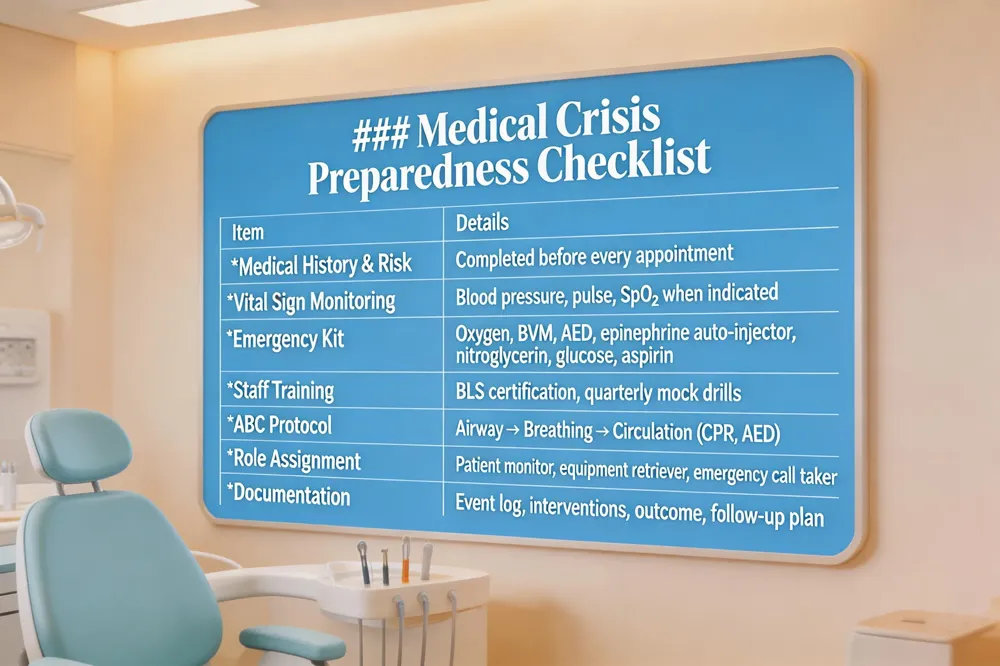 Dental practices must be ready for sudden medical emergencies that range from vasovagal syncope and hypoglycemia to life‑threatening events such as myocardial infarction, anaphylaxis, and cardiac arrest. Prevention begins with a thorough medical history, risk‑assessment questionnaire, and vital‑sign monitoring before any procedure. Preparation requires an up‑to‑date emergency kit that includes oxygen, a bag‑valve‑mask, an automated external defibrillator (AED), and essential drugs (epinephrine, antihistamines, nitroglycerin, glucose, and aspirin). Staff should be certified in Basic Life Support (BLS) and regularly rehearse a three‑step ABC protocol: first, ensure a clear airway and place an unconscious patient supine with the legs elevated; second, provide 100 % oxygen and assess breathing; third, evaluate circulation, initiate CPR if needed, and apply the AED while calling 911. Clear role assignments—who monitors the patient, who retrieves equipment, who contacts emergency services—reduce response time. Documentation of the event, interventions, and outcomes is essential for legal compliance and quality‑improvement. For detailed guidance, the “Medical Emergencies in the Dental Office” PDF (available free from the Emergency Dental Instructional Consortium) outlines prevention strategies, kit contents, and step‑by‑step management of syncope, allergic reactions, seizures, and cardiac emergencies. A well‑structured PowerPoint on dental emergencies and management can reinforce these concepts, covering trauma, severe pain, abscesses, facial swelling, and medical events, while emphasizing rapid triage, appropriate antibiotic use, and referral pathways. By integrating these protocols, dental teams protect patient safety and maintain confidence in their care.
Promoting Oral Health for Whole‑Body Wellness
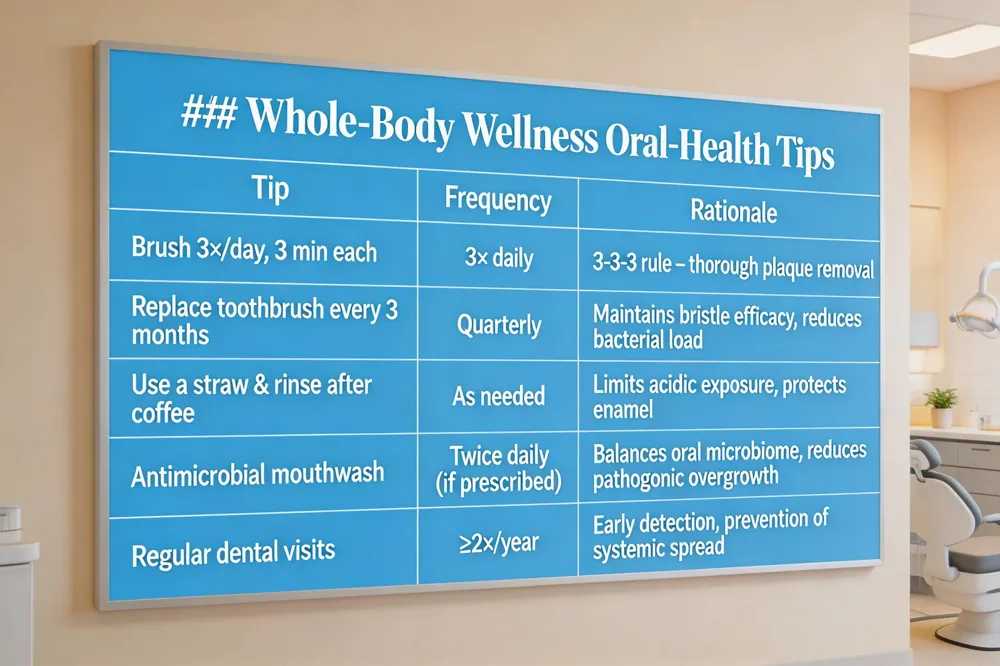
Whole‑Body Wellness Oral‑Health Tips
| Tip | Frequency | Rationale |
|---|---|---|
| Brush 3×/day, 3 min each | 3× daily | 3‑3‑3 rule – thorough plaque removal |
| Replace toothbrush every 3 months | Quarterly | Maintains bristle efficacy, reduces bacterial load |
| Use a straw & rinse after coffee | As needed | Limits acidic exposure, protects enamel |
| Antimicrobial mouthwash | Twice daily (if prescribed) | Balances oral microbiome, reduces pathogenic overgrowth |
| Regular dental visits | ≥2×/year | Early detection, prevention of systemic spread |
 Importance of oral hygiene in daily life
Consistent oral hygiene removes plaque, the sticky film of bacteria that causes cavities and gum disease, and reduces systemic inflammation linked to heart disease, diabetes complications, and respiratory infections. Brushing twice daily with fluoride toothpaste, flossing, and regular professional cleanings keep the mouth clean, support nutrition, speech, and confidence, and are a cost‑effective habit that safeguards overall health.
Is coffee bad for receding gums?
Coffee is acidic; its low pH can erode enamel and irritate gum tissue. Over time, enamel loss exposes dentin, increasing sensitivity and potentially contributing to gum irritation and recession. Drinking coffee with a straw and rinsing with water can minimize exposure.
How to fix oral microbiome imbalance?
First, eliminate active Periodontal disease through professional treatment. Then maintain daily habits—brush twice a day, floss, and use an antimicrobial mouthwash—to promote a balanced microbial environment and prevent pathogenic overgrowth.
What are 5 oral health diseases?
- Dental caries (tooth decay) – acid‑induced enamel loss.
- Periodontal disease – gingivitis/periodontitis leading to bone loss.
- Oral cancer – malignant lesions on lips, tongue, or oropharynx.
- Xerostomia – chronic dry mouth increasing decay risk.
- Tooth erosion – enamel loss from acidic exposure.
What is the 3‑3‑3 rule for teeth?
Brush three times a day, for three minutes each session, and replace the toothbrush every three months. This routine ensures thorough cleaning and optimal fluoride protection.
What is oral health education?
It teaches patients proper brushing, flossing, fluoride use, and dietary choices while highlighting the oral‑systemic link. Culturally‑sensitive education in multiple languages empowers individuals to prevent disease, attend regular check‑ups, and seek timely care, ultimately improving both oral and overall health.
Economic and Community Benefits of Preventive Dental Care
Economic & Community Impact of Preventive Care
| Benefit | Description |
|---|---|
| Cost Savings | Early detection reduces expensive restorative/surgical procedures; 4.42 % annual reduction in total medical expenses (Cigna 2024) |
| Reduced Emergency Visits | Preventive care lowers incidence of acute infections → fewer ER admissions |
| Improved Chronic Disease Management | Better glycemic control, lower CRP → lower cardiovascular costs |
| Access via Multilingual Staff | Breaks language barriers, increases appointment adherence in diverse communities (Paterson, NJ) |
| Public‑Health Integration | Oral‑systemic screening in community health centers identifies systemic risk early, decreasing overall healthcare burden |
 Oral health definition PDF
Oral health is a state of complete physical, mental, and social well‑being of the mouth, teeth, gums, and related structures, enabling speaking, smiling, tasting, and chewing without pain or disease. The WHO emphasizes that it goes beyond the absence of disease and is tightly linked to systemic conditions such as diabetes, cardiovascular disease, and pregnancy outcomes.
Dental emergencies and management
Dental emergencies—traumatic, infectious, or post‑procedural—require rapid assessment (airway, breathing, circulation) and immediate measures: pressure to control bleeding, cold compresses for swelling, analgesics (ibuprofen or acetaminophen), and, when needed, empiric antibiotics and incision‑and‑drainage. Prompt definitive care prevents spread of infection to the bloodstream, reducing risks of sepsis, endocarditis, and airway compromise.
Dental emergencies and management PPT
A well‑structured PowerPoint should define emergencies, categorize them (e.g., avulsed teeth, abscesses, facial swelling), outline ABC triage, pain‑control protocols, evidence‑based antibiotic choices, and clear referral pathways to emergency departments when life‑threatening signs appear.
Oral health and overall health PubMed
PubMed studies consistently show that periodontal disease worsens glycemic control, elevates C‑reactive protein, and raises cardiovascular risk. Improved oral hygiene lowers systemic inflammatory load, translating into better chronic disease management and reduced medical costs.
Cost savings from early detection
Preventive cleanings and twice‑yearly check‑ups catch caries and periodontitis before they require costly restorative or surgical interventions; a 2024 Cigna study found a 4.42 % annual reduction in total medical expenses for patients receiving regular preventive dental care.
Impact of multilingual team on access
Multilingual staff at David M.ayerlay DMD break language barriers, encouraging timely appointments for diverse Paterson residents, which lowers emergency visits and associated systemic complications.
Public‑health implications for Paterson, NJ
Integrating oral‑systemic screening into community health centers can identify early systemic disease markers, improve chronic disease outcomes, and reduce overall healthcare expenditures for the city’s underserved populations.
Take Action Today for a Healthier Mouth and Body
Research consistently shows that untreated dental infections and gum disease are not confined to the mouth. Bacteria from cavities or periodontitis can enter the bloodstream, raising the risk of heart disease, stroke, diabetes complications, pneumonia, and even adverse pregnancy outcomes. Dental emergencies such as abscesses, severe tooth pain, or traumatic injuries can trigger systemic inflammation, bacteremia, and life‑threatening conditions like Ludwig’s angina or sepsis. The good news is that regular preventive care—professional cleanings and exams at least twice a year—detects problems early, controls plaque, and dramatically lowers systemic inflammatory load. We invite you to schedule your next preventive visit today. Our multilingual team is ready to answer questions in several languages, ensuring clear communication and timely treatment for every patient, regardless of background. By protecting your oral health, you protect your whole body and enjoy a brighter, healthier future.