Introduction: Why a Seamless Transition Matters
Moving from a partial denture to a full denture is a pivotal step in restoring oral function and confidence. Partial dentures replace only the missing teeth, clasping to remaining natural teeth, while full (complete) dentures replace an entire arch and rest on the gums or palate. Patients often worry about discomfort, changes in speech, diet restrictions, and the appearance of a new smile. A well‑planned transition—starting with a comprehensive oral exam, accurate impressions, and a staged extraction schedule—reduces these concerns. Proper care, including a soft‑food diet, speech‑practice exercises, and diligent hygiene, eases adaptation and protects gum health. When the process is coordinated by a multidisciplinary team, the result is a comfortable, stable prosthesis that improves chewing efficiency, facial support, and overall quality of life.
Planning the Transition: Evaluation and Decision‑Making
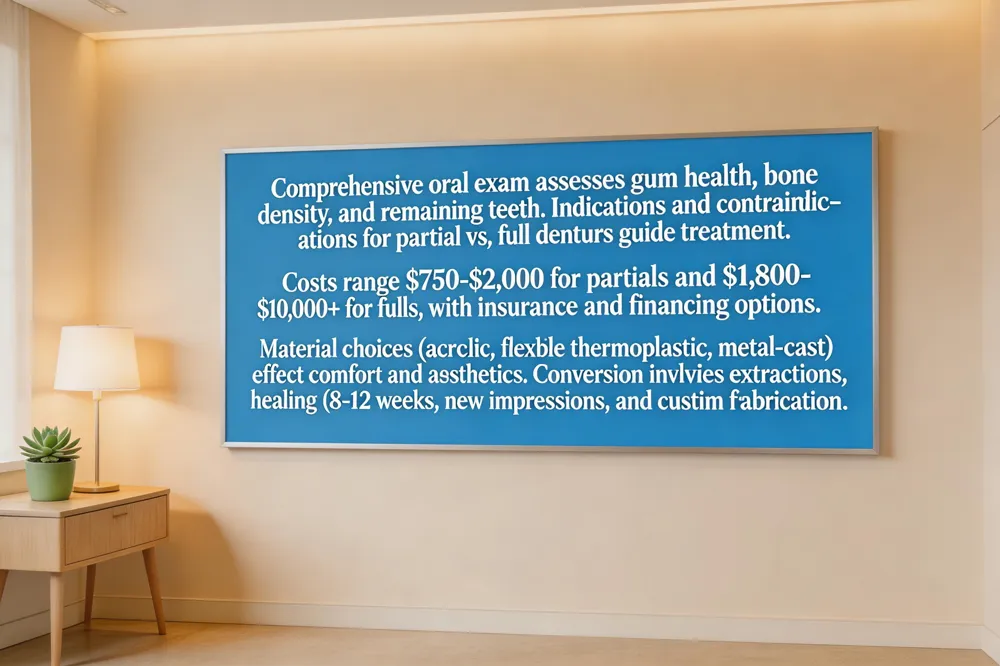 A successful move from a partial to a full denture begins with a comprehensive oral examination that assesses gum health, bone density, and the condition of any remaining teeth. Indications for a removable partial denture include several missing teeth with healthy abutments that can provide support; it is contraindicated when periodontal disease, extensive decay, or systemic health issues compromise the remaining teeth. A full (complete) denture is indicated when an entire arch is edentulous or when residual teeth are non‑restorable; contraindications include severe ridge resorption, active infection, or inability to tolerate the bulk of a removable prosthesis.
Cost considerations vary widely. Partial dentures range from $750 to $2,000, while full dentures start around $1,800 and can exceed $10,000 for implant‑supported options. Insurance often covers a portion of the expense, and many practices offer financing or in‑house payment plans to keep treatment affordable.
Material and design choices affect comfort and aesthetics. Modern full dentures use high‑quality acrylic or flexible thermoplastic bases that are lighter and more natural‑looking; partials may be metal‑cast, acrylic, or flexible nylon, each with distinct durability and translucency.
Conversion process typically involves extracting compromised teeth, allowing 8–12 weeks for healing, taking new impressions (digital scans or traditional putty), and fabricating a custom full denture that fits the healed ridge. Temporary reliners or interim prostheses can cushion the tissues during adaptation.
By evaluating oral health, weighing indications and contraindications, reviewing cost and insurance options, selecting appropriate materials, and following a structured conversion protocol, patients can transition smoothly to a full denture that restores function, speech, and facial confidence.
The Step‑by‑Step Dental Journey from Consultation to Final Fit
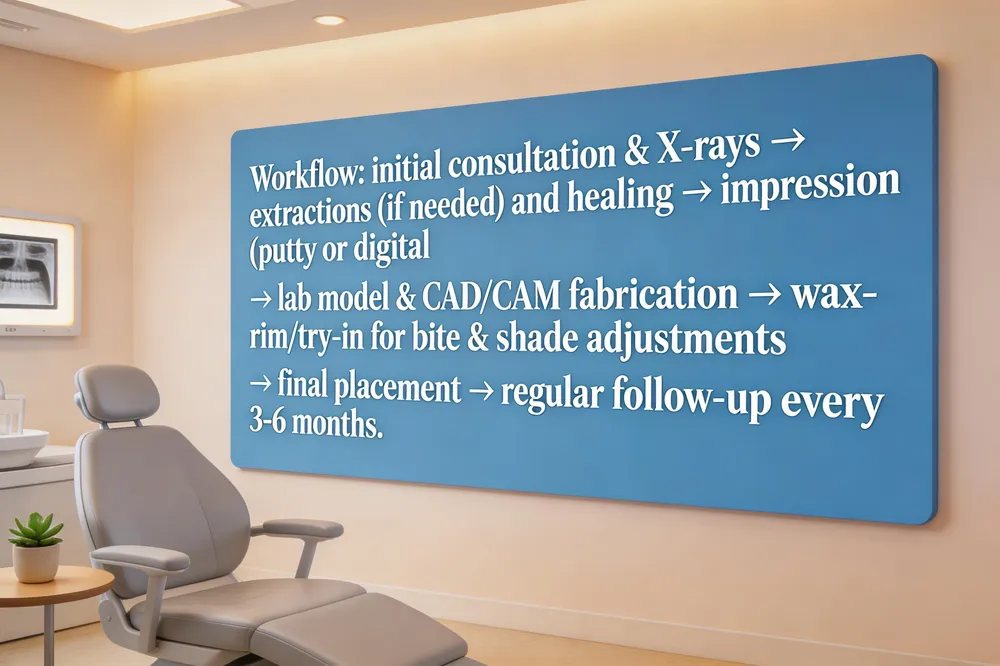 The denture process begins with a comprehensive initial consultation where the dentist evaluates oral health, takes X‑rays, and discusses the best denture option—partial, full, or implant‑supported. If any remaining teeth are unsound, tooth extractions are performed under local anesthesia and a healing period of 6–12 weeks follows (or immediate denture placement for same‑day aesthetics).
During healing, impression techniques—either traditional putty or digital intra‑oral scanning—capture the exact shape of the gums and any remaining teeth. These impressions are sent to a dental lab where a custom stone model is created.
The lab fabricates the denture, often using CAD/CAM technology, and a wax‑rim or try‑in appointment allows the dentist to adjust bite, shade, and tooth positioning before the final acrylic set is made.
At the final placement visit, the denture is fitted, checked for comfort, speech, and chewing, and any minor adjustments are made. Follow‑up care includes regular check‑ups every 3–6 months, relining as the jaw remodels, and daily hygiene: soft brushing, soaking overnight, and nighttime removal.
Key questions answered:
- Denture process from start to finish – consultation → extraction/healing → impressions → lab fabrication → try‑in → final placement → follow‑up.
- Four stages of dentures – evaluation & impressions, bite registration & wax‑rim, trial denture, final denture placement.
- Five steps to getting dentures – consult, extract, take impressions, try‑in, receive & adjust final denture.
- How are dentures made – impressions → plaster model → wax‑up → acrylic injection → polishing → fitting.
- Immediate dentures – placed the same day as extractions to protect gums and preserve appearance, later relined or replaced.
- Same‑day dentures process – consultation, pre‑extraction impression, extraction, immediate denture placement, healing follow‑ups, final denture.
- Process length – typically 6 weeks to 3 months, depending on extractions and denture type.
Managing the Adjustment Period: Comfort, Speech, and Diet
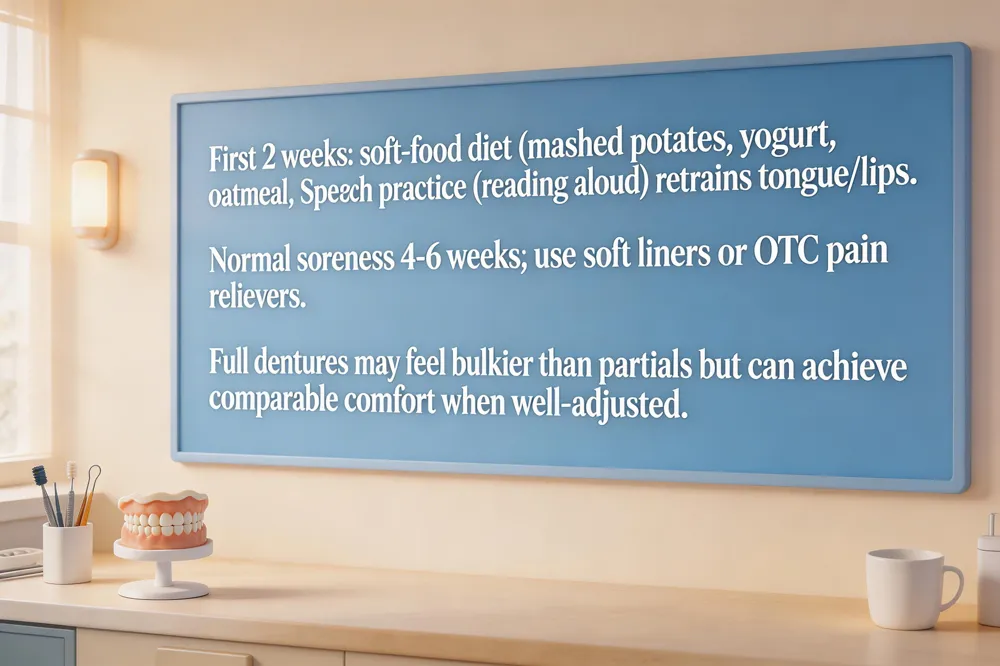 A soft‑food diet is essential during the first two weeks after receiving full dentures. Choose mashed potatoes, yogurt, scrambled eggs, oatmeal, and pureed soups; avoid sticky or hard foods until the gums have healed and the denture settles. Speech practice—reading aloud, singing, or reciting simple phrases helps retrain the tongue and lips, reducing the lisp or slurring that often occurs initially.
Soreness is normal for the first 4–6 weeks as pressure points develop; a soft liner or tissue conditioner can cushion tender areas, and over‑the‑counter pain relievers ease discomfort. Compared with partials, full dentures may feel bulkier, yet a well‑adjusted full denture can be as comfortable as a partial that is anchored to remaining teeth. Patient satisfaction hinges on fit, diet, and daily cleaning and regular six‑month check‑ups to monitor fit and oral health.
Full mouth dentures worth it? Yes, for most patients they provide a cost‑effective, non‑invasive solution that restores chewing, speech, and facial support, though implant‑supported options offer superior long‑term stability.
Are full dentures more comfortable than partial? Comfort is individual; full dentures can be very comfortable when custom‑fit, but partials often feel more stable because they clasp to natural teeth.
Most comfortable full dentures? Custom‑made acrylic or flexible‑resin dentures that match gum contours, or implant‑supported snap‑in dentures for maximum stability.
What to expect when getting full dentures? Initial soreness, multiple adjustment visits, daily cleaning, and regular six‑month check‑ups to monitor fit and oral health.
Maintaining Your New Smile: Care, Follow‑Ups, and Longevity
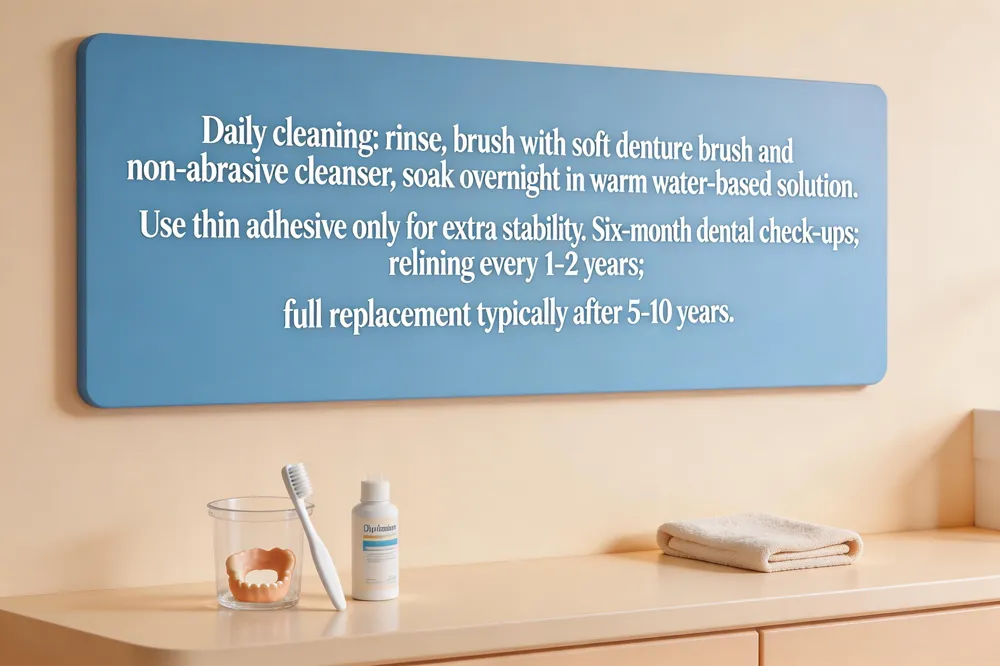 A consistent daily cleaning routine is the cornerstone of denture health. After each meal, rinse the prosthesis, then brush it gently with a soft‑bristled denture brush and a non‑abrasive cleanser to remove food particles and plaque. At night, soak the dentures in a warm water‑based cleaning solution; this keeps the acrylic hydrated, prevents warping, and eliminates lingering bacteria.
If additional stability is needed during the early adjustment weeks, a thin layer of denture adhesive can be applied according to the manufacturer’s instructions, but it should never replace a properly fitted denture.
Regular dental check‑ups every six months are essential. The dentist will examine gum health, assess fit, and make minor adjustments to eliminate sore spots. Over time, bone resorption and tissue remodeling may necessitate relining of the denture—typically every 1–2 years—to maintain a snug, comfortable fit. When relining no longer restores function, a full replacement (often after 5–10 years) may be recommended to preserve chewing efficiency, speech clarity, and facial support.
Financial Pathways: Costs, Insurance, and Financing
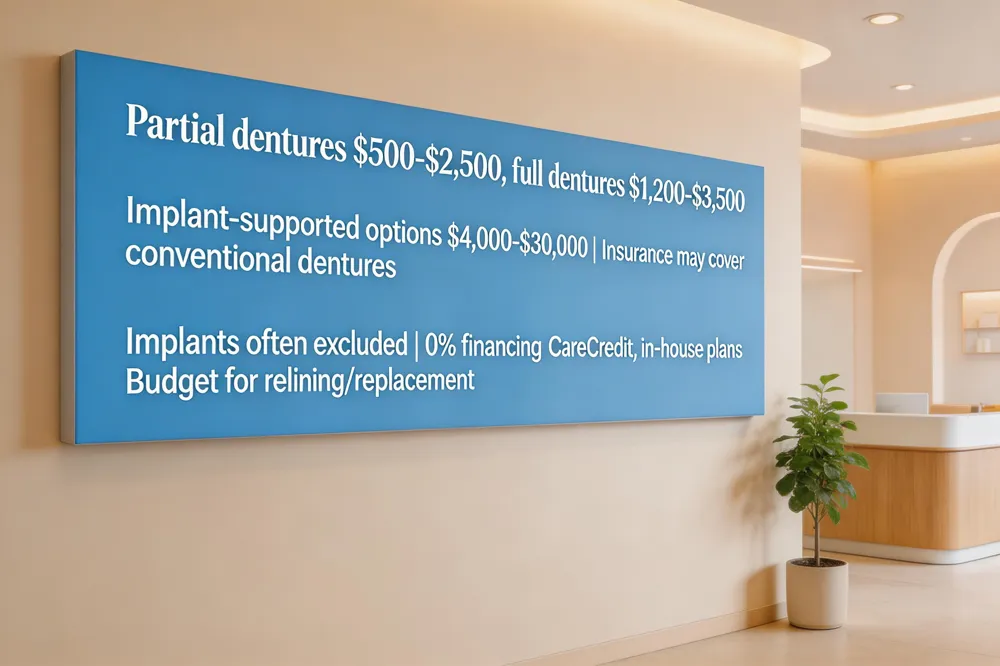 Choosing a denture solution involves clear budgeting. Full removable dentures generally range from $1,200 to $3,500 per arch, with acrylic being the most affordable and porcelain‑fused‑metal or cobalt‑chrome at the higher end. Partial dentures are less costly, typically $500 – $2,500 per arch; acrylic options start around $500, while cast‑metal designs can reach $2,500. Because partials replace fewer teeth, they usually cost $750 – $2,000, whereas full dentures start near $1,800 and can exceed $10,000 when implant‑supported. Implant‑supported dentures add a significant premium—basic overdentures begin around $4,000 and full‑arch fixed solutions may top $30,000, reflecting implant surgery, abutments, and prosthetic teeth.
Most dental insurance plans cover a portion of conventional denture fees, but implant components are often excluded. Medicaid and many private insurers provide partial coverage for extractions and basic dentures. To ease cash flow, many offices offer 0 % interest financing over 12 months, CareCredit plans, or in‑house payment schedules.
Long‑term budgeting is essential: dentures typically need relining or replacement every 5‑10 years as bone resorption occurs, so set aside funds for periodic maintenance. A free consultation can give a personalized quote and help match a payment plan to your budget.
Choosing the Right Solution: Patient Satisfaction and Latest Innovations
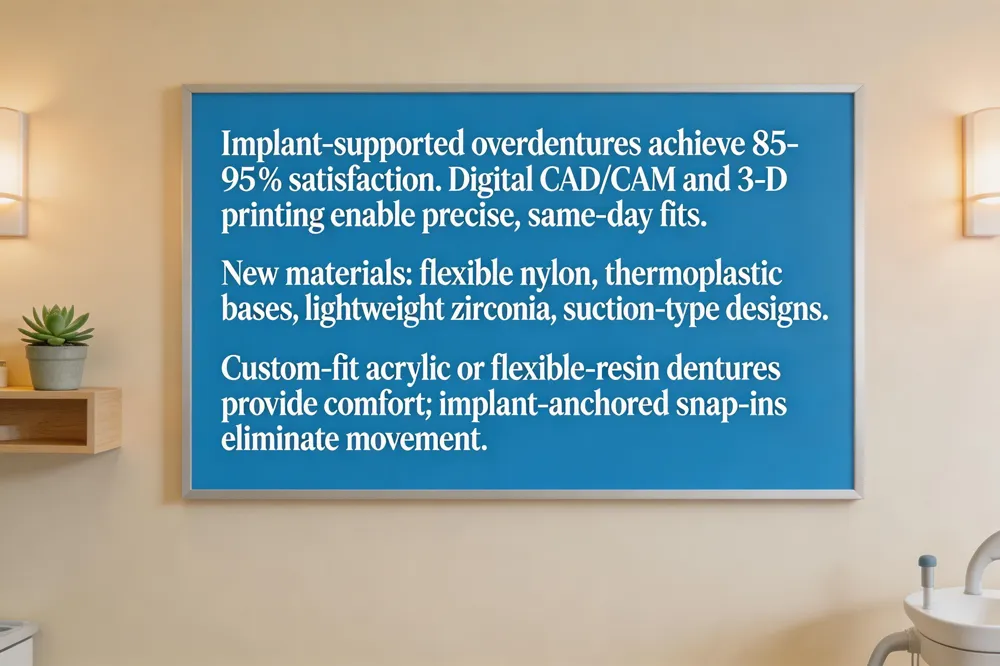 Implant‑supported overdentures consistently earn the highest satisfaction rates—85 % to 95 % of wearers report superior stability, natural chewing, and confidence, far outpacing traditional removable dentures (60 %–75 %). Modern digital workflows, using intra‑oral scanners and CAD/CAM, enable ultra‑precise 3‑D‑printed dentures that fit on the first day and reduce adjustment visits. New material choices expand options: flexible nylon or thermoplastic bases adapt to irregular arches and sensitive gums, lightweight zirconia offers durable, stain‑resistant aesthetics, and suction‑type designs create a vacuum seal without implants or adhesives. Compared with conventional acrylic full dentures, these innovations provide less pressure, fewer sore spots, and longer lifespan. The most comfortable full dentures are custom‑fit, lightweight acrylic or flexible‑resin devices, but implant‑anchored snap‑in versions eliminate movement altogether. Regular follow‑ups and digital relines keep the fit optimal as tissues remodel, ensuring lasting comfort and function.
Conclusion: Your Journey to a Confident Smile
From the first comprehensive oral evaluation, through precise impressions and tailored fabrication, to diligent daily care, each step of moving from a partial to a full denture is designed to restore function, aesthetics, and confidence. Modern digital scanning, soft reliners, and, posture funds implant‑supported options ensure a personalized fit, while multilingual dental teams help every patient understand instructions and feel supported throughout the process. Regular follow‑up visits allow timely adjustments, relining, and monitoring of gum health, preserving comfort and longevity. If you are ready to regain a natural smile and improve chewing, speech, and facial support, schedule a consultation today. Our caring professionals will guide you through each stage, answer your questions, and create a customized treatment plan that fits your lifestyle and budget.