Why Prompt Dental Attention Matters
Delaying treatment of a severe toothache, cracked tooth, or oral infection can quickly turn a manageable problem into a life‑threatening one. Untreated abscesses may spread to the jaw, neck, or bloodstream, leading to cellulitis, Ludwig’s angina, or sepsis, while a knocked‑out tooth loses its chance of re‑implantation after 30–60 minutes. In Paterson, NJ, emergency dental clinics such as David M.ayer, DMD provide same‑day appointments, after‑hours hotlines, and rapid digital imaging to diagnose and stabilize urgent cases within hours. These practices keep a multilingual team—English, Spanish, and Arabic speakers—on hand so patients from the city’s diverse community receive clear instructions, culturally sensitive care, and faster triage. Prompt, competent intervention not only preserves natural teeth but also protects overall health and reduces the higher costs of delayed, more extensive dental procedures.
Understanding Dental Emergencies
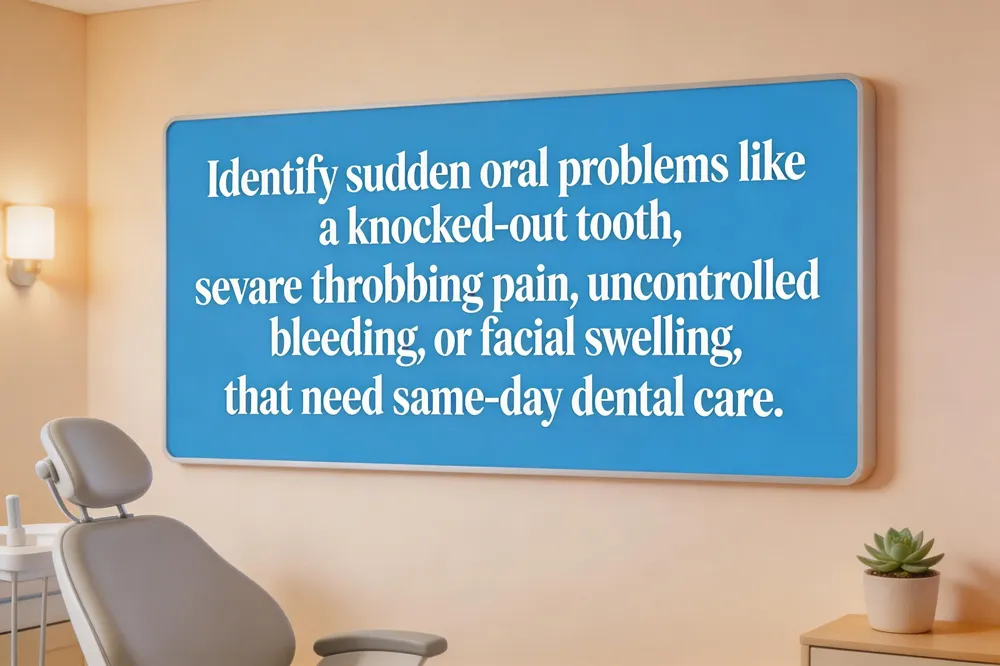 A dental emergency is any sudden oral problem that poses a risk to health, causes severe pain, or could lead to rapid infection. Typical scenarios include a knocked‑out permanent tooth (save it moist in milk and see a dentist within 30–60 minutes), a cracked or broken tooth exposing the pulp, uncontrolled oral bleeding that does not stop after 10 minutes of pressure, and facial or jaw swelling with fever—signs of a spreading abscess that can threaten the airway. Severe, throbbing toothache that persists despite over‑the‑counter pain relievers, especially when triggered by hot or cold foods, also qualifies as an emergency. Lost crowns or fillings expose the tooth to decay and should be repaired promptly, though they are less urgent than infection or trauma. If you notice any of these signs, call our Paterson office immediately for same‑day care; early intervention preserves the tooth, prevents complications, and protects overall health.
Weekend Dental Crises: What to Do Immediately
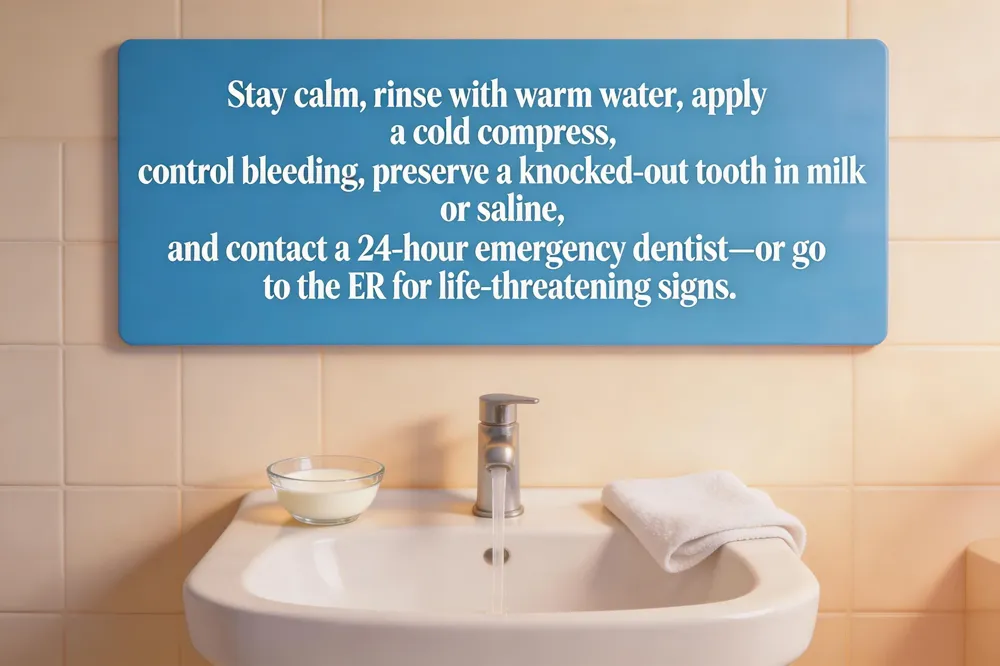 Dental emergencies don’t wait for office hours. First, stay calm and rinse the mouth with warm water. Apply a cold compress to any swelling and use gauze to control bleeding with gentle pressure.
Step‑by‑step emergency response
- Assess the injury (pain level, bleeding, swelling).
- Rinse, compress, and stop bleeding.
- Preserve a knocked‑out tooth: handle only the crown, rinse briefly, and store it in milk, saline, or the patient’s cheek for 30‑60 minutes.
- Contact a 24‑hour emergency dentist (many Paterson clinics offer same‑day appointments) or an urgent‑care dental center.
- If you cannot reach a dentist and the situation involves severe facial swelling, difficulty breathing or swallowing, or uncontrolled bleeding, go directly to the emergency department.
When to seek professional help versus the ER Mild to moderate pain, a lost crown, or a chipped tooth can be managed by an emergency dentist. Life‑threatening signs—airway compromise, intense swelling, fever, or persistent bleeding—require emergency‑room care.
What should I do if I have a dental emergency on the weekend?
- Remain calm and assess the situation.
- Rinse your mouth gently with warm water.
- Apply a cold compress to reduce swelling.
- For a knocked‑out tooth, place it in milk or a saline solution and avoid touching the root.
- Control any bleeding with gauze and gentle pressure.
- Contact an emergency dentist (many offices offer 24‑hour service) or go to the nearest urgent‑care dental clinic.
- If you cannot reach a dentist and the situation is life‑threatening (e.g., severe swelling, difficulty breathing), go to the emergency department.
The 3‑3‑3 Oral Hygiene Rule
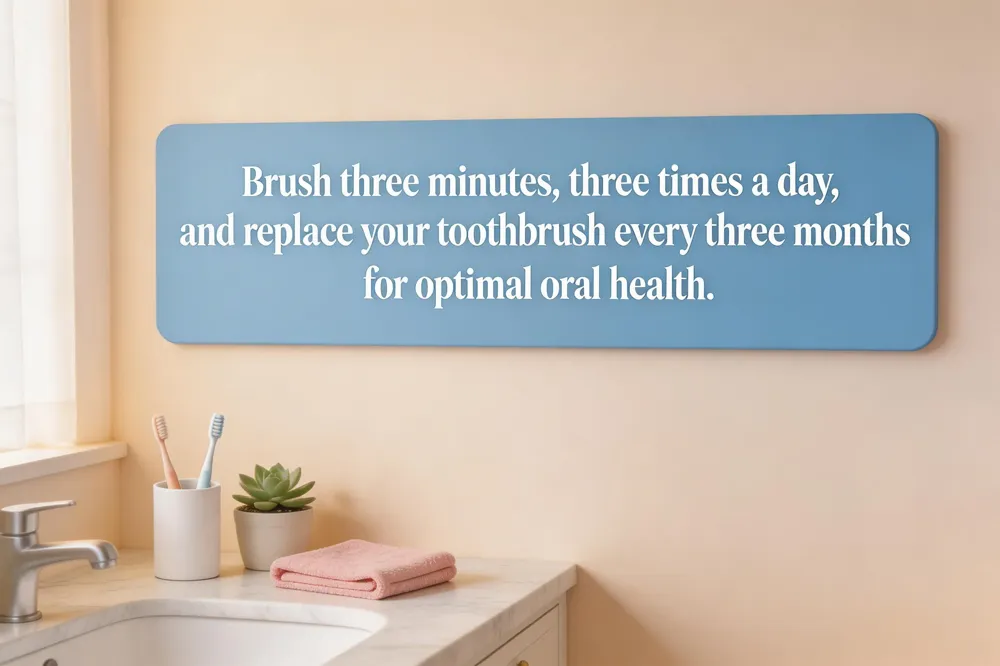 The 3‑3‑3 rule is a simple, evidence‑based mnemonic that helps patients maintain optimal oral health. Three‑minute brushing technique – spend about one minute on each of the four mouth quadrants, using a soft‑bristled brush at a 45° angle with gentle pressure; this ensures thorough coverage without damaging the gum or enamel. Replace toothbrushes every three months – worn bristles lose effectiveness and can irritate gums, so a fresh brush (or electric head) restores cleaning efficiency.
What is the 3‑3‑3 rule for teeth? It is the three‑step habit of brushing three times a day, brushing for three minutes each session, and replacing the toothbrush every three months. This routine is especially beneficial for patients at higher risk of cavities, those with orthodontic appliances, or individuals with dry‑mouth concerns, as it consistently disrupts plaque formation and promotes a healthier oral environment.
Signs That Require Urgent Dental Care
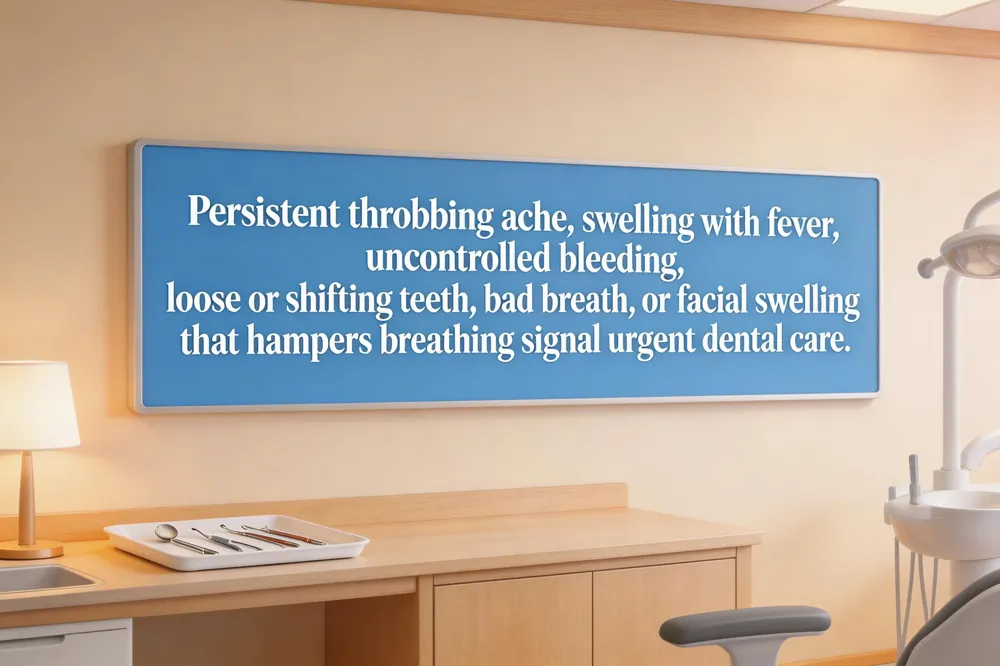 Persistent throbbing pain that lasts more than a day or two, especially when over‑the‑counter medication fails to relieve it, is a classic warning sign of a deep infection, abscess, or cracked tooth. Swelling of the gums, jaw, or face, fever, a foul taste, or pus drainage indicate a spreading infection that can become life‑threatening if not treated promptly. Dental trauma—such as a knocked‑out permanent tooth, a broken or chipped tooth exposing the pulp, or a loose tooth after an accident—requires immediate attention to preserve the tooth and prevent further damage.
What are the signs you need urgent dental care? Persistent throbbing ache, swelling with fever, uncontrolled bleeding, loose or shifting teeth, sudden sensitivity to temperature, bad breath, and facial swelling that hampers breathing or swallowing all signal an emergency.
Should I go to urgent care for tooth pain? Yes. If you cannot reach your dentist, an urgent‑care center can provide pain relief, prescribe antibiotics, and refer you for definitive dental treatment. However, for severe swelling, breathing difficulty, or uncontrolled bleeding, go straight to the emergency department and contact your dentist immediately.
Managing Cracked or Damaged Teeth
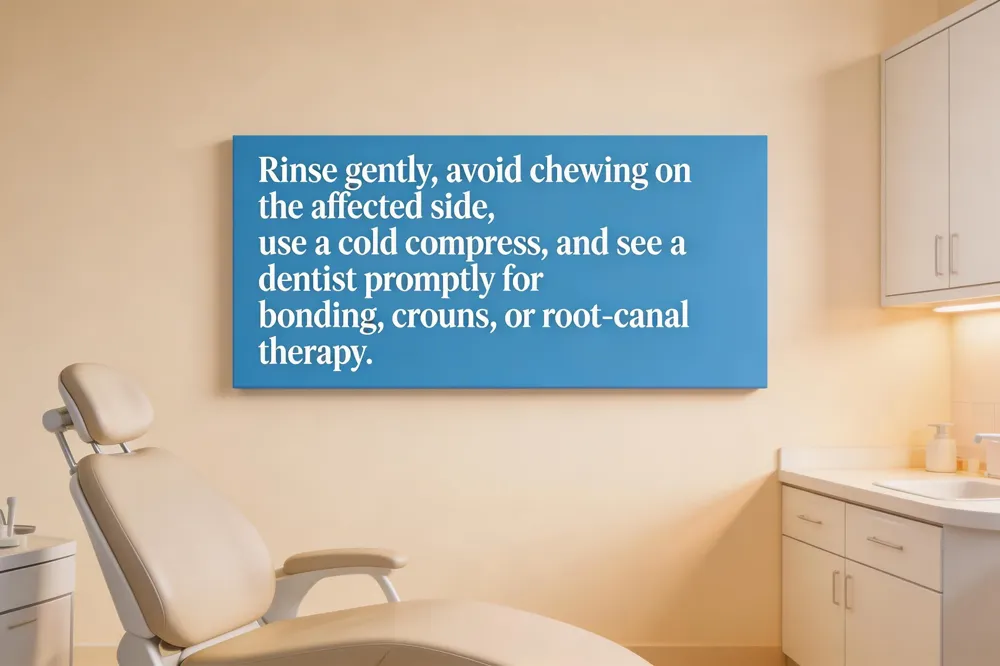 Cracked or broken teeth need care to stop infection and save the tooth. What should I do if a tooth is damaged or cracked? Rinse gently with warm water, avoid chewing on that side, and apply a cold compress for 15‑minute intervals. If loose, place soft gauze over it and keep it stable. Call your dentist; evaluation can prevent infection and may allow repair such as bonding, a crown, or root‑canal therapy. How can a damaged tooth be repaired? Small chips are often fixed with dental bonding, a tooth‑colored resin that is shaped and cured. Larger loss may need a filling, onlay, or crown. If the pulp is infected, root‑canal therapy followed by a crown restores function; severe cases may require extraction and an implant. Are there home remedies while waiting for care? Rinse with salt‑water solution (½ tsp salt in 8 oz water) several times daily, apply a cold compress, take OTC ibuprofen or acetaminophen as directed, and eat foods. These steps ease pain but do not replace professional care.
When to Head to the Emergency Room or Urgent Care
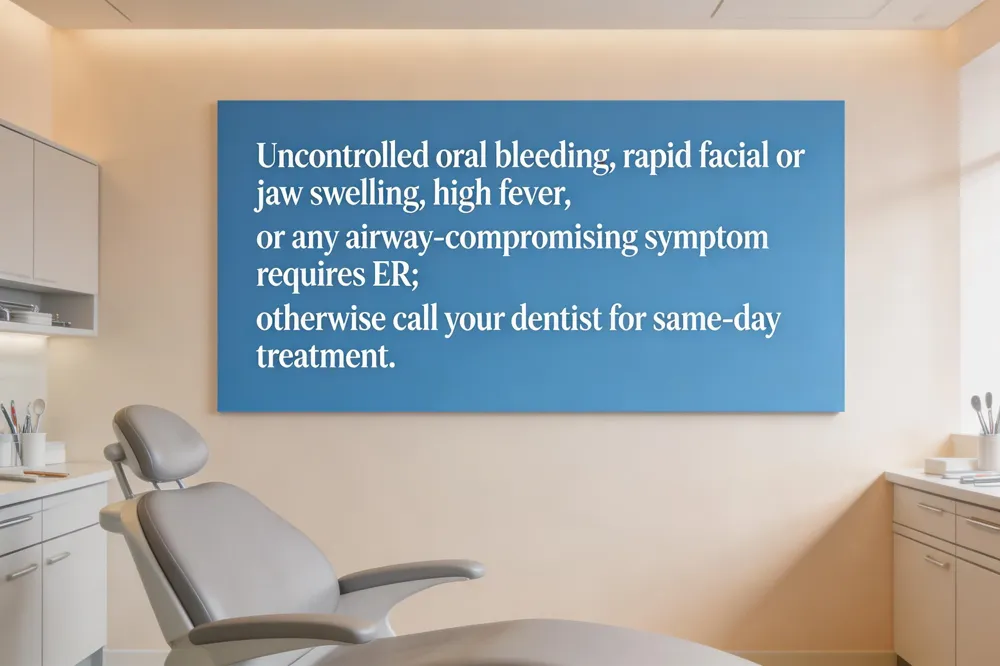 Life‑threatening dental conditions include uncontrolled oral bleeding, rapidly spreading facial or jaw swelling, high fever, and any symptom that compromises the airway or causes dizziness. If bleeding does not stop after 10‑15 minutes of firm pressure, or if swelling makes swallowing or breathing difficult, go straight to the emergency department. Systemic infection warnings—fever, chills, malaise, or a foul taste together with severe tooth pain—also demand immediate medical attention because an untreated abscess can spread to the neck, sinuses, or even the brain.
Guidelines for ER versus dental office: Call your dentist for same‑day emergency care when the problem is urgent but not life‑threatening—such as a knocked‑out tooth within 30‑60 minutes, a cracked tooth exposing pulp, or a lost crown that causes pain. If you cannot reach the dentist and the pain is severe, an urgent‑care center can provide pain relief, prescribe antibiotics, and refer you to an emergency dentist, but it cannot perform definitive dental procedures.
When should I go to the ER for a dental emergency? When you have uncontrolled oral bleeding, high fever, facial swelling that threatens the airway, or any sign of a systemic infection. If the situation is not immediately life‑threatening, call the dental office for same‑day treatment.
Should I go to urgent care for tooth pain? Yes—urgent care can manage severe pain, give antibiotics, and assess for infection, but you will still need a follow‑up with a dentist for definitive care.
What are considered major dental procedures? Major procedures involve extensive restoration or replacement of teeth, such as crowns, bridges, dentures, implants, wisdom‑tooth extractions, bone grafts, and complex oral surgeries.
Act Quickly, Preserve Your Smile
Recognizing a dental emergency early—severe throbbing pain, uncontrolled bleeding, facial swelling, a knocked‑out tooth, or a cracked tooth exposing the pulp—can mean the difference between a simple repair and a serious infection. At David M.ayer, DMD in Paterson, NJ, same‑day emergency appointments give you immediate access to digital imaging, anesthesia and, and restorative options such as temporary crowns, root‑canal therapy, or tooth re‑implantation, all performed by a multilingual team fluent in English, Spanish and Arabic. Prompt treatment not only relieves pain but also prevents the spread of infection to the jaw, neck or bloodstream, preserving the natural tooth and overall health. Keep your dentist’s emergency contact number saved in your phone and in a home emergency kit; a quick call can secure a same‑day slot and protect your smile before the problem escalates.