Introduction
Dental crowns are custom‑fabricated caps that restore a damaged tooth’s shape, strength and appearance. By covering the entire visible portion of the tooth, crowns protect against decay, reinforce weakened structure and improve chewing efficiency. The material chosen—porcelain, all‑ceramic, zirconia, metal alloy or PFM—not only determines durability and aesthetics but also reflects a patient’s daily habits, bite forces, aesthetic goals and budget. An active athlete who grinds teeth may favor the fracture‑resistance of zirconia, while a professional who appears on camera often selects a translucent all‑ceramic option. This article guides readers through the primary crown materials, explains how lifestyle factors influence the recommendation, and outlines practical care tips to maximize longevity. Regular check‑ups and proper oral hygiene further ensure success over time.
Health and Cancer Concerns
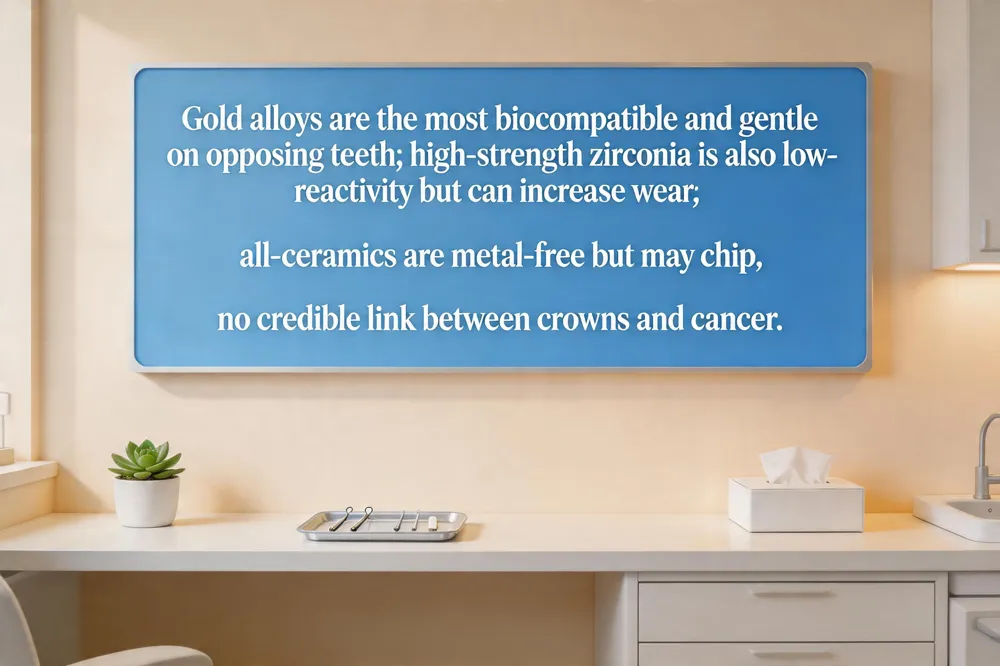 When choosing a crown, biocompatibility and long‑term health are top priorities. Gold alloy crowns are widely regarded as the healthiest option because the inert metal causes minimal wear on opposing teeth, is chemically stable, and can last decades even in high‑stress molar sites. High‑strength zirconia follows closely, offering excellent fracture resistance, tooth‑colored aesthetics, and a low‑reactivity profile, though its hardness can increase wear on the opposite bite. All‑ceramic materials such as lithium‑disilicate (E‑max) and porcelain are also metal‑free and well‑tolerated, but they are more prone to chipping under heavy chewing forces. Porcelain‑fused‑to‑metal (PFM) crowns combine strength and appearance but may release metal ions that trigger sensitivities in some patients. Regarding cancer risk, current scientific evidence shows no credible link between dental crowns and cancer. All FDA‑approved crown materials—porcelain, ceramic, zirconia, gold, and other metal alloys—are rigorously tested for biocompatibility and contain no known carcinogens. Proper oral hygiene and regular dental check‑ups remain essential for overall oral health, but the crowns themselves do not increase cancer risk.
Cost and Insurance Landscape
 Dental crown pricing varies widely by material, location, and insurance coverage. The most affordable option is a composite resin crown, typically $150‑$300 per tooth, used for short‑term protection. Gold crowns are the most expensive, ranging $1,200‑$2,500, while all‑porcelain crowns fall between $900‑$1,800. In Paterson, NJ, crowns generally cost $800‑$2,500 depending on material—PFM crowns $800‑$1,400, all‑ceramic or zirconia $1,000‑$2,000, and gold or full‑metal $900‑$2,500. Dental insurance usually covers about 50 % of medically necessary crowns, reducing out‑of‑pocket expenses after benefits. Common crown types and their approximate costs are: all‑metal $800‑$1,200, gold alloy $1,200‑$2,500, PFM $900‑$1,500, all‑ceramic (zirconia or lithium disilicate) $1,100‑$2,000, and temporary composite $150‑$300. Additional fees for exams, X‑rays, or core buildup may add $100‑$300.
Material Benefits and Strength
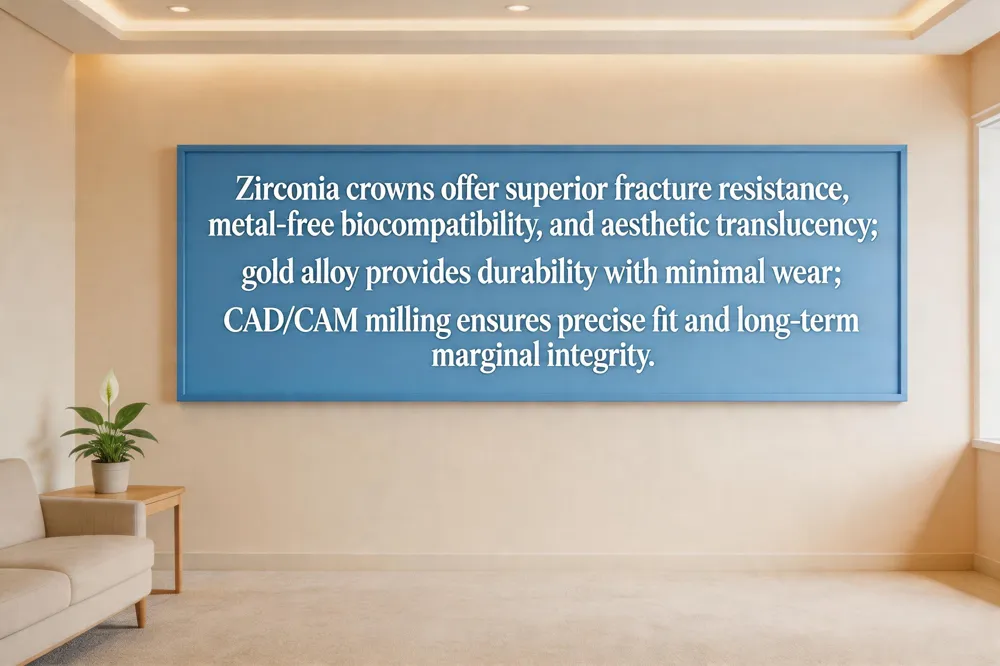 Zirconia crowns are strong and fracture‑resistant, making them ideal for both front and back teeth and for patients who grind or have a heavy bite. Their metal‑free, biocompatible ceramic composition eliminates allergic reactions and avoids unsightly dark margins, while high‑translucency formulations mimic natural tooth color and shine. Tooth reduction preserves more of the patient’s natural structure, and CAD/CAM digital milling provides a precise fit with excellent marginal integrity. With Proper oral hygiene, zirconia restorations can last decades. For molar restorations, the most reliable choice is a high‑strength zirconia crown, which offers unparalleled fracture resistance and a tooth‑colored appearance. Gold alloy crowns also provide durability and minimal wear on opposing teeth, but are less aesthetic. When aesthetics are a priority, a porcelain‑fused‑to‑metal or monolithic zirconia crown can balance beauty and function.
Ceramic, Porcelain, Types & Disadvantages
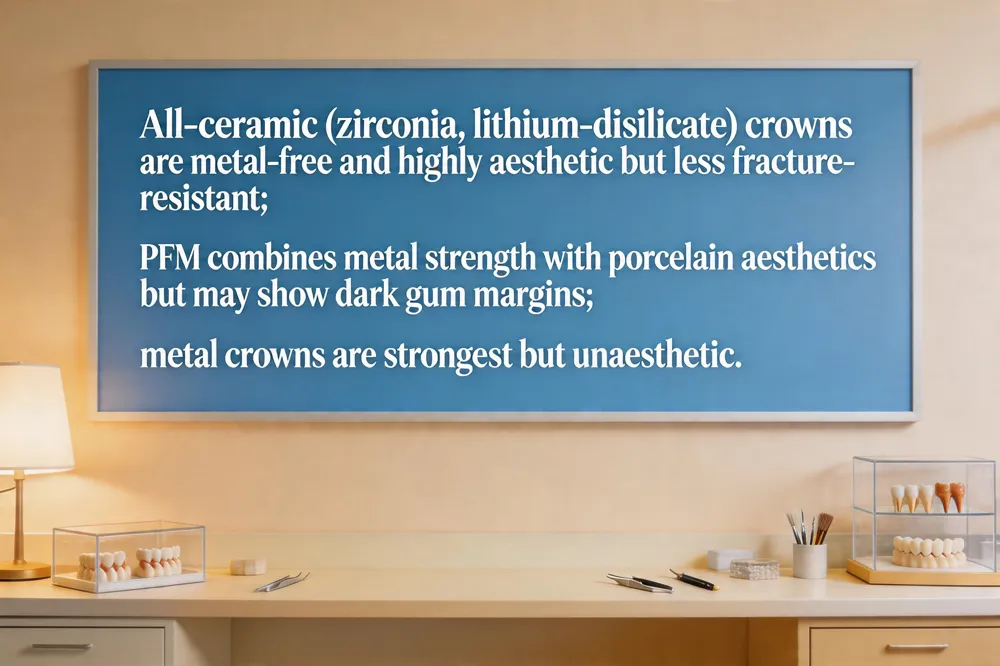 Ceramic crowns are entirely metal‑free, typically fabricated from high‑strength Zirconia crowns or lithium disilicate. Their full‑ceramic composition gives excellent translucency, mimics natural enamel, and usually requires less tooth reduction, making them kinder to the underlying tooth. Porcelain crowns, most often porcelain‑fused‑to‑metal (PFM), contain a metal substructure that boosts fracture resistance but can create a dark gum‑line margin and block light transmission, reducing aesthetic appeal.
When selecting a material for molars, durability and resistance to heavy chewing forces dominate the decision. Zirconia crowns and metal alloy crowns (including gold) are preferred for posterior teeth because they resist chipping and wear, while all‑ceramic options may be more prone to fracture under high bite pressures.
The five principal crown types are: (1) all‑resin (composite) crowns – low cost, limited durability; (2) all‑porcelain (all‑ceramic) crowns – superior aesthetics but less strength; (3) PFM crowns – a metal core with a porcelain overlay; (4) metal crowns – gold or base‑metal alloys, longest‑lasting and gentle on opposing teeth; and (5) zirconia crowns – high‑strength, metal‑free, suitable for both front and back teeth.
Disadvantages common to all crowns include irreversible tooth reduction, possible post‑procedure sensitivity, higher expense (especially for premium ceramics), and the risk of loosening, fracture, or metal allergy reactions. Regular oral hygiene and professional check‑ups are essential to mitigate these issues.
Procedure, Care & Long‑Term Performance
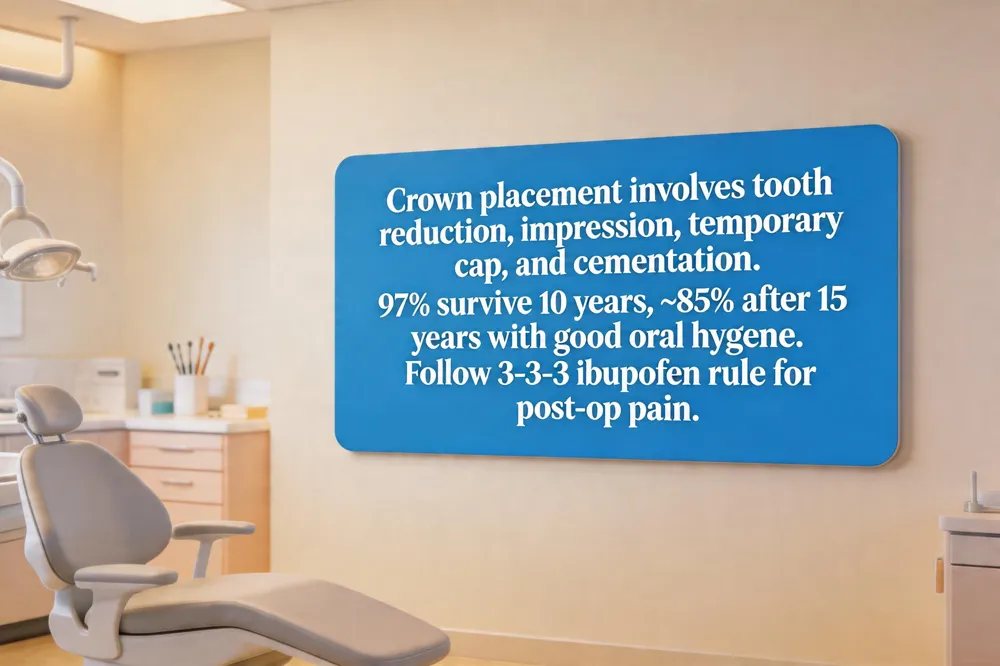 Placing a dental crown starts with an exam, X‑rays, and local anesthesia. Decay is removed and the tooth reshaped, trimming an amount of enamel. An impression or scan is taken and sent to a lab—or milled chairside with CAD/CAM—while a temporary cap protects the tooth. When the crown is ready, the temporary is removed, the new crown is tried in, adjusted for fit and bite, then cemented. A ‘tooth cap’ is a provisional restoration or partial onlay that protects the tooth temporarily, while a crown fully encircles it. The 3‑3‑3 rule for post‑op pain advises 200 mg ibuprofen three times daily, every three hours, for up to three days. Studies show about 97 % of crowns work after ten years, with roughly 85 % still good after fifteen years when hygiene is maintained.
Lifestyle Matching and Patient Preferences
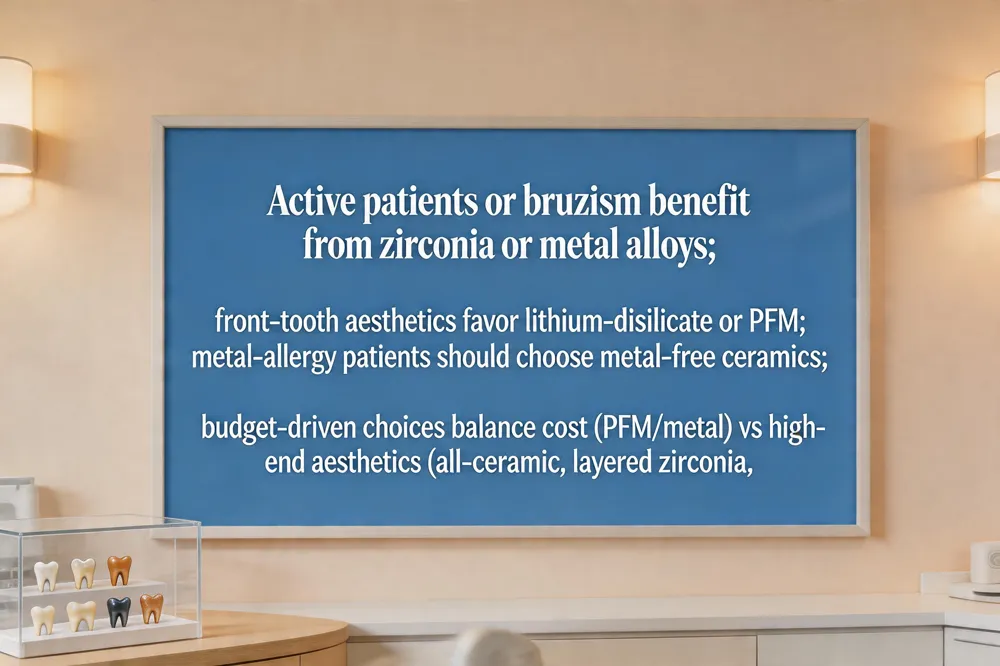 Lifestyle matching & Active lifestyle recommendations
Patients who grind teeth, play high‑impact sports, or have a heavy bite benefit from zirconia or metal‑alloy crowns because of their fracture‑resistance and low chip risk.
Aesthetic preferences
Front‑tooth restorations favor all‑ceramic (lithium disilicate) or porcelain‑fused‑to‑metal crowns that mimic enamel translucency, while posterior teeth may prioritize strength over appearance.
Metal sensitivities
Those with known nickel or other metal allergies should choose metal‑free options such as all‑ceramic or zirconia crowns to avoid allergic reactions.
Budget vs aesthetics
PFM and metal‑alloy crowns offer a cost‑effective balance of durability and decent looks; however, all‑ceramic and layered zirconia crowns, though pricier, deliver superior aesthetics for patients willing to invest. Selecting the right crown material thus aligns material lifestyle, visual goals, allergy concerns, and financial considerations.
Conclusion
Key takeaways: Dental crowns restore function and aesthetics, but the optimal material depends on tooth location, bite forces, goals, budget, and metal sensitivities. All‑ceramic (including lithium disilicate) crowns give the natural look for front teeth; zirconia and metal alloys provide superior strength for posterior teeth or bruxism; PFM offers a compromise, while gold crowns excel in durability and minimal wear on opposing teeth.
Personalized material selection: Exam lets dentist match crown type to patient’s lifestyle—athletes or grinders often benefit from zirconia or metal; professionals who interact frequently may prefer all‑ceramic or layered zirconia for smile; budget‑conscious patients might choose PFM or metal alloy crowns that balance cost and performance.
Next steps for patients: Schedule a consultation, discuss allergies, request shade‑matching, consider nightguard if grinding, and commit to brushing, flossing, and check‑ups to maximize crown longevity.