Introduction to Same-Day Crown Technology
Revolutionizing Restorative Dentistry with Same-Day Crowns
Same-day crown technology represents a significant advancement in dental care, integrating cutting-edge computer-aided design and manufacturing (CAD/CAM) systems to design, fabricate, and place dental crowns within a single appointment. This innovative approach replaces traditional multi-visit procedures with a streamlined experience that enhances precision and patient comfort.
The Role of CAD/CAM in Modern Dentistry
At the heart of this innovation is CAD/CAM technology, which utilizes digital scanning to create detailed 3D models of the teeth. Dentists use specialized software to custom-design crowns with exceptional accuracy, preserving natural tooth structure and ensuring an optimal fit. On-site milling machines then carve crowns from high-quality ceramic or zirconia materials in under an hour, enabling immediate placement.
Benefits for Patients
This technology offers significant advantages for patients, including reduced treatment time, elimination of temporary crowns, and avoidance of uncomfortable traditional impressions. Most procedures complete within 1 to 2 hours, making it ideal for busy individuals seeking durable, natural-looking restorations without disrupting daily routines. Additionally, the prompt placement protects teeth from further damage and reduces the risks associated with longer treatment spans.
Overall, same-day crown technology represents a fusion of convenience, precision, and aesthetics, setting a new standard for restorative dental care.
From Multiple Visits to One: Appointment Efficiency in Dental Crowns
How many appointments are commonly required for a traditional crown?
Typically, getting a traditional dental crown requires two visits. The first appointment involves tooth preparation, removal of decay, and taking impressions or digital scans, followed by placement of a temporary crown to protect the tooth during fabrication.
Traditional crown appointment process
After the initial appointment, the impressions are sent to a dental lab where skilled technicians craft the permanent crown over several days or weeks. During the second visit, the temporary crown is removed, and the permanent crown is carefully fitted and bonded.
Number of visits for lab-made crowns
This multi-visit process contrasts with newer technologies that consolidate procedures, requiring more patient time overall and often causing inconvenience due to multiple dental office trips.
Comparison with same-day crown appointments
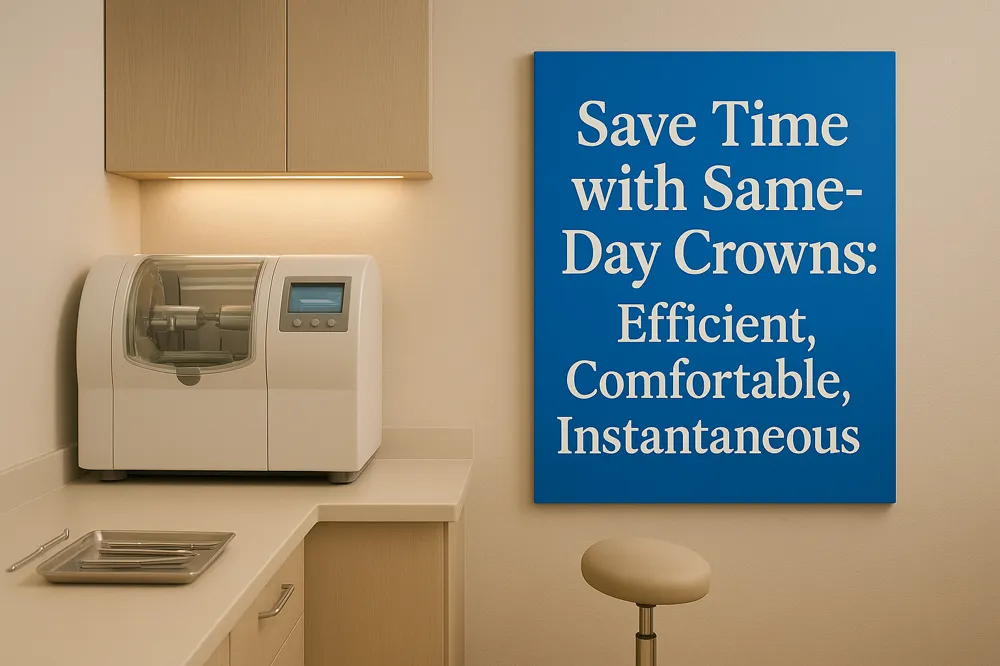
Same-day crowns utilize advanced CAD/CAM technology in dental crowns to design, mill, and place the crown in a single session, often lasting 1 to 2 hours. Digital impressions replace messy molds, and in-office milling eliminates wait times for lab fabrication.
Impact on patient time and convenience
By reducing the number of visits from two or more to one, same-day crowns significantly enhance patient convenience. They eliminate the need for uncomfortable temporary crowns, reduce treatment duration, and fit well within busy schedules, making restorative care more accessible and comfortable.
The Same-Day Crown Procedure: How It Works and Its Advantages
Step-by-Step Process of Same-Day Crowns
The same-day crown process begins with the dentist preparing the damaged tooth by removing decay or old material. Next, a digital scanner captures a detailed 3D image of the tooth and surrounding gums, replacing traditional dental impressions. This digital impression is then processed with CAD/CAM technology in dental crowns, allowing the dentist to design a precisely fitting crown tailored to the patient's natural tooth shape and color.
Once the design is finalized, an in-office milling machine carves the crown from a solid block of ceramic or zirconia, usually within 20 to 30 minutes. After careful finishing, the crown is bonded directly onto the tooth during the same appointment.
Use of Digital Scanners and CAD/CAM Systems
Modern technology like CEREC and Planmeca FIT digital impression systems facilitates this streamlined approach. The digital scanner ensures accurate, comfortable impressions, while the CAD/CAM dental crowns software optimizes crown fit and aesthetics. This integration significantly reduces human error and provides a durable, natural-looking restoration.
Materials Used and Their Aesthetic Qualities
Same-day crowns are crafted from high-quality ceramic materials such as zirconia or lithium disilicate crowns, known for their strength, translucency, and close resemblance to natural enamel. These materials allow crowns to withstand biting forces and mimic the natural appearance of teeth, ensuring both functional and cosmetic satisfaction.
Advantages Such as Precision, No Temporary Crown, and Time Savings
One major advantage of same-day crowns is eliminating the need for temporary crowns in traditional procedures, which can be uncomfortable or prone to dislodgement. Completing the entire procedure in one visit means fewer appointments and less disruption to patients’ busy schedules.
The digital workflow offers enhanced precision and a better fit, leading to increased comfort and greater longevity. Patients benefit from immediate crown placement, reducing sensitivity and risk of decay associated with delays. Overall, same-day crowns provide a faster, more comfortable, and aesthetically pleasing option for dental restoration without sacrificing quality.
Durability and Fit: Comparing Same-Day Crowns to Traditional Crowns
How do material choices affect durability and fit in same-day vs. traditional crowns?
Traditional crowns are made from a variety of materials including metal, porcelain-fused-to-metal, all-ceramic, zirconia, and gold. These options allow for durability and aesthetics to be balanced according to the tooth’s location and function. For example, metal crowns provide exceptional strength, making them suitable for molars under heavy chewing forces. Porcelain-fused-to-metal crowns offer both durability and aesthetic appeal through customized layering. (Traditional dental crown materials)
Same-day crowns, primarily fabricated from high-quality ceramic or zirconia blocks using CAD/CAM technology, focus on convenience and aesthetics. However, their material selection is somewhat limited compared to traditional lab crowns, which can affect how well they withstand long-term use, especially in high-pressure areas.
What differences exist in fit accuracy and customization?
Traditional crowns benefit from the lost wax and metal casting laboratory methods, resulting in a highly precise internal fit. Conventional impressions provide detailed captures of the tooth and surrounding gum tissue, particularly vital in complex cases involving fractures beneath the gumline.
Same-day crowns use digital intraoral scanners for impressions, enabling a faster and more comfortable process. While digital scanning is precise and improves patient experience, it may not always match the nuanced fit achieved by traditional methods, potentially leading to a less exact fit and requiring more tooth structure removal. (digital scanning in dentistry)
How do longevity and durability compare between the two crown types?
Traditional crowns generally offer superior longevity due to their diverse material options and fabrication techniques, often lasting 15 to 20 years or more with proper care. Their strength also makes them appropriate for heavy chewing forces. (Durability of traditional dental crowns
Same-day crowns are durable and often last between 10 to 15 years, contingent on good oral hygiene and care. Their ceramic construction provides a natural look but may be more susceptible to chipping or wear over time, especially in posterior teeth. (Durability of Same Day Crowns)
Which clinical scenarios favor same-day crowns over traditional lab crowns?
Same-day crowns are ideal for patients with cracked, chipped, or moderately worn teeth and those seeking cosmetic improvements or quick restorative solutions. They suit straightforward cases where immediate treatment is preferred, such as after root canal therapy or minor cosmetic restoration.
Conversely, traditional crowns serve best in complex clinical situations requiring enhanced durability, extensive tooth structure replacement, or cases where precise marginal fit is critical. They are also favorable when a broader range of materials is necessary to meet specific functional or aesthetic needs. (Conventional crowns vs. same-day crowns
| Aspect | Same-Day Crowns | Traditional Crowns | Notes |
|---|---|---|---|
| Material Options | Mostly ceramic, zirconia (Ceramic crowns | Ceramic, metal, porcelain-fused-to-metal (Traditional dental crown materials | Traditional offers wider choices |
| Fit Precision | Good but potentially less exact (digital scanning in dentistry | Very precise due to lab fabrication (Dental impressions accuracy | Lab impressions often more accurate |
| Durability | 10–15 years with proper care (Durability of Same Day Crowns | 15–20+ years depending on material (Durability of traditional dental crowns | Traditional crowns tend to last longer |
| Procedure Time | Single appointment (1–2 hours) (Same-day crowns technology | Multiple appointments over weeks (Two-visit process for conventional crowns | Same-day is faster and more convenient |
| Ideal Candidates | Moderate damage, cosmetic needs (Candidates for same-day crowns | Extensive damage, complex cases (Choosing the right type of crown | Material and fit needs guide choice |
| Tooth Structure Removal | Often less removal needed (less removal of natural tooth structure) | May require more removal (tooth preparation for crowns | Digital design conserves tooth structure |
Both crown types offer significant benefits. The best choice depends on the patient’s oral health needs, aesthetic preferences, and the clinical judgment of the dental professional.
Technological Innovations Driving Same-Day Crowns
Role of CAD/CAM and CEREC Systems
Same-day crowns are made possible thanks to advanced CAD/CAM technology, including popular systems such as CEREC. These tools allow dentists to digitally scan the mouth, design a custom crown with specialized software, and mill it onsite within about 20 to 30 minutes. This innovation eliminates multiple dental visits and the wait times associated with lab fabrication, streamlining the treatment process.
Digital Impressions Versus Traditional Molds
Digital impressions replace traditional molds by using intraoral scanners to create precise 3D images of teeth and gums. This approach is more comfortable for patients and yields highly accurate data that enhances crown fit and reduces the need for adjustments. Unlike traditional putty impressions, digital scans eliminate mess and gag reflex discomfort, improving the patient experience.
Materials Like Zirconia and Lithium Disilicate
Same-day crowns are typically milled from durable ceramic materials such as zirconia and lithium disilicate. Zirconia offers exceptional strength, biocompatibility, and a natural appearance due to its translucency and multilayered structure. Lithium disilicate boasts excellent aesthetic qualities, closely resembling natural enamel. These materials ensure long-lasting restorations that withstand normal chewing forces while maintaining pleasing aesthetics.
Future Trends Such as AI-Driven Design and 3D Printing
Emerging advances include AI-driven crown design software, which optimizes the crown’s fit, shape, and function by reducing errors and required adjustments. Alongside this, 3D printing technology is becoming integrated into dental practices, producing highly precise crowns and improving fabrication efficiency. These innovations promise even faster, more comfortable, and personalized dental restorative care in the near future.
Patient Experience and Accessibility in Modern Dental Practices
Comfort and Convenience Benefits of Same-Day Crowns
Same-day crowns represent a significant advancement in patient-centered dental care. By utilizing CAD/CAM technology, the entire crown procedure—from tooth preparation to final placement—can be completed in a single appointment, typically lasting about 60 to 90 minutes. This rapid process reduces disruption to patients’ daily schedules, offering a more convenient and less stressful experience compared to traditional multi-visit crown treatments.
Reduction of Discomfort: No Temporary Crowns or Messy Impressions
Traditional crown procedures often require temporary crowns and messy putty impressions, which can cause discomfort and inconvenience. Same-day crowns eliminate the need for temporary restorations, reducing risks such as temporary crown dislodgement and sensitivity. Additionally, intraoral digital scanners replace uncomfortable impression trays, enhancing patient comfort while increasing precision in crown fitting.
Availability of Technology in US Dental Offices
Approximately 53% of dental offices in the United States have adopted digital scanning and in-office milling technologies enabling same-day crowns. Leading practices like Oxford Dental modern practices and Kraner Family Dentistry's same-day crown services utilize these innovations to provide quick and high-quality restorative care. This widespread integration increases accessibility, making modern crown treatments available to a broad patient base across the country.
Insurance Considerations and Treatment Costs
Insurance coverage for same-day crowns typically parallels that of traditional crowns, making this advanced option affordable for many patients. Although some advanced technologies may present higher upfront costs, the reduction in required visits and elimination of temporary crowns often contribute to overall cost savings. Patients are encouraged to consult with their dental providers and insurance companies to determine coverage specifics.
How long does a same day crown procedure take?
A same-day crown procedure usually takes about 60 to 90 minutes in one appointment. During this time, your dentist uses advanced CEREC same-day dental crowns in Arlington technology to prepare the damaged tooth, capture a digital scan, design the crown, mill it from high-quality ceramic, and securely place it—all without needing temporary crowns or follow-up visits. This streamlined treatment delivers durable, natural-looking restorations with minimal discomfort and maximum efficiency.
Same-Day Crowns: Transforming the Future of Dental Care
Time-Saving Benefits of Same-Day Crowns
Same-day crowns revolutionize dental care by completing the entire crown procedure—from digital scanning to milling and placement—in just one appointment, typically within 1 to 2 hours. This approach eliminates multiple dental visits and the need for temporary crowns, offering a more convenient and comfortable experience, especially for busy patients.
Durability Meets Convenience
Crafted from high-quality ceramic and zirconia materials, same-day crowns provide a strong, natural-looking restoration. While traditional lab-made crowns may offer slightly better fit and longevity in complex cases, modern milling technology ensures these in-office crowns can last 10 to 15 years with proper care, striking a balance between durability and patient convenience.
Accessibility and Patient Satisfaction
With over half of dental offices in the U.S. adopting digital scanning and CAD/CAM technology, same-day crowns have become widely available. Patients report high satisfaction due to fewer appointments, precise fit, and aesthetics that closely match natural teeth, making same-day crowns a transformative option in restorative dentistry.