A New Era of Discreet Orthodontics
SureSmile’s digital workflow begins with a high‑resolution 3‑D intra‑oral scan that replaces messy impressions and creates a precise virtual model of the dentition. Advanced CAD/CAM software then simulates the entire treatment, allowing orthodontists to design custom aligners or robotically bent wires that deliver calibrated forces. Because each appliance is molded to the exact shape of the teeth, pressure is gentle, reducing gum irritation and making daily wear comfortable for up to 20‑22 hours. The clear, BPA‑free thermoplastic matches the refractive index of enamel, giving a near‑invisible look that preserves confidence while achieving accurate, predictable results for patients of all ages.
Digital Imaging, Virtual Planning, and Software Power
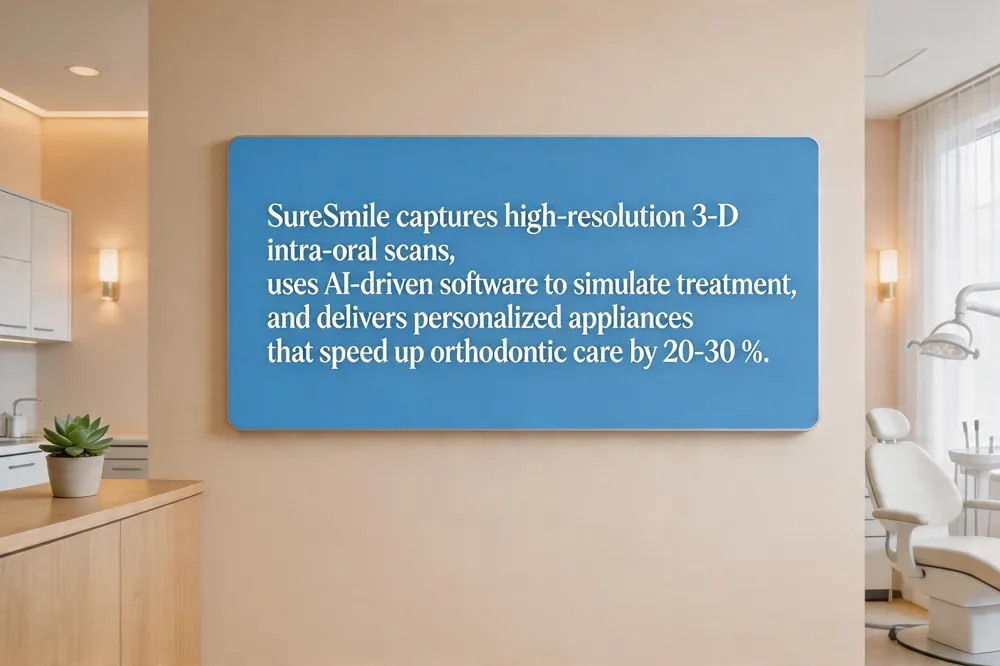 SureSmile® technology begins with a high‑resolution 3‑D intra‑oral scan, captured by an OraScanner® or CBCT, that creates a precise virtual model of each tooth and the bite. This digital impression eliminates messy impressions and provides the foundation for a comprehensive treatment simulation. Using proprietary software, orthodontists can map every incremental tooth movement, generate a step‑by‑step sequence, and offer patients a virtual preview of the final smile before any hardware is fabricated. The system’s calibrated movements are then delivered by robotically bent, shape‑memory‑alloy archwires or custom clear aligners made from BPA‑free Essix ACE™ plastic, ensuring gentle, targeted forces and often reducing overall treatment time by 20‑30 % compared with conventional braces.
What is SureSmile technology? SureSmile combines 3‑D scanning, AI‑driven planning, and robotic wire bending to produce personalized orthodontic appliances that move multiple teeth simultaneously with high accuracy.
SureSmile vs Invisalign Both are clear‑aligner systems, but SureSmile adds robotic wire fabrication and often treats complex cases in 6‑12 months, whereas Invisalign relies on iTero scans and typically requires 12‑18 months.
SureSmile invisible braces technology reviews Clinical data show 25‑40 % faster treatment and 10‑18 % better outcome scores versus traditional methods, with most patients reporting a secure, comfortable fit and fewer refinements.
SureSmile invisible braces technology cost The platform is generally more affordable than many competitors, with lab fees lower than Invisalign and financing options such as HSA/FSA or insurance coverage making it accessible for a wide range of patients.
Custom Aligners, Materials, and Near‑Invisible Aesthetics
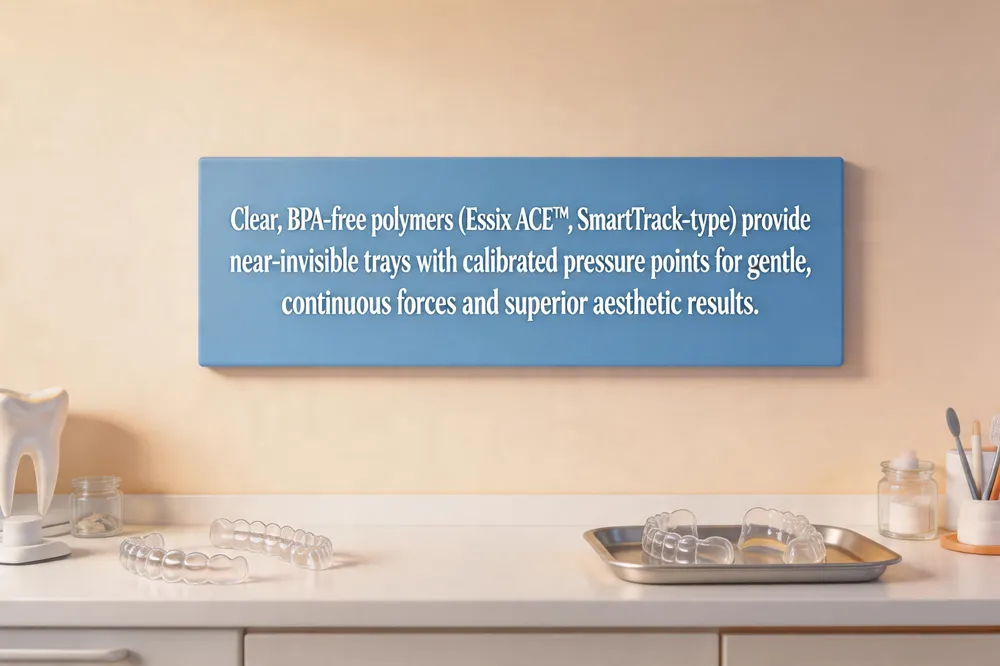 Clear thermoplastic polymers such as BPA‑free polyurethane, Essix ACE™, and the SmartTrack‑type material used by SureSmile and Invisalign are engineered for high optical clarity and durability. Their refractive index matches natural enamel, giving the trays a near‑invisible look while delivering gentle, continuous forces. SmartForce technology embeds calibrated pressure points or variable thicknesses into each aligner, allowing precise control of torque, rotation, extrusion and other complex movements without bulky brackets.
Clear aligners cost – In the U.S. prices range $1,800‑$8,100; our Paterson practice offers $3,000‑$5,500 with insurance, FSA/HSA and CareCredit options, plus a free whitening kit and retainers.
Clear aligners vs Invisalign – All Invisalign trays are clear aligners, but “clear aligners” is a broader category. Invisalign uses patented SmartTrack material and a proprietary ClinCheck® software, while other brands may employ different plastics and simpler planning tools.
Close aligners near me – Our Paterson, NJ office provides custom clear‑aligner therapy (Invisalign and SureSmile) with digital scans, virtual previews, flexible financing and multilingual support.
Invisible braces for adults cost – Typically $4,000‑$7,500; many offices break the fee into $200‑$250 monthly payments and accept orthodontic insurance.
Best invisible braces – Professionally supervised clear‑aligner systems (e.g., Invisalign, SureSmile) offer the safest, most predictable results compared with direct‑to‑consumer kits.
SureSmile invisible braces technology price – Generally $2,500‑$5,000 for a full course, with financing and insurance options; additional fees may apply for extended treatment.
Smile Direct Club – The former teledentistry aligner provider filed for bankruptcy in 2023; patients now seek care from licensed dentists offering similar clear‑aligner options.
Robotic Wire Bending, Force Precision, and Comfort
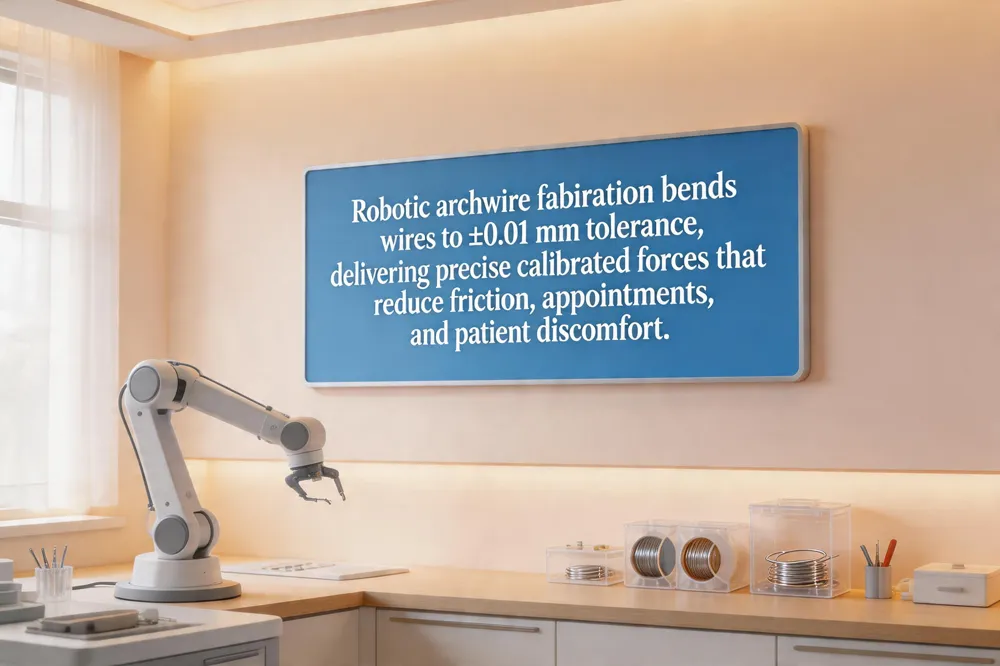 SureSmile’s robotic archwire fabrication creates custom‑shaped wires that match the exact force vectors planned in the digital treatment simulation. The robot bends each archwire to a tolerance of ±0.01 mm, delivering precise, calibrated forces that move teeth gently while minimizing excess pressure. This accuracy reduces the friction traditionally seen with hand‑bent wires, especially when paired with self‑ligating brackets that use a built‑in clip instead of elastic ties.
Self‑ligating braces employ a low‑profile clip to hold the wire, cutting friction and allowing smoother tooth movement. The design shortens appointments, reduces the need for elastic replacements, and improves patient comfort and oral hygiene.
SureSmile vs Invisalign – Both are clear‑aligner systems, but SureSmile integrates a 3‑D scanner with robotic wire bending, often achieving complex corrections in 6‑12 months versus Invisalign’s typical 12‑18 months. Costs are comparable, with SureSmile generally a bit lower, and materials differ (Essix Ace vs SmartTrack).
SureSmile invisible braces technology reviews – Clinical data show a 25‑40 % reduction in overall treatment time and 10‑18 % higher outcome scores versus conventional methods. Patients report a secure, comfortable fit, fewer refinements, and tooth movements within 0.5 mm and 2° of the virtual plan, making the system an efficient, aesthetic choice for mild‑to‑moderate cases.
Treatment Workflow, Compliance, and Patient Management
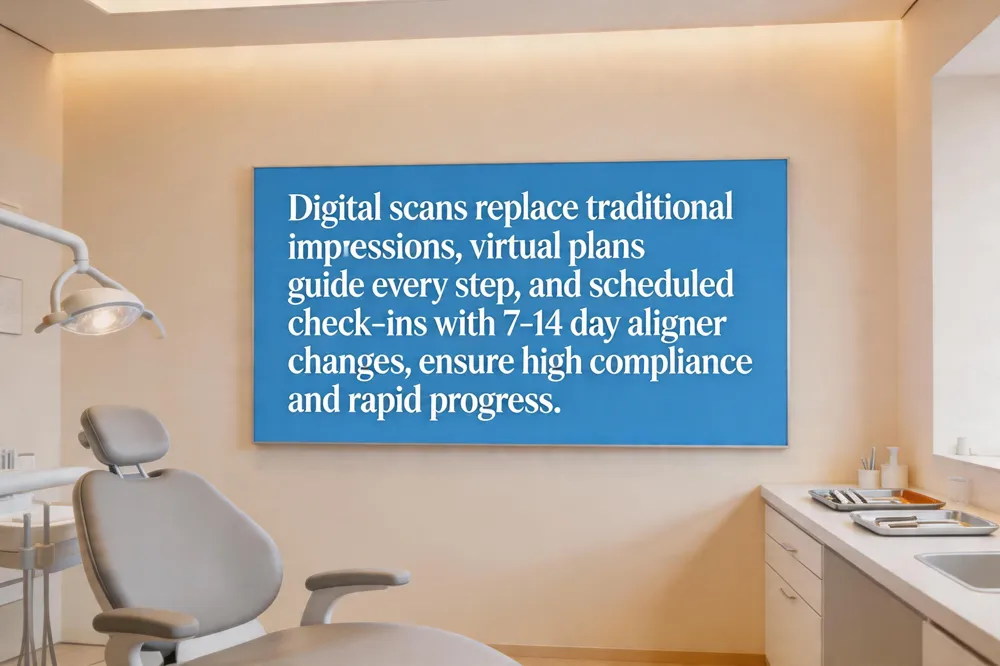 Digital scanning and impressions: SureSmile starts with a high‑resolution intra‑oral scan that creates an accurate 3‑D model of the patient’s teeth, removing the need for traditional putty impressions. This model is imported into proprietary treatment‑planning software, which simulates the entire tooth‑movement sequence before any aligner or wire is fabricated.
Appointment schedule: After the scan, the orthodontist reviews the virtual plan and schedules the initial bonding visit. Because the system uses robotically bent wires or custom clear aligners, patients experience fewer in‑office adjustments. Aligners are typically changed every 7–14 days, and check‑ins are set for every 4–6 weeks to verify fit and receive the next set.
Progress monitoring: Ongoing digital scans are compared to the original plan, allowing early detection of deviations. The software displays predicted versus actual tooth positions, enabling timely refinements.
How to put braces on teeth step by step
- Clean and dry each tooth. 2. Apply bonding agent to bracket backs, position, and cure with a blue light. 3. Place metal bands on back molars for anchorage. 4. Thread archwire through bracket slots. 5. Secure wire with elastic ligatures or self‑ligating clips. 6. Trim excess wire and verify bracket placement. 7. Perform a bite‑check, give hygiene instructions, and schedule the first adjustment.
What foods should I avoid with SureSmile? No food restrictions; simply remove the aligners to eat and brush before reinserting.
Why do dentists not recommend Invisalign? Complex cases (severe crowding, deep bites, active gum disease) often require stronger forces than aligners can provide; strict compliance is essential, and costs can be higher.
Is $6,000 normal for Invisalign? Yes, it falls within the typical $3,000‑$7,000 U.S. range, varying by case complexity, location, and insurance coverage.
Cost, Financing, and Insurance Overview
 Clear aligners range $1,800–$8,100 nationally; our Paterson price $3,000–$5,500 and includes a whitening kit, retainers and virtual check‑ins.
Braces cost $3,000–$10,000: metal $2,500–$7,000, ceramic/clear $4,480–$11,300, lingual $7,300–$17,400. Insurance may reduce out‑of‑pocket to $1,000–$3,000; CareCredit, HSA/FSA and payment plans are common.
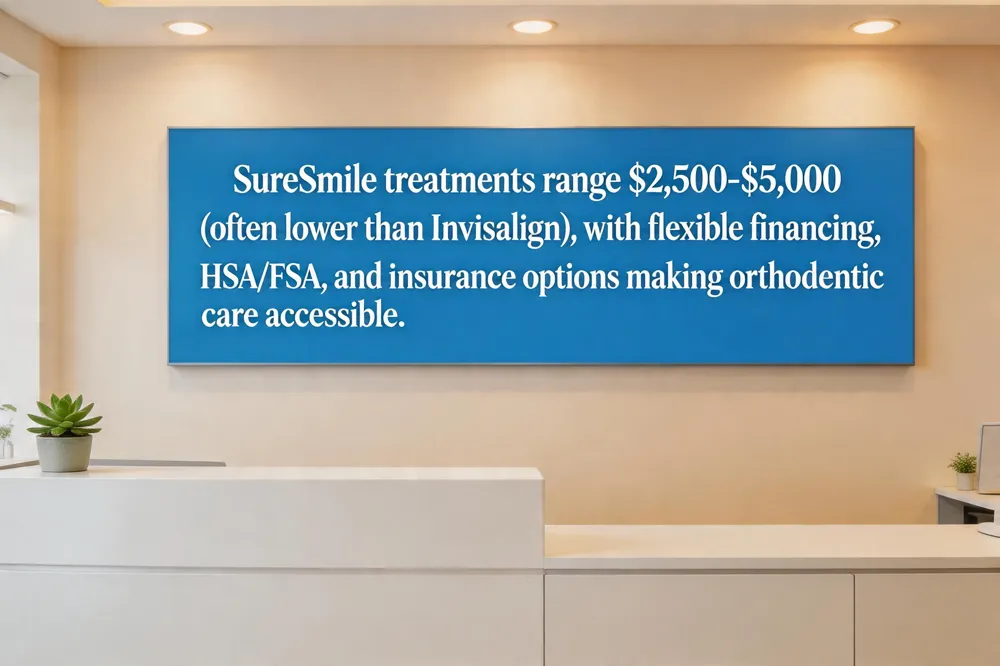
SureSmile invisible‑brace treatment typically $2,500–$5,000 for a full series; extra fees only if treatment exceeds three years. Financing, insurance billing and HSA/FSA reimbursement are available.
Smile Direct Club closed in Dec 2023; patients now use professionally supervised clear‑aligner options.
The best invisible braces are dentist‑prescribed systems like Invisalign or SureSmile, offering custom trays, regular monitoring and proven safety.
Adult invisible braces cost $4,000–$7,500; many offices allow $200‑$250 monthly payments and accept orthodontic insurance.
Traditional expanders work best before ages 16‑18; older patients may need MARPE or surgical expansion.
There is no upper age limit for braces—adults of any age can be treated if oral health is sound and confidence in your smile.
Why Choose SureSmiles at David Mayer DDS
David Mayer DDS leverages SureSmile’s cutting‑edge digital platform, which starts with a high‑resolution 3‑D intra‑oral scan and AI‑driven treatment simulation. Custom‑crafted, BPA‑free clear aligners and robotically bent archwires are fabricated with micron‑level precision, delivering gentle, predictable forces that often shorten treatment time. The practice prioritizes patient‑centered care: removable aligners allow normal eating and oral hygiene, financing options and HSA/FSA eligibility make treatment affordable, and regular digital check‑ins reduce office visits. Multilingual support in English, Spanish, and Arabic ensures clear communication for Paterson’s diverse community, fostering confidence and comfort throughout the orthodontic journey. Each step is tracked with real‑time imaging, keeping patients motivated.