Introduction
The Multi-Visit Crown Journey
A traditional dental crown is a custom-fitted cap that restores a tooth damaged by decay, cracks, or extensive wear. For decades, this restorative procedure has followed a multi-step, multi-visit protocol. The process typically begins with an initial consultation to assess the need for a crown. During the first major appointment, the dentist prepares the tooth by removing decay and shaping it to fit the future crown.
Following preparation, the dentist takes a physical impression of the tooth and surrounding area using a tray filled with a putty-like material. This impression is then sent to an off-site dental laboratory, where technicians use it to fabricate the permanent crown. To protect the prepared tooth during the several weeks it takes the lab to create the crown, the dentist places a temporary crown using a temporary adhesive.
Patients return for a second appointment weeks later to have the temporary crown removed. The dentist then tries in the permanent crown from the lab, makes any necessary adjustments, and finally bonds it into place with a permanent cement. This entire cycle requires significant coordination from the patient, involving at least two lengthy appointments separated by weeks of waiting.
Challenges of the Conventional Approach
While effective, the traditional method presents several logistical and comfort challenges for patients. The need for multiple appointments can be difficult to manage around work, school, or family responsibilities. Temporary crowns, while necessary, are often less comfortable and less stable than permanent ones; they can feel bulky, may not fit perfectly, and are prone to coming loose or falling out.
Furthermore, the physical impression process can be unpleasant for many, potentially triggering a gag reflex. The extended waiting period also means the tooth remains vulnerable beneath the temporary restoration, with a small risk of further decay or sensitivity. For individuals with demanding schedules or those who live far from their dental office, these factors can make seeking necessary dental care a significant source of stress and inconvenience.
A Streamlined, Single-Visit Solution
In contrast, same-day crown technology represents a significant evolution in restorative dentistry. This approach utilizes advanced computer-aided design and manufacturing (CAD/CAM) systems to complete the entire crown procedure—from preparation to placement of the permanent restoration—in a single appointment, often within about two hours.
The core technology behind this efficiency is frequently referred to as CEREC, which stands for Chairside Economical Restoration of Esthetic Ceramics. It integrates digital scanning, computer-aided design, and in-office milling to create a high-quality, custom ceramic crown while the patient waits. This paradigm shift transforms a weeks-long process into a convenient, same-day experience, aligning with the needs of modern, busy lifestyles.
Aligning Technology with Patient-Centered Care
This innovative technology is more than just a technical advancement; it is a fundamental shift towards more compassionate and efficient patient care. By condensing treatment into one visit, it significantly reduces the disruption to a patient's daily life, minimizing time away from work or family obligations. The elimination of temporary crowns and physical impressions directly addresses common sources of patient anxiety and discomfort.
For our practice, adopting this technology is a direct reflection of our commitment to providing exceptional, personalized care. We believe in leveraging advancements that prioritize your time, comfort, and overall well-being. Same-day crown technology is a prime example of how we integrate modern solutions to uphold our ethos of making high-quality dental care accessible, efficient, and as stress-free as possible, ensuring you can maintain your oral health without it overwhelming your schedule.
The Single-Visit Solution: How Same-Day Crowns Work
Can a Tooth Crown Be Done in a Single Day?
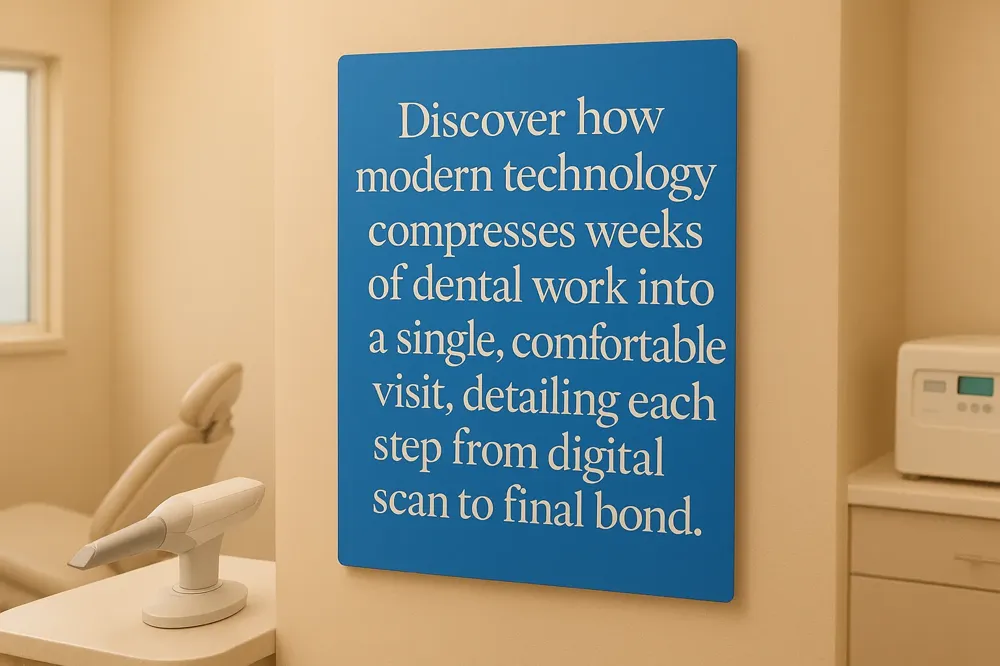
Yes, a dental crown can be fully completed in a single day using CEREC CAD/CAM technology. This same-day process transforms a traditional procedure that normally takes multiple weeks into a streamlined experience. You arrive for your appointment, and within about two hours, you leave with a permanent, custom-crafted ceramic crown bonded to your tooth.
This advancement eliminates the need for a temporary crown and the second appointment required in conventional methods. It provides an immediate, durable restoration for teeth damaged by decay, cracks, or chips. The final result is a strong, natural-looking crown designed to last for many years with proper oral hygiene.
A Step-by-Step Guide to the Same-Day Procedure
The same-day crown process follows a clear, efficient sequence using digital technology.
Tooth Preparation: The procedure begins by numbing the area for comfort. Your dentist then prepares the damaged tooth by removing any decay and gently shaping it to create a stable base for the new crown. This step often involves less removal of healthy tooth structure compared to traditional methods.
Digital Scanning: Next, a 3D digital scanner is used to capture precise images of your prepared tooth and surrounding teeth. This replaces the uncomfortable, messy putty impressions used for traditional crowns. The scanner creates an exact virtual model in minutes, with no gagging or unpleasant taste.
Computer-Aided Design (CAD): The digital scan is uploaded to design software. Your dentist uses this program to custom-design your crown, carefully shaping it to match your natural bite, smile, and the contours of your neighboring teeth. You can often see a preview of the design on screen.
In-Office Milling (CAM): The digital design is sent to a compact milling machine in the dental office. This machine carves your permanent crown from a solid block of high-quality ceramic material. This milling process typically takes 15 to 30 minutes.
Final Fitting and Bonding: Once milled, the crown is checked for fit and color match. Your dentist makes any minor adjustments needed for a perfect, comfortable fit. Finally, the crown is permanently bonded to your prepared tooth with a strong dental adhesive bonding process for crowns. The area is polished, and your bite is verified.
How Does the Same-Day Crown Procedure Work?
The core of the same-day procedure is the integration of digital scanning, design, and on-site fabrication. After the tooth is prepared, an intraoral camera captures a detailed 3D model. This model is used to design a crown that fits your unique dental anatomy with precision. A milling machine then creates the physical crown from a ceramic block right in the treatment room.
This closed-loop, in-office system gives the dentist complete control over the entire process. It ensures accuracy and allows for immediate adjustments. The final step is the permanent placement of the crown, which is checked and cemented during the same visit. You receive a finished, functional restoration without leaving the chair.
Contrasting Methods: Same-Day vs. Traditional Crowns
The fundamental difference between same-day and traditional crowns lies in the workflow and technology used.
| Procedure Aspect | Same-Day (CEREC/CAD/CAM) Crowns | Traditional Crowns |
|---|---|---|
| Number of Visits | One appointment. | Minimum of two appointments, often weeks apart. |
| Impressions | Digital 3D scan; no messy materials. | Physical putty or paste impressions. |
| Fabrication | Milled in-office in about 15-30 minutes. | Made at an external dental laboratory. |
| Temporary Crown | Not needed; permanent crown placed immediately. | Required to protect tooth between visits. |
| Total Time to Completion | About 2 hours in a single day. | Several weeks from first visit to final placement. |
| Patient Convenience | High; minimizes schedule disruptions. | Lower; requires coordinating multiple appointments. |
Traditional crowns involve sending physical impressions to a lab, where a technician fabricates the crown over one to two weeks. During this waiting period, you must wear a temporary crown, which can be less comfortable and more prone to coming loose.
How Long Does a Same-Day Crown Procedure Take?
A complete same-day crown procedure typically takes between 90 minutes and two hours. This single, consolidated appointment includes all steps from tooth preparation through final bonding. The exact time can vary based on the tooth's location and the case's complexity.
The in-office milling is remarkably fast, usually completing in under 30 minutes. This efficiency means you can often schedule your treatment during a lunch break or between other daily commitments. You walk out with a fully restored, permanent crown, avoiding the need to return for a second visit weeks later.
Key Topics in Same-Day Crown Technology
| Topic | Description | Benefit to Patient |
|---|---|---|
| Digital Impressions | 3D scanning replaces putty molds. | More comfortable, precise, and faster. |
| CAD/CAM Design | Computer software creates custom crown shape. | Ensures perfect fit for bite and smile. |
| In-Office Milling | Machine carves crown from ceramic block on-site. | Eliminates lab wait time; immediate results. |
| Material Quality | Crowns made from durable, tooth-colored ceramic. | Provides natural aesthetics and long-term strength. |
| Elimination of Temporaries | Permanent crown placed in one visit. | Avoids discomfort and risk of a temporary failing. |
This integrated approach streamlines care, reduces patient anxiety, and delivers a high-quality restoration efficiently. It represents a significant shift towards more patient-centered, convenient dental solutions.
Weighing the Benefits: Convenience, Comfort, and Quality
Why do dentists commonly recommend crowns?
Dentists commonly recommend crowns to restore and protect teeth that are too damaged or decayed for a simple filling. A crown provides essential structural reinforcement for a weakened tooth, preventing fractures and allowing for normal chewing function. They are also the standard restoration to cover and complete a dental implant or a tooth that has had a root canal. Furthermore, crowns can significantly improve the appearance, shape, and alignment of a tooth. Ultimately, this versatile treatment is a long-lasting solution that preserves oral health, prevents further damage, and maintains the integrity of your smile.
A Modern Approach to Dental Restoration
same-day crowns, often made with CEREC technology, address the same fundamental dental needs as traditional crowns. However, they introduce a new level of patient-centered care through their advanced methodology. The core process integrates CAD/CAM technology in dentistry detailed explanation directly in the dental office. This shift transforms a multi-week, multi-visit procedure into a streamlined, single-appointment dental crowns experience.
The Pillars of Patient-Centered Care
This modern approach delivers a powerful combination of convenience, comfort, and high-quality results.
- single-visit dental crowns: The most significant advantage is completing the entire procedure in one appointment, typically lasting two to three hours. This eliminates the need for a second visit weeks later to place a permanent crown placement. For patients, it means no coordinating multiple appointments, less time away from work or family, and a swift return to normalcy.
- Enhanced Digital Comfort: The process replaces traditional putty impressions with a comfortable digital impressions for crowns. A small intraoral camera captures precise 3D images, avoiding the messy trays and potential gag reflex associated with conventional molds. This step is faster, more accurate, and contributes to a much more pleasant patient experience.
- Immediate and Lasting Protection: Because the permanent crown is fabricated and placed on the same day, there is no need for a temporary crown. This avoids the common issues with temporary crowns, such as poor fit, discomfort, or risk of coming loose. The tooth receives its final, durable protection immediately.
A Solution for Demanding Schedules
This efficiency is a game-changer for individuals with busy, demanding lifestyles.
- Professionals can schedule a single-appointment without disrupting critical meetings or projects.
- Parents can arrange dental care without the logistical challenge of securing childcare for multiple visits.
- Students can fit treatment into academic schedules with minimal interruption.
The technology reduces the stress and logistical complexity often associated with dental procedures, making essential care more accessible.
Natural Aesthetics and Durable Materials
Quality is not sacrificed for speed. same-day crowns are milled from high-quality, tooth-colored ceramic crowns blocks. The CAD/CAM technology in dentistry detailed explanation allows the dentist to design a crown that perfectly matches the shape, size, and subtle color variations of your natural teeth. The ceramic material is strong, durable, and designed to blend seamlessly with your smile for a natural, aesthetically pleasing result. This precise customization ensures a comfortable fit that feels like your own tooth.
Comparison of Crown Procedures
| Feature | Same-Day / CEREC Crowns | traditional vs CEREC crowns | Key Patient Impact |
|---|---|---|---|
| Number of Visits | One appointment | At least two appointments | Saves significant time and scheduling effort |
| Impressions | digital impressions for crowns, no trays | Traditional putty molds | More comfortable, no gagging, greater precision |
| Temporary Crown | Not needed | Required for 2-3 weeks | Avoids discomfort and risk of temporary crown issues |
| Fabrication Time | About 15-20 minutes in-office | 2-3 weeks at an external lab | Immediate restoration and protection |
| Primary Material | High-strength ceramic | Various (ceramic, metal, porcelain-fused-to-metal PFM crowns durability) | Natural tooth color, metal-free option |
| Tooth Preparation | Often less removal required | Standard preparation | May preserve more natural tooth structure |
Understanding the Trade-offs: Materials, Durability, and Cost
What are the advantages and disadvantages of same-day (CEREC) crowns compared to traditional crowns?
Choosing the right type of dental crown involves weighing specific benefits and limitations. Same-day CEREC crowns provide excellent convenience and efficiency. The entire procedure from digital scan to final placement is completed in a single appointment, typically lasting two to three hours. This eliminates the need for a temporary crown, which can be uncomfortable and prone to falling off.
Furthermore, the CEREC process often preserves more of your natural tooth structure, as the digital design is highly precise. For many patients, the comfort of digital impressions for crowns—replacing the uncomfortable, gag-inducing traditional putty molds—is a significant plus. However, it's important to consider some potential trade-offs.
Traditional crowns, crafted in an off-site dental laboratory, offer a wider range of material options. For instance, they can be made from porcelain-fused-to-metal (PFM) crowns, which are exceptionally durable for back teeth that endure heavy chewing forces. In very complex cases, especially where extensive damage extends below the gum line, the meticulous craftsmanship of a lab technician may be required to achieve an ideal fit and seamless aesthetic match.
How long do same-day crowns typically last?
Durability is a primary concern for any dental restoration. When properly cared for, same-day ceramic crowns are designed to be long-lasting. On average, they last between 10 and 15 years, and with excellent maintenance, they can often remain effective for decades—comparable to traditional crowns.
Their longevity is directly tied to the quality of the high-grade ceramic dental crown block used and your oral care habits. While these crowns are strong and resistant to wear, like natural teeth, they are not indestructible. Practicing good oral hygiene, avoiding biting hard objects, and attending regular dental cleanings are the best ways to protect your investment and ensure a long, functional lifespan for your restoration.
How much does a same-day (CEREC) crown cost?
The cost of a same-day dental crown is influenced by several factors, including the tooth's location, the case's complexity, and your geographic area. Generally, you can expect a price range from approximately $500 to $1,500 per tooth.
While this cost is often similar to a traditional lab-made crown, it's essential to consider the complete value. The single-visit dental crown approach eliminates extra costs associated with temporary crowns and, crucially, reduces indirect expenses like lost wages or childcare for multiple appointments. Most dental insurance plans that cover crowns will also cover CEREC crowns when deemed medically necessary, though coverage levels vary.
Our practice is committed to transparent financial discussions and will help you navigate your insurance benefits and explore flexible payment plans to make this efficient, high-quality treatment accessible.
| Comparison Aspect | Traditional Crowns | Same-Day CEREC Crowns | Key Consideration |
|---|---|---|---|
| Appointment Count | At least two visits | One single visit | Saves time and scheduling hassles. |
| Temporary Crown | Required for weeks | Not needed | Reduces discomfort and risk of dislodgement. |
| Material Options | Wide variety (PFM, metal, ceramic) | Primarily ceramic | Metal may be preferred for back teeth durability. |
| Impression Method | Traditional putty molds | Digital 3D scan | Digital is faster, more comfortable, and precise. |
| Fabrication Location | Off-site dental lab | In-office milling machine | CEREC offers complete in-house control and speed. |
| Average Longevity | 10 to 15+ years | 10 to 15+ years | Both offer comparable lifespan with proper care. |
| Aesthetic Customization | High-quality lab craftsmanship | Excellent digital color matching | Traditional may excel in very complex shade matching. |
| Tooth Structure Removal | Standard amount | Often less removed | CEREC can be more conservative of natural tooth. |
Post-Procedure Care and Common Uses
Are there any restrictions on eating after getting a same-day crown?
Following your same-day crown placement, it's crucial to follow specific dietary guidelines to protect the new restoration and ensure proper healing. You should wait for the local anesthesia to fully wear off, typically between 1 to 4 hours, before eating to avoid accidentally biting your cheek or tongue. For the first 24 to 36 hours, stick to a soft-food diet to allow the bonding cement to set completely without disruption. Suitable foods include smoothies, mashed potatoes, scrambled eggs, yogurt, and soups. Avoid hard foods like nuts and raw vegetables, sticky candies, and extremely hot or cold items that could cause sensitivity or dislodge the crown. After this initial period, you can gradually return to your normal diet, though it is wise to be cautious with very hard or chewy foods on the crowned tooth long-term.
Long-Term Care and Crown Longevity
To maximize the lifespan of your same-day crown, which can last 10 to 15 years or more with proper care, consistent oral hygiene is essential. We recommend regular brushing and flossing, paying close attention to the gum line around the crown to prevent plaque buildup and potential decay at the margin.
What is the 3-3-3 rule for brushing teeth?
The 3-3-3 rule offers a proactive framework for optimal oral health: brush three times a day (ideally after meals), for three minutes each session, and replace your toothbrush every three months. Using a soft-bristled brush and fluoride toothpaste protects both your natural teeth and the ceramic crown. Remember to schedule professional cleanings and check-ups every six months so your dentist can monitor the crown's integrity and your overall oral health.
Overview of Dental Issues Same-Day Crowns Can Address
Same-day crowns are a versatile solution for a range of dental problems, combining restorative function with aesthetic improvement. They are commonly used to repair teeth that are cracked, chipped, or severely worn down. Crowns also provide necessary strength and protection for teeth weakened by large cavities or after root canal treatment. For cosmetic concerns, these crowns can effectively cover discolored, misshapen, or slightly crooked teeth, offering a uniform and natural-looking smile. They are also used to replace large, failing fillings or to serve as the final restoration on a dental implant. The technology is particularly beneficial for addressing these issues promptly, allowing patients to restore both dental health and confidence in a single visit.
| Dental Issue Addressed | Primary Benefit of Same-Day Crown | Key Consideration for Care |
|---|---|---|
| Cracked or Broken Tooth | Immediate protection & prevents further damage | Avoid hard foods on that tooth long-term |
| Large Cavity or Decay | Restores strength & seals tooth from bacteria | Meticulous flossing at crown margin |
| Tooth After Root Canal | Protects the now-brittle tooth structure | Regular check-ups to ensure seal remains intact |
| Cosmetic Improvement (Discoloration, Shape) | Natural, color-matched appearance for smile | Use non-abrasive toothpaste to maintain glaze |
| Replacement for Large Failing Filling | Provides a more durable, long-term solution | Maintain consistent oral hygiene routine |
Beyond Crowns: Technology and Patient-Centered Care
Broader Applications of CAD/CAM Dentistry
The CAD/CAM technology behind same-day crowns, often branded as CEREC, is not limited to just crowns. This versatile system can be used to fabricate several other precise, ceramic restorations. Dental inlays and onlays are conservative alternatives to crowns, used to repair moderately damaged teeth. The technology also enables the creation of ceramic dental crowns, which are thin shells bonded to the front of teeth to enhance a smile's appearance. This streamlined, single-visit process for veneers and other restorations offers the same efficiency and high-quality results as it does for crowns.
Integrating Technology with Compassionate Care
Same-day technology aligns perfectly with a practice dedicated to accessible, compassionate, and multilingual care. By reducing treatment time and eliminating the need for multiple visits, this approach directly supports making high-quality dental care more convenient and less disruptive for patients with demanding schedules. This efficiency, combined with the comfort of digital impressions, helps reduce patient anxiety. In a multilingual practice, this respectful, patient-centered approach ensures clear communication and builds trust, allowing dental professionals to focus on holistic patient well-being.
Understanding the Ideal Candidate
So, who benefits most from same-day crowns? Ideal candidates typically include busy professionals, students, and parents who need to minimize time away from work or family. The technology is also excellent for treating dental emergencies like cracked or severely decayed teeth, offering immediate dental crowns Philadelphia. However, it may not be the first choice for every situation; for instance, ceramic-only material options might not suit every preference, and complex cases involving damage below the gum line may still require traditional methods.
| Restoration Type | Primary Use | Key Benefit of Same-Day Process |
|---|---|---|
| Crown | Full tooth coverage | Single visit, no temporary crown |
| Inlay/Onlay | Moderate interior repair | Preserves more natural tooth structure |
| Veneer | Cosmetic front tooth enhancement | Custom color matching, immediate results |
Same-day crown technology represents a significant shift in modern dentistry, prioritizing patient convenience without compromising on quality. It empowers individuals to address dental health needs promptly, supporting long-term oral wellness with minimal interruption to daily life. This patient-first approach, enabled by precise digital tools, continues to redefine standards for efficient, comfortable, and trustworthy dental care.
Conclusion
A New Standard for Patient-Focused Care
The availability of same-day crowns has fundamentally transformed the dental experience. For patients accustomed to multi-visit procedures, temporary crowns, and weeks of waiting, this innovation offers a streamlined, efficient, and far more convenient pathway to restoring oral health and confidence. By completing the entire process in a single appointment, it significantly reduces the logistical burden on busy professionals, parents, and students, making essential dental care fit more seamlessly into demanding lives.
Merging Precision Technology with Human Touch
This advancement represents a perfect harmony between cutting-edge digital precision and core patient-centered values. The use of CAD/CAM technology ensures a restoration tailored to your exact bite and smile, resulting in a crown that fits better, feels more comfortable, and looks more natural. Yet, this technological prowess is delivered within a framework focused on your comfort and well-being, eliminating the discomfort of traditional impressions and the uncertainty of temporary restorations. The result is a high-quality, durable solution that supports long-term oral health without compromise.
Taking the Next Step Toward Your Smile
If you are managing a busy schedule, experiencing dental discomfort, or simply seeking a more modern approach to dental restoration, same-day crowns present a compelling option. We encourage you to explore how this solution could benefit you. The most important next step is a conversation with a dental professional who can assess your specific needs and discuss whether this innovative approach is the right fit for your smile and your lifestyle.
| Key Aspect | Traditional Crowns | Same-Day (CEREC) Crowns | Impact on Patient Experience |
|---|---|---|---|
| Appointment Timeline | Two visits, 2-3+ weeks total | One visit, ~2-3 hours | Eliminates scheduling conflicts and repeated trips. |
| Impressions | Traditional putty molds | Comfortable 3D digital scan | No gagging, greater comfort and precision. |
| Temporary Crown | Required for weeks | Not required | Avoids discomfort and risk of breakage or loss. |
| Material & Aesthetics | Various options (e.g., metal, porcelain) | High-quality, tooth-colored ceramic | Natural appearance that blends seamlessly. |
| Design & Fabrication | Off-site dental lab | In-office CAD/CAM milling | Custom fit with immediate on-site adjustments. |