Why Timely Emergency Dental Care Matters
Dental crises often occur without warning, and the speed of professional intervention is frequently the deciding factor between saving a natural tooth or facing permanent loss. For a knocked-out tooth, dentists have the highest probability of successful replantation if the tooth is returned to the socket within one hour. Delayed care can lead to serious complications, including systemic infection and long-term damage to jaw tissue.
At davidmmayerdmd.com, our team leverages over 40 years of clinical experience to ensure every urgent patient receives rapid, effective treatment. Unlike many general practices that require long wait times for acute issues, we prioritize same-day emergency services to address pain, trauma, and abscesses immediately.
Establishing a relationship with a trusted provider before an emergency occurs provides essential peace of mind. By choosing a practice that utilizes state-of-the-art technology for precise diagnosis, you ensure that your treatment is both accurate and efficient. Our multilingual team is dedicated to delivering compassionate, accessible care that addresses both your physical comfort and your peace of mind during stressful moments.
Defining and Recognizing a Dental Emergency
 A dental emergency is any oral health issue that requires immediate professional attention to stop bleeding, alleviate severe pain, save a tooth, or manage a potentially serious infection. Common examples include knocked-out or partially dislodged teeth, severe toothaches, badly cracked teeth, and significant facial swelling or jaw pain. Additionally, traumatic injuries such as deep cuts to the soft tissues of the mouth or broken facial bones should be treated as urgent concerns. While your dentist is the primary point of contact for most dental issues, certain severe injuries may require a trip to the nearest emergency room. If you are experiencing any of these symptoms, please reach out to our team immediately so we can provide guidance and the prompt care you need.
Distinguishing Urgent Care from Routine Discomfort
Understanding when to prioritize a visit is critical, as delaying treatment for conditions like an abscess can cause infection to spread beyond the oral cavity to the face or jaw What Is a Dental Emergency and Where To Go for Care. While minor sensitivity may wait for a routine checkup, signs of acute distress, such as uncontrollable bleeding or severe pain that medications cannot manage, warrant immediate action. Prompt intervention by a dental professional is often the only way to prevent permanent tooth loss or the development of systemic health complications.
Avoiding Risky Home Remedies
In the stress of a crisis, patients sometimes turn to improper home fixes that exacerbate damage. You should never apply aspirin or other painkillers directly against gum tissue, as the chemical interaction can cause painful burns What Is a Dental Emergency and Where To Go for Care. Similarly, items like super glue must never be used to reattach broken crowns or bridges, as these adhesives are toxic and difficult to remove safely. For temporary relief while waiting for professional help, patients should opt for dental cement or simply keep the area clean.
- Uncontrollable bleeding following trauma
- Severe, radiating toothache indicating deep infection
- Knocked-out teeth requiring replantation within one hour
- Significant facial swelling or restricted airway
Our Multilingual Team and Advanced Emergency Technology
 When a dental crisis strikes, the combination of clinical expertise and seamless communication determines the quality of care. At davidmmayerdmd.com, we leverage over 40 years of experience to ensure rapid, evidence-based decision-making for every patient. This foundation allows our team to distinguish between routine discomfort and true emergencies, providing same-day attention that addresses the root cause of your pain.
High-stress situations often compound when communication barriers exist. Our multilingual team is fluent in English, Spanish, and Arabic, ensuring that patients receive clear, compassionate dialogue when they need it most. By reducing anxiety through precise explanation of emergency extraction procedures or restorative options, we foster trust during difficult moments.
Technical precision is equally vital during trauma. We integrate state-of-the-art diagnostic technology to enhance the accuracy of our assessments. Advanced imaging allows our dental staff to identify fractures, infections, or underlying bone damage that might remain hidden on a superficial exam. This technological approach minimizes guesswork, allowing us to perform restorative procedures with greater efficiency and comfort.
Medical Emergencies within the Dental Office
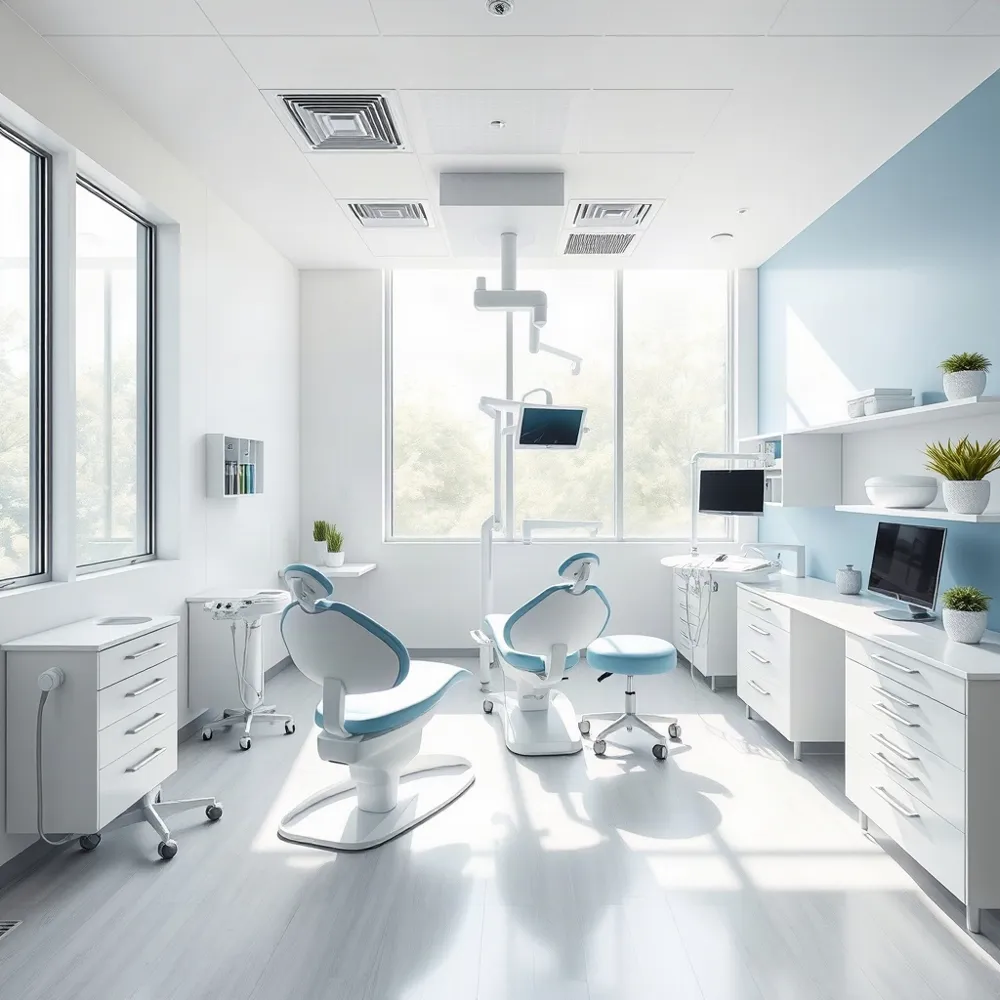 A medical emergency in a dental environment is defined as an unexpected event involving physical injury, respiratory or circulatory distress, central nervous system disturbances, or allergic reactions per the American Dental Association.
What is the most common medical emergency encountered in a dental office?
The most frequent medical emergency encountered in a dental setting is syncope, commonly known as fainting, which accounts for roughly 39% to 50% of all reported in-office incidents per findings in Decisions in Dentistry. These events are often stress-related, as physiological or psychological tension can exacerbate underlying conditions or trigger a physical reaction. Other common emergencies include anginal pain, asthmatic episodes, seizures, hyperventilation, and allergic reactions. Because approximately 75% of these common emergencies are linked to stress, according to Dimensions of Dental Hygiene, our team focuses on effective anxiety management and pain control to help prevent them.
At davidmmayerdmd.com, we prioritize patient safety by maintaining a culture of institutional readiness. Our clinical protocols follow the established P-C-A-B-D sequence, which stands for Positioning, Circulation, Airway, Breathing, and Definitive Care, as outlined by the American Dental Association. By leveraging over 40 years of experience, our team is trained to recognize early signs of patient distress and manage any situation with expert care. Unlike practices that may rely on periodic training, we ensure our staff is prepared through consistent practice and familiarity with our on-site emergency equipment, such as an automated external defibrillator.
Institutional Preparedness and Staff Readiness
To ensure patient safety, dental offices must establish a robust emergency preparedness plan that includes comprehensive staff training and regular, scenario-based mock drills. All team members, both clinical and administrative, should maintain current certification in Basic Life Support and cardiopulmonary resuscitation to ensure they can act confidently during an urgent event. Practices must also keep essential emergency medications and life-saving equipment, such as an Automated External Defibrillator, readily available and properly maintained.
At davidmmayerdmd.com, we prioritize these standards by maintaining a rigorous schedule for equipment checks and medication expiration tracking. Our team conducts regular training to ensure that every staff member understands their specific role during a crisis, fostering a culture of safety that allows for rapid, coordinated intervention. Unlike practices that may lack a formal emergency strategy, we emphasize clear communication and team-based workflows to handle unexpected situations with clinical precision.
Furthermore, conducting thorough medical risk assessments for patients helps teams identify potential triggers before treatment begins. Per American Dental Association guidelines, regular reviews of a patient's complete health history are essential to mitigate risks. By maintaining proactive protocols for recognizing distress and handling medical emergencies, we ensure our office is fully prepared to provide secure and efficient care to every patient.
Emergency Dentist vs. Hospital Emergency Room
When a dental crisis occurs, choosing the right venue for care is essential for your recovery. While hospital emergency rooms are necessary for life-threatening events like broken facial bones, severe uncontrolled bleeding, or deep lacerations, they rarely provide definitive dental treatment per Cleveland Clinic. Most emergency rooms are designed to address general medical trauma and can offer only temporary relief for oral pain through antibiotics or pain medication. They lack the specialized restorative equipment required to perform extractions or treat the root cause of an infection, making a follow-up visit to a dentist mandatory.
Your dentist is the primary solution for oral-specific trauma because they have the tools and expertise to perform immediate restorative work. At davidmmayerdmd.com, our team leverages over 40 years of experience to manage urgent issues like abscesses and severe tooth pain that require precise diagnostic skills. Unlike an emergency room that may delay care for non-systemic issues, we prioritize same-day intervention to stop infection and restore oral health structures efficiently.
Can emergency rooms treat infected teeth or perform extractions?
Hospital emergency rooms are generally not equipped to perform routine dental procedures like extractions or fillings. While they can help manage life-threatening complications, such as swelling that obstructs breathing or spreads to the neck or eyes per V.F. Dental, they lack the specialized training to resolve underlying dental pathology. For most dental emergencies, contacting a dentist first is the safest course of action.
- In the event of a knocked-out tooth, time is critical. Attempt to see a dentist within 60 minutes for the highest success rate of replantation.
- Handle the tooth only by the crown, never the root, and keep it moist in milk, saline, or a specialized medium like Save-a-Tooth.
- Do not scrub the tooth or remove any attached tissue, as this can damage the cells necessary for successful reattachment.
- Contact our office immediately for instructions, as we are equipped to handle these time-sensitive dental emergencies with state-of-the-art technology.
Financial Accessibility for Urgent Treatment
Prioritizing your health during a crisis is essential, as delaying treatment for conditions like an abscess or a knocked-out tooth often results in more severe and costly health complications What Is a Dental Emergency and Where To Go for Care. While some providers may lack transparent pricing models, at davidmmayerdmd.com, we prioritize clear communication regarding costs before any procedure begins.
What should I do if I have a dental emergency but am concerned about the cost?
Do not allow financial concerns to prevent you from seeking life-saving intervention. Many practices, including ours, are committed to making urgent care accessible by offering flexible payment options or third-party financing solutions. Our multilingual team is trained to help you understand your treatment plan and explore ways to manage expenses without compromising your dental health. By addressing the root cause of your pain early, you often avoid the much higher costs associated with long-term damage or secondary infections.
Prioritizing Your Oral Health and Peace of Mind
Maintaining consistent oral health remains the most effective defense against sudden dental crises. By leveraging over 40 years of clinical experience, our team at davidmmayerdmd.com provides comprehensive care rooted in evidence-based protocols and state-of-the-art technology. We encourage patients to visit us for routine check-ups, which allow our experts to identify potential complications before they escalate into painful emergencies.
Our commitment to patient well-being extends beyond clinical procedures. Whether you require emergency tooth extraction or routine preventive care, our multilingual staff is dedicated to ensuring you feel informed and comfortable throughout your visit. Building trust starts with proactive communication and a readiness to handle the unexpected with precision, ensuring that our Paterson neighbors have a reliable partner for every stage of their dental health journey.